Table of Contents
- Table of Contents
- Why Brushing Your Cat’s Teeth Matters
- What You’ll Need to Brush Your Cat’s Teeth
- Get Your Cat Ready First
- How to Brush Cat Teeth: Step by Step
- Where to Focus When You Brush
- How Often Should You Brush?
- Tips for Cats Who Fight It
- Other Ways to Help Your Cat’s Teeth
- When to See a Vet First
- Frequently Asked Questions
Quick answer: To brush cat teeth, use a toothpaste made for cats and a soft cat toothbrush or finger brush. Build up slowly over two to four weeks: first let your cat lick the toothpaste, then touch the lips and gums, then brush a few back teeth. Lift the lip and brush the outside of the teeth along the gumline for about 30 seconds. Aim for every day, and never use human toothpaste.
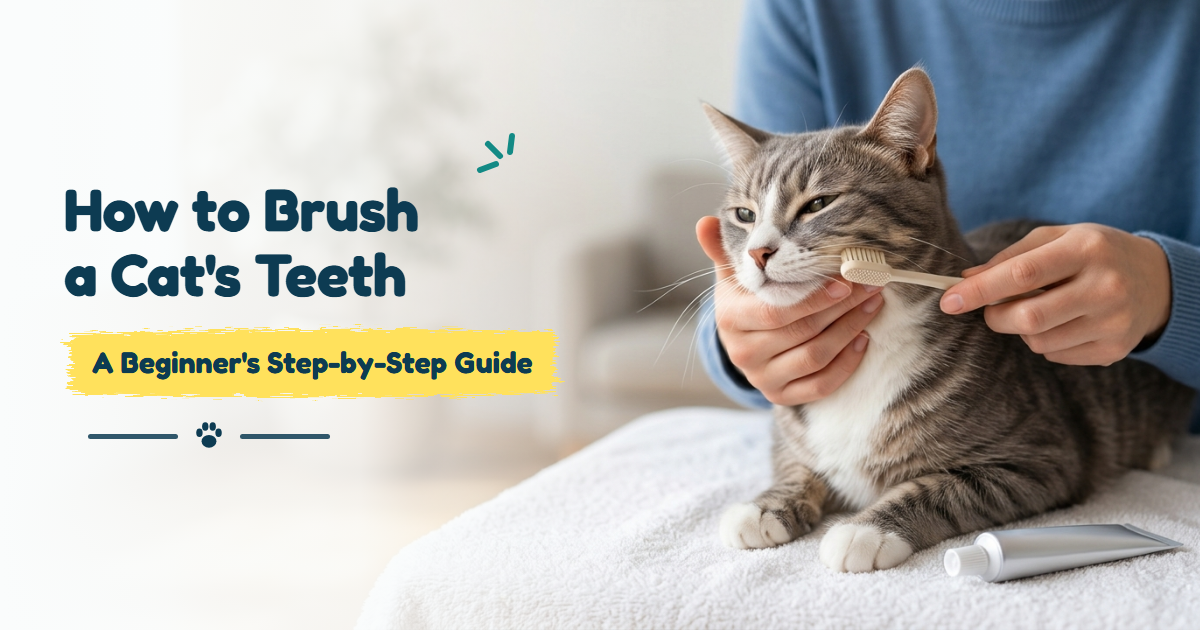
Brushing a cat’s teeth sounds like a fast way to get scratched. But with the right tools and a slow plan, many cats learn to accept it, and some even like the taste of the toothpaste. It’s worth the effort. Dental disease is one of the most common health problems in adult cats, and daily brushing is the best way to prevent it at home. This beginner’s guide shows you how to brush cat teeth step by step, even if you’ve never done it before.
Table of Contents
- Why Brushing Your Cat’s Teeth Matters
- What You’ll Need to Brush Your Cat’s Teeth
- Get Your Cat Ready First
- How to Brush Cat Teeth: Step by Step
- Where to Focus When You Brush
- How Often Should You Brush?
- Tips for Cats Who Fight It
- Other Ways to Help Your Cat’s Teeth
- When to See a Vet First
- Frequently Asked Questions
Why Brushing Your Cat’s Teeth Matters
Plaque, a sticky film of bacteria, forms on your cat’s teeth every day. If it isn’t removed, it hardens into tartar within a few days. Tartar irritates the gums and leads to gum disease, which can cause pain, bad breath, tooth loss, and infection.
Most cats show some signs of dental disease by age three. Cats hide pain very well, so they often keep eating even when their mouth hurts. Brushing removes plaque before it hardens, which keeps gums healthier and can cut down on how often your cat needs a dental cleaning at the vet.
Not sure if your cat already has a problem? Check our home checklist of signs of dental disease in cats before you start.
What You’ll Need to Brush Your Cat’s Teeth
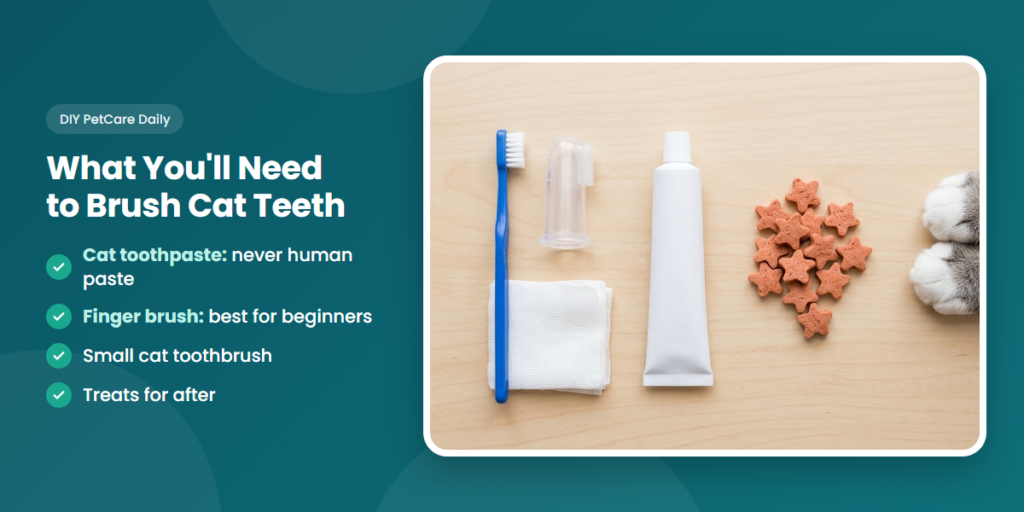
Cat Toothpaste
Use toothpaste made for cats only. Cat toothpaste comes in flavors cats like, such as chicken, fish, or malt, and is safe to swallow. Many contain enzymes that help break down plaque.
Never use human toothpaste. It can contain fluoride and xylitol, which aren’t safe for cats, and the foam and mint flavor upset most cats.
A Toothbrush That Fits
Pick whichever your cat accepts best:
- Finger brush: a soft rubber cap with nubs that slips over your fingertip. Great for beginners.
- Small cat toothbrush: a tiny head with soft bristles. Reaches the back teeth better.
- Soft child’s toothbrush: a small, extra-soft toothbrush can work for larger cats.
- Gauze or a soft cloth: wrapped around your finger, it’s a gentle way to start.
Treats and Patience
Have a reward ready for after each session. Some cats like a favorite treat or a quick play session with a wand toy.
Get Your Cat Ready First
Before you start the steps, set yourself up for success.
- Choose a calm time. After a meal or a nap works well.
- Pick a comfortable spot. Sit on the floor with your cat beside you or on your lap on a towel. Some people find it easier to sit with the cat facing away from them.
- Keep sessions very short. A few seconds is fine at the start.
- Stay calm. Speak softly. If you’re tense, your cat will notice.
- Never force it. Holding your cat down teaches them to fear the toothbrush. If your cat struggles, stop and try again later.
If your cat already fights grooming, our guide on how to brush a cat that hates being brushed uses the same slow, treat-based approach.
How to Brush Cat Teeth: Step by Step
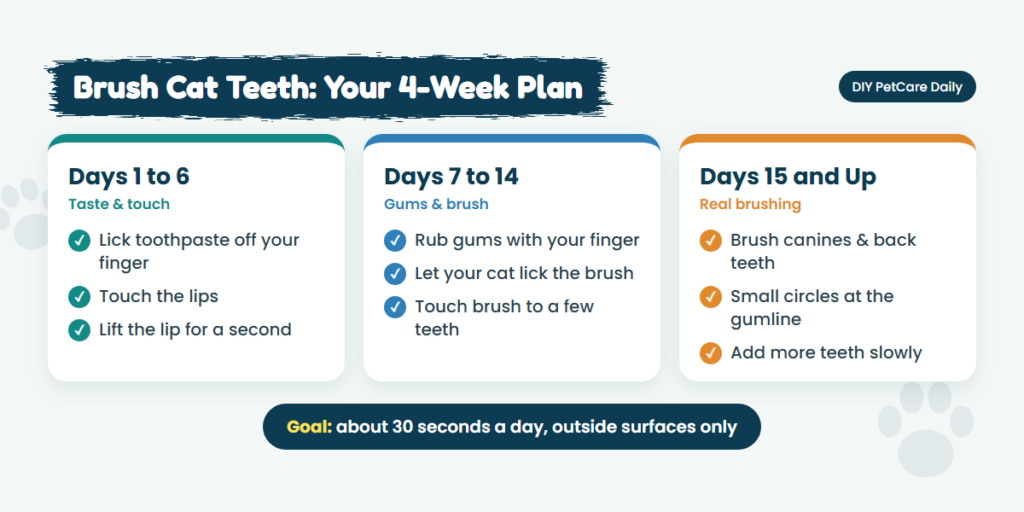
Spend a few days on each step, or longer if your cat needs it. Only move on when your cat is relaxed with the current step.
Step 1: Let Your Cat Taste the Toothpaste (Days 1 to 3)
Put a bit of cat toothpaste on your finger so your cat can lick it off.. Do this once or twice a day. Most cats enjoy the flavor, and they start to see the toothpaste as a treat.
Step 2: Touch the Mouth and Lips (Days 4 to 6)
While your cat is relaxed, gently touch the outside of their mouth and lips with your finger. Then lift the upper lip for a second and let it go. Give a lick of toothpaste as a reward.
Step 3: Rub the Gums With Your Finger (Days 7 to 10)
Put toothpaste on your fingertip. Lift the lip and gently rub it along the outer gums and teeth for a few seconds. Start with the front teeth and the large canine teeth (the fangs).
Step 4: Introduce the Brush (Days 11 to 14)
Let your cat sniff and lick toothpaste off the finger brush or toothbrush. Then touch it to a few teeth without brushing. Keep it brief and positive.
Step 5: Brush a Few Teeth (Days 15 to 21)
Lift the upper lip on one side. Hold the brush at a slight angle toward the gumline and use small, gentle circles. Start with the canine and the large back teeth on top. Brush for 5 to 10 seconds, then reward.
Step 6: Work Up to the Whole Mouth (Week 4 and Beyond)
Slowly add more teeth until you can brush the outside of all teeth on both sides, top and bottom. A full session takes about 30 seconds to one minute. You don’t need to open your cat’s mouth or brush the inner surfaces. The tongue helps keep the inside of the teeth cleaner, and most plaque builds up on the outer surfaces.
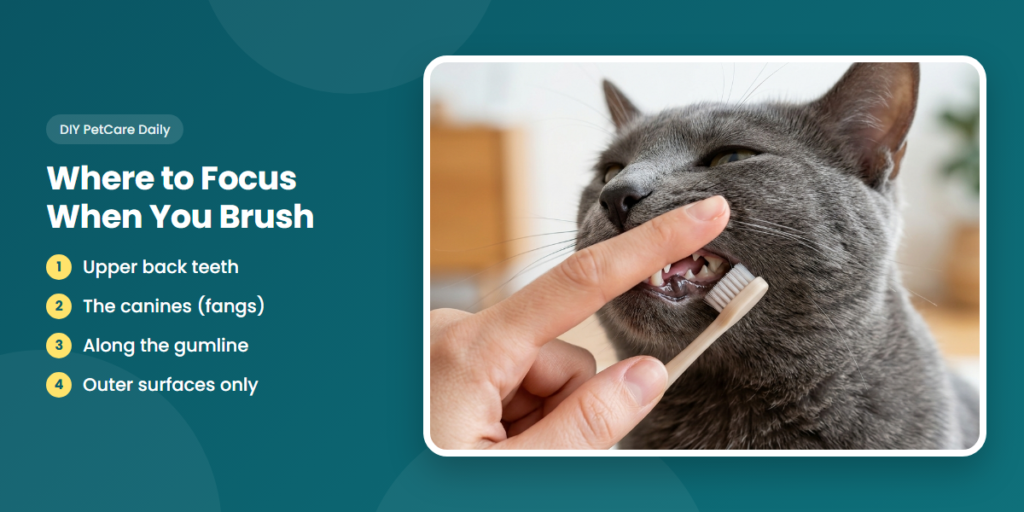
Where to Focus When You Brush
If your cat only gives you a few seconds, spend them where they count the most:
- Upper back teeth (premolars and molars): these big cheek teeth build up tartar fastest because they sit near the salivary glands.
- The canines: the long fangs on top and bottom.
- The gumline: angle the bristles so they reach the spot where the tooth meets the gum. That’s where gum disease starts.
How Often Should You Brush?
Every day is best. Plaque starts to harden into tartar in about 24 to 48 hours, so daily brushing removes it before it sets. If daily isn’t possible, aim for at least three times a week. Even a quick brush is far better than none.
A good routine looks like this:
| How Often | What to Do |
| Every day | Brush the outer surfaces for 30 to 60 seconds |
| Every week | Lift the lips and check the gums, teeth, and breath |
| Every year | Get a vet checkup that includes a look at the mouth |
Make it part of the same time each day, like right before dinner. Cats like routines.
Tips for Cats Who Fight It
- Go back a step. If your cat suddenly resists, return to an earlier, easier step for a few days.
- Switch tools. Some cats prefer gauze or a finger brush over a toothbrush.
- Try a new flavor. If your cat isn’t keen on poultry, try fish or malt.
- Do one side a day. Brush the left side today and the right side tomorrow.
- Look for pain. If your cat flinches or pulls away when you touch a certain tooth, they may have a sore mouth. Stop and see your vet.
Other Ways to Help Your Cat’s Teeth
Brushing works best, but other products can help, especially for cats who won’t accept a toothbrush.
- Dental treats and dental diets: look for products with the Veterinary Oral Health Council (VOHC) seal, which means they’ve been tested to reduce plaque or tartar.
- Water additives: these go in your cat’s water bowl. Some cats won’t drink treated water, so watch your cat’s water intake.
- Dental gels: some are applied to the gums and help reduce plaque.
These products help, but none of them clean as well as brushing.
When to See a Vet First
Don’t start brushing if your cat already shows signs of a sore mouth. Brushing inflamed gums or a painful tooth can hurt, and your cat may learn to hate it. See your vet first if your cat has:
- Red, swollen, or bleeding gums
- Heavy yellow or brown tartar
- Very bad breath (see our guide on why your cat’s breath smells)
- Drooling, dropping food, or chewing on one side
- A broken or loose tooth
Your vet may recommend a professional dental cleaning under anesthesia first. After that, you start brushing with a clean, comfortable mouth.
For more cat dental tips, visit our Cat Teeth Care section.
Frequently Asked Questions
Can I use human toothpaste on my cat?
No. Human toothpaste can contain fluoride and xylitol, which aren’t safe for cats to swallow. Cats can’t spit, so always use a toothpaste made for cats.
What if my cat won’t let me brush their teeth at all?
Go back to the first step and move much slower. Use a finger brush or gauze instead of a toothbrush. If your cat still won’t allow it, ask your vet about VOHC-approved dental treats, diets, or water additives.
Is it too late to start brushing an older cat’s teeth?
It’s never too late to start. Many adult and senior cats learn to accept brushing. Have your vet check your cat’s mouth first, since older cats are more likely to have sore teeth that need treatment.
How long does it take to train a cat to accept tooth brushing?
Most cats take two to four weeks of short, daily practice. Some take longer. Going slowly builds trust and makes brushing easier for years to come.
Do dental treats replace brushing?
No. Dental treats can help reduce plaque, but they don’t clean along the gumline the way brushing does. Use them as an extra, not a replacement.