Table of Contents
Quick answer: Your cat’s breath most often smells because of dental disease, where plaque and tartar bacteria build up along the gums. Other causes include tooth resorption, mouth inflammation, something stuck in the mouth, and diet. A breath that smells like urine or ammonia can point to kidney disease, a sweet or fruity smell can mean diabetes, and a very foul smell with yellow gums can mean liver disease. Healthy cat breath should be mild, so any strong smell that lasts is worth a vet visit.
Your cat climbs onto your chest for a snuggle, yawns, and you get a whiff of something awful. You might be wondering if that’s just “cat breath.” The truth is, a healthy cat’s breath shouldn’t smell bad. It may smell a little like their food, but it shouldn’t make you pull away. If you’re asking “why does my cat’s breath smell,” there’s usually a reason, and most of the time that reason is in the mouth. This guide covers the common causes, what different smells can mean, and when bad breath is a problem.
Table of Contents
- What Should Normal Cat Breath Smell Like?
- Common Causes of Bad Breath in Cats
- What Different Breath Smells Can Mean
- When Bad Breath Is a Problem
- How Vets Find the Cause
- How to Keep Your Cat’s Breath Fresh
- Frequently Asked Questions
What Should Normal Cat Breath Smell Like?
Normal cat breath is mild. Right after a meal, it may smell a little like fish or meat, especially if your cat eats fish-flavored food. That’s fine as long as the smell fades.
Bad breath, also called halitosis, is different. It’s a sour, rotten, or strong smell that stays all day, even when your cat hasn’t eaten. That kind of smell nearly always has a cause that needs attention.
Common Causes of Bad Breath in Cats
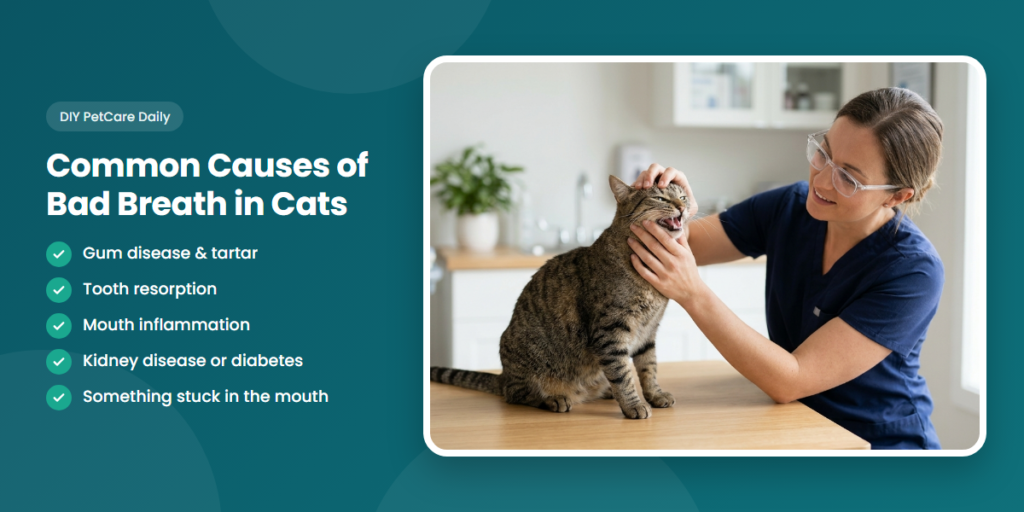
1. Dental Disease (the Most Common Cause)
Most bad breath in cats comes from gum disease, also called periodontal disease. Plaque forms on the teeth every day. If it isn’t removed, it turns into hard tartar. Bacteria in the plaque and tartar give off smelly gases and irritate the gums. Over time, the infection can damage the tissue and bone that hold the teeth in place.
Most cats have some dental disease by age three. Along with bad breath, you may see red gums, yellow or brown tartar, or drooling. Our home checklist of signs of dental disease in cats walks you through what to look for.
2. Tooth Resorption
Tooth resorption is a painful condition where the tooth slowly breaks down from the inside, starting near the gumline. It’s very common in adult cats. The gum often grows up over the damaged spot, which can look like a small pink or red bump on the tooth. Cats with tooth resorption may have bad breath, drool, or chatter their jaw when eating. Affected teeth usually need to be removed by a vet.
3. Stomatitis and Mouth Inflammation
Some cats get stomatitis, a severe, painful swelling of the gums and the tissue at the back of the mouth. It often causes very bad breath, drooling, bleeding, and not wanting to eat. The cause isn’t fully understood, but it seems to be an overreaction of the immune system to plaque. It needs vet treatment.
4. Something Stuck in the Mouth
A piece of string, a plant fiber, a bone fragment, or food stuck between the teeth can rot and cause a sudden bad smell. Never pull on a string you see under your cat’s tongue or in the throat. Call your vet, since strings can be dangerous if swallowed.
5. Diet
Fish-based foods and some treats can leave a strong smell. Dry food or wet food alone doesn’t cause bad breath, but food that sticks to the teeth can add to plaque buildup. If diet is the only cause, the smell is mild and fades between meals.
6. Kidney Disease
Kidney disease is common in older cats. When the kidneys don’t filter waste well, it builds up in the blood and can make the breath smell like urine or ammonia. Other signs include drinking and peeing more, weight loss, a poor appetite, and vomiting.
7. Diabetes
A sweet or fruity smell on your cat’s breath can be a sign of diabetes, especially a dangerous complication called diabetic ketoacidosis. Other signs include drinking a lot, peeing a lot, weight loss, and a big appetite at first. A sweet smell along with vomiting, weakness, or not eating is an emergency.
8. Liver Disease and Mouth Tumors
A very foul breath along with yellow gums or eyes, vomiting, and not eating can point to liver disease. Oral tumors can also cause a strong, rotten smell, sometimes with bleeding, a lump, or swelling of the face. These are less common, but they’re serious and need a vet visit soon.
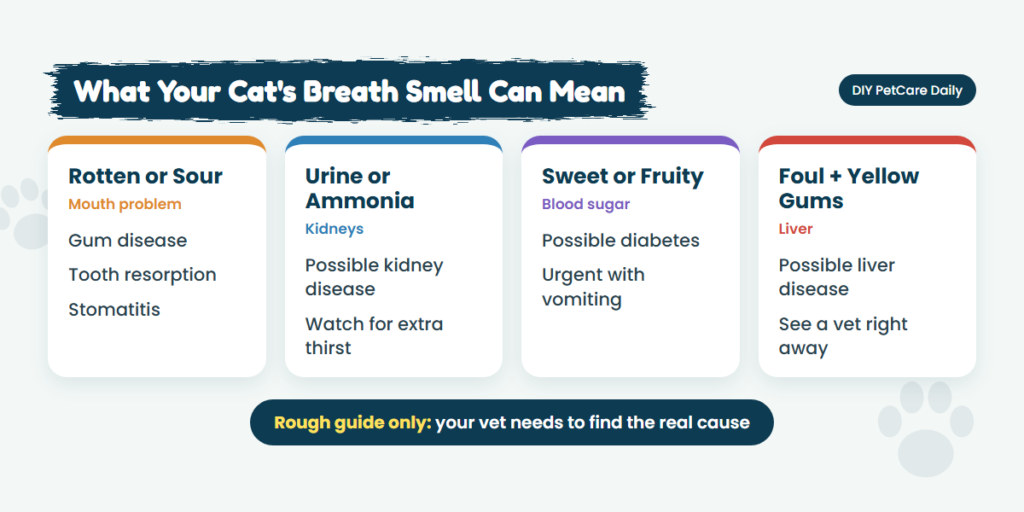
What Different Breath Smells Can Mean
Use this as a rough guide only. Your vet needs to examine your cat to find the real cause.
| Breath Smell | Possible Cause |
| Rotten, sour, or “dirty” | Dental disease, tooth resorption, stomatitis |
| Fishy | Fish-based diet or dental disease |
| Urine or ammonia | Kidney disease |
| Sweet or fruity | Diabetes or diabetic ketoacidosis |
| Very foul, with yellow gums | Liver disease |
| Sudden bad smell | Something stuck in the mouth, or an abscess |
Why Does My Cat’s Breath Smell Like Fish?
This is one of the most common questions cat owners ask. If your cat eats fish-flavored food, a fishy smell right after meals is normal, and it should fade within an hour or so.
A fishy smell that stays all day is different, especially in a cat who doesn’t eat fish. It usually comes from bacteria living in plaque and tartar along the gums. In other words, it’s most often an early sign of gum disease. Lift your cat’s lip and look for a red line along the gums or yellow-brown tartar on the back teeth. If you see either, book a vet visit.
To tell food smell from a mouth problem, try this: smell your cat’s breath first thing in the morning, before breakfast. If it still smells fishy then, the food isn’t the cause.
Why Does My Cat’s Breath Smell Like Poop or Death?
A very foul smell, like poop or something rotting, is a stronger warning sign than a fishy one. Common causes include:
- Advanced gum disease, where infected tissue is breaking down around the teeth
- A tooth root abscess, sometimes with swelling on the face or under the eye
- Stomatitis, which causes painful, raw tissue at the back of the mouth
- Something rotting in the mouth, like trapped food or a foreign object
- An oral tumor, which can cause a rotten smell along with bleeding or a lump
In rare cases, a poop-like smell can be linked to a blockage in the gut, especially if your cat is also vomiting. Any of these smells means your cat should see a vet soon, not at the next yearly checkup.
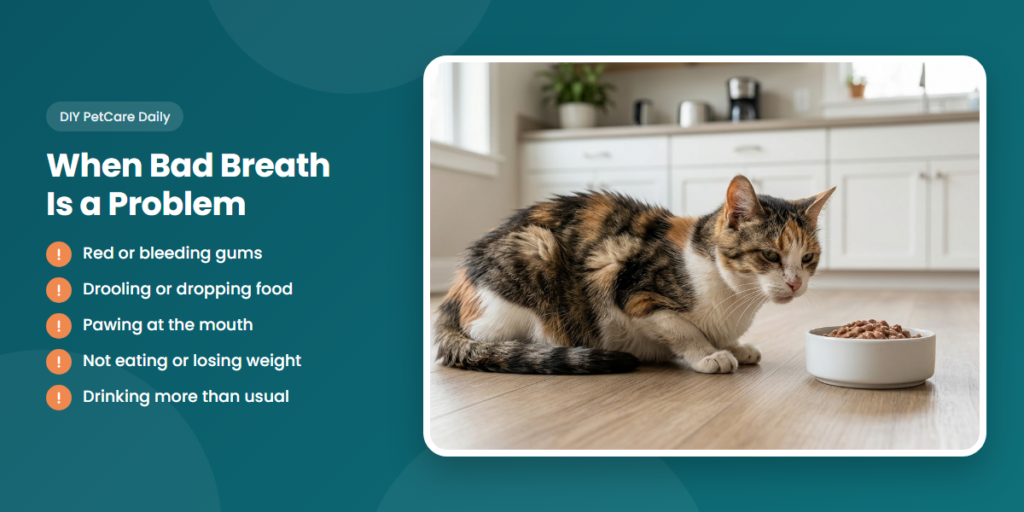
When Bad Breath Is a Problem
Bad breath on its own is a reason to book a regular vet visit. Get your cat seen sooner if bad breath comes with any of these:
- Red, swollen, or bleeding gums
- Drooling, sometimes with blood in it
- Dropping food, chewing on one side, or eating slowly
- Pawing at the mouth or face
- Not eating, or only eating soft food
- Weight loss
- A messy or greasy coat because your cat has stopped grooming
- Swelling on the face or under the eye
- Drinking or peeing more than usual
When It’s an Emergency
Call your vet or an emergency clinic right away if your cat has a sweet or fruity breath smell along with vomiting or weakness, yellow gums or eyes, hasn’t eaten for more than a day, or seems very tired and is hiding. Cats who stop eating can quickly develop a serious liver problem. Our guide on signs of a sick cat covers other warning signs cats try to hide.
How Vets Find the Cause
At the visit, your vet will usually:
- Look inside your cat’s mouth at the teeth, gums, tongue, and throat.
- Do a full physical exam.
- Suggest blood and urine tests, especially for older cats, to check the kidneys, liver, and blood sugar.
- Recommend a dental cleaning under anesthesia with dental X-rays if dental disease is likely. X-rays are the only way to see problems below the gumline, like tooth resorption.
Treatment depends on the cause. Dental disease is treated with a cleaning and, if needed, removing damaged teeth. Kidney disease, diabetes, and liver disease are managed with medicine, diet changes, and regular checkups.
How to Keep Your Cat’s Breath Fresh
Once your vet has ruled out a medical problem, these habits help keep your cat’s breath mild:
- Brush your cat’s teeth. Daily brushing is the best way to stop plaque from building up. Our beginner guide shows you how to brush cat teeth step by step.
- Use cat toothpaste only. Never use human toothpaste.
- Try VOHC-approved products. Dental treats, dental diets, and water additives with the Veterinary Oral Health Council seal can help reduce plaque or tartar.
- Keep your cat drinking. Fresh water and some wet food help keep the mouth and body healthy.
- Check the mouth weekly. Lift the lip and look for redness, tartar, or anything stuck.
- Get yearly vet checkups. Older cats should go twice a year.
For more cat dental guides, visit our Cat Teeth Care section.
Frequently Asked Questions
Is it normal for my cat’s breath to smell?
A mild smell that’s a bit like their food is normal. A strong, sour, or rotten smell that stays all day is not normal, and usually means dental disease or another health problem.
Can hairballs cause bad breath in cats?
Not usually for long. A cat who just threw up a hairball may have a sour smell for a short time, but it should fade. If your cat vomits often or the bad smell stays, see your vet. Our guide on how to prevent hairballs in cats can help cut down on hairballs.
Can I give my cat breath mints or human mouthwash?
No. Human breath mints and mouthwash can contain xylitol, alcohol, or essential oils that aren’t safe for cats. Treat the cause of the smell instead, and use products made for cats.
Can a cat’s bad breath go away on its own?
Bad breath caused by a meal fades on its own. Bad breath caused by dental disease or illness won’t go away without treatment, and it usually gets worse over time.
Does dry food help with bad breath in cats?
Regular dry kibble doesn’t clean teeth much. Some special dental diets are made to help reduce plaque and tartar. Look for the VOHC seal and ask your vet if one is right for your cat.