Table of Contents
- Table of Contents
- What Causes Hairballs in Cats?
- How Many Hairballs Are Normal?
- Which Cats Get the Most Hairballs?
- How to Prevent Hairballs in Cats With Grooming
- Diet Tips to Reduce Hairballs
- How to Get Rid of Hairballs in Cats: Gels, Treats, and Grass
- A Simple Weekly Plan to Stop Cats Getting Hairballs
- Stress, Itchy Skin, and Overgrooming
- When Hairballs Are a Sign of a Problem
- Frequently Asked Questions
Quick answer: The best way to prevent hairballs in cats is to brush your cat often so there’s less loose fur to swallow. Add more moisture with wet food and fresh water, try a hairball-control food or extra fiber, and ask your vet about a hairball gel. An occasional hairball is normal, but more than one or two a month, or retching with nothing coming up, is a reason to see your vet.
That hacking, gagging sound in the middle of the night is something almost every cat owner knows. Hairballs are common, but they’re not something your cat has to live with every week.
Most hairballs come down to one thing: too much swallowed fur. The less loose fur your cat swallows, and the better it moves through the gut, the fewer hairballs you’ll find on your carpet. If you’re looking for how to stop hairballs in cats, this guide covers what causes them, simple grooming and diet changes that prevent them, how to get rid of them when they happen, and when hairballs are a sign of something more serious.
Table of Contents
- What Causes Hairballs in Cats?
- How Many Hairballs Are Normal?
- Which Cats Get the Most Hairballs?
- How to Prevent Hairballs in Cats With Grooming
- Diet Tips to Reduce Hairballs
- How to Get Rid of Hairballs in Cats: Gels, Treats, and Grass
- A Simple Weekly Plan to Stop Cats Getting Hairballs
- Stress, Itchy Skin, and Overgrooming
- When Hairballs Are a Sign of a Problem
- Frequently Asked Questions
What Causes Hairballs in Cats?
Your cat’s tongue is covered in tiny backward-facing hooks called papillae. When your cat grooms, these hooks catch loose fur, and your cat swallows it. Most of that fur passes through the gut and comes out in the litter box. Sometimes it collects in the stomach instead and forms a wet clump. When the clump gets big enough, your cat throws it up. Vets call this a trichobezoar.
Despite the name, hairballs usually look like a tube or cigar shape, not a ball. That’s because they get squeezed through the narrow food pipe on the way out. They’re often mixed with fluid, food, or bile.
So what makes one cat get more hairballs than another? The main causes are:
- Swallowing more fur: long coats, heavy shedding seasons, or overgrooming
- Fur moving too slowly through the gut: dehydration, a low-fiber diet, or gut problems like inflammatory bowel disease
- Itchy or stressed skin: fleas, allergies, and anxiety all lead to more licking
Fix either side of that equation, less fur going in or better movement through the gut, and hairballs usually drop.
How Many Hairballs Are Normal?
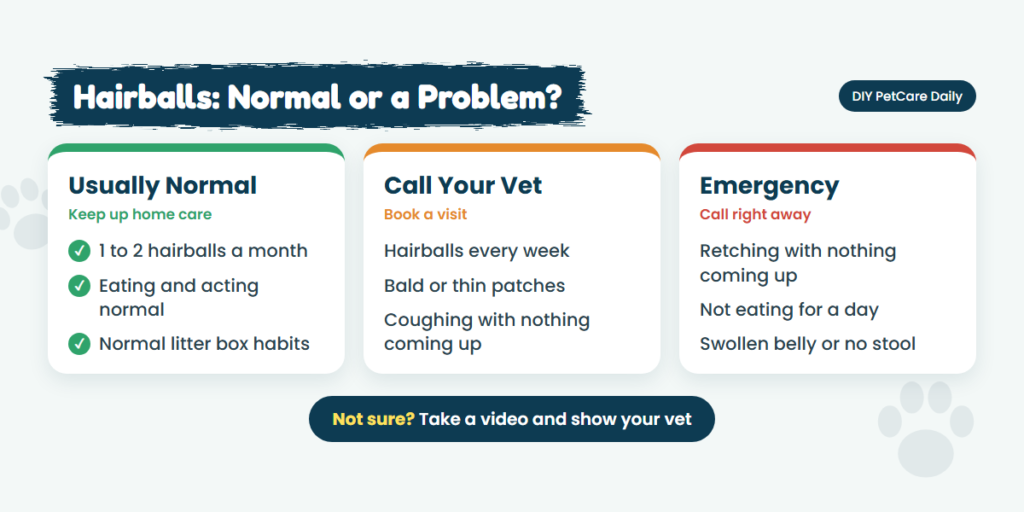
Many vets say an occasional hairball, around once or twice a month at most, can be normal, especially in long-haired cats. More than that suggests your cat is either swallowing too much fur or having trouble moving it through the gut.
Hairballs are not a sign of a healthy cat. Some cats never have them at all. If your cat brings one up every week, it’s worth working on prevention and talking to your vet.
Which Cats Get the Most Hairballs?
Some cats are more likely to have hairballs than others:
- Long-haired breeds like Persians, Maine Coons, Ragdolls, and Himalayans
- Heavy shedders, especially during spring and fall shedding seasons
- Cats who overgroom because of stress, allergies, fleas, or skin problems
- Cats with gut problems that slow down digestion, like inflammatory bowel disease
- Older cats whose digestion has slowed down
Short-haired cats get hairballs too, just usually less often. Regular brushing still helps them.
How to Prevent Hairballs in Cats With Grooming
Grooming is the most direct way to reduce hairballs. Every hair you brush out is one less hair in your cat’s stomach.
Brush Your Cat Regularly
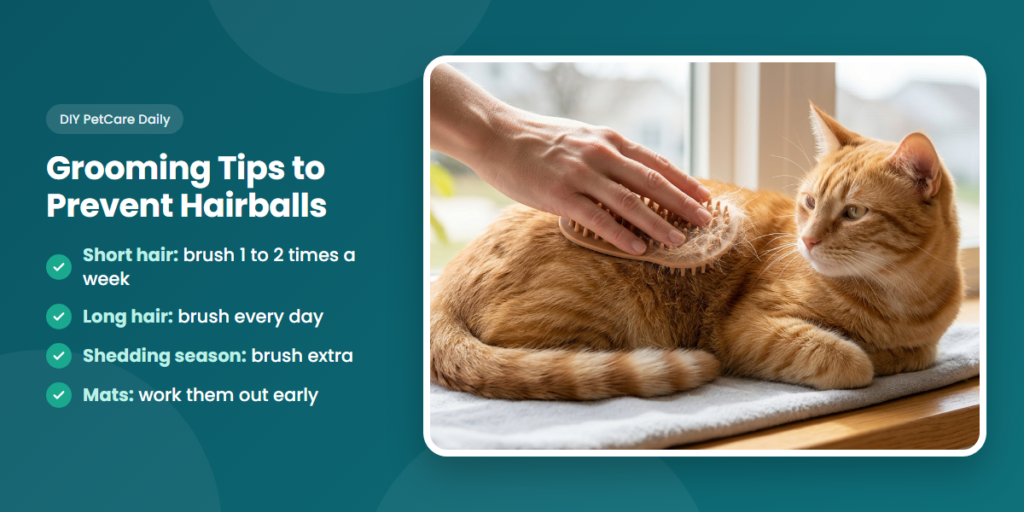
- Short-haired cats: brush 1 to 2 times a week, more during shedding season.
- Long-haired cats: brush every day, even if it’s only for a few minutes.
- All cats: brush more in spring and fall, when cats shed the most.
A grooming glove or rubber brush works well for short coats. Long coats need a soft slicker brush and a wide-tooth comb.
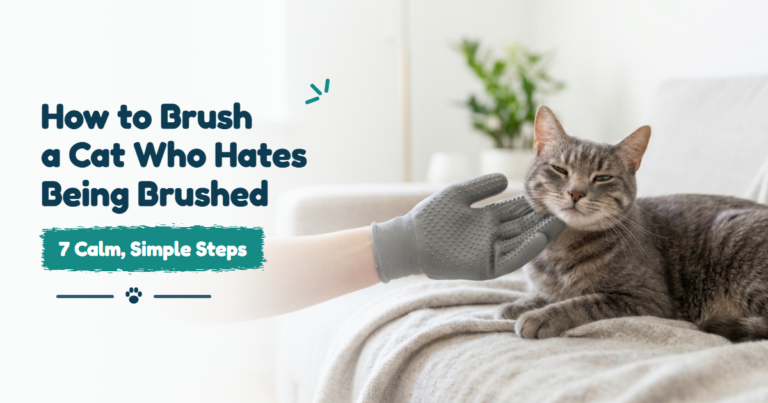
If your cat hates the brush, don’t give up. Our step-by-step guide on how to brush a cat that hates being brushed shows you how to build up slowly with treats.
Take Care of Mats
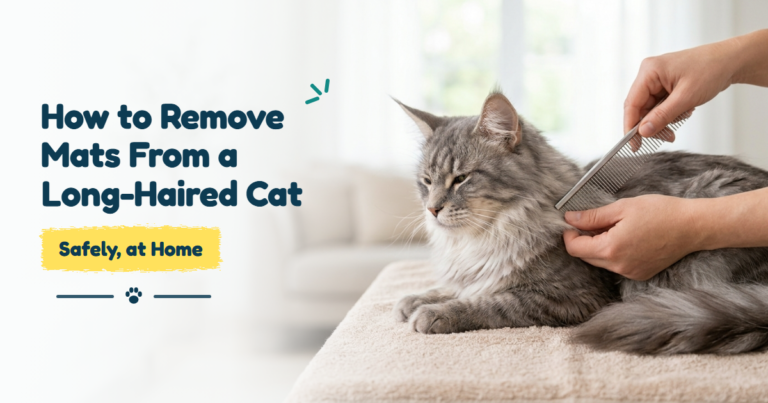
Mats trap loose fur and make brushing harder. If your long-haired cat has tangles, see our guide on how to remove mats from cat fur for a safe way to work them out.
Try Wiping Down Your Cat
A damp cloth or an unscented pet grooming wipe can pick up loose surface hair between brushing sessions. It’s a nice option for cats who tolerate a gentle wipe better than a brush.
Consider a Groomer for Long-Haired Cats
A professional groom every few months, or a shorter trim during heavy shedding, can cut down on the amount of fur your cat swallows.
Diet Tips to Reduce Hairballs
What your cat eats affects how well swallowed fur moves through the gut.
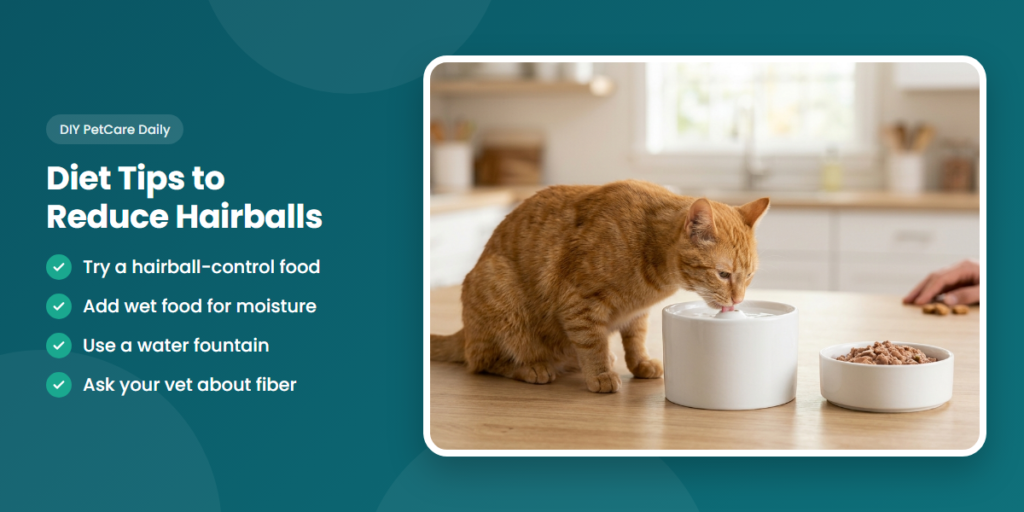
Try a Hairball-Control Cat Food
Many brands make hairball formulas. These foods usually have extra fiber to help fur move through the gut and into the litter box. Some also have nutrients for healthy skin and coat, which can mean less shedding. Switch slowly over 7 to 10 days to avoid an upset stomach.
Add More Moisture
Water helps everything move through the gut, fur included. Cats often don’t drink much on their own. You can help by:
- Feeding some or all wet food
- Adding a little water to wet food
- Using a cat water fountain, since many cats like running water
- Placing water bowls in a few spots around the house, away from food and litter
Our guide on wet vs dry cat food explains how moisture fits into your cat’s diet.
Ask About Extra Fiber
Small amounts of fiber can help some cats. Your vet may suggest plain canned pumpkin (not pie filling) or a fiber supplement made for cats. Too much fiber can cause other problems, so check with your vet about the right amount.
Feed Smaller Meals
Cats who eat fast and then vomit may be bringing up food, not true hairballs. Smaller meals or a slow feeder can help. Our guide on how much to feed your cat can help you set portions.
Healthy Fats for Skin and Coat
Omega-3 fatty acids, like fish oil made for pets, can support healthy skin and may reduce shedding. Ask your vet before adding any supplement.
How to Get Rid of Hairballs in Cats: Gels, Treats, and Grass
Grooming and diet prevent new hairballs. These options help move fur that’s already been swallowed.
Hairball Gels and Pastes
These are lubricants, often made with petroleum jelly or mineral oil. They coat the swallowed fur so it slides through the gut more easily. They’re usually given a few times a week. Use them as your vet directs, since using them too often can affect how your cat absorbs nutrients.
Hairball Treats
Hairball treats are like small doses of fiber or lubricant in a treat. They can help, but they work best alongside brushing and a good diet, not in place of them.
Cat Grass
Some cats like to nibble on cat grass (usually wheatgrass or oat grass). It may help some cats move fur along or bring it up. If you grow it, make sure your cat doesn’t have access to toxic houseplants, like lilies, which are deadly to cats. Our list of foods toxic to cats covers other things to keep away.
What Not to Use
Skip olive oil, butter, and human laxatives. Oils add calories and can upset your cat’s stomach, and human medicines aren’t dosed for cats. Never try to pull a hairball out of your cat’s mouth or throat.
A Simple Weekly Plan to Stop Cats Getting Hairballs
If you want one routine that covers the basics, try this:
| How often | What to do |
| Every day | Fresh water in at least 2 spots; brush long-haired cats for a few minutes; 10 to 15 minutes of play |
| 2 to 3 times a week | Brush short-haired cats; wipe down with a damp cloth; offer a hairball treat or gel if your vet recommends one |
| Every week | Check the coat for mats and the skin for fleas or redness; count any hairballs |
| Every month | Check flea prevention is up to date; if you saw more than 2 hairballs, call your vet |
| Spring and fall | Brush daily during heavy shedding; consider a professional groom for long coats |
Keep a simple note on your phone of each hairball. It helps you see whether the plan is working, and your vet will find it useful too.
Stress, Itchy Skin, and Overgrooming
Some cats get hairballs because they groom far more than they need to. Signs of overgrooming include bald or thin patches, short broken fur, or red skin, often on the belly, inner legs, or sides.
Common causes are:
- Fleas or other parasites
- Food or environmental allergies
- Skin infections
- Stress, like a new pet, a move, or changes in routine
- Boredom
Treating the cause can stop the overgrooming, and the hairballs often get better too. Use a vet-recommended flea preventive, and give your cat daily play time, places to climb, and quiet spots to hide.
When Hairballs Are a Sign of a Problem
Most hairballs are harmless. But a large hairball can sometimes block the stomach or intestines, which is an emergency. Call your vet right away if your cat has:
- Repeated gagging or retching with nothing coming up
- Vomiting several times in a day
- Not eating for more than a day
- Lethargy or hiding
- Constipation or no stool for more than a day or two
- A swollen or painful belly
- Diarrhea or blood in vomit or stool
Is It a Hairball or a Cough?
Watch closely. A cat bringing up a hairball usually heaves with its belly and then produces something. A cat that crouches low with its neck stretched out and coughs, but nothing comes up, may have asthma or another breathing problem. Take a video and show your vet.
Is It a Hairball or Regular Vomiting?
A true hairball has visible fur in a tube shape. If your cat often throws up food, foam, or liquid with little or no fur, the cause is probably something else, like eating too fast, a food sensitivity, or an illness. Our guide on why your cat is throwing up explains what different vomit colors and types can mean.
Hairballs and frequent vomiting can be early signs that something else is going on. Our guide on signs of a sick cat lists other clues to watch for. For more grooming help, visit our Cat Hair & Grooming Care section.
Frequently Asked Questions
How do I stop my cat from getting hairballs?
Brush your cat regularly (daily for long-haired cats), add moisture with wet food and fresh water, and consider a hairball-control food. Treat fleas and skin problems that cause overgrooming. Most cats have far fewer hairballs within a few weeks of a steady routine.
What is the fastest way to help my cat with hairballs?
For quick relief, ask your vet about a hairball gel, which helps fur slide through the gut. For long-term results, brush your cat often and add more moisture to the diet.
Does wet food help prevent hairballs in cats?
It can help. Wet food adds water to your cat’s diet, which keeps the gut moving and helps swallowed fur pass through to the litter box.
Can I give my cat olive oil for hairballs?
It’s best not to. Oils like olive oil can upset your cat’s stomach and add extra calories. A hairball gel made for cats, used as your vet directs, is a safer choice.
When should I worry about my cat’s hairballs?
Call your vet if your cat has hairballs more than once or twice a month, keeps retching without bringing anything up, stops eating, seems tired, or isn’t using the litter box normally.

2 Responses