Table of Contents
- Table of Contents
- Wet vs Dry Cat Food at a Glance
- Why Water Matters So Much for Cats
- Benefits of Wet Cat Food
- Benefits of Dry Cat Food
- Dry Food or Wet for Cats? A Quick Guide
- The Case for Mixed Feeding
- How to Pick a Good Cat Food (Wet or Dry)
- Tips to Get More Water Into a Dry-Food Cat
- How to Switch Between Wet and Dry Food
- Storing Cat Food Safely
- Frequently Asked Questions
Quick answer: In the wet vs dry cat food debate, wet food is usually the better choice for hydration, urinary health, and weight control, because it’s about 75 to 80 percent water and has fewer calories per bite. Dry cat food is cheaper, easier to store, and handy for puzzle feeders. Most healthy cats do well on either one as long as it’s labeled “complete and balanced,” and many vets suggest a mix of both. Cats with urinary, kidney, or weight problems often do best with mostly wet food.
Walk down the cat food aisle and you’ll see cans, pouches, and big bags of kibble, all claiming to be the best. It’s easy to feel unsure. Is dry food bad for cats? Is wet food worth the extra cost?
The truth is that both can be healthy. The right choice depends on your cat’s health, age, habits, and your budget. Dry food or wet for cats? This guide compares wet vs dry cat food side by side so you can decide what works best for your cat and your home.
Table of Contents
- Wet vs Dry Cat Food at a Glance
- Why Water Matters So Much for Cats
- Benefits of Wet Cat Food
- Benefits of Dry Cat Food
- Dry Food or Wet for Cats? A Quick Guide
- The Case for Mixed Feeding
- How to Pick a Good Cat Food (Wet or Dry)
- Tips to Get More Water Into a Dry-Food Cat
- How to Switch Between Wet and Dry Food
- Storing Cat Food Safely
- Frequently Asked Questions
Wet vs Dry Cat Food at a Glance
| Feature | Wet Cat Food | Dry Cat Food |
| Water content | About 75 to 80% | About 6 to 10% |
| Calories | Lower per ounce | Much higher per ounce |
| Hydration | Very good | Poor on its own |
| Carbohydrates | Usually lower | Usually higher |
| Cost per day (10 lb cat) | About $1.50 to $4.00 | About $0.40 to $1.25 |
| Shelf life once open | 2 to 3 days in the fridge | About 6 weeks in a sealed bag |
| Can sit out all day? | No, 20 to 30 minutes at room temperature | Yes, though portions are still best |
| Taste appeal | Very high for most cats | Good, crunchy texture some cats love |
| Good for puzzle feeders | Limited | Yes |
| Dental benefit | None | Small, unless it’s a special dental formula |
Costs vary a lot by brand and region. These are rough US price ranges for mid-range foods.
Why Water Matters So Much for Cats
To understand the wet vs dry cat food debate, it helps to know where cats come from. House cats come from desert-dwelling wild cats. In the wild, they get most of their water from their prey, which is about 70 percent water. Because of this, cats have a low thirst drive. They often don’t drink enough water on their own, even when they need it.
A cat eating only dry food gets very little water from meals. Some cats make up for it by drinking more, but many don’t. Over time, low water intake can lead to concentrated urine, which raises the risk of:
- Bladder crystals and stones
- Urinary tract inflammation (feline idiopathic cystitis)
- Urethral blockages, especially in male cats, which are an emergency
If your cat has ever peed outside the box, urinary pain may be the reason. Our guide on why your cat is peeing outside the litter box covers the medical causes to check first.
Benefits of Wet Cat Food
Better Hydration
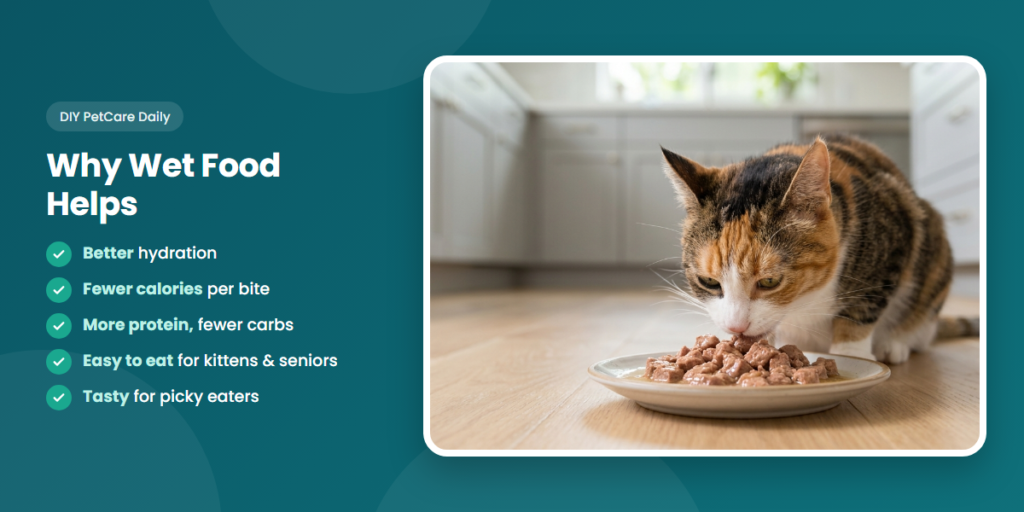
This is the biggest benefit. A cat eating wet food takes in much more total water each day, which keeps urine diluted and supports the bladder and kidneys.
Easier Weight Control
Wet food has fewer calories per bite because so much of it is water. Your cat can eat a satisfying portion without overdoing calories. That’s helpful because about 6 in 10 US cats are overweight or obese, according to vet surveys.
Fewer Carbs, More Protein
Cats are true carnivores. They need protein and fat from animal sources. Most wet foods are higher in protein and lower in carbohydrates than dry foods, which suits a cat’s natural diet. This can help cats with diabetes, along with vet treatment.
Easier to Eat
Soft food is easier for kittens, senior cats, and cats with missing teeth or mouth pain. If your cat has started chewing on one side or dropping kibble, read our signs of dental disease in cats checklist.
Very Tasty
Most cats love the smell and texture of wet food. It’s a good choice for picky cats or cats who need to be tempted to eat after an illness.
Downsides of Wet Food
- Costs more per day
- Spoils quickly once opened or left out
- Takes more storage space and makes more trash
- Can be messy
- Hard to use with automatic feeders or while you’re away all day
Benefits of Dry Cat Food
Lower Cost
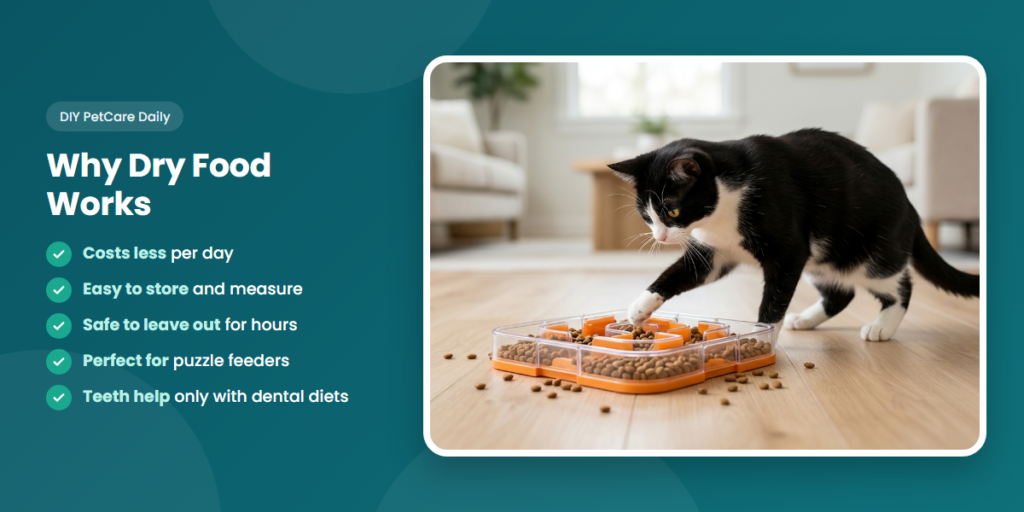
Dry food usually costs much less per day, which matters if you have several cats.
Convenient
Kibble is easy to store, measure, and travel with. It can sit in a bowl or automatic feeder for hours without spoiling, which works well if you work long days.
Great for Puzzle Feeders
Dry food fits easily in food puzzles and treat balls. These make cats “hunt” for meals, which keeps indoor cats busy and can help slow fast eaters.
Dental Benefits? Only Sometimes
Many people believe crunchy kibble cleans cats’ teeth. For most regular kibble, the effect is small, because cats often swallow pieces whole or shatter them right away. Special dental diets made with large, fibrous kibble can help reduce plaque and tartar. Look for foods with the Veterinary Oral Health Council (VOHC) seal.
The best way to protect your cat’s teeth is daily brushing. Our guide on how to brush cat teeth makes it simple, even for beginners.
Downsides of Dry Food
- Very low water content
- Easy to overfeed, since it’s calorie-dense
- Often higher in carbohydrates
- Free feeding can lead to weight gain
- Can go stale or attract pests if not stored well
Dry Food or Wet for Cats? A Quick Guide
| Your Cat’s Situation | Best Choice |
| Healthy adult, drinks well, lean | Either, or a mix |
| History of urinary crystals, cystitis, or blockage | Mostly or all wet food |
| Kidney disease | Mostly wet food (often a vet kidney diet) |
| Overweight or needs to lose weight | Mostly wet food, measured portions |
| Diabetes | Wet, low-carb food under vet care |
| Kitten | Either kitten formula; wet helps hydration |
| Senior cat with dental pain | Wet or soft food |
| Picky eater | Try wet food, then mix |
| Busy home, long workdays | Dry food in a timed feeder, plus a wet meal |
| Tight budget | Dry food, with a wet meal when you can |
The Case for Mixed Feeding
You don’t have to choose just one. Many vets suggest mixed feeding, which gives you the best of both:
- Wet food once or twice a day for water, protein, and taste
- A measured amount of dry food for grazing, puzzle feeders, or while you’re away
Mixed feeding also helps your cat stay used to different textures. Cats often form food preferences early in life. A cat who has only ever eaten kibble may refuse wet food later, which can be a problem if they ever need a wet prescription diet.
How to Balance a Mixed Diet
The key is to count calories from both foods so your cat doesn’t gain weight.
- Find your cat’s daily calorie goal. Our guide on how much should I feed my cat shows you how.
- Check the calories on the can (often listed as kcal per can).
- Subtract the wet food calories from the daily goal.
- Feed the rest as dry food, measured with a real measuring cup.
For example, a 10-pound indoor cat might need about 220 calories a day. One 3-ounce can of wet food at 80 calories leaves about 140 calories for dry food. At 400 calories per cup, that’s about 1/3 cup of kibble a day.
How to Pick a Good Cat Food (Wet or Dry)
The type of food matters less than its quality. Check the label for:
- “Complete and balanced” statement. Look for the AAFCO statement saying the food meets nutrient profiles for your cat’s life stage (growth, adult maintenance, or all life stages).
- Named animal protein first. Chicken, turkey, salmon, or another specific meat at the top of the list.
- Taurine. Cats need this amino acid for their heart and eyes. All complete cat foods include it.
- Life stage match. Kitten food for kittens under 12 months.
- Calories per can or cup. Helps you portion correctly.
Be careful with foods labeled “complement,” “treat,” or “for intermittent or supplemental feeding only.” These are not complete diets.
Tips to Get More Water Into a Dry-Food Cat
If your cat only eats dry food, you can still help them drink more:
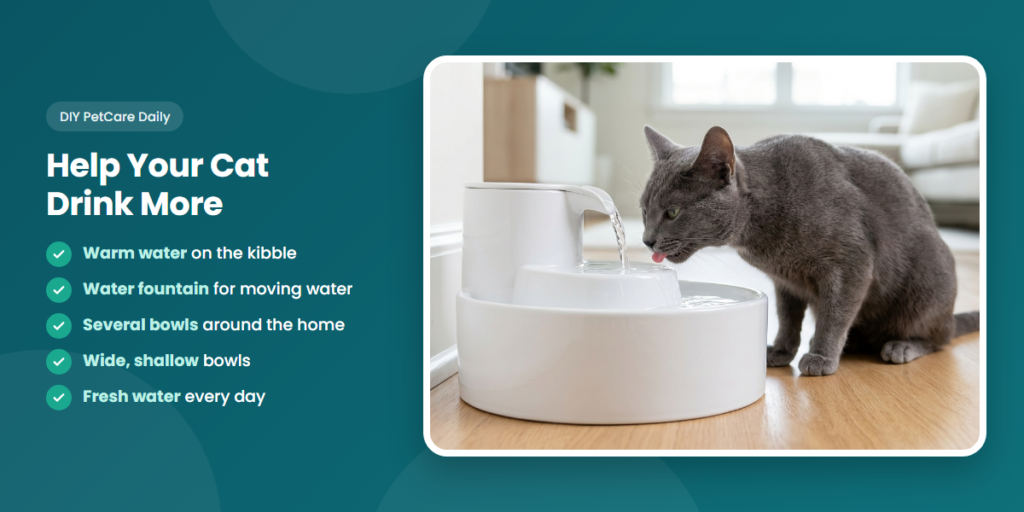
- Add warm water to kibble, a tablespoon or two at a time, right before serving
- Use a cat water fountain. Many cats prefer moving water
- Place several water bowls around the home, away from food and the litter box
- Try wide, shallow bowls. Some cats dislike their whiskers touching the sides
- Offer a small wet meal or a spoonful of wet food as a daily treat
- Keep water fresh and refill it at least once a day
How to Switch Between Wet and Dry Food
Change foods slowly over 7 to 10 days, mixing a little more of the new food each day. Cats can be very picky, so go slower if needed. Never let a cat go without eating for more than a day or two, because cats can develop a serious liver condition called hepatic lipidosis when they stop eating. If your cat refuses food, call your vet.
Storing Cat Food Safely
- Wet food: cover opened cans and refrigerate for up to 2 to 3 days. Throw out wet food left in the bowl after 20 to 30 minutes, or sooner on hot days. Many cats like it slightly warm, so let cold food sit for a few minutes or add a splash of warm water.
- Dry food: keep kibble in its original bag (it has the lot number in case of a recall), roll it closed, and put it inside an airtight bin. Use it within about 6 weeks of opening.
- Clean bowls daily with hot, soapy water.
For more guides on feeding your cat, visit our Cat Food & Nutrition section. You may also find our list of foods toxic to cats helpful before sharing any human food.
Frequently Asked Questions
Is wet or dry food better for cats?
For most cats, wet food is better for hydration, urinary health, and weight control. Dry food is cheaper and more convenient. Both can be healthy if they are complete and balanced, and many vets recommend feeding a mix.
Is dry food bad for cats?
No, dry food isn’t bad for healthy cats. Many cats live long, healthy lives on quality dry food. The main concerns are low water content and the ease of overfeeding, so measure portions and help your cat drink enough water.
Can I feed my cat only wet food?
Yes. A complete and balanced wet food can be your cat’s whole diet. It’s often the best choice for cats with urinary or kidney problems. Just keep up with dental care, since wet food doesn’t help clean teeth.
Does dry cat food clean teeth?
Most regular kibble does very little to clean teeth. Special dental diets with large, textured kibble can help, especially those with the VOHC seal. Brushing is still the best way to keep your cat’s teeth healthy.
How much wet and dry food should I feed my cat?
Most indoor adult cats need about 200 to 250 calories a day. If you feed both, add up the calories from the wet food first, then make up the rest with a measured amount of dry food. Adjust based on your cat’s weight and body shape.