Table of Contents
- Table of Contents
- Why Some Human Foods Are Dangerous for Cats
- What Foods Are Toxic to Cats? Quick Reference Chart
- The Most Dangerous Foods for Cats
- Foods That Cause Problems Over Time
- Non-Food Dangers Found in the Kitchen and Home
- Safe Human Foods Cats Can Eat
- Signs Your Cat May Have Eaten Something Toxic
- What to Do If Your Cat Eats Something Toxic
- How to Keep Your Cat Safe in the Kitchen
- Frequently Asked Questions
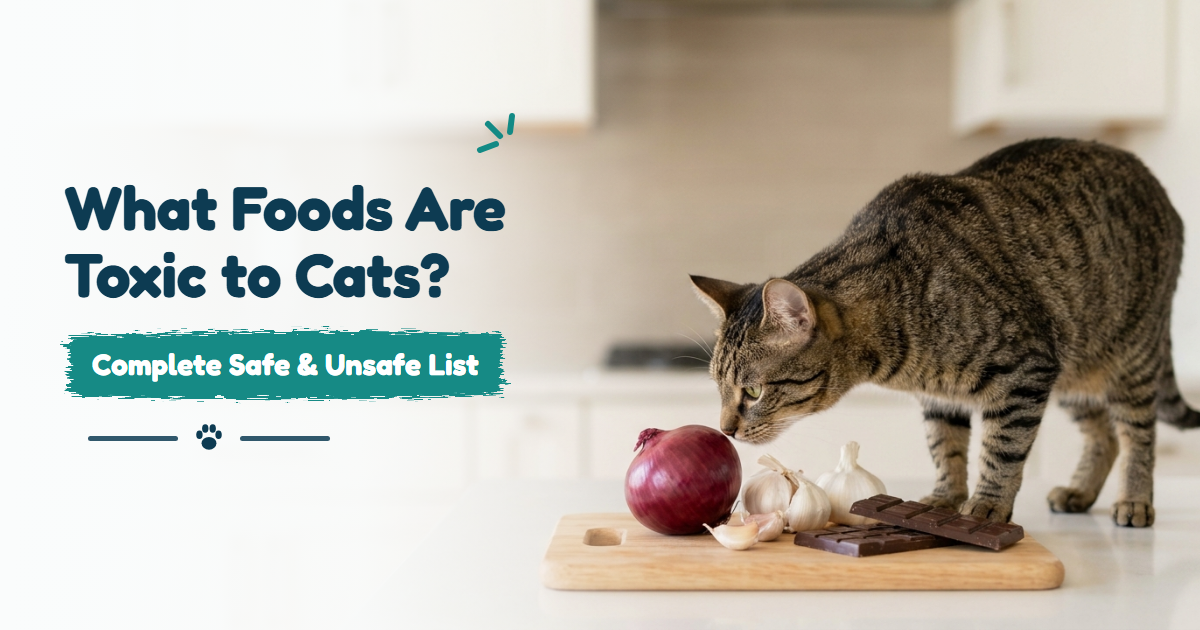
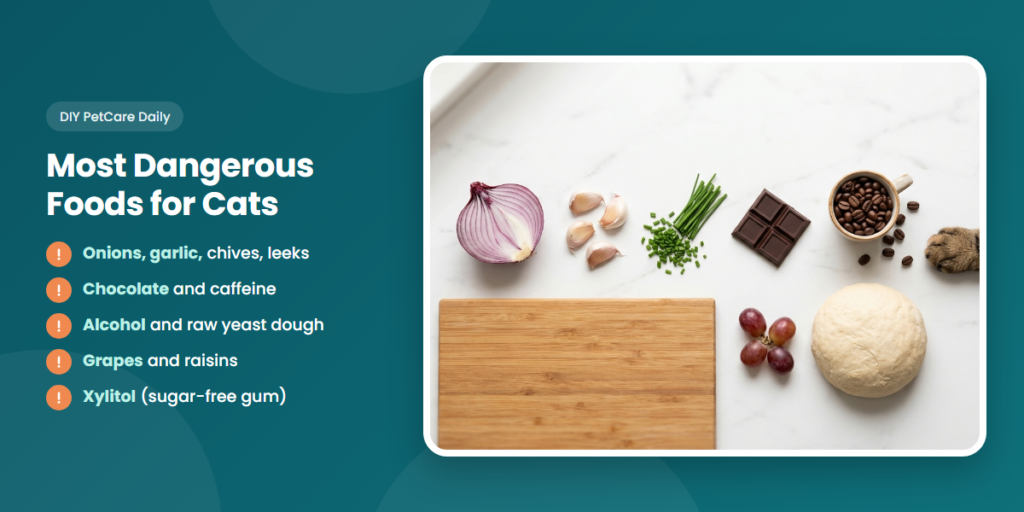
Quick answer: The most dangerous foods toxic to cats are onions, garlic, chives, and leeks (in any form), chocolate, caffeine, alcohol, raw yeast dough, grapes and raisins, and xylitol. Raw fish, raw eggs, raw meat, fat trimmings, cooked bones, and large amounts of milk can also make cats sick. Safe human foods in small amounts include plain cooked chicken, turkey, salmon, scrambled egg, and plain pumpkin. If your cat eats something toxic, call your vet or a pet poison hotline right away.
Cats are curious, and many will happily jump on the counter to check out your dinner. While they tend to be pickier than dogs, cats can still get into foods that make them seriously ill. Because cats are small, even a little bit of the wrong thing can be a big problem.
So, what foods are toxic to cats? This guide gives you a complete list of foods toxic to cats, explains why each one is a problem, and shows you which human foods are safe to share. You’ll also learn the warning signs of poisoning and exactly what to do in an emergency.
Table of Contents
- Why Some Human Foods Are Dangerous for Cats
- What Foods Are Toxic to Cats? Quick Reference Chart
- The Most Dangerous Foods for Cats
- Foods That Cause Problems Over Time
- Non-Food Dangers Found in the Kitchen and Home
- Safe Human Foods Cats Can Eat
- Signs Your Cat May Have Eaten Something Toxic
- What to Do If Your Cat Eats Something Toxic
- How to Keep Your Cat Safe in the Kitchen
- Frequently Asked Questions
Why Some Human Foods Are Dangerous for Cats
Cats process food very differently than people. Their livers are missing some of the enzymes that break down certain compounds, so chemicals that are harmless to us can build up in their bodies. Cats are also true carnivores, so their digestive systems aren’t built for many plant foods, rich sauces, or sugary snacks.
Size plays a part too. An average house cat weighs about 10 pounds, so a small bite for you can be a big dose for them.
What Foods Are Toxic to Cats? Quick Reference Chart
| Food | Why It’s Harmful | Common Signs |
| Onions, garlic, chives, leeks, shallots | Damage red blood cells and cause anemia | Weakness, pale gums, fast breathing, red or brown urine |
| Chocolate | Theobromine and caffeine affect the heart and nervous system | Vomiting, restlessness, fast heartbeat, tremors, seizures |
| Coffee, tea, energy drinks | Caffeine overstimulates the heart and brain | Restlessness, fast breathing, tremors |
| Alcohol | Very small amounts can poison a cat | Vomiting, wobbliness, slow breathing, coma |
| Raw yeast dough | Expands in the stomach and makes alcohol | Bloated belly, vomiting, wobbliness |
| Grapes and raisins | Linked to kidney damage | Vomiting, lethargy, peeing less |
| Xylitol (sugar-free products) | May affect blood sugar and liver; not safe for pets | Vomiting, weakness, seizures |
| Raw fish | Breaks down thiamine (vitamin B1); can carry bacteria | Over time: loss of balance, seizures |
| Raw eggs | Salmonella and E. coli risk; affects biotin use | Vomiting, diarrhea, dull coat over time |
| Raw or undercooked meat | Bacteria like Salmonella and E. coli | Vomiting, diarrhea, fever |
| Cooked bones | Splinter and can block or cut the gut | Choking, gagging, vomiting, constipation |
| Fat trimmings and greasy food | Can trigger pancreatitis | Vomiting, belly pain, not eating |
| Milk, cream, ice cream | Most adult cats are lactose intolerant | Diarrhea, gas, vomiting |
| Salty snacks | Too much sodium | Thirst, vomiting, tremors |
| Dog food (long term) | Missing taurine and nutrients cats need | Over time: heart and eye problems |
| Too much liver | Too much vitamin A | Over time: bone and joint problems |
| Macadamia nuts and other nuts | High fat, possible toxins | Vomiting, weakness |
The Most Dangerous Foods for Cats
Onions, Garlic, Chives, and Leeks
These are some of the most common causes of food poisoning in cats. They belong to the allium family and damage red blood cells, which can lead to a serious type of anemia. Cats are even more sensitive to this than dogs.
It doesn’t matter if they’re raw, cooked, dried, or powdered. In fact, onion and garlic powder are more concentrated, so a small amount can be harmful. Watch out for hidden sources like:
- Soups, broths, and gravies
- Baby food (often made with onion powder)
- Pizza, pasta sauce, and seasoned meats
- Stuffing and casseroles
Signs can take a few days to show up, so call your vet even if your cat seems fine right after eating them.
Chocolate
Chocolate contains theobromine and caffeine, which cats can’t break down well. Dark chocolate and baking chocolate are the most dangerous. Most cats aren’t drawn to sweets, because they can’t taste sweetness, but some will lick chocolate frosting, pudding, or hot cocoa.
Caffeine
Coffee grounds, tea bags, energy drinks, soda, and caffeine pills can all poison cats. Never leave used coffee grounds or tea bags where a cat can play with them.
Alcohol
Even a few laps of beer, wine, or a mixed drink can be dangerous for a cat. Alcohol also hides in foods like rum cake, some sauces, and raw dough (see below). Keep drinks out of reach at parties.
Raw Yeast Dough
Uncooked bread or pizza dough keeps rising in a warm stomach, which can cause painful bloating. The yeast also makes alcohol as it ferments, which can lead to alcohol poisoning.
Grapes and Raisins
Grapes and raisins are well known for causing kidney failure in dogs. There are fewer reports in cats, but the ASPCA and many vets advise keeping them away from cats too, since no safe amount is known.
Xylitol
Xylitol is a sugar substitute found in sugar-free gum, candy, baked goods, some peanut butters, and toothpaste. It’s extremely toxic to dogs. Research suggests cats may be less sensitive, but it isn’t considered safe for them, so keep these products away from all pets.
Foods That Cause Problems Over Time
Raw Fish
Raw fish contains an enzyme that breaks down thiamine, a B vitamin cats need. A diet with a lot of raw fish can lead to thiamine deficiency, which causes nerve problems like loss of balance, head tilting, and seizures. Cooked fish is fine as an occasional treat.
Canned Tuna for People
A small bite of plain tuna packed in water is fine now and then. But cats can get hooked on it, and an all-tuna diet lacks important nutrients and can be high in mercury. Tuna packed in oil or with added salt isn’t a good choice either.
Milk and Dairy
Many people picture a cat with a saucer of milk, but most adult cats are lactose intolerant. Milk often leads to diarrhea, gas, and an upset stomach. It isn’t poisonous, but it isn’t good for them. If you want to give a milk treat, choose a lactose-free cat milk from the pet store.
Dog Food
A bite of dog food won’t hurt your cat, but it shouldn’t be part of their regular diet. Dog food doesn’t have enough taurine, arachidonic acid, or vitamin A for cats. A long-term lack of taurine can cause heart disease and blindness.
Liver
A little cooked liver is fine, but too much can lead to vitamin A toxicity over time, which affects the bones and joints.
Non-Food Dangers Found in the Kitchen and Home
These aren’t foods, but cats often find them in the kitchen or near food, and they’re very dangerous:
- Lilies. True lilies (Easter, Tiger, Stargazer, and Daylilies) are extremely toxic to cats. Even licking pollen off their fur or drinking vase water can cause kidney failure. Keep lilies out of any home with cats.
- Essential oils. Tea tree, eucalyptus, peppermint, citrus, and many others can harm cats, especially in diffusers or applied to the skin.
- Human medicines. Acetaminophen (Tylenol) and ibuprofen are very toxic to cats, even in small doses.
- String, ribbon, and twist ties. Often found on meat or baked goods and can cause a serious gut blockage if swallowed.
Safe Human Foods Cats Can Eat
Many plain, cooked foods are safe for cats as an occasional treat. Serve them plain, without salt, butter, oil, onion, garlic, or seasoning.
| Safe Food | How to Serve |
| Chicken | Cooked, skinless, boneless, plain |
| Turkey | Cooked, skinless, boneless, plain (no deli meat) |
| Salmon and other fish | Cooked, boneless, plain |
| Lean beef | Cooked, plain, fat trimmed |
| Eggs | Fully cooked, scrambled or hard-boiled, plain |
| Pumpkin | Plain canned pumpkin or cooked, not pie filling |
| Carrots | Cooked soft, in tiny pieces |
| Peas | Cooked, plain |
| Green beans | Cooked, plain, chopped |
| Cantaloupe | Small pieces, no rind |
| Blueberries | One or two, cut in half |
| Plain cooked rice or oatmeal | Small amount, unseasoned |
Plain pumpkin is high in fiber and can help with hairballs and constipation. Our guide on how to prevent hairballs in cats explains how to use it.
Keep Treats Small
Treats, including human food, should be no more than 10 percent of your cat’s daily calories. For an average indoor cat, that’s only about 20 to 25 calories a day, or roughly a thumbnail-size piece of cooked chicken. Our guide on how much should I feed my cat shows how treats fit into your cat’s daily total.
Signs Your Cat May Have Eaten Something Toxic
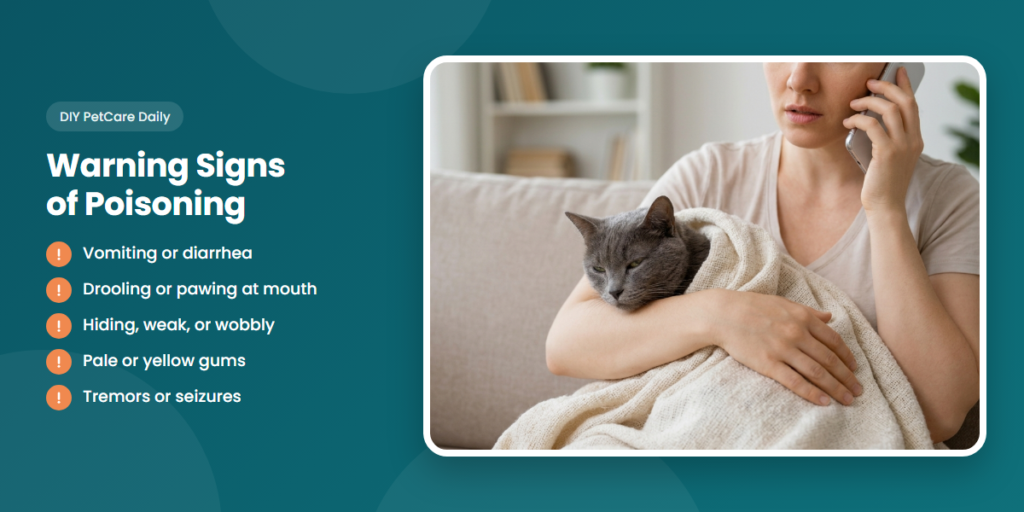
Call your vet right away if you notice any of these, especially after your cat got into food:
- Vomiting or diarrhea
- Drooling or pawing at the mouth
- Not eating
- Hiding or being very quiet
- Weakness, wobbliness, or trouble walking
- Pale or yellow gums
- Fast or hard breathing
- Tremors or seizures
- Peeing a lot more or a lot less than usual
Cats are experts at hiding illness. Our guide to the signs of a sick cat covers more of the subtle clues to watch for.
What to Do If Your Cat Eats Something Toxic
- Take away any remaining food and move your cat to a safe spot.
- Find out what they ate, how much, and when. Keep the package or label if you can.
- Call your vet or nearest emergency vet right away. You can also call the ASPCA Animal Poison Control Center at (888) 426-4435 or the Pet Poison Helpline at (855) 764-7661. A consultation fee may apply.
- Don’t try to make your cat vomit at home. Hydrogen peroxide is not safe for cats and can damage their stomach and throat. Only a vet should do this.
- Don’t wait for signs. Many poisonings, like onion, garlic, and lilies, look fine at first and cause damage later.
How to Keep Your Cat Safe in the Kitchen
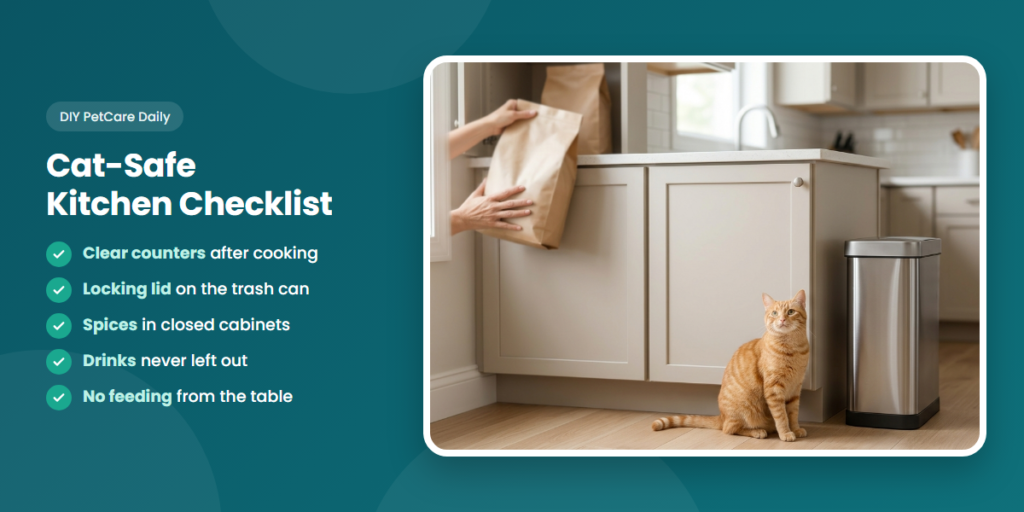
- Keep counters clear and put food away right after cooking
- Use a trash can with a locking lid
- Store onion, garlic, and spice powders in closed cabinets
- Don’t leave drinks, coffee, or tea unattended
- Tell guests and kids not to feed your cat from the table
- Be extra careful during holidays like Thanksgiving and Christmas, when rich foods, bones, and lilies are common. Our guide to keeping your cat safe around the Christmas tree covers tinsel, tree water, and poinsettias.
For more guides on safe and healthy feeding, visit our Cat Food & Nutrition section, or read our comparison of wet vs dry cat food.
Frequently Asked Questions
What foods are toxic to cats?
The most toxic foods for cats are onions, garlic, chives, leeks, chocolate, caffeine, alcohol, raw yeast dough, grapes, raisins, and xylitol. Raw fish, raw eggs, raw meat, cooked bones, fat trimmings, and milk can also cause problems.
Can cats eat tuna?
A small bite of plain tuna packed in water is OK once in a while. But tuna for people shouldn’t be a regular part of a cat’s diet, since it’s missing key nutrients and can be high in mercury.
Is cheese safe for cats?
Most adult cats are lactose intolerant, so cheese and other dairy can cause diarrhea or stomach upset. A tiny piece of hard cheese may be fine for some cats, but it’s best to skip it.
What should I do if my cat ate onion or garlic?
Call your vet or a pet poison hotline right away, even if your cat seems fine. Damage to red blood cells can take a few days to show, and early treatment works best.
What human foods are safe for cats?
Plain cooked chicken, turkey, salmon, lean beef, and eggs are safe in small amounts. Small portions of plain pumpkin, cooked carrots, peas, green beans, and cantaloupe are also safe. Always serve them plain, with no seasoning.