Table of Contents
- Table of Contents
- Why Cats Love Christmas Trees
- Are Christmas Trees Toxic to Cats?
- How to Cat Proof a Christmas Tree, Step by Step
- Most Dangerous Christmas Decorations for Cats
- Christmas Plants That Are Toxic to Cats
- How to Keep Cats Out of a Christmas Tree
- Signs Your Cat Ate Something From the Tree
- Christmas Tree Safety for Cats: Quick Checklist
- Frequently Asked Questions
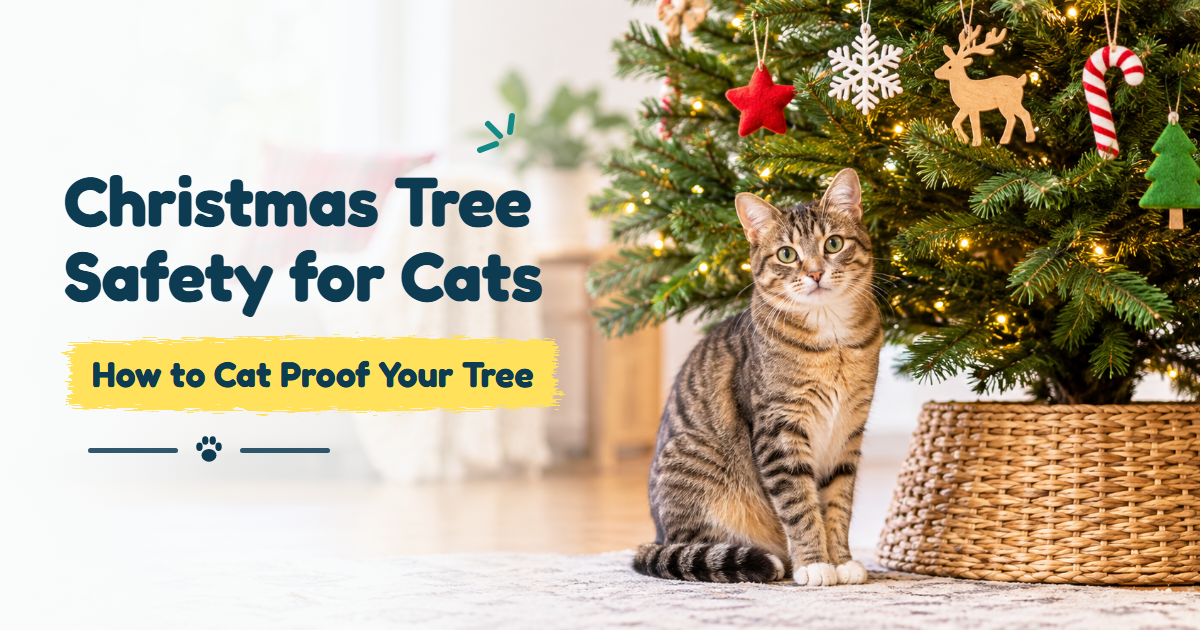
Quick answer: Christmas tree safety for cats comes down to three things: a tree that can’t tip over, decorations that can’t be swallowed or broken, and no access to tree water or toxic plants. Anchor the tree to the wall, skip tinsel and glass ornaments on lower branches, cover the water base, hide light cords, and keep lilies away completely. Real fir, pine, and spruce trees are only mildly toxic to cats.
To a cat, a Christmas tree is a brand-new indoor climbing tower that showed up overnight, covered in shiny toys that swing when you bat them. Of course they want in.
Some cats ignore the tree after a day or two. Others treat it like a jungle gym for the whole season. Either way, a few smart setup choices can keep your cat safe and your tree standing. This guide covers how to cat proof a Christmas tree, which decorations cause the most vet visits, whether real trees are toxic to cats, and how to keep cats out of the tree without making them miserable.
Table of Contents
- Why Cats Love Christmas Trees
- Are Christmas Trees Toxic to Cats?
- How to Cat Proof a Christmas Tree, Step by Step
- Most Dangerous Christmas Decorations for Cats
- Christmas Plants That Are Toxic to Cats
- How to Keep Cats Out of a Christmas Tree
- Signs Your Cat Ate Something From the Tree
- Christmas Tree Safety for Cats: Quick Checklist
- Frequently Asked Questions
Why Cats Love Christmas Trees
It helps to understand what your cat is getting out of it:
- Height. Cats feel safe up high, where they can watch the room.
- Climbing. A tree is like a giant scratching post with branches.
- Movement. Dangling ornaments and ribbons look a lot like prey.
- New smells. A real tree brings outdoor scents inside.
- Novelty. Anything new in a cat’s territory gets inspected.
Knowing this, the goal isn’t just to say “no.” It’s to make the tree boring and give your cat better places to climb and play.
Are Christmas Trees Toxic to Cats?
The popular real Christmas trees, like fir, pine, and spruce, are considered mildly toxic to cats. The oils in the needles can irritate the mouth and stomach. A cat who chews on a tree may drool, vomit, or have an upset stomach. Serious poisoning is rare.
The needles themselves are a bigger concern than the oils. They’re sharp and don’t digest well. If a cat swallows several, they can cause irritation and, in rare cases, a blockage in the intestines.
What About the Tree Water?
The water in the tree stand can be a problem. It may contain preservatives, fertilizer, or pesticide residue from the tree farm, and it grows bacteria as it sits. A cat drinking from it can get vomiting or diarrhea. Don’t add aspirin, sugar, or “tree food” to the water if you have pets. Cover the stand so your cat can’t reach it.
Are Artificial Trees Safer?
Artificial trees don’t have sap or needle oils, but they aren’t risk-free. Cats sometimes chew the plastic needles, and swallowed pieces can upset the stomach. Older artificial trees may shed. Still, many cat owners find a sturdy artificial tree easier to manage.
How to Cat Proof a Christmas Tree, Step by Step
Here’s the setup that works for most homes.
1. Pick the Right Tree and Spot
- Choose a smaller tree if you have a young, climbing-crazy cat. A tabletop tree in a room you can close off is the safest option for kittens.
- Pick a tree with a wide, heavy base. Metal stands are sturdier than plastic.
- Place it away from furniture your cat can use as a launch pad, like the back of a couch, shelves, or a cat tree.
- A corner spot helps, since there are fewer sides to climb.
2. Anchor It
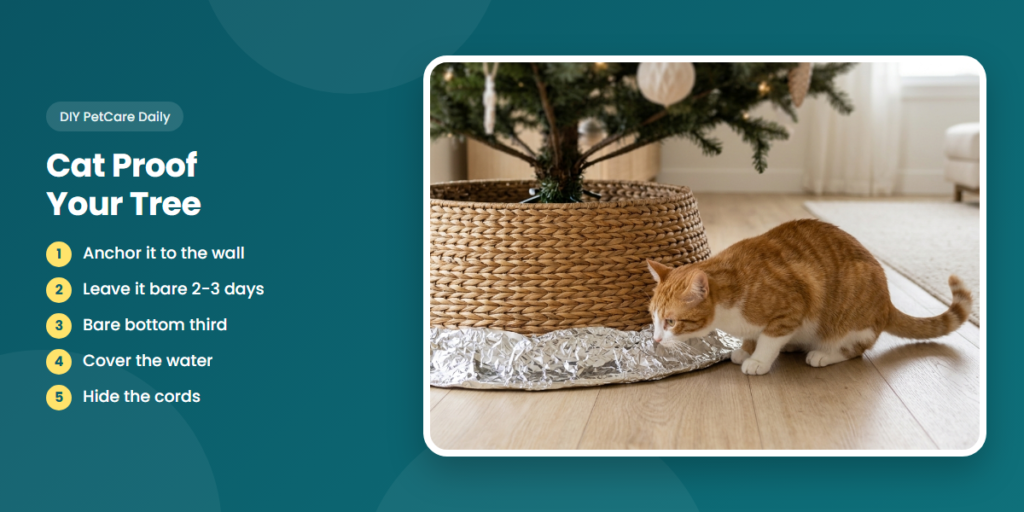
This is the single most important step. Secure the top third of the tree to the wall or ceiling with clear fishing line and a small hook or screw eye. If your cat climbs, the tree may sway, but it won’t fall on them or on your floor.
3. Let the Bare Tree Sit for a Few Days
Set the tree up with no decorations for two or three days. Let your cat explore it and lose interest. A tree that’s just a tree is a lot less exciting than one covered in sparkly toys.
4. Cover the Base and Water
- Use a tree skirt or a tree collar box that covers the stand.
- Tuck aluminum foil around the base. Many cats dislike how it feels and sounds under their paws.
- A plastic carpet runner turned nub-side up around the tree can also discourage close visits.
5. Decorate Smart
- Put nothing breakable or dangling on the bottom third of the tree.
- Use shatterproof ornaments made of plastic, felt, wood, or fabric.
- Attach ornaments with twist ties or ribbon tied snugly, not open metal hooks. Hooks can get swallowed or snag a paw.
- Skip tinsel, angel hair, and loose ribbon completely. More on why below.
- Avoid edible ornaments, like popcorn or cranberry garlands and salt dough ornaments.
6. Hide and Protect Cords
- Run light cords up the back of the tree and tape them flat along the floor.
- Use cord covers or split tubing on any wire your cat can reach.
- Unplug the lights when you’re not home or asleep.
- Check cords for bite marks every few days.
7. Give Your Cat Something Better
Set up a cat tree, a window perch, or a few DIY cat shelves nearby so your cat has an approved place to climb and look out. Add a few short play sessions each day with a wand toy. A tired, entertained cat has less interest in the tree. Our DIY cat toys guide has easy toys you can make in minutes.
Most Dangerous Christmas Decorations for Cats
| Decoration | Risk level | What can happen |
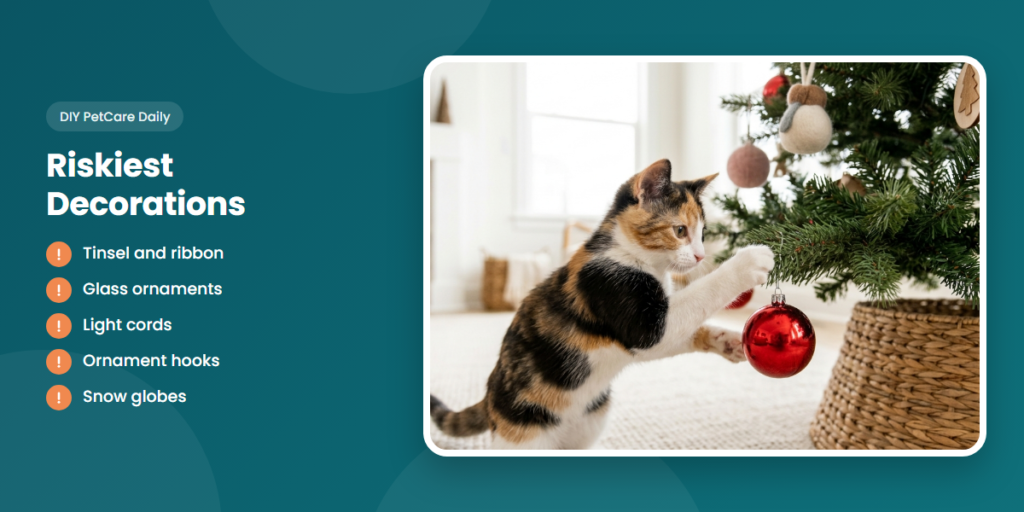
| Tinsel, ribbon, string, yarn | High | Swallowed strands can cause a “linear foreign body,” a serious intestinal emergency that often needs surgery |
| Glass ornaments | High | Cuts to paws and mouth, broken glass swallowed |
| Light cords | High | Electrical burns to the mouth, breathing problems, shock |
| Ornament hooks | Medium | Swallowed hooks, paw injuries |
| Tree water | Medium | Vomiting, diarrhea |
| Snow globes | Medium | Some contain antifreeze (ethylene glycol), which is deadly if a cat licks the liquid |
| Candles and potpourri | Medium | Burns, singed fur, liquid potpourri can burn the mouth |
| Edible garlands | Low to medium | Stomach upset, string swallowed with them |
| Fake snow (flocking) | Low | Mild stomach upset if eaten |
Why Tinsel Is the Worst
Cats have backward-facing barbs on their tongues, so once a strand of tinsel or ribbon is in their mouth, it’s hard for them to spit it out. When a long strand goes down, one end can get stuck while the intestines keep moving the rest, which can bunch up and damage the gut. Vets see this every holiday season.
If you see a string or ribbon hanging from your cat’s mouth or rear end, don’t pull it. Call your vet right away.
Christmas Plants That Are Toxic to Cats
The tree isn’t the only holiday hazard. Keep these plants out of your home or completely out of reach:
Lilies (Extremely Dangerous)
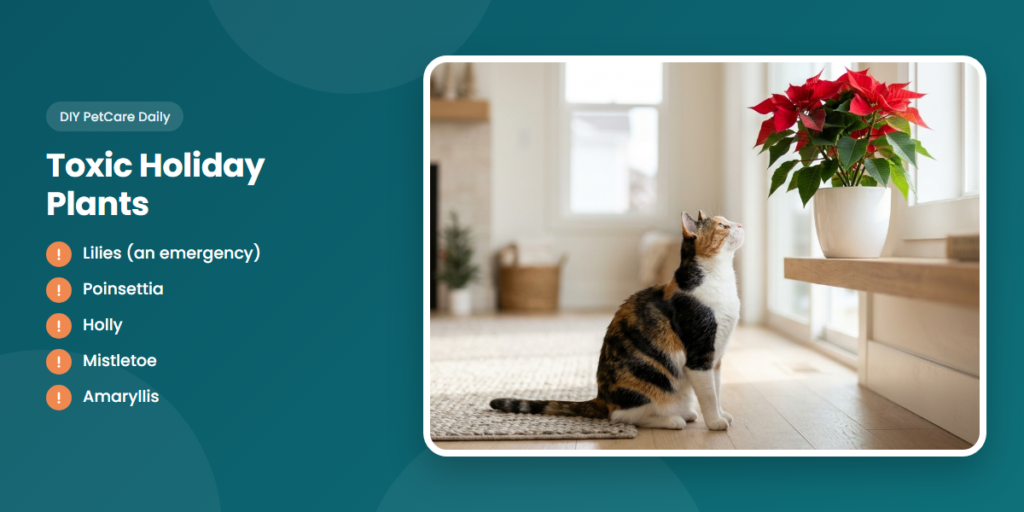
Lilies are often added to holiday flower arrangements and bouquets. True lilies (Lilium) and daylilies (Hemerocallis) can cause kidney failure in cats. Even licking pollen off their fur or drinking the vase water can be enough. If your cat touches a lily, treat it as an emergency.
Are Poinsettias Toxic to Cats?
Poinsettias are mildly toxic to cats. Their milky sap can irritate the mouth and stomach and cause drooling, licking, and sometimes vomiting. They have a scarier reputation than they deserve, and serious poisoning is unlikely. Still, it’s best to keep them up high or skip them.
Holly
Holly berries and leaves can cause vomiting, diarrhea, and drooling. The spiky leaves can also hurt the mouth.
Mistletoe
Mistletoe can cause stomach upset. Large amounts, especially of European mistletoe, can cause more serious problems, including a low heart rate and trouble walking. Hang it well out of reach, and watch for fallen berries.
Amaryllis
Popular as a holiday bulb gift, amaryllis can cause vomiting, diarrhea, drooling, and belly pain. The bulb is the most toxic part.
A safer pick for festive greenery? A pot of fresh cat grass. Our guide on how to grow cat grass shows how to have it ready in about 10 days.
How to Keep Cats Out of a Christmas Tree
If your cat keeps climbing even after the tree is set up well, try a few of these together:
- Citrus scent. Many cats dislike citrus. Place orange or lemon peels around the base of the tree. Don’t use citrus essential oils, which can be harmful to cats.
- Texture they hate. Foil, double-sided tape on a board, or a nubby plastic mat around the base.
- A pine cone barrier. A ring of pine cones around the stand makes it uncomfortable to walk up to.
- Redirect, don’t punish. When your cat heads for the tree, toss a toy the other way or call them to a perch and reward them. Spray bottles and yelling can make cats fearful of you, not the tree.
- Close the door. If all else fails, put the tree in a room your cat can’t enter when you’re not watching.
- Supervised time only. Some kittens just need a season or two to grow out of it.
If your cat gets stressed by all the holiday changes, watch their cat body language for signs they need a quiet space.
Signs Your Cat Ate Something From the Tree
Call your vet if your cat shows any of these during the holidays:
- Vomiting, especially more than once
- Drooling or pawing at the mouth
- Not eating or hiding
- Straining in the litter box or no poop
- A string, ribbon, or tinsel visible in the mouth or at the rear
- Burns on the lips or tongue, coughing, or trouble breathing (possible cord bite)
- Low energy or a painful belly
For possible poisonings, you can call the ASPCA Animal Poison Control Center at (888) 426-4435 or the Pet Poison Helpline at (855) 764-7661 (a fee may apply). Our guide to signs of a sick cat and our post on cat throwing up can help you decide how urgent things are.
Christmas Tree Safety for Cats: Quick Checklist
Print this or save it on your phone for setup day:
- Tree anchored to the wall or ceiling
- Heavy, wide stand with the water covered
- No furniture “launch pads” next to the tree
- Bare tree for 2 to 3 days before decorating
- Bottom third left bare
- Shatterproof ornaments, tied on with ribbon or twist ties
- No tinsel, angel hair, or loose ribbon
- Light cords hidden, covered, and unplugged at night
- No lilies anywhere in the house
- Poinsettias, holly, mistletoe, and amaryllis out of reach
- A cat tree or perch nearby, plus daily play
- Wrapping ribbon and gift string put away after gifts are opened
Frequently Asked Questions
Are Christmas trees toxic to cats?
Real fir, pine, and spruce trees are mildly toxic to cats. Chewing the needles can cause drooling, vomiting, or an upset stomach, and swallowed needles can irritate the gut. Tree water can also make cats sick, so keep it covered.
How do I cat proof my Christmas tree?
Anchor the tree to a wall or ceiling, use a heavy base, leave the bottom third bare, use shatterproof ornaments tied on with ribbon or twist ties, skip tinsel, cover the tree water, and hide light cords in covers. Give your cat other places to climb nearby.
How do I keep my cat out of the Christmas tree?
Make the tree area unappealing with foil, citrus peels, or a nubby mat around the base, and make other spots more appealing with a cat tree, perch, and daily play. Leave the tree bare for a few days at first so your cat gets bored with it.
Is an artificial tree better for cats?
It can be easier, since there’s no sap, falling needles, or tree water. But cats can still climb it, knock it over, or chew the plastic needles. You’ll still want to anchor it and decorate with cat safety in mind.
Are poinsettias toxic to cats?
Poinsettias are mildly toxic to cats. The sap can cause drooling, mouth irritation, and vomiting, but serious poisoning is unlikely. Lilies are far more dangerous to cats and should never be kept in a home with cats.