Table of Contents
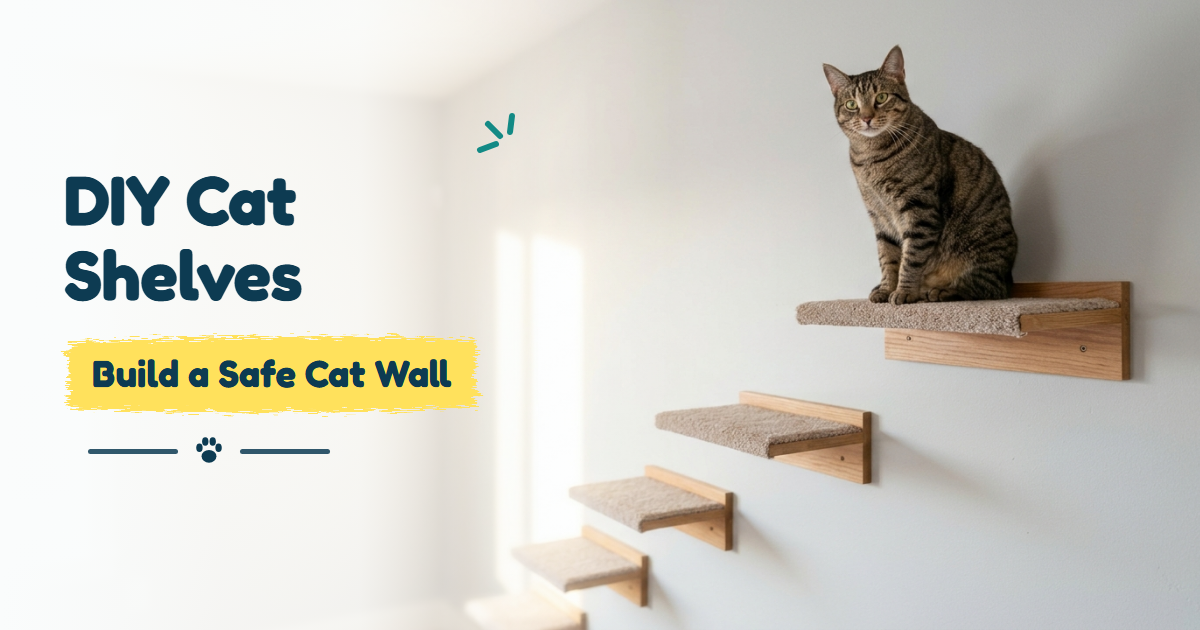
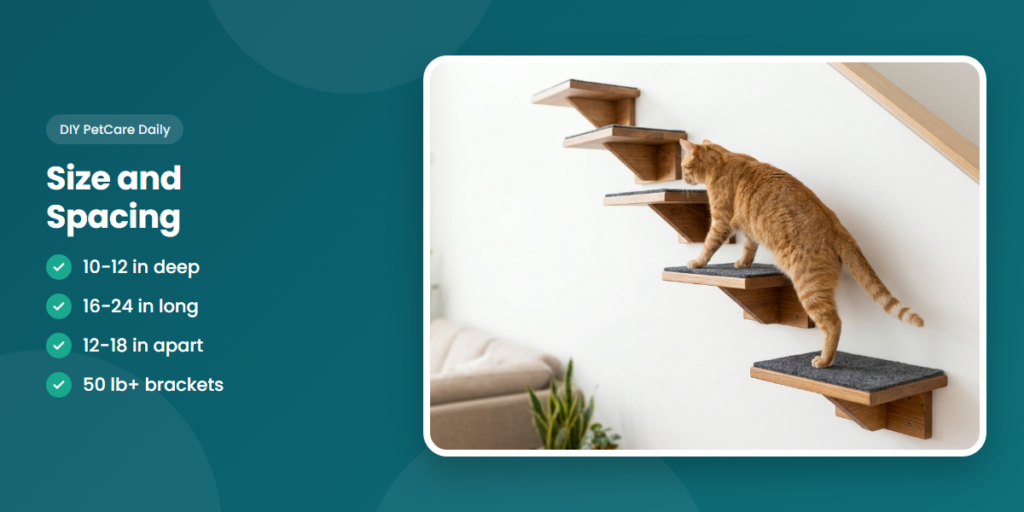
Quick answer: DIY cat shelves are wooden boards, about 10 to 12 inches deep and 16 to 24 inches long, mounted into wall studs with heavy-duty L-brackets. Space them 12 to 18 inches apart in a staircase pattern so your cat can hop up easily, and cover the tops with carpet or a non-slip mat. Never rely on drywall anchors alone, since cats push off hard when they jump.
Cats love to be up high. From a shelf near the ceiling, they can watch the whole room, nap in peace, and stay out of reach of the dog, the toddler, or the other cat. Experts call this vertical territory, and it’s one of the easiest ways to make an indoor cat happier.
Cat shelves don’t have to be expensive or complicated. With a few boards, brackets, and a stud finder, you can build a cat wall in an afternoon. This guide covers sizes, spacing, safe mounting, layout ideas, and a simple window perch.
Table of Contents
- Why Cats Love Vertical Space
- Cat Shelf Size and Spacing Guide
- Materials You’ll Need
- How to Build DIY Cat Shelves Step by Step
- DIY Cat Wall Layout Ideas
- How to Build a DIY Cat Window Perch
- Renter-Friendly Options
- Getting Your Cat to Use the Shelves
- Frequently Asked Questions
Why Cats Love Vertical Space
- Safety and control. High spots let cats see what’s coming. Many cats feel calmer when they can watch from above.
- Less tension in multi-cat homes. Extra levels give cats more room to share without bumping into each other. It’s the same idea as giving each cat their own litter box; our guide on how many litter boxes per cat explains why spreading out resources helps.
- Exercise. Jumping and climbing keep muscles strong and help burn calories.
- Enrichment. A new climbing route is exciting for a bored indoor cat.
- A dog-free zone. Shelves give cats an escape route when dogs or kids get too much.
You can often tell how your cat feels by where they choose to sit and how they hold their body. Our guide to cat body language helps you read those signals.
Cat Shelf Size and Spacing Guide
| Measurement | Recommended | Why |
| Shelf depth | 10 to 12 inches | Room for a cat to sit, turn, and lie down |
| Shelf length | 16 to 24 inches (longer for lounging) | Space to land safely |
| Board thickness | 3/4 inch solid wood or plywood | Strong enough not to bend |
| Vertical spacing | 12 to 18 inches | An easy hop for most cats |
| Horizontal gap | Up to 12 to 18 inches | Short jumps feel safe |
| Bracket rating | At least 50 lb per shelf | Cats push off with much more than their body weight |
For senior or heavy cats: Use deeper shelves, smaller gaps (10 to 12 inches), and add a ramp or steps. Our guide to senior cat care covers other ways to make your home easier for older cats.
Materials You’ll Need
- 1×10 or 1×12 boards, or 3/4-inch plywood, cut to length
- Heavy-duty L-brackets (two per shelf; three for shelves over 24 inches)
- Wood screws (1 1/4 inch for brackets to shelves)
- Wood screws or lag screws (2 1/2 to 3 inches for brackets to studs)
- Stud finder
- Level, tape measure, and pencil
- Drill and driver
- Sandpaper
- Carpet scraps, sisal fabric, or non-slip rubber shelf liner
- Staple gun or carpet adhesive
- Pet-safe paint or stain (optional)
How to Build DIY Cat Shelves Step by Step
Step 1: Plan Your Layout
Tape paper rectangles to the wall in the shape of each shelf. Step back and check the route. Can your cat reach the first shelf from the floor or a nearby piece of furniture? Is every jump short and easy? Is there a way down as well as up?
Step 2: Find the Studs
Run a stud finder along the wall and mark every stud with a pencil. In most US homes, studs sit 16 inches apart. Wherever you can, line up each bracket with a stud.
Step 3: Prep the Boards
Cut the boards to length. Sand all edges and corners until they’re smooth and rounded. If you’re painting or staining, do it now, and let it cure for several days so the smell and fumes are gone before your cat uses it.
Step 4: Add Grip
Cats need traction to land and take off. Wrap the top of each shelf in carpet, sisal fabric, or rubber liner. Pull it tight and staple it underneath, or glue it on with carpet adhesive. Bare wood or glossy paint is slippery.
Step 5: Attach the Brackets to the Shelves
Lay each shelf upside down. Screw two L-brackets to the underside, a few inches in from each end, so they’ll line up with your studs.
Step 6: Mount the Shelves
Hold each shelf against the wall, check it’s level, and drive long screws through the brackets into the studs. Start with the lowest shelf and work up.
If a bracket can’t reach a stud: Mount a long board (a cleat) across two studs first, then attach your shelves to the cleat. Drywall anchors alone usually aren’t strong enough for a jumping cat.
Step 7: Test Every Shelf
Push down hard on the front edge of each shelf. Lean on it with your hand. It shouldn’t move, bend, or creak. Only then let your cat try it.
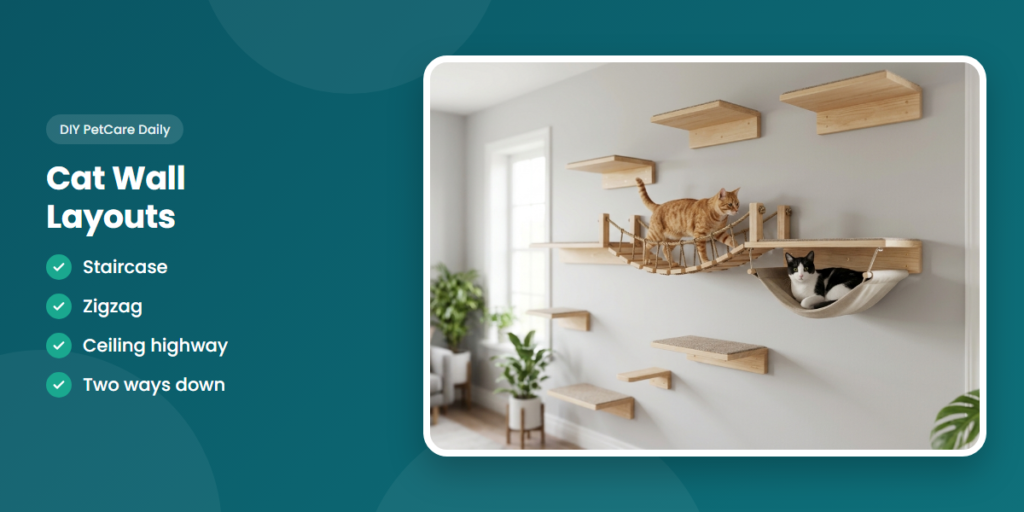
DIY Cat Wall Layout Ideas
A cat wall is just a set of shelves and other pieces arranged into a climbing route.
- Staircase: Shelves step up diagonally across the wall. Simple and easy for cats of all ages.
- Zigzag: Shelves alternate left and right as they climb. Takes up less width.
- Ceiling highway: A long run of shelves near the top of the wall, circling part of the room.
- Mixed wall: Combine shelves with a hanging bed, a wall scratcher, and a small bridge.
Tips for a Great Cat Wall
- Always add two ways down. Dead ends can trap a cat if another pet blocks the path. Every high point should have at least two exits.
- Add a lounge spot at the top. A wider shelf, a box, or a hammock gives your cat a reason to climb. Our guide to a DIY cat bed includes a hammock you can hang under a shelf.
- Include scratching. A vertical board wrapped in sisal makes a great first step. See our DIY cat scratcher guide for how to make one.
- Keep it away from hazards. Avoid placing shelves above stoves, fish tanks, or anything breakable.
- Leave headroom. Keep at least 12 inches between the top shelf and the ceiling so your cat can sit up.
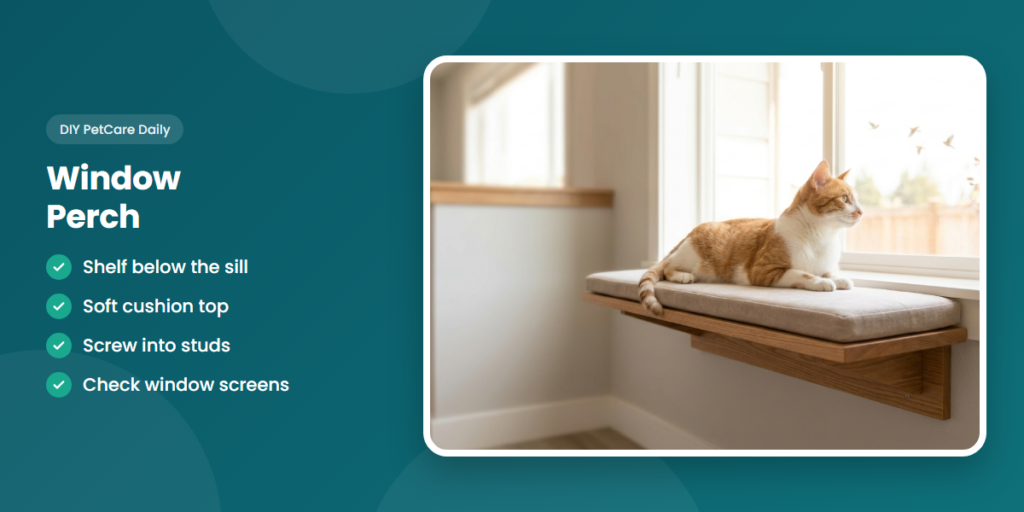
How to Build a DIY Cat Window Perch
Window perches are one of the most loved cat spots in any home. Cats can watch birds, squirrels, and passing cars for hours.
Option 1: Shelf-Style Window Perch
- Cut a 1×10 or 1×12 board to the width of your window, or about 24 inches.
- Cover the top with carpet or a soft cushion.
- Screw two L-brackets under the board.
- Mount the brackets into the wall studs just below the window sill, so the perch extends the sill.
Option 2: No-Drill Window Perch
If you rent, a perch that rests on the sill and is held by a support leg against the wall works without screws. Suction cup window hammocks also exist, but check the weight limit, clean the glass first, and press the cups firmly every few weeks. They can fall if a suction cup loses grip.
Window safety: Make sure window screens are secure. Cats can push through loose screens, and falls from open windows are a real risk in apartments.
Renter-Friendly Options
If you can’t drill into walls:
- Use a tall, sturdy bookcase as a climbing tower. Anchor it to the wall with a furniture strap (most leases allow these) so it can’t tip.
- Arrange furniture in a step pattern: an ottoman, a side table, a dresser.
- Buy or build a tall freestanding cat tree with a wide base.
- Use cube storage units stacked at different heights, anchored for safety.
Getting Your Cat to Use the Shelves
- Put treats on the lowest shelf first.
- Use a wand toy to lure your cat up, one level at a time.
- Place a favorite blanket or a little catnip on the top shelf.
- Feed a few meals on a low shelf.
- Be patient. Some cats leap up the first day. Others take a week to trust a new path.
For more ideas, browse our DIY Cat Projects section.
Frequently Asked Questions
How far apart should cat shelves be?
Space cat shelves about 12 to 18 inches apart, both up and across. Use smaller gaps, around 10 to 12 inches, for senior, heavy, or less active cats.
How deep should a cat shelf be?
About 10 to 12 inches deep, so your cat can sit, turn around, and land safely. Lounging shelves can be deeper, around 14 to 16 inches.
Can cat shelves hold a cat’s weight?
Yes, if they’re mounted into wall studs with heavy-duty brackets. Cats push off with much more force than their body weight when they jump, so use brackets rated for at least 50 pounds and avoid drywall anchors alone.
What do you put on cat shelves so they aren’t slippery?
Carpet scraps, sisal fabric, or rubber non-slip shelf liner all work. Wrap the material tightly over the top of the shelf and staple or glue it underneath.
Are cat walls good for cats?
Yes. Cat walls give indoor cats more space to climb, exercise, and rest, and they help reduce tension in homes with more than one cat or with dogs.