Table of Contents
Quick answer: The common rule is one litter box per cat, plus one extra. So one cat needs 2 boxes, 2 cats need 3 boxes, and 3 cats need 4 boxes. Each box should be about 1.5 times your cat’s length, from nose to the base of the tail. Place the boxes in quiet, easy-to-reach spots in different parts of your home, not all lined up in one room, and keep them away from food, water, and loud appliances.
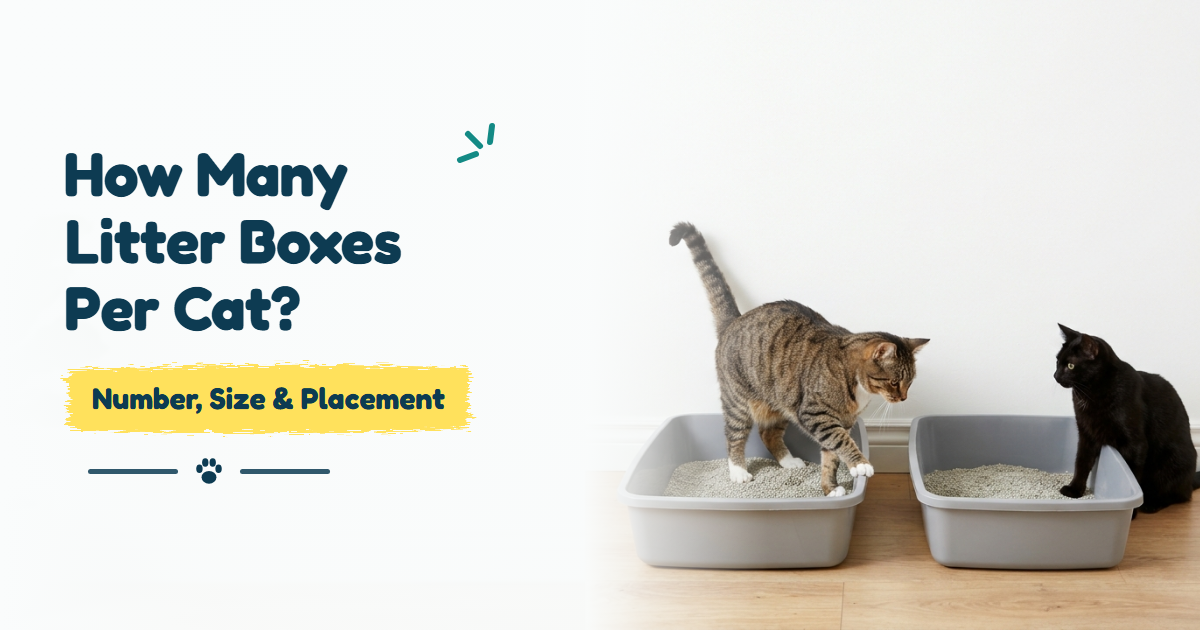
Most people buy one litter box when they bring a cat home and never think about it again. Then one day there’s a puddle on the rug, and they wonder what went wrong. Often, the answer is the litter box setup: not enough boxes, boxes that are too small, or boxes in the wrong place.
So, how many litter boxes per cat do you really need? This guide covers the simple rule vets and cat experts use, why it works, what size box to get, and where to put each one.
Table of Contents
- The Rule: One Box Per Cat, Plus One
- Why More Boxes Help
- What Size Litter Box Do You Need?
- Covered vs Open Litter Boxes
- Where to Put Litter Boxes
- Choosing the Right Litter
- How to Keep Litter Boxes Clean
- Signs Your Litter Box Setup Isn’t Working
- Frequently Asked Questions
The Rule: One Box Per Cat, Plus One
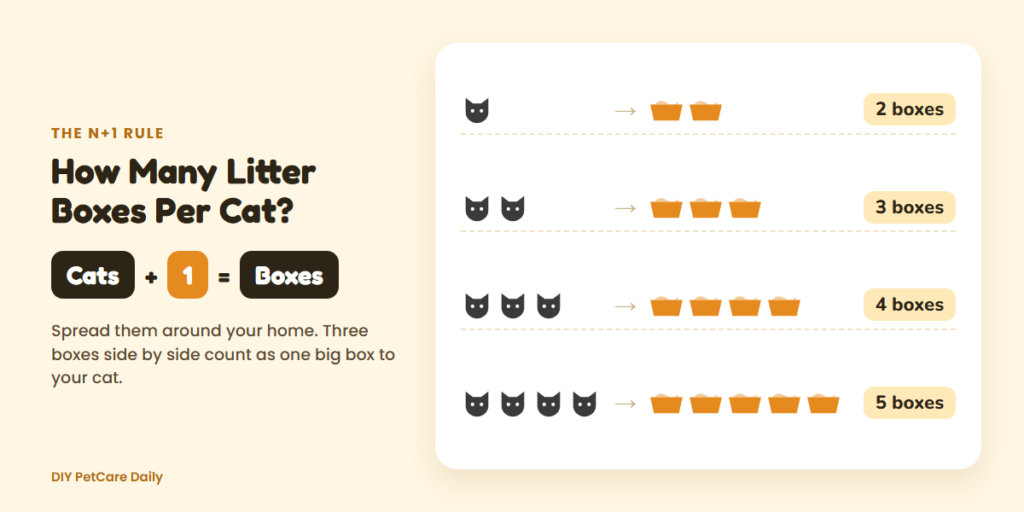
The easiest way to remember it is the “n+1 rule,” where n is the number of cats you have.
| Number of Cats | Recommended Litter Boxes |
| 1 cat | 2 boxes |
| 2 cats | 3 boxes |
| 3 cats | 4 boxes |
| 4 cats | 5 boxes |
This might seem like a lot, especially in a small home. But it’s one of the simplest ways to prevent accidents and keep peace between cats.
Does One Cat Really Need Two Boxes?
Many single cats do fine with one well-kept box. But a second box helps in a few cases:
- Your cat likes to pee in one box and poop in another. Some cats do.
- You live in a home with more than one floor. A box on each level means less walking, which matters for older cats.
- You’re sometimes late scooping. A second clean box gives your cat a backup.
- Your cat is a senior or has health issues. They may need to go more often, or more urgently.
If you only have room for one box and your cat is using it well, that’s okay. Just scoop often and watch for any changes.
Why More Boxes Help
Cats Like a Clean Spot
Cats have a much stronger sense of smell than we do. A box that’s been used several times can feel too dirty, and some cats will look for another place to go. More boxes spread out the use, so each one stays cleaner between scoops.
Fewer Fights in Multi-Cat Homes
In homes with two or more cats, one cat may block the path to a box or wait near it to pounce. This is often quiet and easy to miss. The cat being bullied may avoid the box altogether. Several boxes in different spots mean no cat can guard them all.
Fewer Accidents
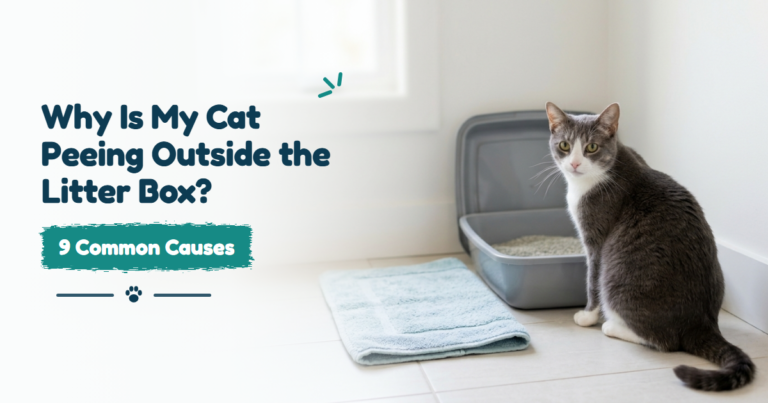
Not having enough boxes is one of the common reasons for a cat peeing outside the box. If your cat has already started having accidents, our guide on cat peeing outside litter box problems walks through all 9 common causes.
What Size Litter Box Do You Need?
Most litter boxes sold in pet stores are smaller than cats actually like. A good guide is:
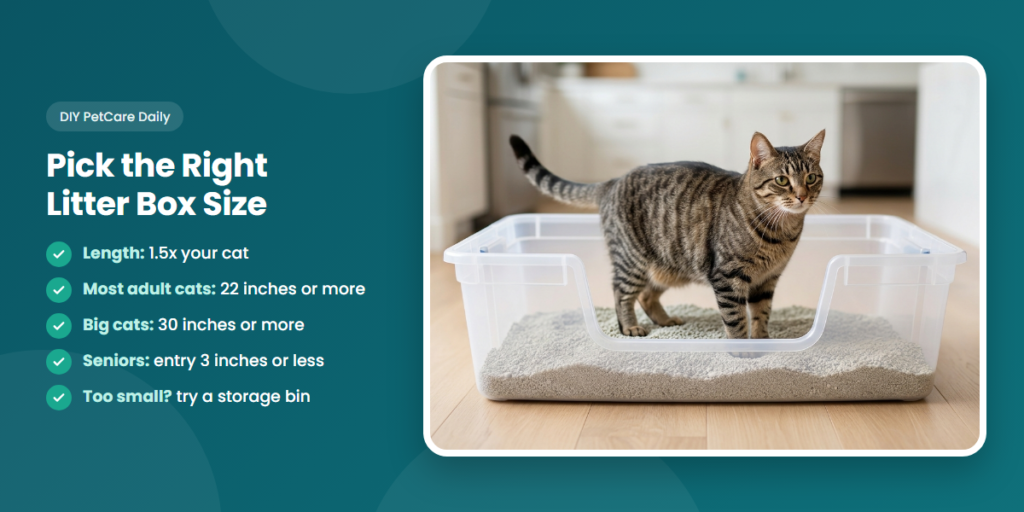
- Length: about 1.5 times your cat’s length, from the tip of the nose to the base of the tail.
- Width: wide enough for your cat to turn around easily.
- Side height: high enough to keep litter in, but low enough to step over easily.
For an average adult cat, that often means a box at least 22 inches long. Big cats, like Maine Coons, may need 30 inches or more.
The Storage Bin Trick
If you can’t find a big enough litter box, many cat owners use a large plastic storage bin. Cut a low, smooth entry on one side, and keep the other sides high to stop litter from flying out. It’s cheap and gives your cat plenty of room.
Boxes for Kittens and Seniors
- Kittens need a low entry so they can climb in easily. A shallow box or baking tray works for very young kittens.
- Senior cats or cats with arthritis need a box with a very low entry, ideally 3 inches or less. High sides can hurt their joints, and pain can make them avoid the box. Learn the quiet signs of pain in cats so you can spot trouble early.
Covered vs Open Litter Boxes
Covered boxes are popular because they hide the mess and keep in some smell. But many cats prefer open boxes. Here’s why:
- Smells stay trapped inside, which is unpleasant for a cat’s sensitive nose.
- A cat inside a covered box can’t see who’s coming, so they may feel trapped.
- Larger cats may not have enough room to turn around.
If your cat uses a covered box with no problems, there’s no need to change it. If you’re setting up a new box, or if your cat has started avoiding the box, try an open one. You can also offer both and let your cat decide.
Self-cleaning boxes are another option. Some cats love them, and some are scared of the noise and motion. If you try one, set it up next to the old box and only turn on the automatic part once your cat is using it.
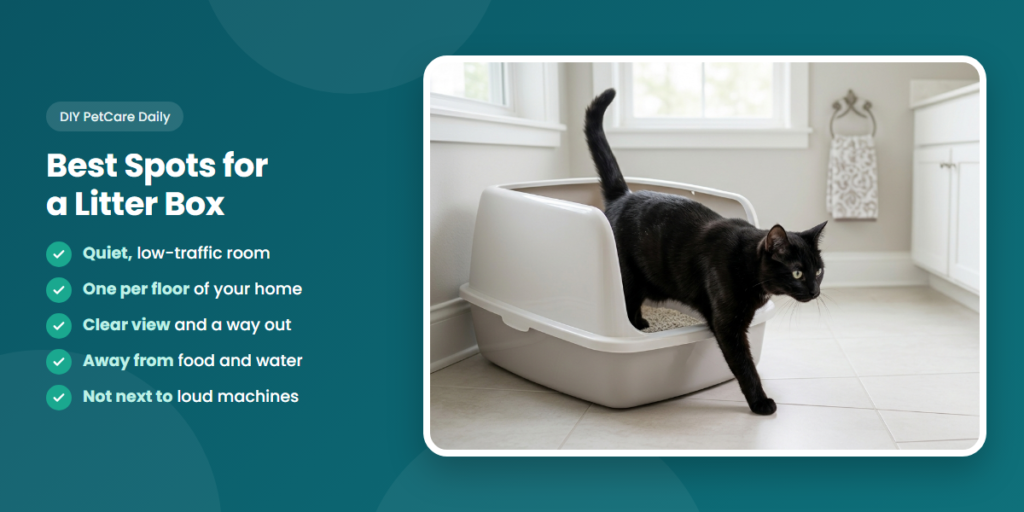
Where to Put Litter Boxes
Location matters as much as the number of boxes. Here’s what works best:
Do
- Pick quiet, low-traffic spots. A spare bathroom, a quiet corner of a bedroom, or a calm laundry area (when the machines aren’t running) can work.
- Spread boxes around the home. Put them in different rooms, and on each floor if you have more than one level.
- Give your cat a clear view and an escape route. Cats like to see who’s coming and have a way out. Avoid tight closets or corners where they could get trapped.
- Make boxes easy to reach. Older cats shouldn’t need to climb stairs to reach one.
Don’t
- Don’t put the box next to food or water. Cats don’t like to eat near where they go to the bathroom.
- Don’t put all the boxes in one room. To a cat, three boxes placed next to each other work like one big box, and one cat can still guard them all.
- Don’t put boxes next to loud appliances. A washing machine that suddenly starts spinning can scare a cat away from the box for good.
- Don’t move the box often. If you need to move it, do it slowly, a few feet at a time, or add a new box in the new spot before removing the old one.
Choosing the Right Litter
The type of litter makes a big difference too. Most cats like:
- Unscented litter. Strong scents can bother cats.
- Clumping litter with a fine, sand-like texture. It’s soft on paws and easy to scoop.
- About 2 inches deep. Some cats like a bit more, especially long-haired cats who like to dig.
If you want to try a new litter, put it in one of the extra boxes and see which one your cat uses more. That’s one more benefit of having more than one box.
How to Keep Litter Boxes Clean
Even the best setup won’t work if the boxes aren’t kept clean.
- Scoop at least once a day. Twice is better, especially in multi-cat homes.
- Top off litter as needed to keep the depth even.
- Empty and wash each box every 2 to 4 weeks with mild, unscented soap and warm water. Skip strong cleaners like bleach or ammonia, as the smell can drive cats away.
- Replace plastic boxes about once a year. Scratches in the plastic trap odor over time.
Scooping is also a free health check. Bigger or more clumps than usual can mean your cat is drinking and peeing more. Tiny clumps, blood, or no clumps at all can mean a bladder problem. Call your vet if you notice changes like these.
Signs Your Litter Box Setup Isn’t Working
Your cat will tell you if something is off. Watch for:
- Peeing or pooping just outside the box
- Perching on the edge of the box instead of stepping in
- Rushing out of the box quickly
- Not covering their waste
- Scratching the floor or walls around the box instead of the litter
- Peeing on soft things like rugs, beds, or laundry
If you see these signs, look at the number of boxes, the size, the location, and the litter. Also see your vet, since medical problems can cause the same behaviors.
For more guides like this, visit our Cat Nail & Litter Care section. And while you’re keeping up with routine care, don’t forget to trim cat nails every few weeks.
Frequently Asked Questions
How many litter boxes do I need for 2 cats?
Three. The n+1 rule means one box per cat plus one extra. Place them in different parts of your home so one cat can’t block the other from all of them.
Can two cats share one litter box?
Some cats will, but it often leads to problems. The box gets dirty faster, and one cat may guard it. More boxes lower the risk of accidents and tension.
Where is the best place to put a litter box?
A quiet, easy-to-reach spot with low foot traffic, away from food, water, and loud appliances. Your cat should be able to see who’s coming and have a clear way out.
How big should a litter box be?
About 1.5 times your cat’s length, from nose to the base of the tail. Most store-bought boxes are too small, so a large storage bin is a popular choice.
How often should you change cat litter completely?
Scoop daily, and fully empty and wash the box every 2 to 4 weeks for clumping litter. Non-clumping litter usually needs a full change about once a week.