Table of Contents
- Table of Contents
- Why Cats Hide Pain
- What Is the Feline Grimace Scale?
- Body Language Signs Your Cat Is in Pain
- Behavior Changes That Can Mean Pain
- Cat Hiding: When It Means Pain
- Common Causes of Pain in Cats
- What Can I Give My Cat for Pain?
- How to Make a Cat in Pain More Comfortable at Home
- When to Call the Vet
- Frequently Asked Questions
Quick answer: The feline grimace scale is a simple tool vets use to spot pain by looking at a cat’s face. It scores five things: ear position, squinting eyes, a tense muzzle, whiskers pulled straight, and a lowered head. Each one gets 0, 1, or 2 points, for a total out of 10. A score of 4 or more suggests your cat is likely in pain and needs to see a vet. Other signs of pain in cats include hiding, not jumping, less grooming, a hunched posture, and changes in eating or litter box habits.
Cats don’t cry out when they hurt the way people or even dogs often do. A cat with a sore back, an aching tooth, or arthritic hips may simply stop jumping onto the bed, or sit quietly in a corner. Many owners don’t realize their cat was in pain until the pain is treated and the cat starts acting young again.
The good news is that a cat’s face and body give clear clues once you know what to look for. This guide shows you how to tell if your cat is in pain, how to use the feline grimace scale at home, and what you can (and can’t) do to help.
Table of Contents
- Why Cats Hide Pain
- What Is the Feline Grimace Scale?
- Body Language Signs Your Cat Is in Pain
- Behavior Changes That Can Mean Pain
- Cat Hiding: When It Means Pain
- Common Causes of Pain in Cats
- What Can I Give My Cat for Pain?
- How to Make a Cat in Pain More Comfortable at Home
- When to Call the Vet
- Frequently Asked Questions
Why Cats Hide Pain
In nature, a cat that looks hurt is easier for predators to catch. So cats are wired to act normal for as long as they can. They may still eat, still purr, and still come for a head scratch while they’re quietly hurting.
That’s why pain in cats often shows up as small changes in face, posture, and daily habits, not loud crying. Long-term pain, like arthritis or dental disease, is the easiest to miss because it builds slowly, and cats simply adjust how they live.
What Is the Feline Grimace Scale?
The feline grimace scale is a pain scoring tool built by researchers at the University of Montreal and published in 2019. They studied the faces of cats in pain and cats not in pain and found five facial changes that reliably show pain. These are called “action units.”
Vets and vet nurses use the scale in clinics, especially after surgery. But it’s simple enough for owners to use at home as a guide. It works best on a cat who is awake and resting quietly, not while eating, grooming, or sleeping.
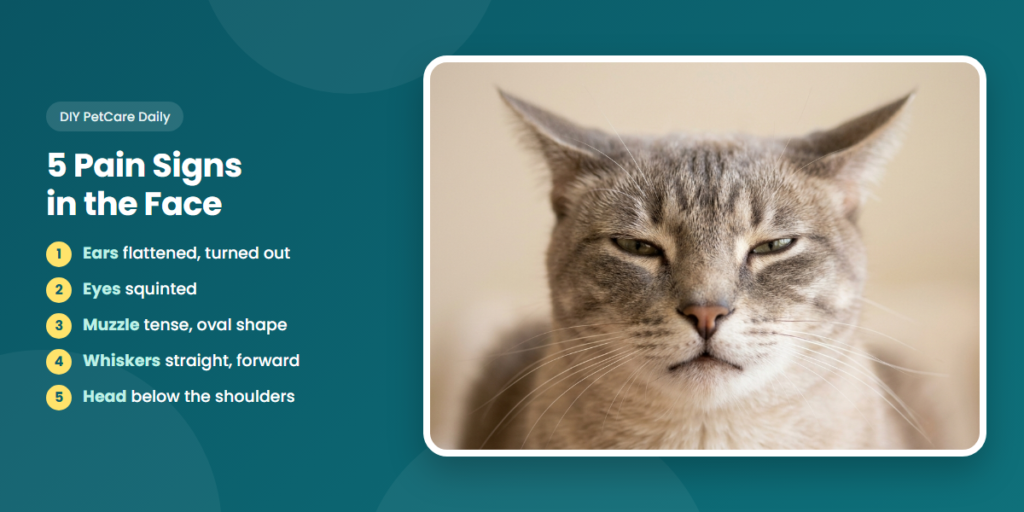
The 5 Action Units
| Action Unit | 0 = Not Present | 1 = Moderately Present | 2 = Clearly Present |
| Ear position | Ears face forward and are upright | Ears slightly pulled apart | Ears flattened and turned outward, like a “sideways” look |
| Orbital tightening (eyes) | Eyes open and relaxed | Eyes partly closed | Eyes squinted or tightly closed |
| Muzzle tension | Muzzle relaxed and round | Muzzle mildly tense | Muzzle tense and drawn into an oval shape |
| Whiskers change | Whiskers loose and curved down | Whiskers slightly curved or straight | Whiskers straight and pointing forward |
| Head position | Head above the shoulder line | Head in line with the shoulders | Head below the shoulder line or tilted down |
How to Score Your Cat at Home
- Watch your cat for about 30 seconds while they’re awake and resting, without touching them.
- Look at each of the five areas in the chart.
- Give each one a score of 0, 1, or 2.
- Add the scores together for a total out of 10.
If you can’t see one area clearly (for example, the cat’s head is turned away), skip it and score the others.
What Your Cat’s Score Means
| Total Score | What It Suggests | What to Do |
| 0 to 3 | Pain is unlikely right now | Keep watching for other signs |
| 4 to 10 | Your cat is likely in pain | Call your vet and describe what you see |
If your cat is recovering from surgery and scores 4 or more, call the clinic. Vets often use this cutoff to decide when to give more pain medicine.
A low score doesn’t rule out pain. Some cats with long-term pain, like arthritis, look calm in the face but move differently. That’s why you should also check the body and behavior signs below.
Body Language Signs Your Cat Is in Pain
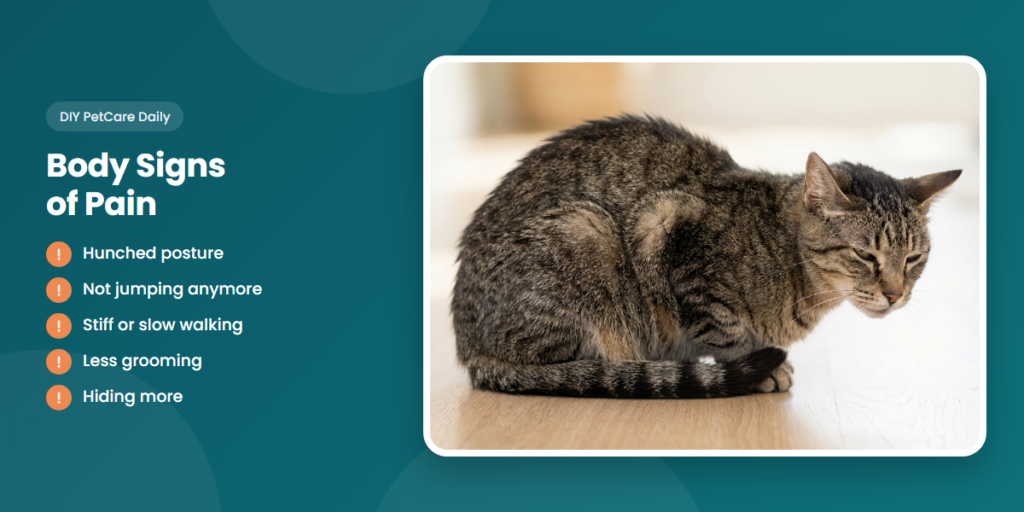
Beyond the face, a cat’s posture and the way they move can show discomfort.
- Hunched posture. Sitting tucked up tight with the back rounded and the head low, often with the tail wrapped close.
- Tucked-in belly or guarding. Reacting when you touch one spot, or lying in an odd position to protect it.
- Stiff or slow movement. Getting up slowly, walking stiffly, or limping.
- Not jumping. Using a chair as a step, or no longer jumping onto beds, counters, or cat trees.
- Trouble with stairs. Going up or down slowly, or avoiding stairs altogether.
- Tail flicking or twitching while resting, which can mean irritation or pain.
- Lying still in one spot for hours and not shifting position.
- Sitting with the head pressed low or facing a wall.
Behavior Changes That Can Mean Pain
Pain changes the way a cat lives day to day. Watch for:
- Less grooming, leading to a messy, greasy, or matted coat, often over the back and hips where arthritis makes stretching hard.
- Overgrooming one spot, sometimes until it’s bald. Cats often lick over a sore joint or area.
- Eating less, eating slowly, or chewing on one side, which can point to mouth pain. Check our guide on signs of dental disease in cats.
- Litter box problems. Climbing into a high-sided box can hurt, so some cats go right next to it. Our guide on cat peeing outside litter box explains this and other causes.
- Grumpiness or aggression when picked up or touched in a certain area.
- Less playing and less interest in people or other pets.
- Changes in sleep, like sleeping more, or being restless and unable to settle.
- Vocal changes, like growling, hissing, or unusual meowing when moving.
Don’t count on purring. Cats purr when they’re happy, but they also purr when they’re hurt, scared, or very sick. Purring may help them calm themselves. A purring cat can still be in pain.
Cat Hiding: When It Means Pain
Cat hiding is one of the most common signs owners notice first. Some cats are naturally shy, so the question is whether this is new behavior.
Hiding may point to pain when:
- Your cat is suddenly hiding and normally isn’t shy
- They hide for more than a day
- Hiding comes with eating less, sleeping more, or other signs
- They don’t come out for food, treats, or their favorite person
Hiding can also come from stress, like visitors, a new pet, or a move. If you can’t link it to a clear change at home, or it lasts more than a day, treat it as a health concern. Our guide on how to tell if your cat is sick covers other signs to check.
Common Causes of Pain in Cats
| Type of Pain | Common Causes | Signs You Might See |
| Joint pain | Arthritis, old injuries, hip dysplasia | Not jumping, stiff walking, less grooming, messy coat |
| Mouth pain | Dental disease, tooth resorption, gum disease | Eating slowly, dropping food, drooling, bad breath |
| Belly pain | Pancreatitis, constipation, blockage | Hunched posture, vomiting, not eating |
| Urinary pain | Bladder inflammation, stones, blockage | Straining, crying in the box, peeing outside it |
| Injury | Falls, fights, bite wounds, broken nails | Limping, swelling, licking one spot |
| Skin and ear pain | Abscesses, ear infections, allergies | Head shaking, scratching, overgrooming |
Arthritis is far more common than most owners think. Studies using X-rays show that most cats over 12 years old have some joint changes, but only a small share are ever treated for pain. If your senior cat “just slowed down,” arthritis may be part of the reason.
What Can I Give My Cat for Pain?
This is one of the most searched questions about cat pain, and the answer matters a lot: don’t give your cat any human pain medicine.
- Acetaminophen (Tylenol) is deadly to cats. Even a small piece of one tablet can damage their red blood cells and liver.
- Ibuprofen (Advil, Motrin) and naproxen (Aleve) can cause stomach ulcers and kidney failure in cats.
- Aspirin is dangerous at human doses. Cats process it very slowly, and it should only ever be used if your vet prescribes an exact dose.
- Essential oils and many herbal products can be toxic to cats, too.
Pain Treatments Your Vet May Use
Your vet will choose a safe option based on what’s causing the pain, your cat’s age, and their kidney health. Common options in the US include:
- Cat-safe anti-inflammatory drugs, such as robenacoxib or meloxicam, used carefully and often for short periods
- Gabapentin, often used for arthritis and nerve pain, and to calm cats before vet visits
- Buprenorphine, a strong pain medicine often used after surgery or injury
- Monthly arthritis injections made for cats, which target long-term joint pain
- Treating the cause, like dental cleaning and extractions, or treating a bladder problem
Never adjust a dose or mix medicines without asking your vet.
How to Make a Cat in Pain More Comfortable at Home
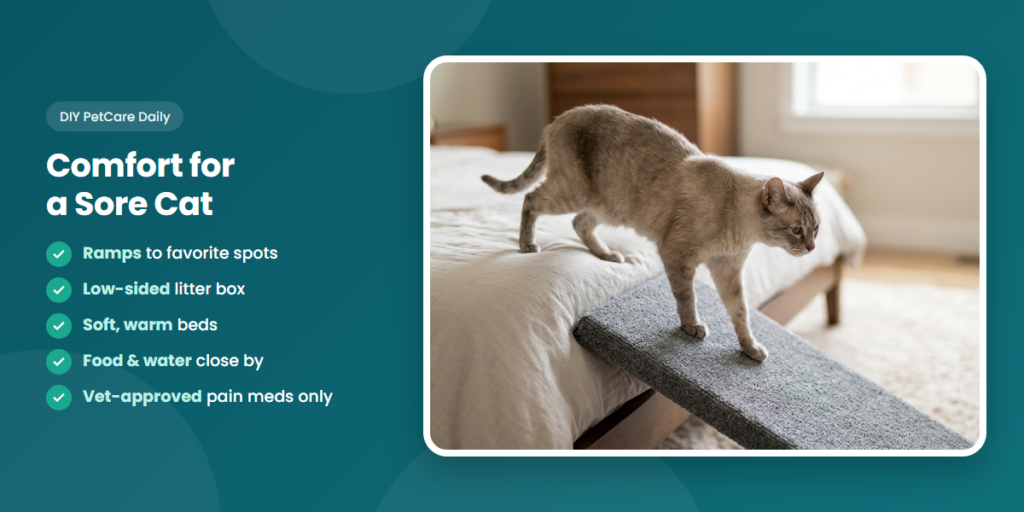
These steps work alongside your vet’s treatment, especially for cats with arthritis.
- Add steps or ramps to favorite spots like the bed, couch, and window perch.
- Use a low-sided litter box, or cut a lower entry into a storage bin. See how many litter boxes per cat for placement tips, and add one on each floor so your cat doesn’t need the stairs.
- Keep food and water within easy reach, ideally on the same floor where your cat sleeps.
- Offer soft, warm beds, like a padded bed in a sunny spot or a pet-safe heated pad.
- Help with grooming. Gentle brushing helps cats who can’t reach their back. If your cat is sensitive, try our tips on how to brush a cat that hates it.
- Trim overgrown nails. Less active cats wear their nails down less, and long nails can curl into the paw pads. Here’s how to trim cat nails without a fight.
- Keep them at a healthy weight. Extra pounds put more stress on sore joints.
- Play gently. Short, low-energy play with a wand toy keeps muscles working without strain.
When to Call the Vet
Go to the vet right away if your cat:
- Is straining in the litter box with little or no urine
- Suddenly can’t use their back legs or cries out in pain
- Is breathing fast or with an open mouth
- Was hit by a car, fell, or was in a fight
- Has a feline grimace scale score of 4 or more and seems to be getting worse
Book a visit soon if your cat:
- Has stopped jumping or seems stiff
- Is grooming less or overgrooming one spot
- Is eating slowly or chewing on one side
- Is hiding more or acting grumpy when touched
For more guides on keeping your cat healthy, visit our Cat Health & Wellness section.
Frequently Asked Questions
How can you tell if a cat is in pain?
Look at your cat’s face first: flattened ears, squinted eyes, a tense muzzle, straight whiskers, and a lowered head are all signs of pain. Then look for hiding, not jumping, a hunched posture, less grooming, eating less, and litter box changes. Any new change in behavior can be a clue.
What are the signs your cat is in pain?
The most common signs your cat is in pain are hiding, a hunched posture, squinting, not wanting to be touched, limping or stiff movement, less grooming or overgrooming one spot, eating less, and peeing outside the litter box. Some cats also growl, hiss, or purr more.
How do cats show pain?
Cats show pain mostly through quiet changes in their face, posture, and habits rather than crying. They tend to hide, move less, groom less, and avoid jumping. The feline grimace scale helps you read the facial signs.
What can I give my cat for pain at home?
Nothing from your medicine cabinet. Acetaminophen, ibuprofen, naproxen, and aspirin can all poison cats. Call your vet. They can prescribe a cat-safe pain medicine and help you make your home more comfortable with ramps, soft beds, and an easy-access litter box.
Do cats purr when they’re in pain?
Yes, they can. Cats purr when they’re relaxed, but also when they’re hurt, scared, or very sick. So a purring cat isn’t always a comfortable cat. Look at the face, posture, and behavior signs too.