Table of Contents
Quick answer: A cat peeing outside the litter box is usually telling you something is wrong. The most common causes are a medical problem (like a bladder infection, bladder inflammation, crystals, kidney disease, or diabetes), pain from arthritis, a dirty box, litter your cat doesn’t like, a box in a bad spot or the wrong size, too few boxes, and stress or marking. Always see your vet first to rule out a health problem. A male cat who strains and passes little or no urine needs emergency care right away.
Finding a puddle on the bath mat, your bed, or a pile of laundry is frustrating. It’s easy to think your cat is being spiteful. But cats do not pee outside the box to punish you. They do it because something about their body, their box, or their home isn’t working for them.
The good news is that most cases can be fixed once you find the cause. This guide covers the 9 most common reasons for a cat peeing outside the litter box, how to figure out which one fits your cat, and how to get things back on track.
Table of Contents
- Is It Peeing or Spraying?
- First: When It’s an Emergency
- 9 Common Causes of a Cat Peeing Outside the Litter Box
- How to Figure Out the Cause
- How to Clean Cat Urine the Right Way
- What Not to Do
- Frequently Asked Questions
Is It Peeing or Spraying?
Before you look at causes, figure out which one you’re seeing. They often have different reasons.
| Peeing | Spraying (Marking) |
| Cat squats | Cat stands with tail up and quivering |
| Puddle on a flat surface like a rug, bed, or floor | Small amount sprayed on a wall, door, or furniture |
| Often linked to medical issues or box problems | Often linked to stress, other cats, or territory |
Both spayed and neutered cats can spray, though it’s much more common in cats who aren’t fixed.
First: When It’s an Emergency
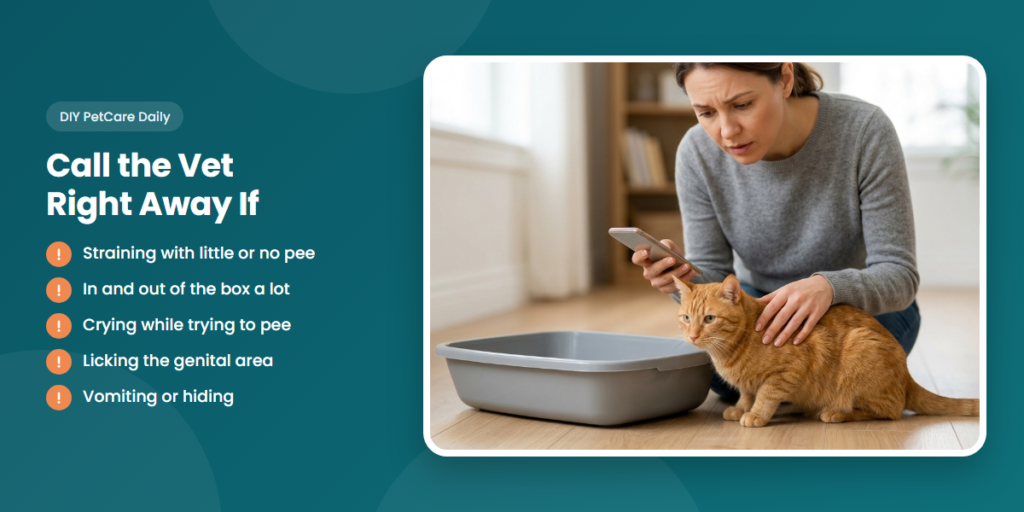
Call your vet or an emergency clinic right away if your cat, especially a male cat:
- Strains in the litter box and passes little or no urine
- Goes in and out of the box many times
- Cries while trying to pee
- Licks the genital area a lot
- Vomits, hides, or seems very weak
These can be signs of a urinary blockage. A blocked cat can’t empty their bladder, and it can become life-threatening within a day or two. Don’t wait to see if it gets better.
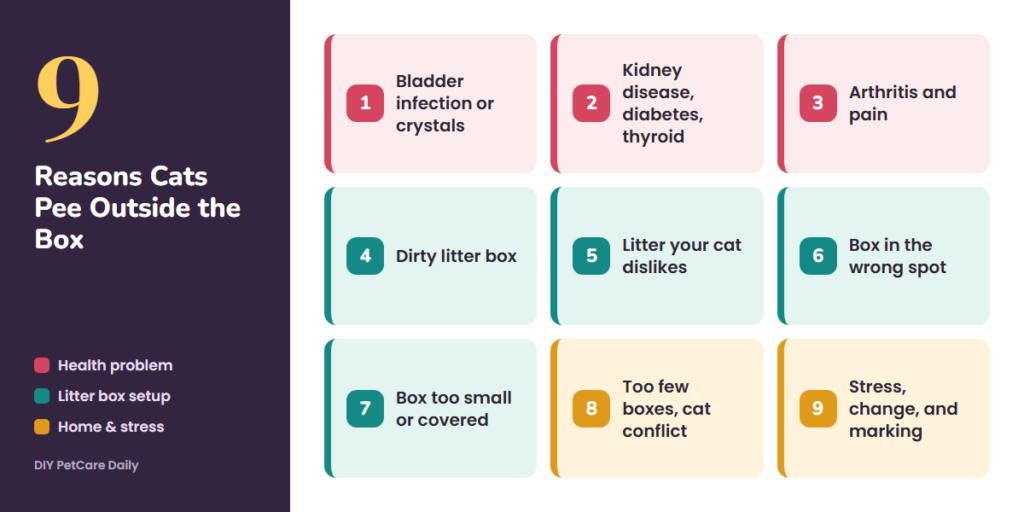
9 Common Causes of a Cat Peeing Outside the Litter Box
1. Urinary Tract Problems
Bladder problems are one of the top reasons cats stop using the box. These include bladder infections, bladder stones or crystals, and a common condition called feline idiopathic cystitis (FIC), which is bladder inflammation often linked to stress.
When peeing hurts, cats may connect the pain with the litter box and start looking for other spots. Many pick soft, cool places like bath mats, tubs, sinks, or beds.
Signs to watch for include peeing small amounts often, straining, blood in the urine, and crying in the box.
2. Kidney Disease, Diabetes, or an Overactive Thyroid
These conditions are common in middle-aged and older cats. They often cause a cat to drink and pee much more. When a cat has to go more often, or with more urgency, they may not make it to the box. You might notice bigger clumps in the litter, an emptier water bowl, or weight loss.
A vet visit with blood and urine tests can check for all of these.
3. Arthritis and Pain
Many older cats have arthritis, even if they don’t limp. Climbing into a box with high sides, walking down stairs to a basement box, or squatting can hurt. So they go somewhere easier.
Look for a box with a low entry, at least one box on each floor of your home, and talk to your vet about pain relief. Our guide on signs of pain in cats explains the quiet clues cats give when something hurts.
4. A Dirty Litter Box
Cats are very clean animals with a strong sense of smell. A box that seems fine to you may be too dirty for them. If the box isn’t scooped often enough, many cats will find another spot.
Scoop at least once a day, ideally twice. Empty the box completely, wash it with mild, unscented soap and water, and add fresh litter every 2 to 4 weeks, depending on the litter type.
5. Litter Your Cat Doesn’t Like
Changing litter brands, switching to a scented litter, or trying a new texture can be enough to drive a cat away. Most cats prefer unscented, fine-grained, clumping litter that feels like sand. Strong perfumes, crystal litters, and pellets bother some cats.
Depth matters too. Most cats like about 2 inches of litter. Too much or too little can be off-putting.
If you want to switch litter, mix the new kind in slowly over a week or two, or set out a second box with the new litter and see which one your cat chooses.
6. The Box Is in the Wrong Spot
Location matters a lot to cats. They don’t like boxes that are:
- Next to loud appliances like a washer, dryer, or furnace
- In a busy hallway where people and pets walk by
- In a spot where another pet or a child can corner them
- Right next to their food and water
- Hard to reach, like a closed room or a far-off basement
Pick a quiet, easy-to-reach spot where your cat can see who’s coming and has a way out.
7. The Wrong Box Type or Size
Many litter boxes sold in stores are too small. A good box should be about 1.5 times the length of your cat, from nose to the base of the tail. Large cats often do better with a big storage bin with a low entry cut into one side.
Covered boxes keep odor in, which is nice for you but not for your cat. Some cats feel trapped in them, too. If your cat stopped using a covered box, try taking the lid off.
8. Not Enough Boxes, or Trouble With Other Cats
In homes with more than one cat, one cat may guard the box or bully another cat on the way to it. The cat being bullied may pick a safer spot.
The general rule is one litter box per cat, plus one extra, placed in different parts of the home. Our guide on how many litter boxes per cat covers the number, size, and best placement in more detail.
9. Stress, Change, and Marking
Cats like routine. Many things can upset them, including:
- Moving to a new home
- A new baby, partner, or roommate
- A new pet
- Construction or remodeling
- A change in your work schedule
- Outdoor cats showing up at the window
Stress can lead to marking, and it can also trigger bladder inflammation (FIC). Keep routines steady, give your cat hiding spots and high perches, and add playtime. Pheromone diffusers help some cats feel calmer. If an outdoor cat is the trigger, block the view from low windows.
How to Figure Out the Cause
- See your vet first. Bring a list of where and when the accidents happen, any changes at home, and how much your cat is drinking.
- Look at the location of the accidents. Pee near a window or door may point to an outdoor cat. Pee on soft items may point to pain or a medical issue.
- Check the box setup. Is it clean, big enough, in a quiet spot, with litter your cat likes?
- Think about recent changes. New litter, a new pet, a move, or schedule changes can all play a part.
Often, more than one thing is going on. A cat with a mild bladder issue and a dirty box may be pushed over the edge by both together.
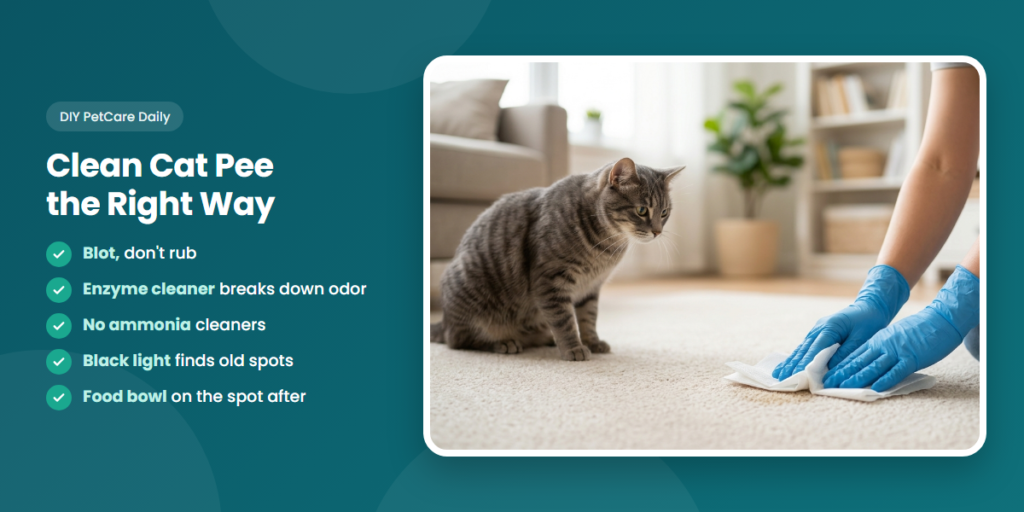
How to Clean Cat Urine the Right Way
If your cat can still smell old urine, they may keep going back to the same spot. Here’s how to clean it well:
- Blot up as much as you can with paper towels. Don’t rub.
- Use an enzyme cleaner made for pet urine. It breaks down the compounds that cause the smell.
- Avoid ammonia-based cleaners. Urine contains ammonia, so these can make the spot smell even more like a bathroom to your cat.
- Let the area dry fully and keep your cat away from it for a while.
- Use a black light in a dark room to find old spots you might have missed.
After cleaning, you can make the spot less appealing by placing a food bowl, a toy, or a scratching pad there, since cats don’t like to pee where they eat or play.
What Not to Do
- Don’t punish your cat. Yelling, spraying water, or rubbing their nose in it makes them more stressed and can make the problem worse.
- Don’t wait. The longer the habit goes on, the harder it is to break.
- Don’t assume it’s behavior. Medical problems are common, and some are serious.
For more help with litter boxes and nails, visit our Cat Nail & Litter Care section. If your cat seems off in other ways too, our list of signs of a sick cat can help you decide how soon to call the vet.
Frequently Asked Questions
Why did my cat suddenly start peeing outside the litter box?
A sudden change often points to a medical problem like a bladder infection or bladder inflammation. It can also follow a recent change, like new litter, a moved box, or a new pet. See your vet first to rule out a health issue.
Do cats pee outside the litter box out of spite?
No. Cats don’t act out of spite. Peeing outside the box is a sign of a health problem, discomfort with the box, or stress.
Can a UTI make a cat pee outside the litter box?
Yes. Bladder infections and other urinary problems make peeing painful and urgent, so cats often go in other places. Your vet can test a urine sample.
How do I stop my cat from peeing on my bed?
Rule out medical issues first. Then clean the bed with an enzyme cleaner, cover it with a waterproof sheet for a while, and make the litter box setup better. Cats often pick beds because they’re soft and smell like you, which feels safe.
Will my cat stop peeing outside the box on its own?
Sometimes, if the cause was short-term, like a brief bout of stress. But most cats need help. Find the cause, fix the box setup, and clean old spots well.