Table of Contents
Quick answer: Good senior cat care comes down to a few simple habits: see the vet every 6 months, weigh your cat monthly, make food, water, and litter boxes easy to reach, help with grooming, keep them gently active, and watch for small changes. Most of these steps cost little and can make a real difference in how your older cat feels each day.
Older cats are wonderful companions. They’re usually calmer, more affectionate, and very good at finding the warmest spot in the house. But their needs do change as the years go by, and they rarely tell you when something hurts.
You don’t need a big budget or special equipment to care for an aging cat. Most of it is about small, steady changes around the home. Use this checklist to see what you’re already doing well and what you might want to add.
Table of Contents
- Senior Cat Care Checklist at a Glance
- Vet Care for Older Cats
- Food and Weight
- Water and Hydration
- Litter Box Setup
- Comfort at Home
- Grooming and Hygiene
- Exercise and Mental Enjoyment
- Changes to Watch For
- Frequently Asked Questions
Senior Cat Care Checklist at a Glance
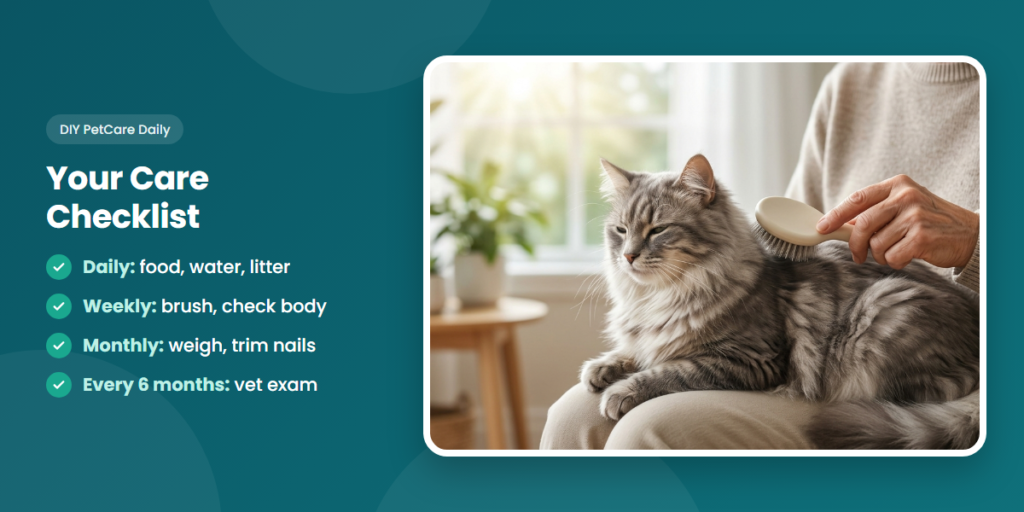
Here’s a quick summary you can save or print. Each item is explained below.
| How Often | What to Do |
| Daily | Check food and water intake, scoop litter, give short play sessions, watch for changes |
| Weekly | Brush your cat, check their eyes, ears, mouth, and skin, wash bowls |
| Monthly | Weigh your cat, check their body shape, trim nails, give flea and parasite prevention if prescribed |
| Every 6 months | Vet exam, weight check, and lab tests as recommended |
| Yearly | Review vaccines, dental health, and diet with your vet |
Not sure if your cat counts as a senior yet? Under current guidelines, cats are seniors after age 10. See our guide on when a cat is considered a senior. You can also convert their age into human years with our cat age calculator.
Vet Care for Older Cats
Cats often hide illness until it’s fairly advanced, so regular exams are one of the best things you can do.
- Book an exam every 6 months. A lot can change in that time for an older cat.
- Ask about lab work. Blood and urine tests can find kidney, thyroid, and blood sugar problems early.
- Ask for a blood pressure check. High blood pressure is common and can damage eyes and other organs.
- Ask for a dental check. Dental pain often goes unnoticed.
- Review all medicines and supplements. Don’t give any human medicines or new supplements without your vet’s approval.
- Review vaccines. Your vet can adjust them based on your cat’s health and lifestyle. Read more about cat vaccines.
Tip: Keep a note on your phone with changes you notice. Add videos of anything unusual, such as limping or odd behavior, because cats often act differently at the clinic.
Food and Weight
Weight changes are one of the earliest signs that something is wrong. Older cats can go either way, so check regularly.
- Weigh your cat monthly. Use a baby scale if you can. Call your vet about any steady loss.
- Feel their body. Run your hands along the ribs and spine. A bonier spine may mean muscle loss.
- Measure their food. Our guide on how much to feed your cat can help. Our cat calorie calculator gives you a starting number.
- Offer smaller, more frequent meals. Many older cats do best with several small meals.
- Try warming wet food. A few seconds in the microwave, stirred well, brings out the smell and helps cats with a weak sense of smell.
- Ask about special diets. Kidney, thyroid, and other conditions may need a prescription food.
- Change foods slowly. Mix old and new over at least 7 to 10 days. Sudden changes can upset their stomach or put them off food.
Should you worry about weight? Check our cat BMI calculator. If your cat is too thin, read why a cat may be so skinny. If your cat stops eating, read our guide on cat not eating, since cats who go without food can get very sick quickly.
Water and Hydration
Older cats are at higher risk of dehydration, especially if they have kidney disease.
- Offer water in several spots. Try at least one bowl on every floor.
- Try a wide, shallow bowl. Some cats dislike having their whiskers touch the sides.
- Try a fountain. Many cats drink more from moving water.
- Add wet food if you can. Wet food is mostly water, so it can help a lot. Our wet vs dry cat food guide compares them.
- Watch how much they drink. Filling the bowl more often is a common sign of illness.
Our guide on how much water a cat should drink gives daily amounts and signs of dehydration.
Litter Box Setup
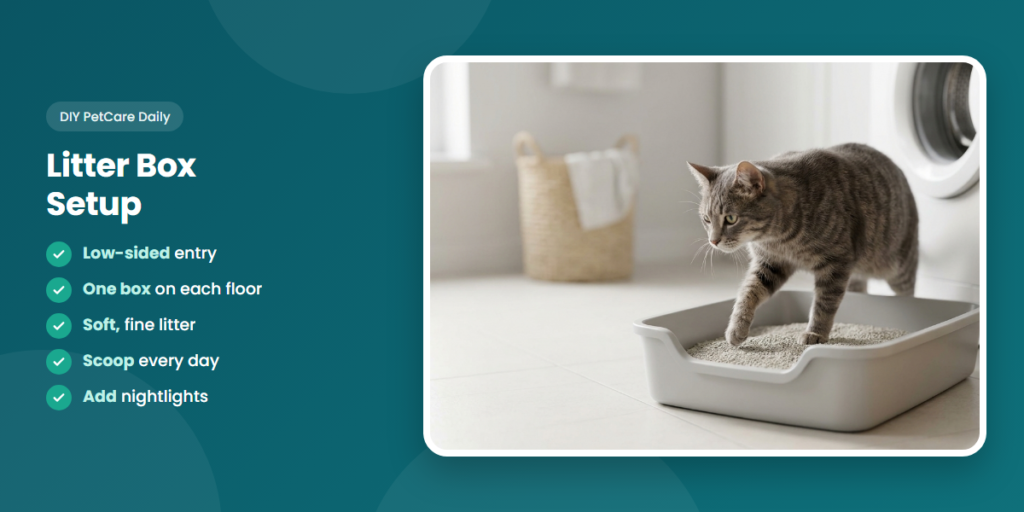
A cat who has trouble getting into the box may start having accidents. It usually isn’t bad behavior, just discomfort.
- Use a low-sided box. A plastic storage bin with one side cut low works well and is inexpensive.
- Keep boxes close. Put one on each floor, so your cat doesn’t have to climb stairs.
- Choose soft, fine litter. Sore paws often prefer it. Avoid sudden changes.
- Scoop every day. It also lets you check how much your cat is peeing and pooping.
- Add nightlights. Older eyes may have trouble in the dark.
Our guide on how many litter boxes per cat covers placement and size. If your cat has started going elsewhere, read why a cat may be peeing outside the litter box, since it may be a medical issue.
Comfort at Home
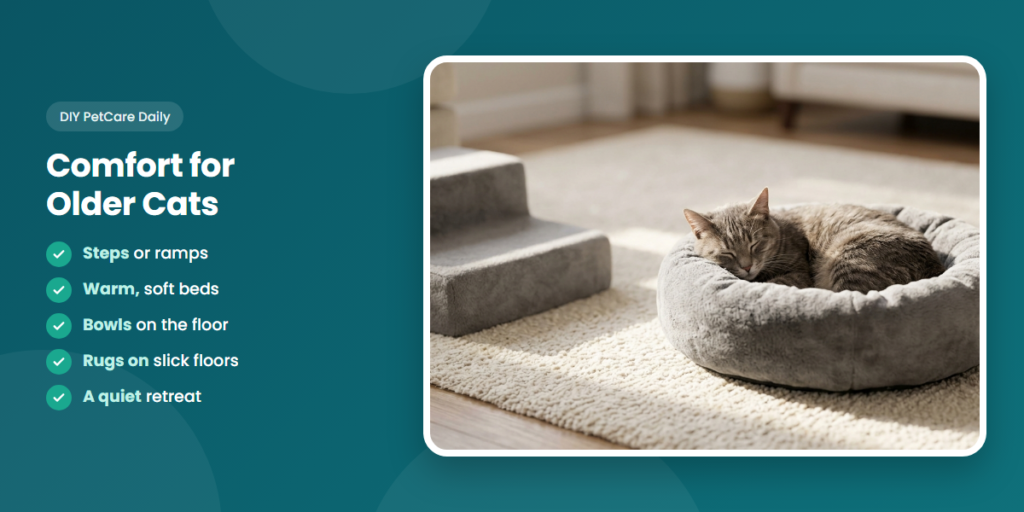
Arthritis is very common in older cats, even though many don’t limp. These changes can make their day much easier.
- Add steps or ramps to favorite beds, sofas, and windows.
- Offer soft beds in warm, draft-free spots. Older cats have more trouble staying warm.
- Place items at floor level. Food, water, and litter should be easy to reach without jumping.
- Use rugs on slippery floors. They help cats keep their footing.
- Keep things predictable. Try not to move furniture, especially if your cat’s vision or hearing is fading.
- Give them a quiet retreat. A calm spot away from kids, dogs, and noise can help them feel safe.
Grooming and Hygiene
Older cats often groom less because of stiffness or dental pain. That can lead to mats, oily fur, and overgrown nails.
- Brush gently a few times a week. Use a soft brush, and keep sessions short. If your cat dislikes it, our guide on how to brush a cat who hates it can help.
- Check for mats on the back, belly, and behind the legs. Our guide on how to remove mats from cat fur explains safe ways to handle them.
- Trim nails about once a month. Older cats’ nails can get thick and curl into the paw pads. Here’s how to trim cat nails safely.
- Check their mouth. Bad breath or drooling can mean dental disease. Read the signs of dental disease in cats.
- Clean up gently. Use a damp cloth for any messy spots under the tail.
- Look for lumps. Grooming is a good time to feel for anything new.
Exercise and Mental Enjoyment
Older cats still need to move and play. It keeps muscles strong and keeps their minds active.
- Play for short bursts. A few 5-minute sessions with a wand toy can be plenty.
- Offer low-effort games. Try batting toys, or rolling a ball along the floor.
- Use food puzzles. Start with easy ones, so your cat doesn’t get frustrated.
- Add a window view. A bird feeder outside can provide hours of entertainment.
- Stick to a routine. Older cats often feel more secure with regular mealtimes and playtimes.
- Be careful with new pets. A new kitten can be stressful. Give your older cat a safe place to retreat.
If your older cat seems confused at night or cries loudly, tell your vet. It may be a sign of pain, high blood pressure, or cognitive dysfunction, which is much like dementia in people.
Changes to Watch For
Older cats are good at hiding problems, so small changes matter. Call your vet soon if you notice:
- Weight loss, even with a good appetite; see our guide on cat losing weight
- More thirst or peeing
- Frequent vomiting; our guide on cat throwing up can help
- Less jumping or grooming
- Bad breath or trouble eating
- Hiding, confusion, or crying at night
- Accidents outside the box
Go to a vet right away if your cat isn’t eating for more than a day, is having trouble breathing, or is straining in the litter box without producing urine. Our guide on how to tell if your cat is sick lists more signs, and the feline grimace scale can help you spot pain.
When the time comes to focus on comfort, our guide to signs your cat is dying can help you know what to expect and how to help.
For more guides, visit our Cat Health & Wellness section.
Frequently Asked Questions
What do senior cats need most?
Older cats need regular vet exams, a healthy weight, plenty of water, and easy access to food, water, litter, and resting spots. Gentle play and grooming help too.
How often should I take my senior cat to the vet?
About every 6 months is a good goal. Cats with kidney disease, thyroid disease, or other ongoing problems may need more frequent visits.
How can I make my senior cat more comfortable?
Add steps to favorite spots, use low-sided litter boxes, offer soft and warm beds, and keep food and water at floor level. Ask your vet about pain relief if your cat seems stiff.
Why is my senior cat so skinny?
Common causes include thyroid disease, kidney disease, diabetes, dental pain, and muscle loss. Since weight loss is often an early sign of illness, have your vet check your cat.
Do senior cats need different food?
Some do, but not all. Healthy older cats may do well on their current food. Cats with health problems, or those gaining or losing weight, may need a different diet. Ask your vet.