Table of Contents
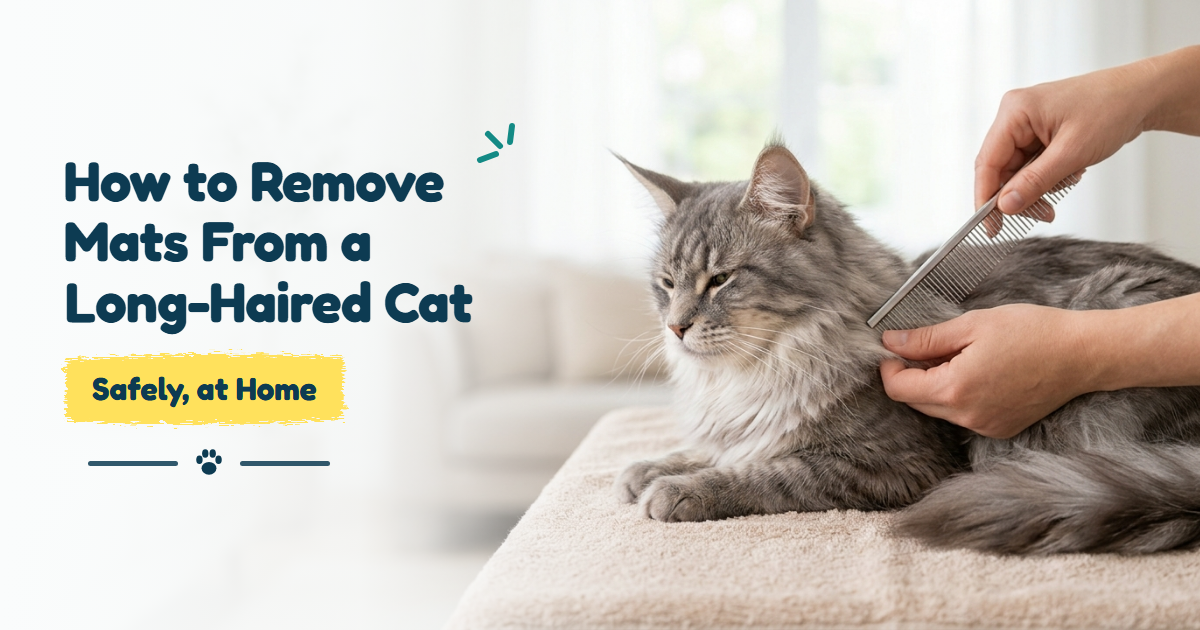
Quick answer: To remove mats from cat fur, hold the fur at the base of the mat against the skin, then gently tease the mat apart from the outer edge with your fingers or a wide-tooth comb. A pinch of cornstarch helps loosen it. Work in short sessions and give treats. Never cut mats with scissors, because cat skin is thin and easy to slice. If a mat is tight against the skin or covers a large area, let a groomer or vet shave it out.
Mats are tight clumps of tangled fur, and long-haired cats get them all the time. Persians, Maine Coons, Ragdolls, Himalayans, and fluffy mixed breeds are especially prone. A small tangle can turn into a hard knot in just a few days. Mats aren’t just ugly. They pull on the skin every time your cat moves, and they can hide sores, fleas, and infections underneath. This guide shows you how to remove mats from cat fur safely at home, and how to know when to leave it to a professional.
Table of Contents
- What Causes Mats in Cat Fur?
- Where Mats Form on Cats
- Why You Shouldn’t Cut Cat Mats With Scissors
- Tools That Help Remove Mats
- How to Remove Mats From Cat Fur, Step by Step
- When to See a Groomer or Vet Instead
- How to Prevent Mats in Long-Haired Cats
- Frequently Asked Questions
What Causes Mats in Cat Fur?
Cats shed all the time. In a long coat, loose hair doesn’t always fall out. It gets caught in the fur around it, twists together, and forms a knot. Over time, more loose hair, skin oil, and dirt pack into that knot until it feels like felt.
Common causes include:
- Long or very fine fur, which tangles easily
- Shedding season, when lots of undercoat comes loose at once
- Not enough brushing, especially in long-haired breeds
- Friction, like under a collar, a harness, or where the legs rub the body
- Age or weight, since older, arthritic, or overweight cats can’t reach their back and rear end to groom
- Illness, because a cat who feels unwell often stops grooming
A cat who used to keep a clean coat and suddenly gets lots of mats may be in pain or sick. Our guide to signs of a sick cat covers what else to watch for.
Where Mats Form on Cats
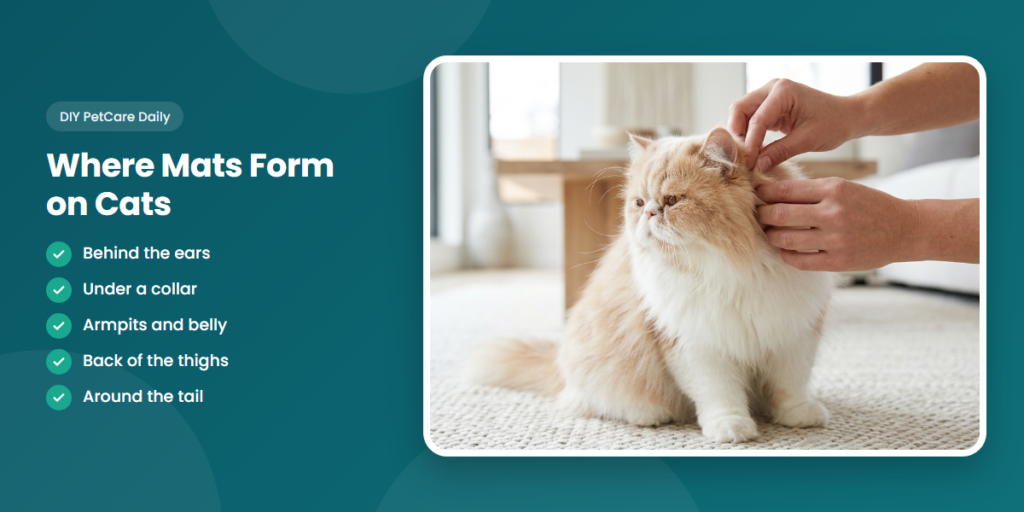
Check these spots first. They’re where mats show up most often:
- Behind the ears
- Under the chin and around the neck, especially under a collar
- In the armpits
- On the belly
- On the back of the thighs (the “britches” or “pants”)
- Around the tail and rear end
- Along the lower back in older or heavy cats
Run your fingers slowly through these areas once a week. Small tangles feel like a little lump in the fur. Big mats feel like a hard pad stuck to the skin.
Why You Shouldn’t Cut Cat Mats With Scissors
This is the most important safety rule in this whole guide. Cat skin is thin and stretchy. When you pull up a mat to cut it, the skin gets pulled up into a tent underneath. It’s very easy to cut right through that skin without seeing it. Vets stitch up cuts like this all the time, and they often happen to careful, loving owners.
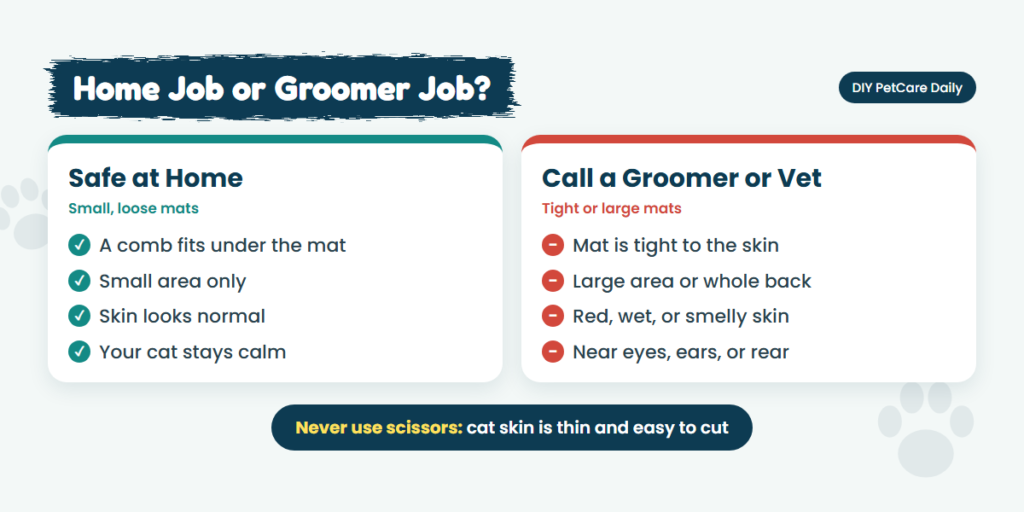
Skip scissors completely. If a mat can’t be teased apart, it needs clippers, and that’s a job for a groomer or vet.
Tools That Help Remove Mats
You don’t need much. A few good tools make the job easier and safer:
- Wide-tooth metal comb. Your main tool for working mats loose and checking that the fur is fully clear.
- Fine-tooth metal comb. For the last small tangles once the big ones are out.
- Soft slicker brush. For brushing out loose fur around the mat. Use very light pressure.
- Mat splitter or dematting comb. These have small blades that cut through a mat from the inside. They can help with medium mats, but use them slowly and always pull away from the skin.
- Cornstarch or a pet detangling spray. These loosen the fibers so they slide apart more easily.
- Treats. Lickable treats keep your cat busy while you work.
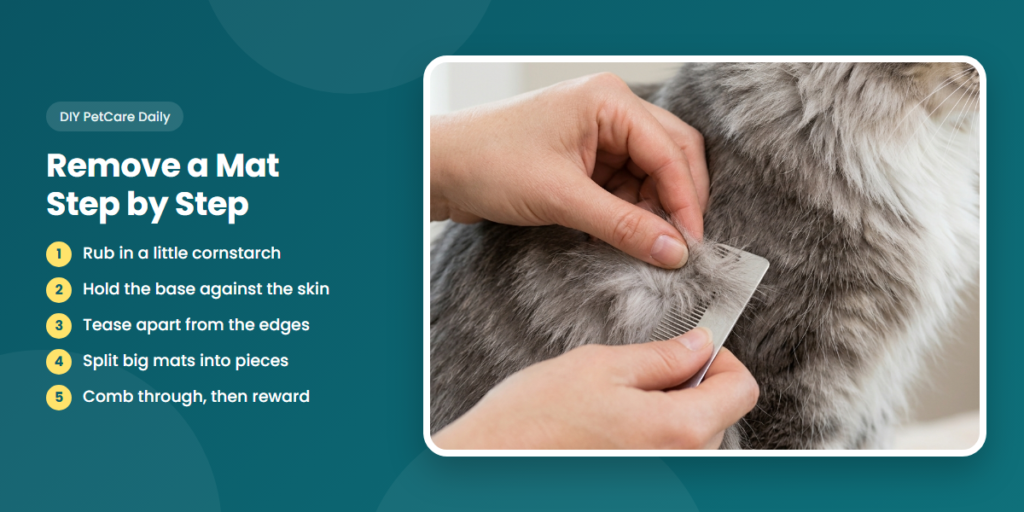
How to Remove Mats From Cat Fur, Step by Step
Only try this at home with small to medium mats that you can easily get your fingers under. If your cat is upset, stop and try again later.
Step 1: Pick a Calm Time
Wait until your cat is relaxed, like after a meal or a nap. Set your cat on a towel in a quiet spot. Have treats close by.
Step 2: Check How Tight the Mat Is
Gently feel the mat. Can you slide a finger or the tip of a comb between the mat and the skin? If yes, you can likely work it out. If the mat sits flat and tight against the skin, stop here and call a groomer or vet.
Step 3: Loosen It With Cornstarch
Sprinkle a little cornstarch onto the mat and rub it in with your fingers. You can also use a detangling spray made for cats. Avoid human hair products and anything with essential oils, since many are unsafe for cats.
Step 4: Hold the Base Against the Skin
This step protects your cat. Pinch the fur at the base of the mat, between the mat and the skin, and hold it firmly. Now when you comb, the pull stops at your fingers instead of yanking on your cat’s skin.
Step 5: Tease Apart the Edges First
Start with your fingers. Pull small strands away from the outer edge of the mat. Then use the end teeth of a wide-tooth comb to pick at the edge, working a little at a time. Always work from the outside of the mat toward the skin, never from the skin outward.
Step 6: Split Bigger Mats Into Smaller Pieces
For a thicker mat, use a mat splitter or the end of your comb to break it into two or three smaller sections. Then work on each piece on its own. Smaller pieces come apart much more easily.
Step 7: Comb Through to the Skin
Once the mat is loose, comb gently through the area with the wide-tooth comb, then the fine-tooth comb. If the comb slides all the way through to the skin, the mat is gone.
Step 8: Reward and Take Breaks
Give a treat after every few minutes of work. If the mat is stubborn, stop after five minutes and finish tomorrow. Spreading the job over a few days is much kinder than a long fight.
When to See a Groomer or Vet Instead
Some mats are not a home job. Get professional help if:
- The mat is tight against the skin and you can’t fit a comb under it
- The mats cover a large area, like the whole back or belly (sometimes called a pelt)
- The skin under the mat looks red, wet, scabby, or smells bad
- Your cat cries, hisses, or bites when you touch the area
- The mat is near the eyes, ears, genitals, or rear end
- Your cat is elderly, very stressed, or has health problems
A groomer will usually shave out the mats with clippers. For very stressed cats, or cats with sore skin underneath, your vet may suggest light sedation. A “lion cut” or sanitary trim is common for heavily matted long-haired cats. The fur grows back, and your cat will feel much better.
How to Prevent Mats in Long-Haired Cats
Getting rid of mats is hard work. Stopping them from forming is much easier.
Brush Every Day
A few minutes a day keeps tangles small. Use a soft slicker brush first, then follow with a wide-tooth comb to catch anything the brush missed. Pay extra attention to the armpits, belly, and back legs.
If your cat fights the brush, start with our guide on how to brush a cat that hates being brushed. It walks you through building up slowly.
Do a Weekly Mat Check
Once a week, run your fingers over the common mat spots. Catching a tangle while it’s small means you can pull it apart in seconds.
Consider a Sanitary Trim
Long fur around the rear end tends to mat and collect litter. A groomer can trim this area short so it stays clean.
Keep Your Cat Healthy
A healthy coat starts with good nutrition and enough water. Cats on a balanced diet often have less greasy, less tangly fur. Our guide on wet vs dry cat food can help you choose what works for your cat.
Help Senior and Overweight Cats
Older cats with stiff joints often can’t reach their back or rear end. They need extra brushing in those areas. Weight loss, when your vet recommends it, can also help cats groom themselves again.
Less loose fur also means fewer hairballs. See our tips on how to prevent hairballs in cats. For more grooming guides, visit our Cat Hair & Grooming Care section.
Frequently Asked Questions
Do cat mats hurt?
Yes. Mats pull on the skin every time your cat moves, lies down, or stretches. Large mats can cause bruising, sores, and skin infections underneath. That’s why it’s worth getting them out early.
Can I use coconut oil to remove cat mats?
A tiny bit of oil can help loosen a mat, but your cat will lick it off and may get an upset stomach. Cornstarch or a detangling spray made for cats is a better choice.
Will cat mats fall out on their own?
No. Mats usually get bigger and tighter over time as more loose fur gets trapped. They need to be combed out or shaved off.
How much does it cost to have a cat’s mats shaved?
In the US, a cat groom with mat removal often costs around $60 to $150 at a groomer, depending on the cat’s size and how bad the mats are. A vet visit with sedation costs more. Ask for a price before the appointment.
How often should I brush a long-haired cat to prevent mats?
Every day is best, even if it’s only a few minutes. Daily brushing keeps tangles small and easy to remove.