Table of Contents
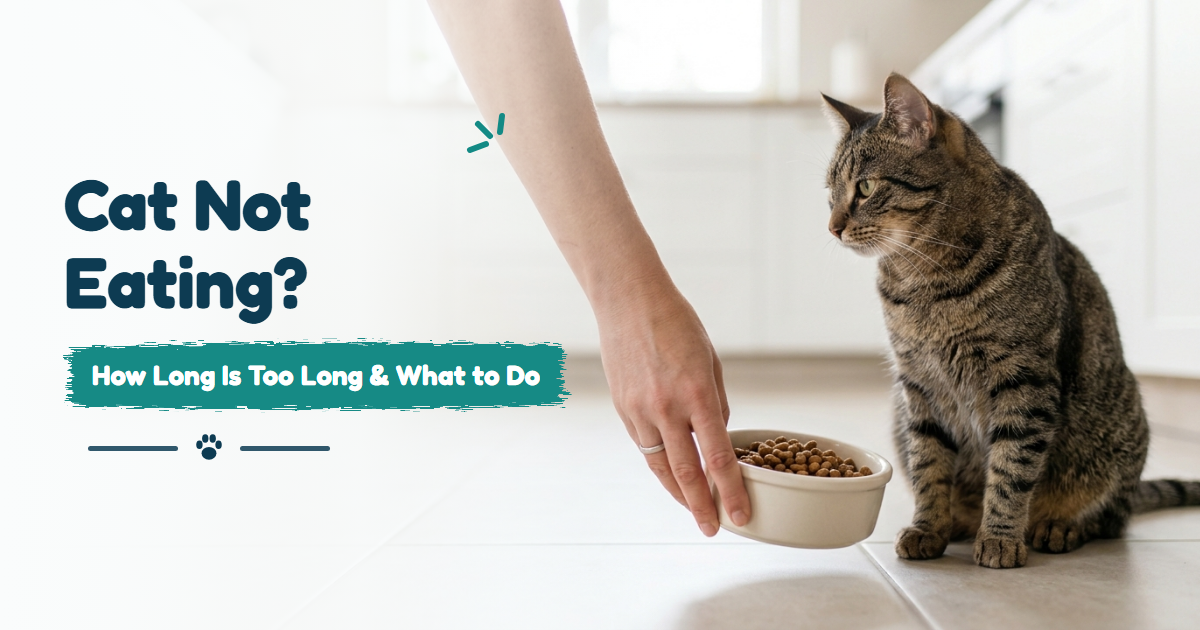
Quick answer: A cat not eating for more than 24 hours needs a call to the vet, even if they seem fine otherwise. Cats can develop a serious liver problem called fatty liver disease after just a few days without food, especially if they are overweight. Common causes include dental pain, nausea, stress, a stuffy nose, a food change, and illnesses like kidney disease. For kittens, seniors, and cats who are also vomiting or hiding, call even sooner.
When a dog skips a meal, it’s often no big deal. When a cat stops eating, it can turn serious fast.
Cats are built differently. When they don’t eat, their body moves stored fat to the liver for energy, and a cat’s liver isn’t good at handling that much fat at once. The fat builds up and the liver starts to fail. This is called hepatic lipidosis, or fatty liver disease, and it can be life-threatening.
That’s why a cat not eating is never something to “wait out” for long. This guide covers why cats stop eating, how long is too long, safe ways to encourage eating at home, and when to get help.
Table of Contents
- How Long Can a Cat Go Without Eating?
- Why Is My Cat Not Eating? Common Causes
- Picky Eater or Sick Cat? How to Tell
- How to Get My Cat to Eat: 9 Tips to Try at Home
- What Your Vet May Do
- Special Situations
- How to Prevent Appetite Problems
- Frequently Asked Questions
How Long Can a Cat Go Without Eating?
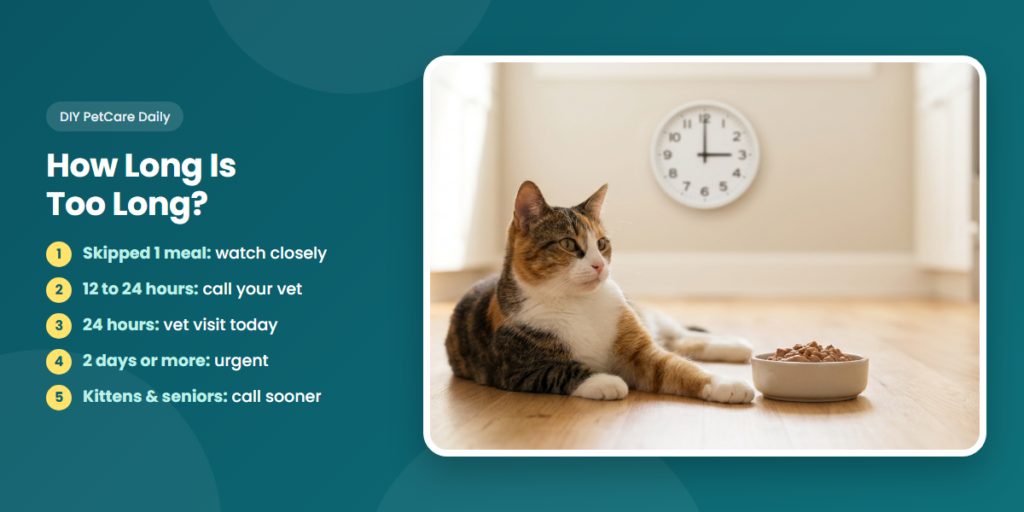
A healthy adult cat may survive for a week or more without food, but that’s not a safe target. Liver damage can start after just 2 to 3 days without food, and sooner in overweight cats. Here’s a simple guide to how fast to act.
| How Long Your Cat Hasn’t Eaten | Adult Cat | Kitten, Senior, or Cat With Health Problems |
| Skipped one meal, otherwise normal | Watch and try tempting tips | Watch closely, call your vet if it happens again |
| 12 to 24 hours | Try tempting tips and call your vet if nothing changes | Call your vet now |
| 24 hours or more | Call your vet today | See a vet today |
| 2 days or more | Urgent vet visit | Emergency |
| Not eating plus vomiting, hiding, or weakness | See a vet today | Emergency |
Young kittens are even more fragile. A kitten under 12 weeks who skips meals can develop low blood sugar quickly. If your kitten is weak, cold, or wobbly, go to a vet right away.
Eating less counts too. A cat who eats only a few bites a day, or eats about half their normal amount for several days, is also at risk. Track how much your cat actually eats, not just whether they visit the bowl.
Why Is My Cat Not Eating? Common Causes
Dental Pain
Sore teeth and gums are one of the most common reasons cats eat less. You may see your cat walk up to the bowl, sniff, maybe take a bite, and then walk away. Other signs include drooling, dropping food, chewing on one side, and bad breath. Check our list of signs of dental disease in cats.
Nausea and Stomach Upset
A cat who feels sick to their stomach often stops eating. You might see lip licking, drooling, or vomiting. Causes include hairballs, food changes, food allergies, bowel disease, and swallowed objects. Our guide on cat throwing up covers these in more detail.
A Stuffy Nose
Cats rely heavily on smell to want food. A cat with an upper respiratory infection (sneezing, runny eyes or nose) may not be able to smell their food, so they lose interest. Warming the food can help a lot.
Stress and Changes at Home
Cats are sensitive to change. Moving, a new pet or baby, visitors, construction noise, a new food bowl spot, or even rearranged furniture can make a cat stop eating for a day or two. A cat not eating after moving to a new home is very common, but they should start eating again within a day or two.
A Food Change or Picky Eating
Cats can refuse a new food, especially if it’s switched suddenly. Some cats also refuse food that has gone stale, a bowl that smells of soap, or food that was next to the litter box.
Illness
Many illnesses reduce appetite. Some of the most common are:
- Kidney disease (very common in older cats)
- Pancreatitis
- Liver disease
- Diabetes
- Infections and fever
- Intestinal blockages
- Cancer
Pain
A cat in pain from arthritis, an injury, or surgery may eat less. Look for hiding, a hunched posture, and less grooming. Our guide on signs of pain in cats explains how to read the clues.
After Vaccines or Medicines
Some cats eat a little less for a day after vaccines. Certain medicines, like antibiotics, can also upset the stomach. If your cat still isn’t eating after 24 hours, call your vet.
Food Aversion
If a cat felt sick while eating a certain food, or had medicine hidden in it, they may link that food with feeling bad and refuse it later. That’s why vets suggest not hiding medicine in your cat’s main food.
Picky Eater or Sick Cat? How to Tell
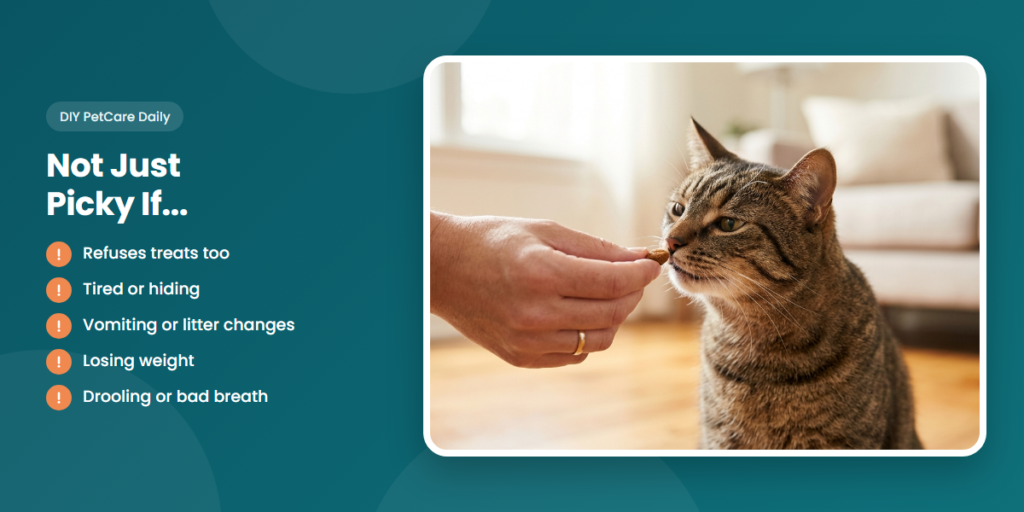
| Picky Eater | Possibly Sick |
| Refuses one food but eats another | Refuses all food, including treats |
| Normal energy and play | Tired, hiding, or sleeping more |
| Normal litter box habits | Changes in pee or poop, or vomiting |
| Steady weight | Losing weight |
| Grooming normally | Messy coat, drooling, or bad breath |
If your cat refuses even favorite treats, that’s a strong sign the problem is medical, not just pickiness. See our guide on how to tell if your cat is sick for more warning signs.
How to Get My Cat to Eat: 9 Tips to Try at Home
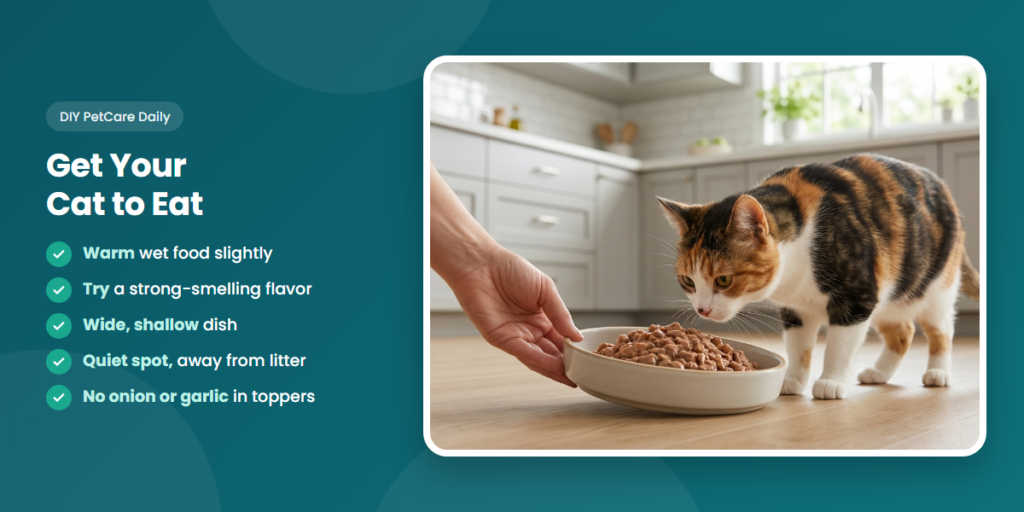
These tips are for cats who are eating less but otherwise seem okay, or while you wait to see your vet. They don’t replace a vet visit if your cat hasn’t eaten in 24 hours.
- Warm the food. Heat wet food for a few seconds in the microwave until it’s about body temperature, then stir it well to avoid hot spots. Warm food smells stronger.
- Offer strong-smelling food. Fish-flavored wet cat food often tempts picky cats. A spoonful of plain, unseasoned cooked chicken can help too.
- Try a different texture. Some cats prefer paté, others like chunks in gravy or shreds.
- Use a wide, shallow dish. Some cats don’t like their whiskers brushing the sides of a deep bowl.
- Serve fresh food. Throw out wet food that has sat out more than about 30 minutes (or a few hours in a cool room) and wash the bowl.
- Find a quiet spot. Feed away from the litter box, loud appliances, and other pets. In multi-cat homes, feed cats in separate rooms.
- Hand feed or offer food on your finger. Some cats eat when they get extra attention.
- Try a little broth topper. Low-sodium chicken broth made without onion or garlic can make food more appealing. Onion and garlic are toxic to cats, so read the label. See our list of foods toxic to cats.
- Don’t force feed. Pushing food into your cat’s mouth with a syringe without vet guidance can cause choking or food going into the lungs, and can make your cat hate that food.
Avoid switching foods over and over. It can upset the stomach and make pickiness worse. If you need to change foods, mix the new food in slowly over 7 to 10 days.
What Your Vet May Do
Your vet will look for the cause and help your cat start eating again. This may include:
- A full exam, including the mouth and teeth
- Blood and urine tests
- X-rays or an ultrasound
- Anti-nausea medicine
- Fluids for dehydration
- Appetite medicine (see below)
- Pain medicine if your cat is sore
- A feeding tube for cats who have gone several days without eating. This sounds scary, but it’s often the best way to treat fatty liver disease, and most cats handle it very well.
Appetite Stimulant for Cats
If your cat is eating too little, your vet may prescribe an appetite stimulant for cats. The two most common options approved for cats in the US are:
- Mirtazapine, which comes as a tablet or as an ointment you rub on the inside of the ear, handy for cats who are hard to pill
- Capromorelin, a flavored liquid approved to help cats with kidney disease gain weight
These work best alongside finding and treating the cause. Never use a human appetite booster or another pet’s prescription.
Special Situations
Cat Not Eating but Drinking Water
Drinking is good, because it helps prevent dehydration. But water doesn’t stop fatty liver disease. A cat who drinks a lot but won’t eat may have kidney disease, diabetes, or another illness. Call your vet if this lasts 24 hours.
Cat Not Eating Dry Food but Eating Wet Food
This is often a sign of dental pain, since crunchy food can hurt sore teeth. It can also just be preference. Mention it to your vet at your next visit. If you’re thinking of switching, see wet vs dry cat food for the pros and cons.
Kitten Not Eating
A kitten not eating is more urgent than an adult cat skipping a meal. Kittens have small energy reserves and can develop low blood sugar quickly. Common causes include worms, upper respiratory infections, stress after adoption, and trouble moving from milk to solid food. If your kitten skips more than one meal, or seems weak, cold, or wobbly, call your vet right away.
Senior Cat Not Eating
Older cats are more likely to have kidney disease, dental disease, thyroid disease, arthritis, and cancer. They also lose weight and muscle faster. A senior cat who eats less for more than a day should see the vet.
Cat Not Eating After Surgery
It’s common for a cat to eat less for 12 to 24 hours after anesthesia. Offer a small amount of their usual food. If they still won’t eat by the next day, call the clinic.
How to Prevent Appetite Problems
- Feed measured meals instead of leaving food out all day, so you notice quickly if your cat eats less. See how much should I feed my cat.
- Weigh your cat once a month to catch slow weight loss.
- Keep up with dental care. Brushing helps; see how to brush cat teeth.
- Keep bowls clean and away from litter boxes.
- Make changes slowly, whether it’s food, home, or routine.
- Keep up with yearly vet visits, or every 6 months for seniors.
For more guides on keeping your cat healthy, visit our Cat Health & Wellness section.
Frequently Asked Questions
How long can a cat go without eating?
A cat shouldn’t go more than 24 hours without eating before you call your vet. Liver damage from fatty liver disease can begin after just 2 to 3 days without food, and sooner in overweight cats. Kittens and seniors are at risk even faster.
Why is my cat not eating but acting normal?
Your cat may be stressed, dislike a new food, have mild nausea, or have early dental pain. Some cats also eat less in hot weather. Try warming their food and offering a favorite flavor. If your cat still isn’t eating after 24 hours, call your vet.
What can I give my cat to make them eat?
Try warmed wet food, a fish-flavored food, a spoonful of plain cooked chicken, or a low-sodium broth topper with no onion or garlic. If your cat still won’t eat, your vet can prescribe a safe appetite stimulant made for cats.
Is it normal for a cat to skip a meal?
One skipped meal in a cat who is otherwise eating, playing, and using the litter box normally is usually not an emergency. But watch closely. Skipping several meals, or eating much less for a day or more, needs a call to your vet.
Why is my cat not eating after moving?
Moving is very stressful for cats. Keep your cat in one quiet room at first with food, water, a litter box, and familiar items like their bed. Most cats start eating again within a day or two. If your cat doesn’t eat for 24 hours, call your vet.