Table of Contents
- Table of Contents
- Cat Vomiting vs Regurgitation: What’s the Difference?
- Common Reasons Your Cat Is Throwing Up
- Cat Vomit Color Chart: What It Can Mean
- How Often Is It Normal for a Cat to Throw Up?
- What to Do When Your Cat Throws Up
- When to Worry: Call the Vet Right Away If
- What Your Vet May Do
- How to Stop a Cat From Throwing Up
- Frequently Asked Questions
Quick answer: A cat throwing up once in a while, with no other signs, is often caused by hairballs, eating too fast, or a sudden food change. But vomiting more than once or twice a month is not normal, even if it’s “just hairballs.” Call your vet the same day if your cat vomits several times in a day, throws up blood, stops eating, seems tired, or might have swallowed string or a toxin. Kittens, seniors, and cats with health problems should be seen sooner.
Few things wake a cat owner faster than that familiar hacking sound at 3 a.m. Most of us have stepped in the result at least once.
Because so many cats throw up now and then, it’s easy to think it’s normal. Many people say “my cat just has a sensitive stomach.” But vets now agree that frequent vomiting is a sign that something is going on, from hairballs and fast eating to food allergies, bowel disease, or kidney and thyroid problems.
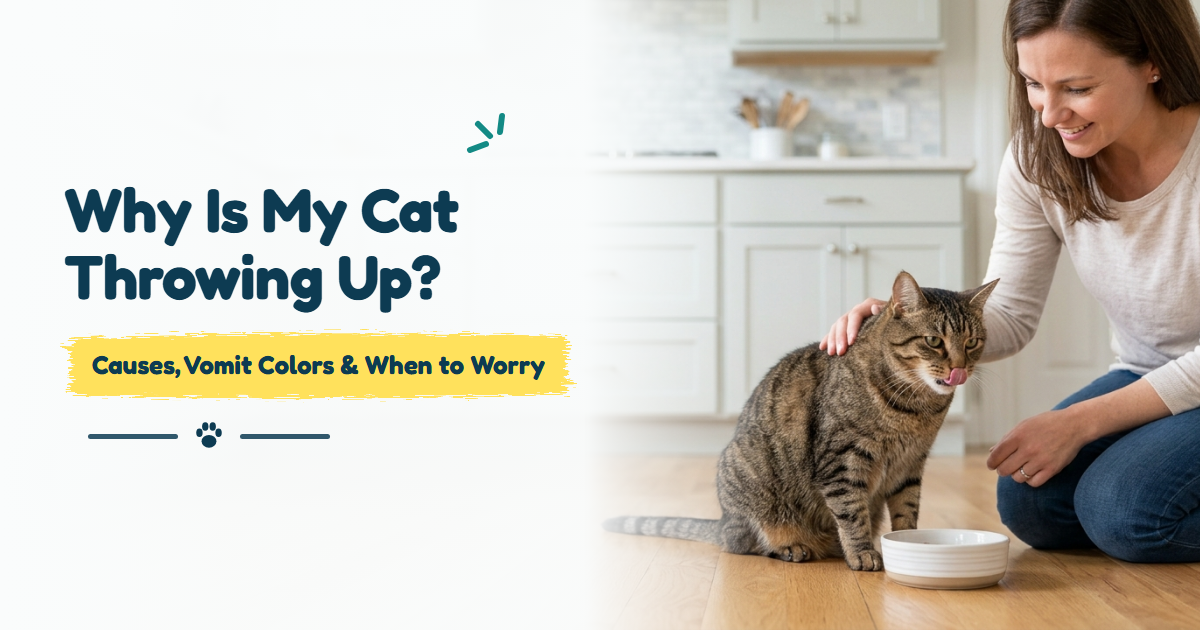
So, why is my cat throwing up? This guide explains the common causes of cat vomiting, what the color of the vomit can tell you, how to care for a mild case at home, and when it’s time to call the vet.
Table of Contents
- Cat Vomiting vs Regurgitation: What’s the Difference?
- Common Reasons Your Cat Is Throwing Up
- Cat Vomit Color Chart: What It Can Mean
- How Often Is It Normal for a Cat to Throw Up?
- What to Do When Your Cat Throws Up
- When to Worry: Call the Vet Right Away If
- What Your Vet May Do
- How to Stop a Cat From Throwing Up
- Frequently Asked Questions
Cat Vomiting vs Regurgitation: What’s the Difference?
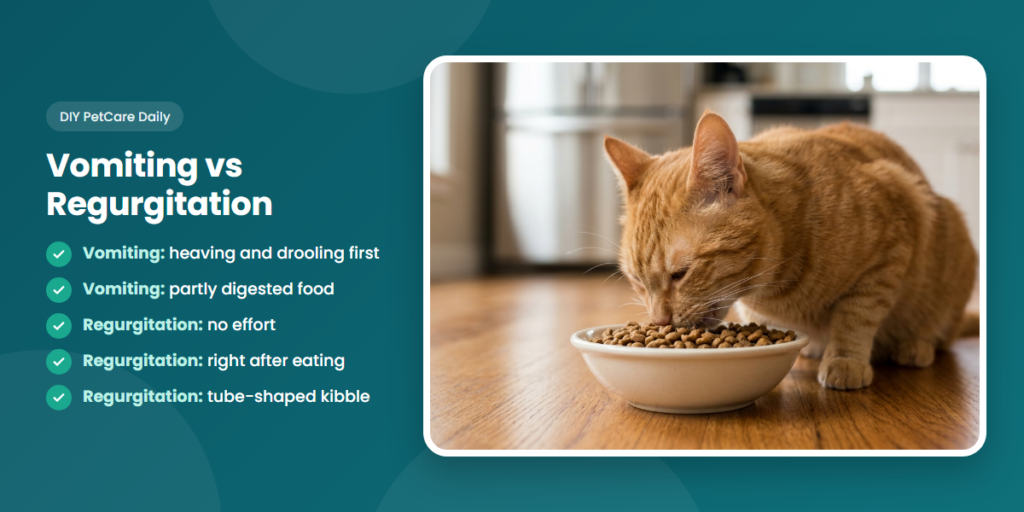
Before you look for a cause, it helps to know what you saw. Vets treat these two very differently.
| Vomiting | Regurgitation | |
| What it looks like | Heaving belly, gagging, drooling, walking around first | Food comes up suddenly with little or no effort |
| When it happens | Any time, often hours after eating | Usually within minutes of eating |
| What comes up | Partly digested food, liquid, foam, or bile | Undigested food, often in a tube shape |
| Common causes | Hairballs, illness, toxins, food problems | Eating too fast, problems in the food pipe (esophagus) |
If your cat brings food back up right after eating, still in kibble shape, and then wants to eat it again, that’s often regurgitation from eating too fast. It’s the most common reason for a cat throwing up undigested food. Real vomiting comes with nausea first: lip licking, drooling, and heaving.
Common Reasons Your Cat Is Throwing Up
Hairballs
Cats swallow loose hair while grooming. Most of it passes through, but some forms a clump that gets vomited up as a long, tube-shaped hairball. Long-haired cats and cats who overgroom get more of them. One or two hairballs a month can be normal. More than that is worth a vet check. Our guide on how to prevent hairballs in cats explains brushing and diet tips that help.
Eating Too Fast (Cat Throwing Up After Eating)
Some cats gulp their food, especially in multi-cat homes. The stomach stretches fast, and the food comes right back up. This is often called “scarf and barf.”
A Sudden Food Change
Switching foods overnight can upset your cat’s stomach. Change foods over 7 to 10 days by mixing a little more of the new food each day.
Food Allergies or Sensitivities
Some cats react to a protein in their food, such as chicken, beef, or fish. Signs can include vomiting, diarrhea, and itchy skin. Your vet may suggest a special diet trial for 8 to 12 weeks.
Eating Plants, String, or Other Objects
Cats love to chew grass, houseplants, ribbons, hair ties, and string. String is especially dangerous. It can wrap around the tongue or catch in the intestines and cut through them.
If you see string coming from your cat’s mouth or bottom, don’t pull it. Go to the vet right away.
Toxins
Lilies, some houseplants, human medicines, cleaning products, and some foods can cause vomiting. All true lilies (Easter, tiger, day lilies) are deadly to cats, even the pollen or the vase water. Check our list of foods toxic to cats for kitchen dangers.
Inflammatory Bowel Disease (IBD) and Intestinal Lymphoma
Middle-aged and older cats who vomit often, lose weight, or have diarrhea may have IBD, a long-term inflammation of the gut. A type of cancer called small cell lymphoma can look very similar. Both need a vet’s tests to diagnose, and both can often be managed.
Kidney Disease, Thyroid Disease, and Diabetes
These are common in cats over 7 years old. Vomiting often comes with other signs like drinking more, peeing more, or weight loss. A simple blood test can check for all three.
Other Causes
- Intestinal worms, especially in kittens
- Pancreatitis or liver disease
- Constipation
- Car rides (motion sickness)
- Some medicines
Cat Vomit Color Chart: What It Can Mean
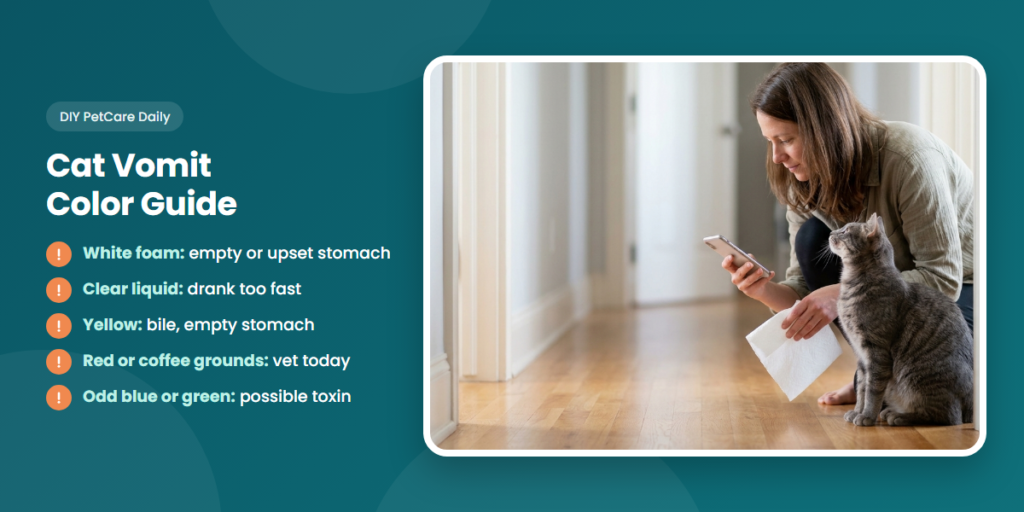
The color and texture of vomit can give clues. Take a photo before you clean it up so you can show your vet.
| What You See | What It May Mean | How Worried to Be |
| Tube-shaped clump of hair | Hairball | Low if rare; see a vet if it happens more than twice a month |
| Undigested food soon after eating | Eating too fast, regurgitation | Low if rare; try a slow feeder |
| Clear liquid | Drank too fast, empty stomach, or nausea | Low if once; call the vet if it repeats |
| White foam | Stomach irritation, empty stomach | Low if once; call the vet if it repeats |
| Yellow liquid or foam | Bile from an empty stomach, or liver or gut problems | Medium; try smaller, more frequent meals and call your vet if it keeps happening |
| Green | Bile, grass, or plants | Medium; check for chewed plants |
| Brown | Food, or digested blood if it looks like coffee grounds | Coffee-ground look: see a vet today |
| Red or pink streaks | Fresh blood from the stomach or throat | See a vet today |
| Worms | Intestinal parasites | Call your vet for deworming |
| Bright blue, green, or other odd colors | Possible toxin (some rodent baits and chemicals) | Emergency, go now |
Cat Throwing Up White Foam
White foam is usually stomach fluid mixed with air. It often shows up when the stomach is empty, or when the stomach lining is irritated by hairballs, grass, or a mild upset. Once is usually not a worry. If your cat throws up white foam several times a week, or also stops eating or seems tired, see your vet. It can be linked to kidney disease, pancreatitis, or bowel disease.
Cat Throwing Up Clear Liquid
Clear liquid is often water or stomach fluid. Some cats drink a lot of water quickly and bring it right back up, and clear liquid can also come up before a hairball. If your cat gulps water, offer it in smaller amounts. Call your vet if it keeps happening, or if your cat is drinking much more than normal, since extra thirst can point to kidney disease or diabetes.
Cat Throwing Up Yellow Liquid
Yellow liquid is bile from the small intestine. It usually appears when the stomach has been empty for a long time, often early in the morning. A small snack before bed often helps. If it keeps happening, your vet may check for liver, pancreas, or bowel problems.
Cat Throwing Up Undigested Food
Whole kibble coming up soon after a meal usually means your cat ate too fast or regurgitated. Try a slow feeder and smaller meals. If it happens often, or the food comes up hours after eating, talk to your vet.
How Often Is It Normal for a Cat to Throw Up?
For a long time, people thought cats vomiting once a week was just “a cat thing.” Vets now say that’s not true. Here’s a simple guide:
- Once in a while (less than once a month): usually not a worry if your cat acts normal.
- One to two times a month: keep a log and mention it at the next checkup.
- Weekly or more: book a vet visit. This is chronic vomiting.
- Several times in one day: call your vet the same day.
Keep a simple vomit log on your phone. Write the date, time, color, what your cat ate, and any other signs. This helps your vet find patterns.
What to Do When Your Cat Throws Up
These steps are for a healthy adult cat who threw up once or twice and is otherwise acting normal: bright, alert, drinking, and wanting food.
- Clean up and check the vomit. Look for hair, food, plants, string, blood, or worms. Take a photo.
- Look around the house. Check for chewed plants, string, hair ties, open medicine, or cleaning products.
- Rest the stomach for a few hours. Many vets suggest skipping the next meal, but keep fresh water available. Don’t withhold food for more than about 12 hours, and never do this with kittens, senior cats, or diabetic cats without asking your vet.
- Offer a small bland meal. Try a tablespoon or two of plain boiled chicken (no skin, bones, or seasoning) or your cat’s usual wet food. If it stays down, offer small meals every few hours.
- Go back to normal meals slowly over a day or two.
- Watch closely for 24 hours. If vomiting comes back, call your vet.
Never give human medicine. Pepto-Bismol contains a salicylate (related to aspirin) that can be toxic to cats. Many other stomach medicines aren’t safe either.
When to Worry: Call the Vet Right Away If
- Your cat vomits several times in a day or can’t keep water down
- There’s blood in the vomit, or it looks like coffee grounds
- Your cat is trying to vomit but nothing comes up
- You see string, thread, or ribbon, or suspect your cat swallowed an object
- Your cat may have eaten a lily, medicine, or chemical
- Vomiting comes with diarrhea, weakness, or hiding
- Your cat hasn’t eaten for 24 hours (read more in our guide on cat not eating)
- Your cat’s belly looks swollen or seems painful to touch
- The cat is a kitten, a senior, or has a health condition like diabetes or kidney disease
Vomiting along with hiding, low energy, and litter box changes can be one of the signs of a bigger problem. See our guide on how to tell if your cat is sick for other symptoms to check.
What Your Vet May Do
Depending on your cat’s signs, your vet may:
- Do a full exam and feel the belly
- Run blood and urine tests to check kidneys, liver, thyroid, and blood sugar
- Take X-rays or an ultrasound to look for blockages
- Check stool for parasites
- Give anti-nausea medicine and fluids
- Suggest a diet trial for food allergies
- Recommend a biopsy for cats with long-term vomiting and weight loss
How to Stop a Cat From Throwing Up
You can’t prevent every case, but these steps help a lot:
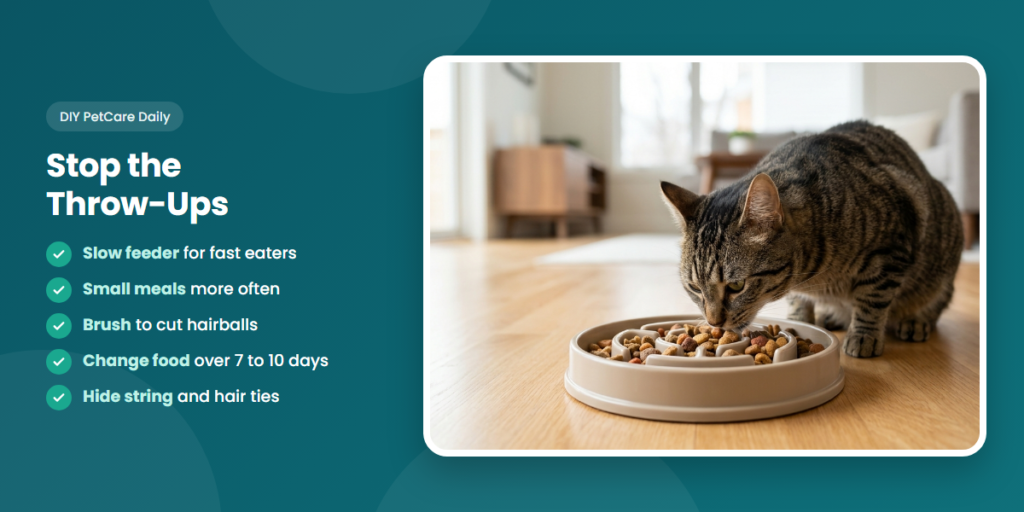
- Slow down fast eaters. Use a slow feeder, a puzzle feeder, or spread the food on a flat plate.
- Feed smaller, more frequent meals. This helps cats who throw up yellow bile on an empty stomach. A small snack before bed often stops early morning vomiting.
- Measure meals. Overeating can cause vomiting. See how much should I feed my cat for a feeding chart.
- Brush your cat regularly to cut down on swallowed hair. If your cat fights it, try our tips on how to brush a cat that hates it.
- Change foods slowly over 7 to 10 days.
- Consider more wet food. It adds water and may help some cats. Compare options in wet vs dry cat food.
- Feed cats separately if one cat rushes to finish before the others.
- Cat-proof your home. Put away string, ribbons, rubber bands, hair ties, and toxic plants. At Christmas, add tinsel to that list and cat proof your Christmas tree.
- Keep up with deworming and yearly vet checkups.
For more guides on keeping your cat healthy, visit our Cat Health & Wellness section.
Frequently Asked Questions
Why is my cat throwing up but acting normal?
A cat throwing up once but acting normal often has a hairball, ate too fast, or ate something that didn’t agree with them. Watch your cat for 24 hours. If the vomiting happens again, or your cat stops eating or seems tired, call your vet.
Why is my cat throwing up after eating?
Throwing up right after eating is most often caused by eating too fast. Try a slow feeder and smaller meals. If it keeps happening, it could point to food allergies, hairballs, or a problem in the esophagus or stomach, so talk to your vet.
Why is my cat throwing up white foam?
White foam is usually stomach fluid and air from an empty or irritated stomach. One episode in a cat who is acting normal is usually not a concern. If it happens often, or comes with not eating or low energy, see your vet.
Should I feed my cat after they throw up?
For a healthy adult cat, many vets suggest skipping the next meal for a few hours, then offering a small amount of bland food. Keep water available. Don’t hold back food for more than about 12 hours, and ask your vet first for kittens, seniors, and cats with health problems.
Is it normal for cats to throw up every week?
No. Weekly vomiting is not normal, even if your cat seems fine otherwise. It can be a sign of hairball problems, food allergies, bowel disease, or other illness. Book a vet visit and bring a log of when it happens.