Table of Contents
- Table of Contents
- Signs Your Dog Is Scared of Fireworks
- Why Fireworks Are So Hard on Dogs
- How to Calm a Dog During Fireworks: Your Game Plan
- Does a Calming Wrap, Pheromone, or Supplement Help?
- Medication for a Dog Scared of Fireworks
- What Not to Do
- Long-Term Training to Reduce Fireworks Fear
- If Your Dog Runs Away During Fireworks
- Frequently Asked Questions
Quick answer: If your dog is scared of fireworks, plan ahead: walk them before dark, set up a quiet safe room with the curtains closed and music or white noise on, give them a long-lasting chew, and stay calm and comforting. Make sure their ID tag and microchip are up to date in case they bolt. For dogs who panic, ask your vet about anti-anxiety medicine well before the big night.
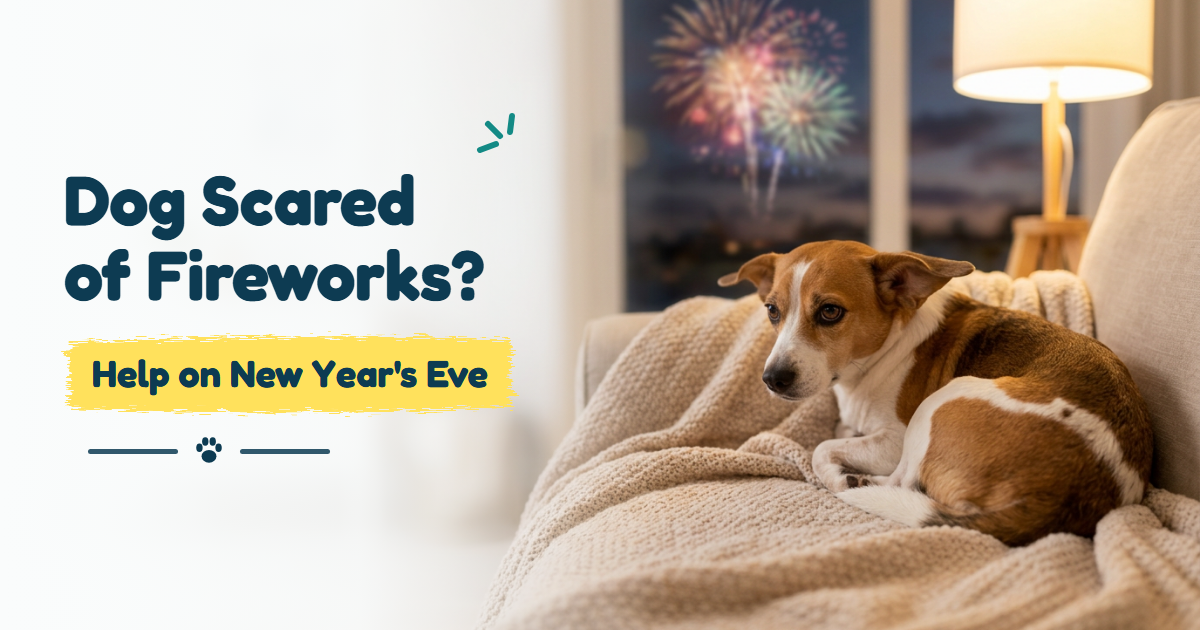
Fireworks are fun for people and frightening for a lot of dogs. The bangs are loud and sudden, the flashes come out of nowhere, and the smell of smoke drifts in. Your dog has no idea it’s a celebration. To them, the world just started exploding.
Surveys of dog owners suggest that close to half of dogs show some fear of loud noises like fireworks. New Year’s Eve and the Fourth of July are the two hardest nights of the year for these dogs, and shelters often take in more lost pets around those dates.
The good news is that you can make a big difference. This guide covers the signs of fireworks fear, a step-by-step plan for the night itself, what helps (and what doesn’t), and how to work on the fear long term.
Table of Contents
- Signs Your Dog Is Scared of Fireworks
- Why Fireworks Are So Hard on Dogs
- How to Calm a Dog During Fireworks: Your Game Plan
- Does a Calming Wrap, Pheromone, or Supplement Help?
- Medication for a Dog Scared of Fireworks
- What Not to Do
- Long-Term Training to Reduce Fireworks Fear
- If Your Dog Runs Away During Fireworks
- Frequently Asked Questions
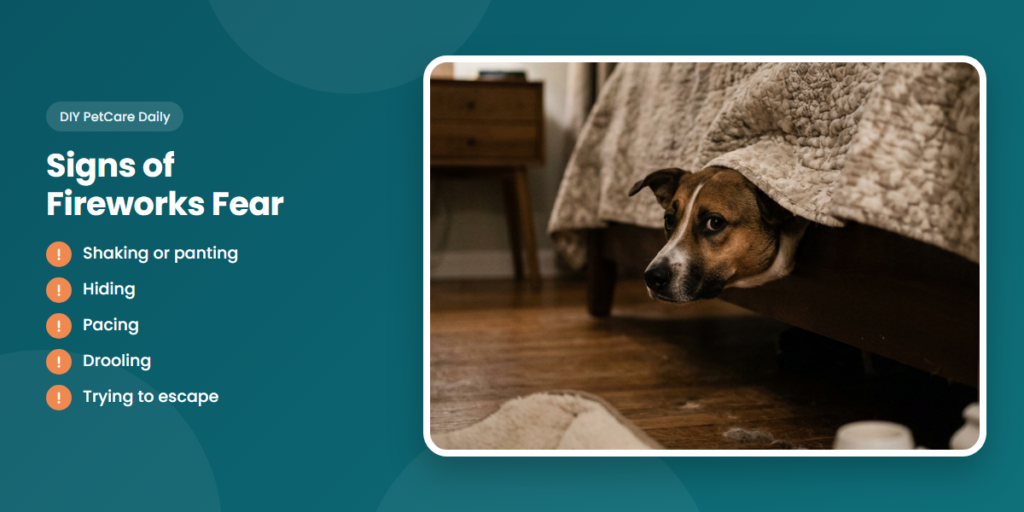
Signs Your Dog Is Scared of Fireworks
Fear doesn’t always look like shaking. Watch for:
- Trembling or shaking
- Panting when it isn’t hot
- Pacing, restlessness, or not being able to settle
- Hiding under beds, in closets, or in the bathtub
- Clinging to you, or the opposite, avoiding everyone
- Tail tucked, ears pinned back, body low
- Drooling or lip licking
- Barking, whining, or howling
- Trying to escape: scratching doors, jumping fences, slipping collars
- Accidents in the house
- Chewing or digging at doors and windows
- Refusing food or treats
A dog who won’t take a favorite treat is usually very stressed. Some dogs stay scared for hours, or even into the next day.
Why Fireworks Are So Hard on Dogs
Dogs hear a wider range of sounds than we do, and they can pick up sounds at lower volumes. Fireworks are loud, random, and impossible to predict. There’s no pattern your dog can get used to during the night, and they can’t escape it.
Some dogs are more likely to struggle:
- Dogs with other noise fears, like thunderstorms
- Anxious dogs in general, including dogs with separation anxiety
- Senior dogs, who may also have pain or hearing changes. See our guide on when a dog is considered a senior
- Herding breeds and other sensitive breeds, though any dog can be affected
- Dogs who had a scary experience with loud noises before
Fear of fireworks often gets worse with each year if nothing is done, so it’s worth working on.
How to Calm a Dog During Fireworks: Your Game Plan
The Week Before
- Check ID. Make sure your dog wears a snug collar with a tag that has your current phone number. Log in to your microchip company’s site and confirm your contact details. This is the most important step. Scared dogs can run for miles.
- Talk to your vet if your dog panics. If past fireworks led to destruction, escape attempts, or hours of shaking, ask about medicine now. Many vets want to do a test dose before the actual night.
- Pick a safe room. An inner room with few windows, like a bathroom, laundry room, or closet-adjacent bedroom, works well. A crate is great if your dog already loves theirs.
- Practice. Spend a few minutes a day giving treats and chews in the safe room so it feels like a good place.
- Find out the schedule. Check local event times and neighborhood plans. On New Year’s Eve, fireworks usually peak around midnight, but neighbors often start early.
On the Day
- Exercise early. Give your dog a long walk or play session in the afternoon, so they’re tired by evening.
- Feed dinner earlier than usual. A dog who’s scared may refuse food later.
- Potty break before dark, and do any evening bathroom trips on a leash, even in a fenced yard. Fences don’t stop a panicked dog.
- Close windows, blinds, and curtains to cut down on noise and flashes.
- Turn on background sound. A fan, white noise machine, TV, or calm music with a steady beat helps cover the bangs. Turn it on before the fireworks start, so it’s part of the normal room sound.
- Stay home if you can. Most scared dogs do better with their person nearby.
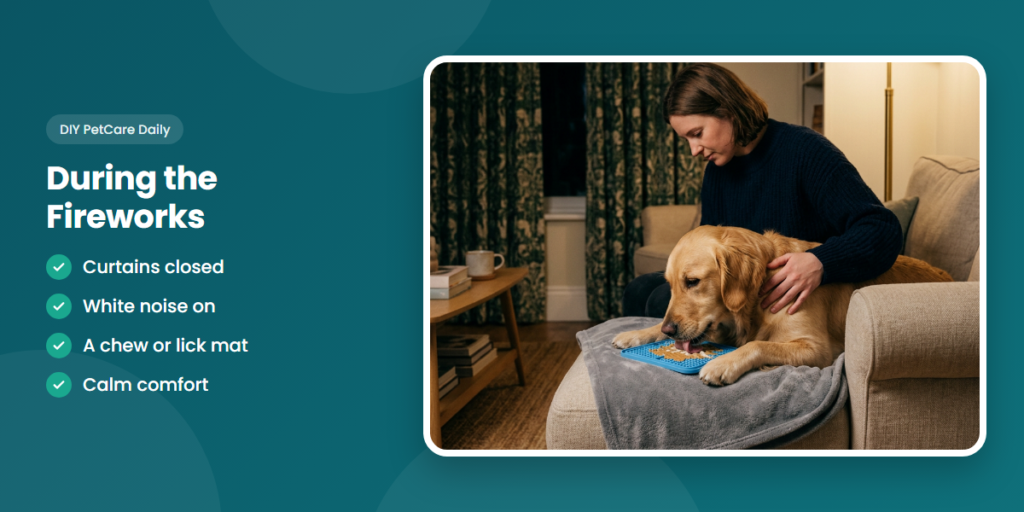
During the Fireworks
- Let your dog choose where to hide. If they crawl under the bed, let them. Don’t drag them out.
- Comfort them. It’s a myth that petting or soothing a scared dog “rewards” the fear. Fear is an emotion, not a trick. Calm petting, a gentle voice, and sitting nearby can help. Just follow your dog’s lead. Some dogs want contact, others want space.
- Offer something to chew or lick. Licking and chewing are naturally calming. A frozen stuffed chew toy, a lick mat with plain yogurt or pumpkin, or a long-lasting chew can keep them busy. See our frozen dog treats recipes for ideas.
- Try an easy game. If your dog will still take food, scatter treats in a DIY snuffle mat or play “find it” in the safe room. Sniffing lowers stress for many dogs.
- Stay calm yourself. Dogs read our mood. A relaxed, normal tone helps more than nervous fussing.
- Never punish fear. Scolding a dog for barking, shaking, or having an accident makes the fear worse.
After the Fireworks
- Keep your dog inside until the noise has fully stopped. Some neighbors set off fireworks again the next day.
- Walk the yard before letting your dog out to pick up firework debris. Spent fireworks contain chemicals that can make dogs sick if they chew them.
- Check doors, gates, and fences for damage from escape attempts.
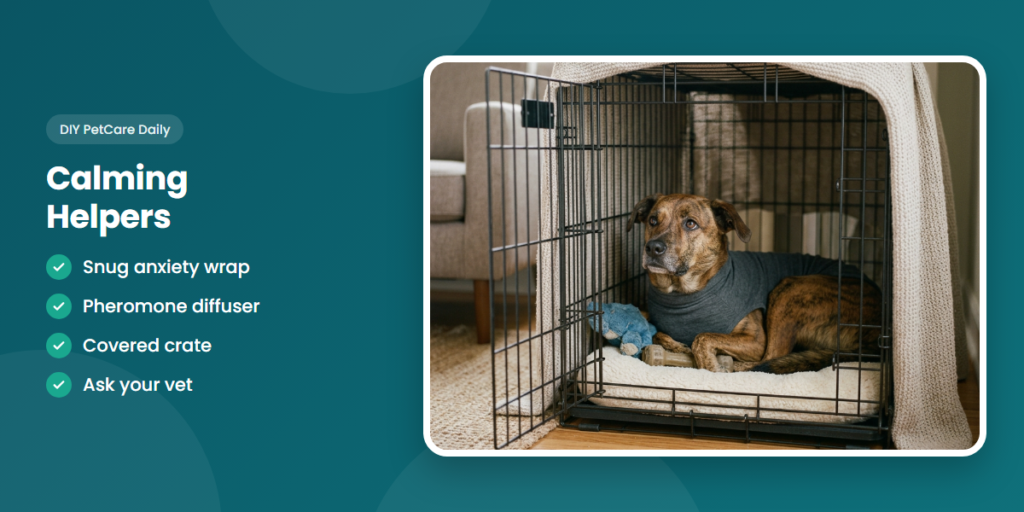
Does a Calming Wrap, Pheromone, or Supplement Help?
These can help some dogs. They work best as extras, not as the whole plan.
| Option | What it is | What to know |
| Anxiety wrap or snug shirt | A garment that applies gentle, steady pressure | Some dogs relax in them; put it on before the noise starts and try it ahead of time |
| Calming pheromone diffuser or collar | Synthetic version of a calming pheromone mother dogs produce | Mixed results; plug in a few days early |
| Calming chews and supplements | Often contain L-theanine, tryptophan, or similar ingredients | Results vary; check with your vet, especially if your dog takes other meds |
| Ear protection for dogs | Fitted muffs or wraps that lower noise | Needs practice ahead of time so your dog accepts them |
| Covered crate | A crate draped with a blanket, door open | Only for dogs who already love their crate |
Never give your dog human calming supplements, melatonin products with xylitol, or any human medicine without your vet’s okay.
Medication for a Dog Scared of Fireworks
For dogs with severe fear, medicine can be the kindest choice. Your vet may suggest:
- A medicine made for noise aversion in dogs. There’s an FDA-approved gel for this, given on the gums shortly before the noise starts.
- Short-term anti-anxiety medicines given an hour or two before the fireworks.
- Longer-term medicine for dogs whose fear affects daily life.
Your vet will choose based on your dog’s health, age, and other medicines. Older sedatives that just make a dog sleepy, without lowering fear, aren’t usually recommended for noise phobia. A dog can be sedated and still terrified inside.
Ask early. Clinics get very busy in late December and late June, and a test dose on a quiet night tells you how your dog responds.
What Not to Do
- Don’t take your dog to a fireworks show. Even calm dogs can panic in crowds with close-up explosions.
- Don’t leave your dog outside, even in a fenced yard or on a tie-out.
- Don’t leave a scared dog alone if you can help it.
- Don’t force exposure by holding your dog near a window “to get used to it.”
- Don’t punish shaking, barking, hiding, or accidents.
- Don’t open doors without checking where your dog is. Panicked dogs slip out fast when guests arrive.
Long-Term Training to Reduce Fireworks Fear
You can’t fix fireworks fear in one night, but you can make next year easier. The approach is called desensitization and counterconditioning.
- Find recordings of fireworks sounds.
- Play them very quietly, low enough that your dog notices but stays relaxed.
- Pair the sound with something great, like special treats, a favorite game, or dinner.
- Raise the volume very slowly over days and weeks, only when your dog stays relaxed at the current level.
- Keep sessions short, just a few minutes.
- Go back a step if your dog shows any fear.
Starting a few months before July 4 or New Year’s Eve gives you the most time. For dogs with strong fear, a veterinary behaviorist or certified trainer who uses reward-based methods can build a custom plan.
Basic training helps too. Dogs who know a solid “settle” or “go to your mat” cue often cope better. Our guide on how to leash train a dog is a good place to build calm, focused habits on walks.
If Your Dog Runs Away During Fireworks
Act fast:
- Search your neighborhood right away, calling calmly. Scared dogs often hide nearby.
- Leave a familiar item, like their bed or your worn shirt, outside your door.
- Call local shelters and animal control, and visit them in person if you can.
- Report your dog lost with your microchip company.
- Post on neighborhood apps and local lost-pet groups with a clear photo.
- Check shelters every day. Dogs can turn up several days later.
Frequently Asked Questions
How do I calm my dog during fireworks?
Walk your dog before dark, keep them inside in a quiet room with curtains closed and white noise or music playing, and give them a chew or lick mat. Stay with them and comfort them calmly. For severe fear, ask your vet about medicine ahead of time.
Should I comfort my dog when they’re scared of fireworks?
Yes. Comforting a scared dog doesn’t reinforce fear. Calm petting, a soft voice, and sitting nearby can help them feel safer. Let your dog decide how much contact they want.
Why is my dog suddenly scared of fireworks?
Noise fears can start or get worse at any age. A bad experience, aging, hearing changes, or pain can all play a part. If the fear is new and strong, a vet check is a good idea to rule out pain or other health problems.
Can I give my dog Benadryl for fireworks?
Don’t give any human medicine without asking your vet first. Some products contain other ingredients that aren’t safe for dogs, and antihistamines don’t reliably reduce fear. Your vet can recommend a safer option and the right dose for your dog.
How long does fireworks anxiety last in dogs?
Some dogs settle as soon as the noise stops. Others stay jumpy for hours or into the next day. If your dog’s fear lasts for days, or seems to get worse each year, talk to your vet about a longer-term plan.