Table of Contents
Quick answer: A velcro dog is a dog that sticks close to its owner all day, following them from room to room. Most of the time this is normal: dogs are social, they’ve learned good things happen near you, and some breeds were bred to work closely with people. Sudden clinginess, though, can point to anxiety, illness, or aging, so watch for other changes.
You get up for a glass of water and hear the click of nails behind you. You go to the bathroom and a nose appears under the door. You switch rooms five times and your dog switches rooms five times too.
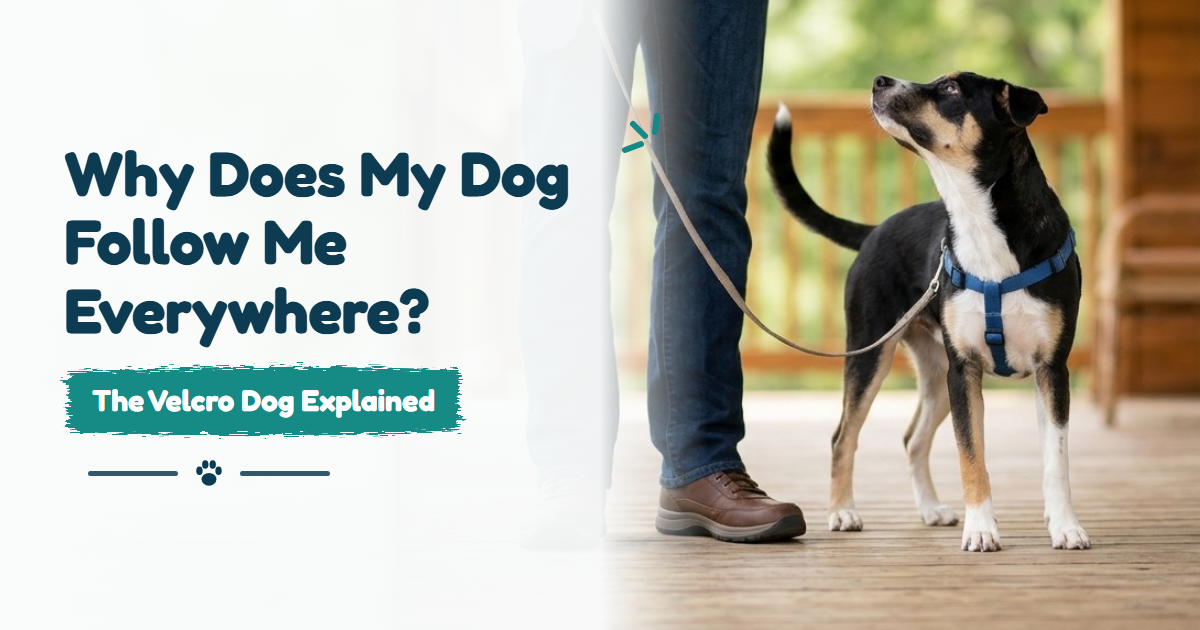
If you’ve ever asked “why does my dog follow me everywhere?”, you’re not imagining it. Some dogs are true shadows. The nickname “velcro dog” fits them well.
In most cases, this is a sign of a strong bond and a happy, normal dog. In a few cases, it’s a clue that something is off. Here’s how to tell the difference.
Table of Contents
- What Is a Velcro Dog?
- 9 Reasons Your Dog Follows You Everywhere
- Velcro Dog Breeds
- Why Does My Dog Follow Me to the Bathroom?
- Why Is My Dog So Clingy All of a Sudden?
- Clingy Dog or Separation Anxiety?
- How to Help Your Dog Feel Confident on Their Own
- Frequently Asked Questions
What Is a Velcro Dog?
A velcro dog is any dog that prefers to stay within a few feet of their favorite person. They lie at your feet while you work, follow you to the kitchen, and wait outside the shower. Some trainers use the term for certain breeds, and some owners use it for any extra-attached dog.
Being a velcro dog isn’t a diagnosis. It’s a description of how close a dog likes to be. The real question is whether your dog is relaxed while staying close, or worried about being apart.
9 Reasons Your Dog Follows You Everywhere
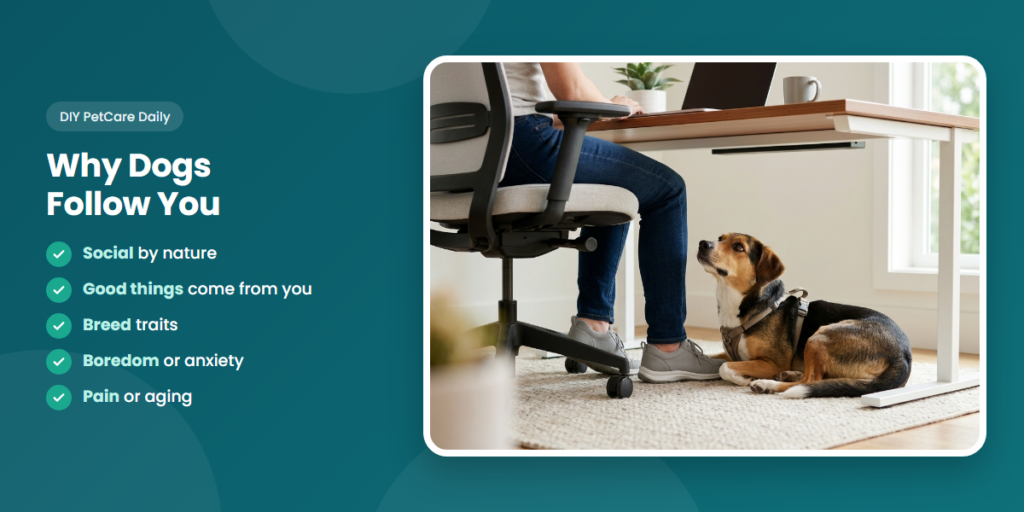
1. Dogs Are Social Animals
Dogs evolved to live in groups, and over thousands of years they’ve been bred to live and work with people. For most dogs, you’re the center of their world. Staying near you just feels right.
2. You’ve Taught Them to (Without Meaning To)
Every time your dog follows you to the kitchen and gets a snack, a pat, or a kind word, they learn that following pays off. Over months and years, this becomes a strong habit. It’s a sweet habit, but it’s learned.
3. You Are the Source of Good Things
Food, walks, play, car rides, and belly rubs all come from you. Your dog follows you because you might be heading toward something fun. That’s why many dogs get extra attached around mealtimes.
4. Breed Traits
Many herding, sporting, and companion breeds were developed to work closely beside people. Following you is part of their job description, even if their job today is guarding the couch. See the breed table below.
5. Curiosity and Boredom
A bored dog with nothing to do will often keep track of you just to see what happens next. Dogs who don’t get enough exercise or mental activity may shadow you more.
6. Imprinting and Early Life
Puppies that were raised with lots of human contact, or hand-raised puppies, often bond very closely with people. Rescue dogs may also cling to a new owner, especially in the first months after adoption.
7. Anxiety
Some dogs follow you because being apart makes them nervous. These dogs may pant, pace, or whine when they can’t reach you. This kind of following can be an early sign of separation anxiety.
8. Illness or Pain
Dogs who feel unwell often seek comfort from their people. If your normally independent dog suddenly sticks to you, look for other changes, like eating less, sleeping more, or limping.
9. Aging Senses and Memory
Senior dogs who are losing their hearing or vision may stay closer so they don’t lose track of you. Dogs with canine cognitive dysfunction, a condition similar to dementia, can also become clingy and confused.
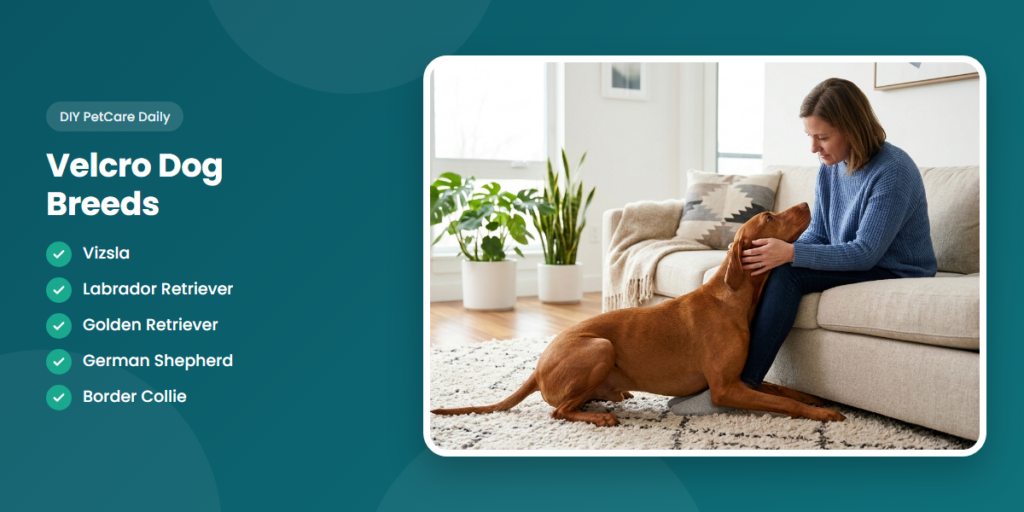
Velcro Dog Breeds
Any dog can become a velcro dog, but some velcro dog breeds are known for staying extra close to their owners.
| Breed | Why They Stick Close |
| Vizsla | Often called the original “velcro dog”; bred to hunt right beside a handler |
| Labrador Retriever | Friendly and people-focused, bred to work with hunters |
| Golden Retriever | Very social and eager to be near family |
| German Shepherd | Loyal and alert, likes to keep an eye on their people |
| Border Collie | A herding breed that watches every move |
| Doberman Pinscher | Bonds strongly with one or two people |
| Shetland Sheepdog | Sensitive herder that likes to stay in contact |
| Cavalier King Charles Spaniel | Bred as a lap dog and companion |
| Italian Greyhound | Small, affectionate, and loves warm laps |
| Chihuahua | Often attaches closely to one favorite person |
| Pug | Bred purely for companionship |
These are tendencies, not rules. You’ll find independent Labradors and clingy Huskies. Your dog’s own personality and history matter more than their breed.
Why Does My Dog Follow Me to the Bathroom?
This is one of the most common questions dog owners ask. Here’s the simple answer: to your dog, the bathroom is just another room you went into. They don’t share our ideas about privacy.
Your dog may also be checking that you’re okay, since you’ve gone somewhere small and closed the door. Some dogs simply don’t like closed doors between them and their person. If you don’t mind the company, there’s no harm in it. If you’d like privacy, teach a relaxed “stay” on a mat outside the door and reward your dog when you come out.
Why Is My Dog So Clingy All of a Sudden?
A dog that has always been clingy is usually fine. A dog suddenly clingy after years of independence is worth a closer look. Common triggers include:
- Changes at home: a move, a new baby, a new pet, or someone moving out
- Weather and noise: thunderstorms, fireworks, or construction
- Your own stress: dogs pick up on changes in your mood and routine
- Health problems: pain, stomach upset, heart issues, or hearing loss
- Pregnancy: in female dogs that haven’t been spayed
- Cognitive changes: in dogs over about 8 to 10 years old
See your vet if clinginess comes with any of these signs:
| Sign | Why It Matters |
| Eating or drinking less or more | Can point to illness |
| Panting or a fast heartbeat at rest | Pain, fever, or heart problems |
| Hiding, trembling, or restlessness | Pain or fear |
| Confusion or getting lost in the house | Possible cognitive dysfunction |
| Limping or not wanting to be touched | Pain or injury |
Our guide to the normal heart rate for dogs shows you how to check heart rate, breathing, and temperature at home before your vet visit.
Clingy Dog or Separation Anxiety?
A clingy dog and a dog with separation anxiety can look similar at home, but they act very differently when you leave.
- A happy velcro dog follows you around, but settles down when you leave. They might nap or chew a toy until you return.
- A dog with separation anxiety panics when alone. They may bark, howl, chew doors, have accidents, or try to escape.
If you’re not sure, record your dog for the first 30 minutes after you leave. If they panic, our guide to dog separation anxiety has a step-by-step training plan.
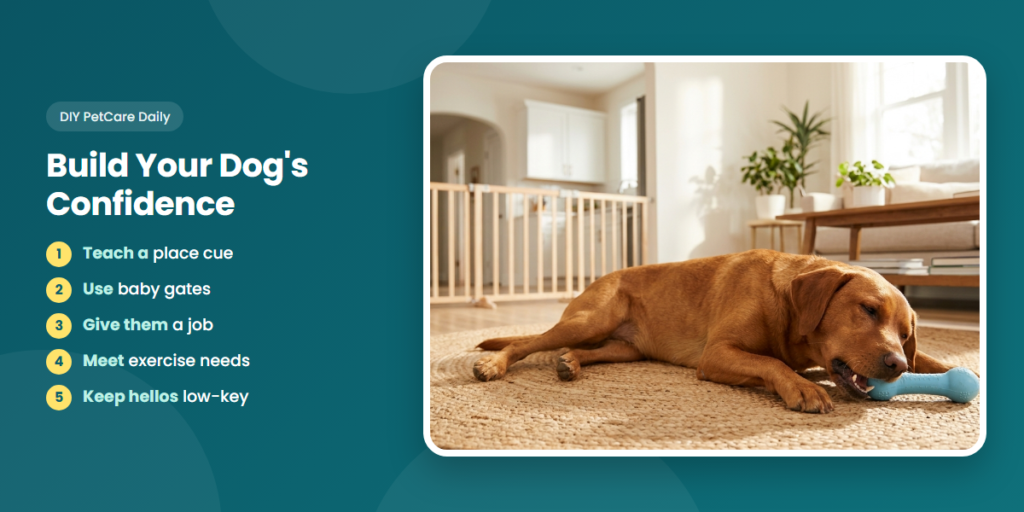
How to Help Your Dog Feel Confident on Their Own
You don’t have to stop your dog from following you. But a little independence makes life easier for both of you, especially for dogs who seem worried when apart.
- Teach a “place” cue. Reward your dog for lying on a bed or mat. Slowly add distance and time while you move around the room.
- Use baby gates. Let your dog see you without being right next to you. Start with short periods.
- Give them a job. Food puzzles, snuffle mats, and chew toys keep dogs busy while you do chores.
- Meet their exercise needs. A tired dog is more likely to nap than shadow you. Walks, play, and sniffing all count. If walks are a struggle, see how to leash train a dog.
- Reward calm, not following. Calmly praise your dog when they choose to rest in another room.
- Keep hellos and goodbyes low-key. Big emotional exits and entrances can make some dogs more worried about separation.
Small changes, practiced a few minutes a day, help a velcro dog learn that being a few rooms away is perfectly safe.
Frequently Asked Questions
Is it bad if my dog follows me everywhere?
Usually no. Most dogs that follow their owners are simply social and attached. It becomes a concern only if your dog seems stressed when they can’t reach you, or if the behavior starts suddenly along with other changes.
Do dogs follow the person they love most?
Dogs often follow the person who feeds them, walks them, and spends the most time with them. That person is linked to the most good things in their day. It’s a sign of a strong bond.
Why does my dog follow me and not my partner?
Your dog may see you as the main source of food, walks, or play. Dogs also bond with people whose routines and energy match theirs. Your partner can build a closer bond by taking over walks and meals for a while.
Are velcro dogs more likely to get separation anxiety?
Not always, but very attached dogs can be at higher risk, especially if they’re rarely left alone. Practicing short alone time from an early age helps prevent problems later.
When should I worry about a dog suddenly clingy?
Talk to your vet if clinginess starts suddenly and comes with changes in appetite, energy, breathing, or movement. In senior dogs, new clinginess with confusion can be a sign of cognitive dysfunction.