Table of Contents
- Table of Contents
- Which Type of Dog Bed Does Your Dog Need?
- How to Size a DIY Dog Bed
- Bed 1: No-Sew Pillow Bed (15 Minutes)
- Bed 2: DIY Raised Dog Bed (PVC Cot)
- Bed 3: Wooden Frame Bed With Mattress
- Bed 4: Orthopedic Foam Bed for Senior Dogs
- Bed 5: Upcycled Drawer or Suitcase Bed (Small Dogs)
- Bed 6: Sweater or Blanket Bolster Bed
- Tips for Dogs Who Chew Their Beds
- Where to Put Your Dog’s Bed
- Frequently Asked Questions
Quick answer: A simple DIY dog bed can be a duvet cover stuffed with old pillows, a wooden frame with a crib mattress, or a raised cot made from PVC pipe and outdoor fabric. Measure your dog while they sleep stretched out and add 8 to 12 inches. Use thick foam for senior dogs, a raised cot for hot weather or heavy chewers, and always choose a washable cover.
Dog beds wear out fast. They get flattened, chewed, dug at, and washed so many times the stuffing turns into lumps. And a good one can cost a lot, especially for big dogs.
Building your own lets you get the exact size and support your dog needs, often for less money. You can also reuse things you already have, like old pillows, a crib mattress, or a wooden pallet. This guide covers six easy builds, how to size them, and which style suits your dog best.
Table of Contents
- Which Type of Dog Bed Does Your Dog Need?
- How to Size a DIY Dog Bed
- Bed 1: No-Sew Pillow Bed (15 Minutes)
- Bed 2: DIY Raised Dog Bed (PVC Cot)
- Bed 3: Wooden Frame Bed With Mattress
- Bed 4: Orthopedic Foam Bed for Senior Dogs
- Bed 5: Upcycled Drawer or Suitcase Bed (Small Dogs)
- Bed 6: Sweater or Blanket Bolster Bed
- Tips for Dogs Who Chew Their Beds
- Where to Put Your Dog’s Bed
- Frequently Asked Questions
Which Type of Dog Bed Does Your Dog Need?
Watch how your dog sleeps. It tells you a lot about the bed they’ll like.
| If your dog… | Try this bed |
| Sleeps stretched out flat | Large flat pillow bed or mattress bed |
| Curls up in a ball | Round bed with raised sides (bolster) |
| Leans against walls or furniture | Bolster bed with a “pillow” edge |
| Runs hot or lives outdoors in summer | Raised cot |
| Is a heavy chewer or digger | Raised cot with tough fabric |
| Is a senior or has arthritis | Orthopedic foam bed |
| Is small and loves to burrow | Covered or cave-style bed |
How to Size a DIY Dog Bed
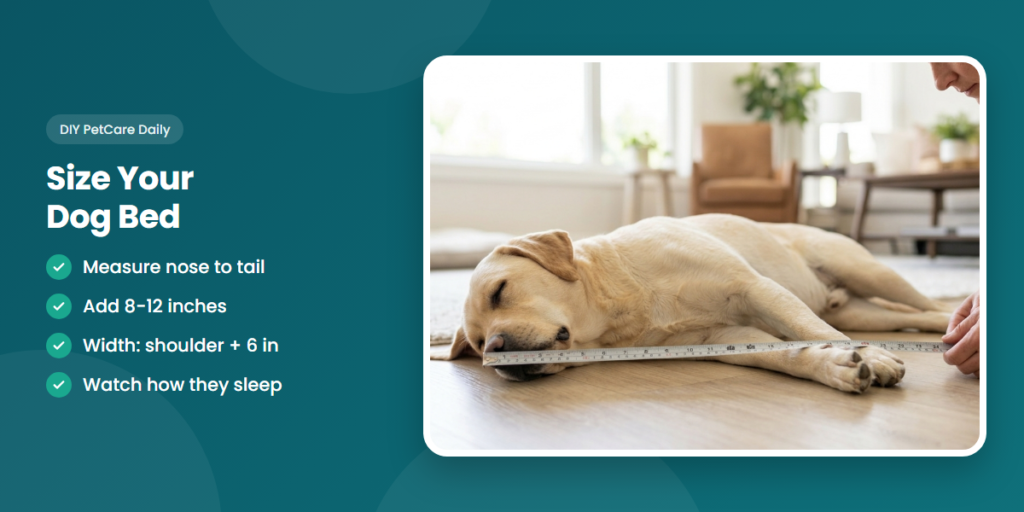
- Wait until your dog is asleep and stretched out in their usual position.
- Measure from the tip of the nose to the base of the tail.
- Add 8 to 12 inches. That’s your bed length.
- Measure from the floor to the top of the shoulder, then add about 6 inches. That’s a good minimum width.
Common Sizes
| Dog size | Example breeds | Bed size (approx.) |
| Small (up to 25 lb) | Dachshund, Pug, Shih Tzu | 24 x 18 in |
| Medium (25 to 50 lb) | Beagle, Border Collie | 30 x 24 in |
| Large (50 to 90 lb) | Labrador, Golden Retriever | 40 x 30 in |
| Extra large (90 lb and up) | Great Dane, Mastiff | 50 x 40 in or bigger |
Not sure which group your dog falls into? Our dog weight chart lists healthy ranges by breed.
Bed 1: No-Sew Pillow Bed (15 Minutes)
The fastest bed on the list.
You need: an old duvet cover or a large zippered pillowcase, and 2 to 4 old bed pillows or a bag of fiberfill.
How to make it:
- Lay the pillows side by side inside the duvet cover.
- If the cover is too big, fold the extra fabric under or tie it off with a knot.
- Zip or button it closed.
When it gets dirty, pull the pillows out and wash the cover. This bed suits gentle dogs, not chewers.
Bed 2: DIY Raised Dog Bed (PVC Cot)
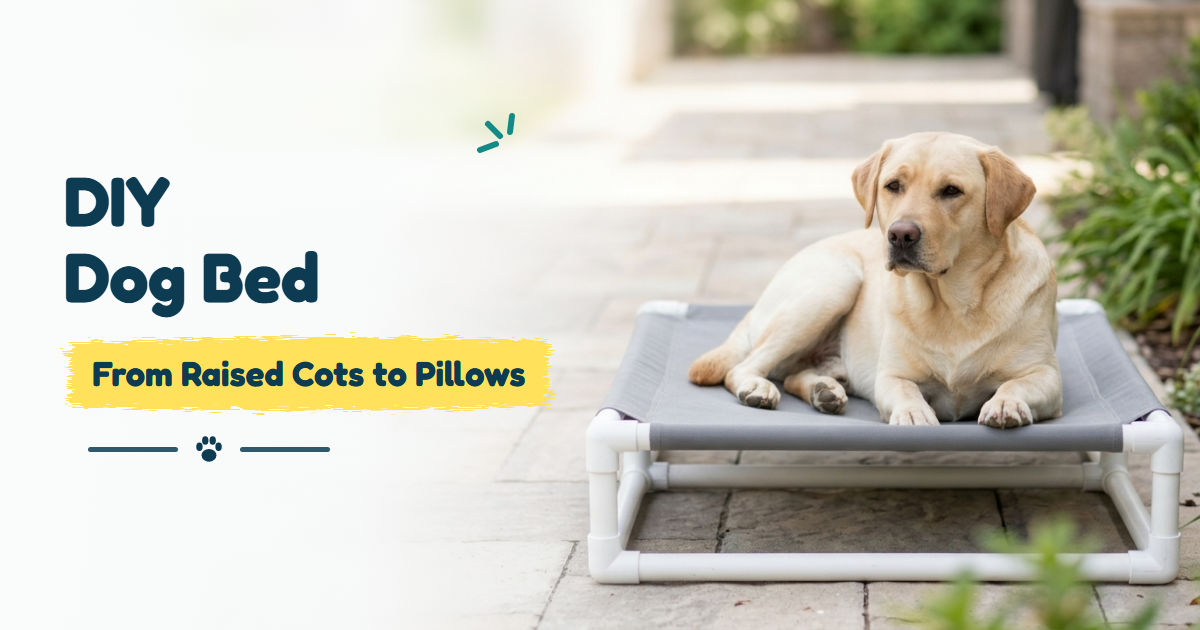
Raised cots keep dogs off cold or hot floors and let air flow underneath. They’re tough, easy to clean, and great for outdoor use and for dogs who chew stuffing.
You need:
- 1-inch PVC pipe (about 20 feet for a large bed)
- 4 PVC elbows (90-degree, three-way “side outlet” style) for corners
- 4 PVC T-joints and short pieces for legs (optional for a sturdier frame)
- PVC cement
- A pipe cutter or hacksaw
- Heavy outdoor fabric (canvas, Textilene mesh, or Cordura), cut 6 inches wider and longer than the frame
- A sewing machine, or grommets and strong cord
How to make it:
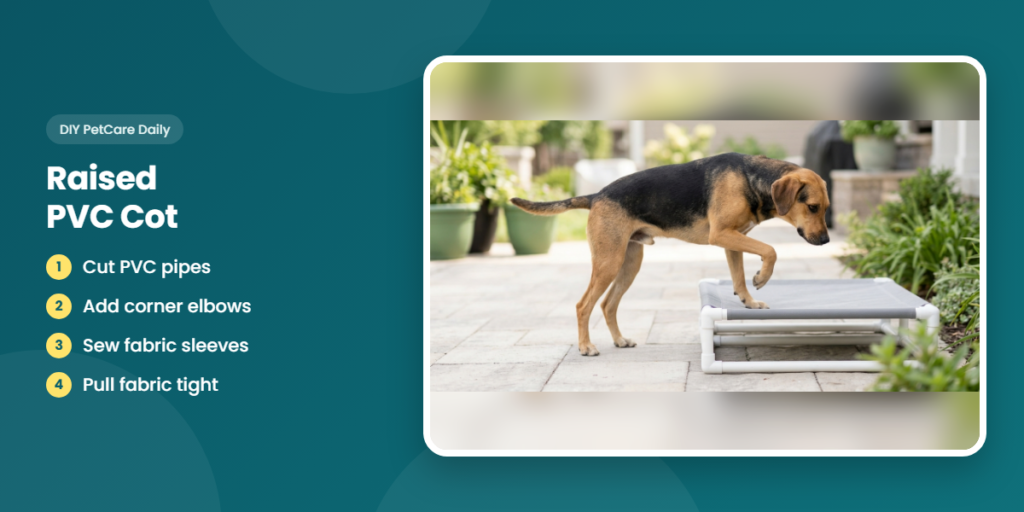
- Cut four pipes for the frame: two for the length and two for the width of your bed.
- Cut four short legs, about 4 to 6 inches long.
- Fit the legs into the bottom openings of the corner elbows.
- Fold the fabric edges over and sew a sleeve (a long pocket) along the two long sides.
- Slide the two long pipes through the fabric sleeves.
- Attach the short pipes and corner elbows to complete the rectangle.
- Pull the fabric tight, then glue the joints with PVC cement once everything fits.
No sewing option: Add grommets around the fabric edge and lace it tightly to the frame with strong cord, like a trampoline.
The fabric should be tight enough that your dog’s body doesn’t touch the floor. Add a thin washable pad on top for extra comfort in cool weather.
Bed 3: Wooden Frame Bed With Mattress
This looks like real furniture and lasts for years.
You need:
- 1×6 boards for the sides
- A sheet of 1/2-inch plywood for the base
- Four short furniture legs (optional)
- Wood screws, wood glue, sandpaper
- A crib mattress or a piece of foam cut to fit
- A washable cover
How to make it:
- Cut the plywood to the size of your mattress plus 1 inch.
- Build a box frame from the 1×6 boards around the plywood base.
- Cut one side lower (about 3 to 4 inches high) as an easy step-in entrance.
- Sand every edge and corner until smooth.
- Drill several holes in the base for airflow.
- Paint or stain with a pet-safe product, and let it cure for several days.
- Add legs if you want it raised, then drop in the mattress.
A crib mattress (about 52 x 28 inches) fits large dogs perfectly and is easy to find secondhand. Use a waterproof cover underneath the fabric cover.
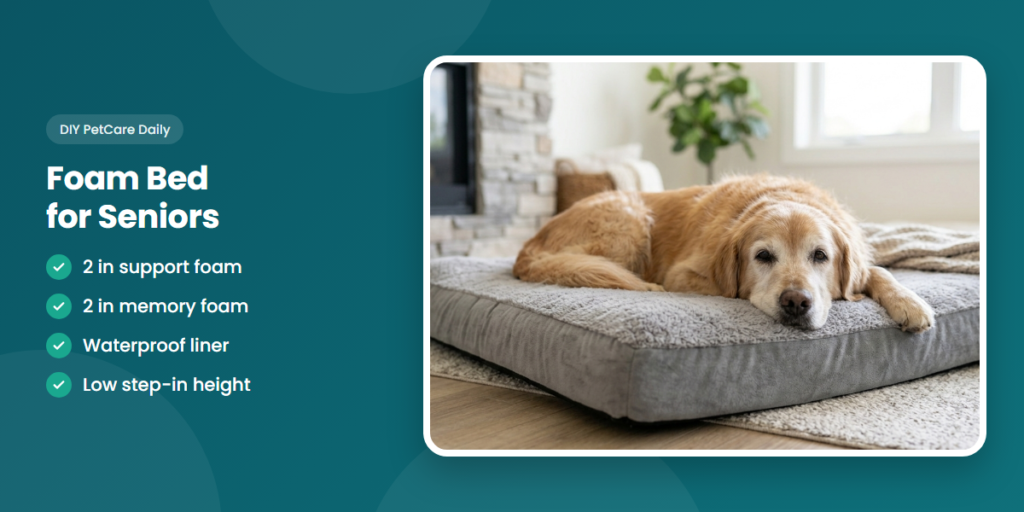
Bed 4: Orthopedic Foam Bed for Senior Dogs
Older dogs and dogs with arthritis need firm, even support so their joints don’t press into the floor.
You need:
- A 2-inch layer of firm support foam
- A 2-inch layer of memory foam on top
- A waterproof liner
- A washable zippered cover (a large cushion cover or duvet cover works)
How to make it:
- Cut both foam layers to your bed size with an electric carving knife or a long serrated knife.
- Stack the memory foam on top of the support foam.
- Slide them into the waterproof liner, then the outer cover.
Keep the bed low, so your dog can step on without climbing. If your older dog struggles with stairs or furniture, our guide to a DIY dog ramp helps too. Not sure if your dog counts as a senior? Read when a dog is considered a senior.
Bed 5: Upcycled Drawer or Suitcase Bed (Small Dogs)
An old dresser drawer or a vintage suitcase makes a cute bed for a small dog.
- Remove handles, hinges, or hardware that sticks out.
- Sand rough edges.
- Screw short legs onto a drawer, or prop a suitcase lid open securely so it can’t close.
- Add a cushion that fits snugly inside.
Make sure there’s nothing your dog could catch a collar, tag, or paw on.
Bed 6: Sweater or Blanket Bolster Bed
Roll a thick blanket into a long tube, tie or sew it into a ring, and set a round cushion in the middle. Dogs who like to curl up and rest their heads on something love the soft edge.
Tips for Dogs Who Chew Their Beds
- Choose a raised cot. There’s no stuffing to pull out.
- Use tough fabric like canvas, ripstop nylon, or Cordura.
- Hide zippers on the bottom or use covers with zipper flaps.
- Don’t use stuffing beds for chewers. Swallowed foam or fiberfill can cause a dangerous blockage.
- Give plenty of chew toys and exercise. Bed chewing is often boredom or anxiety. Our guide on dog separation anxiety covers chewing that happens when dogs are left alone.
Where to Put Your Dog’s Bed
- Somewhere quiet, but near the family. Many dogs want to be close to you; our guide on velcro dogs explains why.
- Away from drafts, heaters, and direct sun.
- Off cold tile or concrete in winter.
- In the same spot each night, so your dog knows where to go.
For outdoor dogs in cold weather, a bed alone isn’t enough. See our guide to an insulated dog house. More builds are in our DIY Dog Projects section.
Frequently Asked Questions
What can I use to make a dog bed?
Old pillows inside a duvet cover, a crib mattress in a wooden frame, foam cut to size, a sweater or blanket rolled into a bolster, or PVC pipe and outdoor fabric for a raised cot all work well.
How do you make a raised dog bed?
Build a rectangle frame from 1-inch PVC pipe and corner elbows with short legs, then stretch tough outdoor fabric over it using sewn sleeves or grommets and cord. Pull the fabric tight so your dog doesn’t sag to the floor.
What size bed does my dog need?
Measure your dog from nose to the base of the tail while they’re stretched out, then add 8 to 12 inches. For width, measure from floor to shoulder and add about 6 inches.
What’s the best filling for a DIY dog bed?
Firm foam works best for support, especially for older dogs. Old pillows or fiberfill are fine for small, gentle dogs. Avoid loose stuffing for chewers.
Are raised dog beds better?
Raised beds keep dogs cooler in summer, lift them off cold or damp floors, and are easier to clean. They’re also great for dogs who chew stuffing. Some dogs prefer a soft, cushioned bed, so you can add a thin pad on top.