Table of Contents
- Why Brushing Your Dog’s Teeth Matters
- What You Need Before You Start
- The 7-Day Plan to Brush a Dog’s Teeth
- How to Brush Properly Once Your Dog Is Comfortable
- What If Your Dog Still Refuses?
- Common Mistakes to Avoid
- Do Dental Chews and Water Additives Replace Brushing?
- When to See a Vet
- Frequently Asked Questions
Quick answer: Go slow. Over seven days, teach your dog to like the taste of dog toothpaste, then to let you touch their lips and gums, then to accept a finger brush or a soft toothbrush. Give a reward after every step. Never use human toothpaste, because it can make your dog sick.
Most dogs don’t like having someone poke around in their mouth, and that’s normal. Your dog isn’t being stubborn. They just haven’t learned that it’s safe. The fix is to go in small steps and make each one a good experience. This plan takes about a week, with 2 to 5 minutes a day.
Why Brushing Your Dog’s Teeth Matters
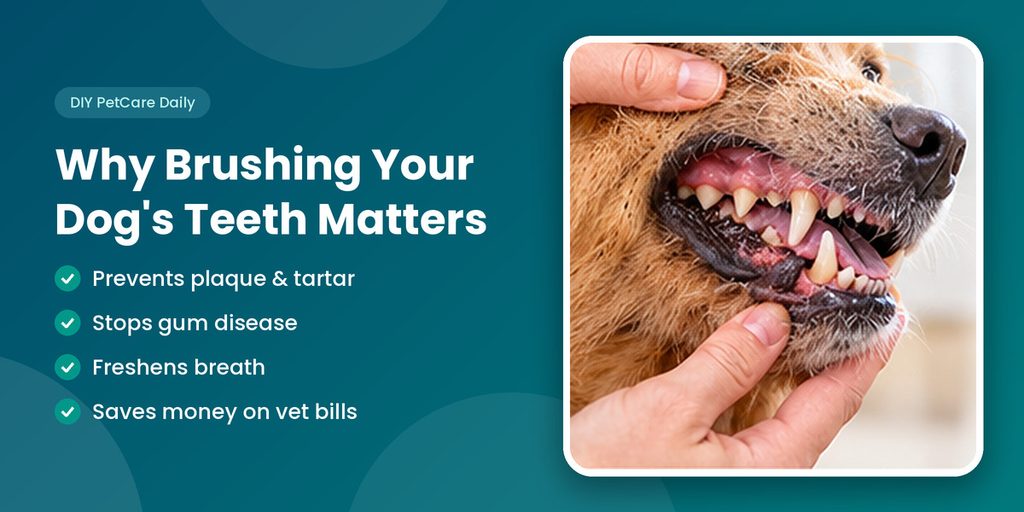
Plaque is a sticky film that builds on teeth every day. Within a few days it can harden into tartar, and tartar can’t be brushed off. It leads to gum disease, bad breath, pain, and loose teeth. Many vets say most dogs have some dental disease by the age of three.
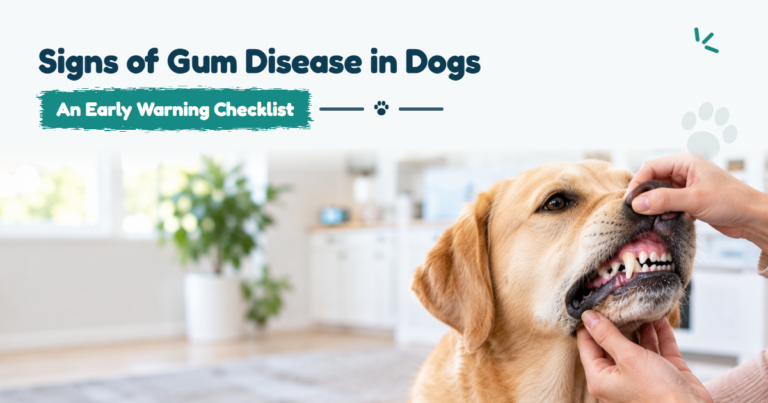
Brushing is the best thing you can do at home to slow this down. It can also save money, since a professional dental cleaning is done under anesthesia and often costs several hundred dollars or more. If you want to know what early gum problems look like, read our guide on signs of gum disease in dogs.
What You Need Before You Start
- Dog toothpaste (poultry, beef, or another dog-friendly flavor)
- A finger brush or a soft dog toothbrush
- Small treats or a favorite toy
- A quiet spot where your dog feels relaxed
Never use human toothpaste. It often has fluoride, which isn’t meant to be swallowed, and some brands contain xylitol, which is toxic to dogs. Dogs can’t spit, so whatever goes on the brush ends up in their stomach. Check the label on dog toothpaste too, and skip any that lists xylitol.
The 7-Day Plan to Brush a Dog’s Teeth
Do one step per day. If your dog seems unsure, repeat the same day until they relax. There’s no deadline. Keep each session short, and always end on something good, like a treat or a quick game.
Day 1: Let Your Dog Taste the Toothpaste
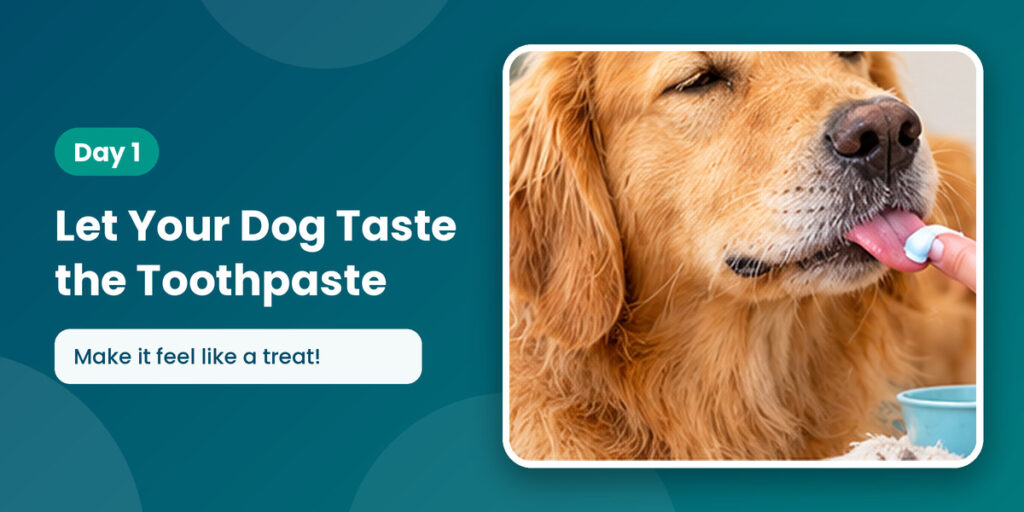
Start by putting a bit of toothpaste on your finger so your dog can lick it off.. Praise them. Do this two or three times. The goal is for your dog to think toothpaste is a treat.
Day 2: Touch the Lips and Gums
Put toothpaste on your finger again. While your dog licks it, lift their lip on one side and touch the gum for a second or two. Give a treat. Stop before your dog pulls away.
Day 3: Rub the Front Teeth
Use your finger to rub the front teeth and the long canine teeth in small circles for about 10 seconds. Reward your dog.
Day 4: Introduce the Brush
Put toothpaste on the brush, or slide on the finger brush, and let your dog lick it. Don’t brush yet. You just want your dog to see the brush as something that brings tasty things.
Day 5: Brush the Front Teeth
Brush the front teeth and canines for 10 to 15 seconds. Hold the brush at a slight angle toward the gumline, about 45 degrees. Give a treat and lots of praise.
Day 6: Add the Side Teeth
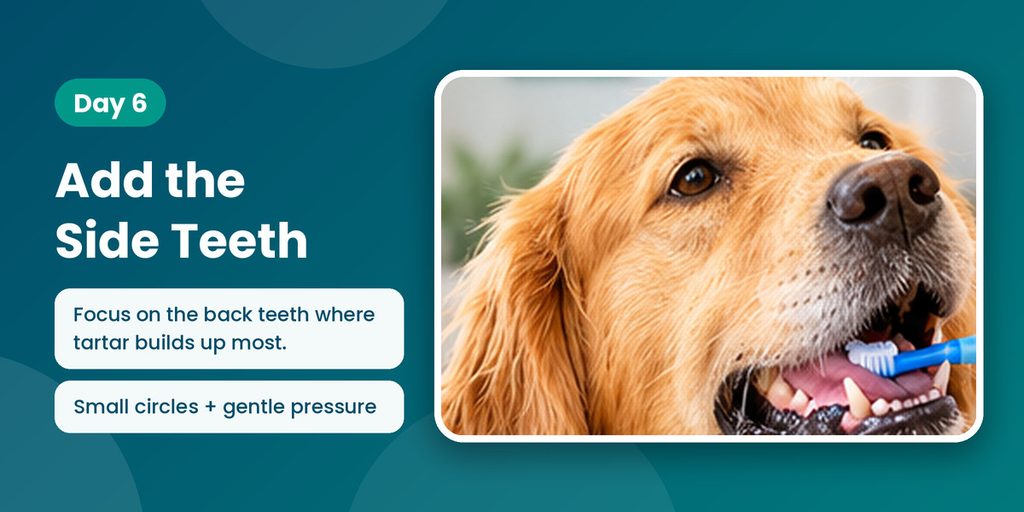
Lift the lip at the side of the mouth and brush the upper cheek teeth, the big teeth toward the back. This is where tartar builds up the most. Try 20 to 30 seconds on each side.
Day 7: Brush Both Sides
Brush the outer surfaces of the teeth on both sides, upper and lower, for about a minute in total. Finish with a big reward. Your dog now knows the routine.
How to Brush Properly Once Your Dog Is Comfortable
After the first week, keep the routine going:
- Brush the outside surfaces of the teeth. Your dog’s tongue keeps the inside cleaner.
- Use small circles along the gumline, where plaque collects.
- Don’t force the mouth open. Lifting the lip is enough.
- Aim for about 30 seconds per side.
- Brush every day if you can. A few times a week still helps, but daily works best.
Tooth brushing also fits into a general grooming routine. If your dog is fussy about being handled, our guide on how to remove matted fur from a dog at home uses the same slow, treat-based approach.
What If Your Dog Still Refuses?
Go back one step. If Day 5 was too much, spend another day on Day 4. A few more tips:
- Try a different toothpaste flavor.
- Switch from a brush to a finger brush, or the other way around.
- Pick a time when your dog is tired, like after a walk.
- Never hold your dog down or scold them. Fear makes it worse.
- Start young if you can. Puppies learn fast, but older dogs can learn too.
If your dog growls, snaps, or pulls away every time you touch the mouth, stop. Mouth pain can be the reason. Have your vet check for sore teeth or gums before you try again.
Common Mistakes to Avoid
- Using human toothpaste or baking soda
- Starting with the brush on day one
- Doing long, stressful sessions
- Giving hard chews like bones, antlers, or hooves, which can crack teeth
- Skipping vet dental checks
Do Dental Chews and Water Additives Replace Brushing?
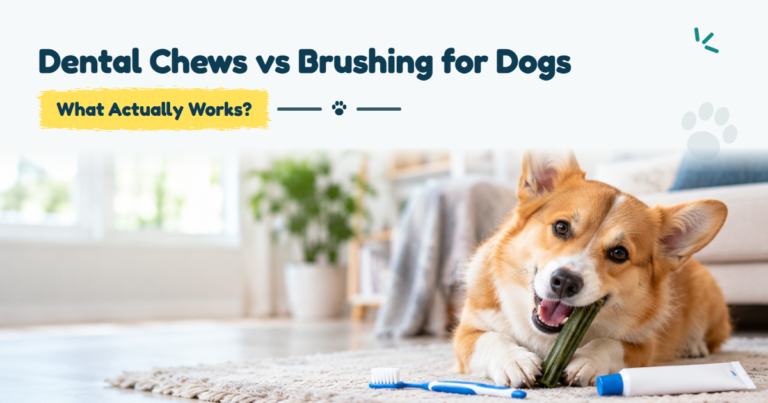
No. Chews and additives can help, but brushing is still the best option. If you buy dental chews, look for the seal of the Veterinary Oral Health Council. It means the product has shown it can reduce plaque or tartar. For a full comparison, see our post on dental chews vs brushing for dogs.
When to See a Vet
Book a visit if you notice any of these:
- Bad breath that doesn’t go away
- Yellow or brown tartar on the teeth
- Red, swollen, or bleeding gums
- More drooling than usual, or dropping food while eating
- Pawing at the mouth
- Loose or broken teeth
A yearly checkup should include a look at your dog’s mouth. For more tips, browse our Dog Teeth Care and Dog Health & Wellness sections.
Frequently Asked Questions
How often should you brush a dog’s teeth?
Daily is best. A few times a week still helps. Once tartar has hardened, brushing won’t remove it, and your vet will need to clean it.
Can I use human toothpaste on my dog?
No. Human toothpaste can contain fluoride and xylitol, and dogs swallow it instead of spitting. Use toothpaste made for dogs.
How long does it take to get a dog used to tooth brushing?
Many dogs are fine within one to two weeks. Anxious dogs can take longer. Go at your dog’s pace and repeat any day that feels too fast.
Is it too late to start brushing an older dog’s teeth?
No. Dogs of any age can learn. If your older dog has heavy tartar, red gums, or seems to be in pain, see your vet first.
Can I use baking soda to brush my dog’s teeth?
It’s not recommended. Baking soda tastes salty and bitter, most dogs refuse it, and it can upset the stomach if swallowed. Dog toothpaste is a safer choice.

One Response