Table of Contents
- Table of Contents
- Why Brushing Matters More Than the Paste
- Is Homemade Dog Toothpaste Safe?
- Ingredients to Never Put in DIY Dog Toothpaste
- 3 Easy Homemade Dog Toothpaste Recipes
- Homemade Dog Toothpaste Without Coconut Oil
- Natural Dog Toothpaste vs. Vet Toothpaste
- Dog Toothpaste Alternatives
- How to Brush Your Dog’s Teeth With Homemade Toothpaste
- Tips for Making and Storing DIY Dog Toothpaste
- When to See Your Vet Instead
- Frequently Asked Questions
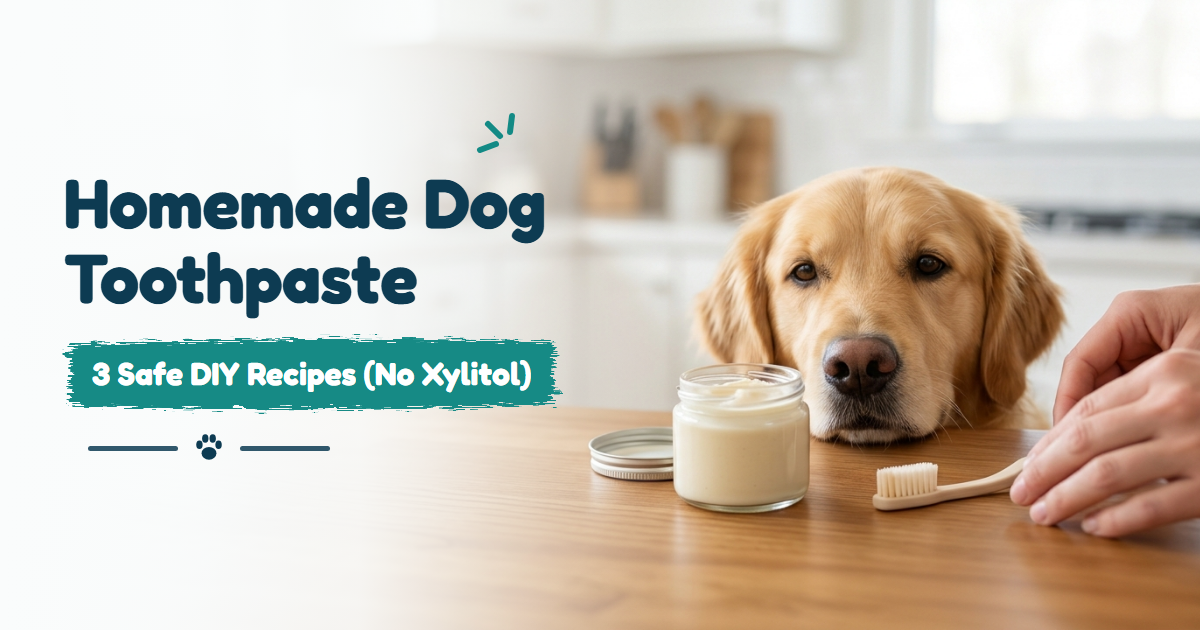
Quick answer: Homemade dog toothpaste can be as simple as 2 tablespoons of coconut oil mixed with 1 teaspoon of low-sodium, onion-free chicken broth. It’s safe for dogs to swallow and tastes good enough that most dogs accept the brush. The brushing does most of the cleaning, so the paste only needs to be safe and tasty. Never use human toothpaste, which can contain xylitol and fluoride.
If you’ve ever tried to brush your dog’s teeth, you know the toothpaste matters more to your dog than it does to you. A flavor they love can turn a wrestling match into a calm 2-minute routine. A flavor they hate can end it before it starts.
Pet store toothpaste works fine, but it isn’t your only choice. You can mix a simple, safe paste at home in about two minutes with things you probably already have in your kitchen. This guide gives you three easy recipes (including one without coconut oil), the ingredients you should never use, what you can brush with when you’re out of paste, and how to make the whole thing work.
Table of Contents
- Why Brushing Matters More Than the Paste
- Is Homemade Dog Toothpaste Safe?
- Ingredients to Never Put in DIY Dog Toothpaste
- 3 Easy Homemade Dog Toothpaste Recipes
- Homemade Dog Toothpaste Without Coconut Oil
- Natural Dog Toothpaste vs. Vet Toothpaste
- Dog Toothpaste Alternatives
- How to Brush Your Dog’s Teeth With Homemade Toothpaste
- Tips for Making and Storing DIY Dog Toothpaste
- When to See Your Vet Instead
- Frequently Asked Questions
Why Brushing Matters More Than the Paste
Here’s something most DIY recipes don’t tell you: the toothbrush does the real work. Plaque is a soft, sticky film of bacteria. The bristles scrub it off the tooth surface and along the gumline. The paste mostly makes the job pleasant for your dog.
That’s good news, because it means a simple homemade paste can do the job well as long as you brush regularly.
Why bother at all? Dental disease is one of the most common health problems vets see. Most dogs show some signs of it by age 3. If plaque isn’t brushed away, it can harden into tartar within a few days. Tartar can’t be brushed off at home and usually needs a professional cleaning under anesthesia.
Over time, plaque and tartar can lead to:
- Bad breath
- Red, swollen, or bleeding gums
- Loose or painful teeth
- Tooth loss
- Infection that can affect other parts of the body
If you’re not sure what your dog’s mouth looks like now, our checklist of signs of gum disease in dogs is a good place to start.
Is Homemade Dog Toothpaste Safe?
Yes, as long as every ingredient is safe for a dog to swallow. Dogs can’t rinse and spit, so whatever goes on the brush ends up in their stomach. That’s the one rule behind every recipe in this guide.
There is one honest trade-off. Many vet toothpastes contain enzymes (like glucose oxidase) that help slow plaque buildup between brushings. Homemade paste doesn’t have those. So a homemade version is a great choice for dogs who refuse store-bought flavors, for owners who want simple ingredients, or for when you run out. If your dog already has gum problems, ask your vet whether an enzymatic paste is a better fit.
Why You Can’t Use Human Toothpaste
Never brush your dog’s teeth with your own toothpaste. Here’s why:
- Xylitol: Some toothpastes are sweetened with xylitol (sometimes listed as “birch sugar”). It’s toxic to dogs. It can cause a sudden drop in blood sugar and liver damage, even in small amounts.
- Fluoride: Safe for people who spit it out, but not something a dog should swallow every day.
- Foaming agents: Ingredients like sodium lauryl sulfate can upset a dog’s stomach.
- Mint flavor: Strong mint is often unpleasant for dogs, which makes brushing harder.
If your dog ever eats human toothpaste, call your vet or a pet poison hotline right away, especially if the label lists xylitol.
Ingredients to Never Put in DIY Dog Toothpaste
A lot of homemade recipes online include ingredients that sound natural but aren’t a good idea for dogs. Skip these:
| Ingredient | Why to avoid it |
| Xylitol or “birch sugar” | Toxic to dogs, even in small amounts |
| Human toothpaste of any kind | May contain xylitol, fluoride, and foaming agents |
| Essential oils (tea tree, peppermint, clove) | Can be toxic to dogs and irritate the mouth |
| Garlic or onion powder | Damages a dog’s red blood cells |
| Broth that contains onion or garlic | Same problem; many store broths include them |
| Salt | Dogs swallow the paste, and extra salt adds up fast |
| Baking soda | Salty taste many dogs dislike, and it isn’t meant to be swallowed in large amounts |
| Hydrogen peroxide | Irritates gums and can cause vomiting if swallowed |
| Sugar, honey, or chocolate | Feeds bacteria, and chocolate is toxic |
Baking soda shows up in a lot of DIY recipes because people use it in their own toothpaste. We leave it out. The brush already scrubs the teeth, and a dog shouldn’t be swallowing a gritty, salty paste every day.
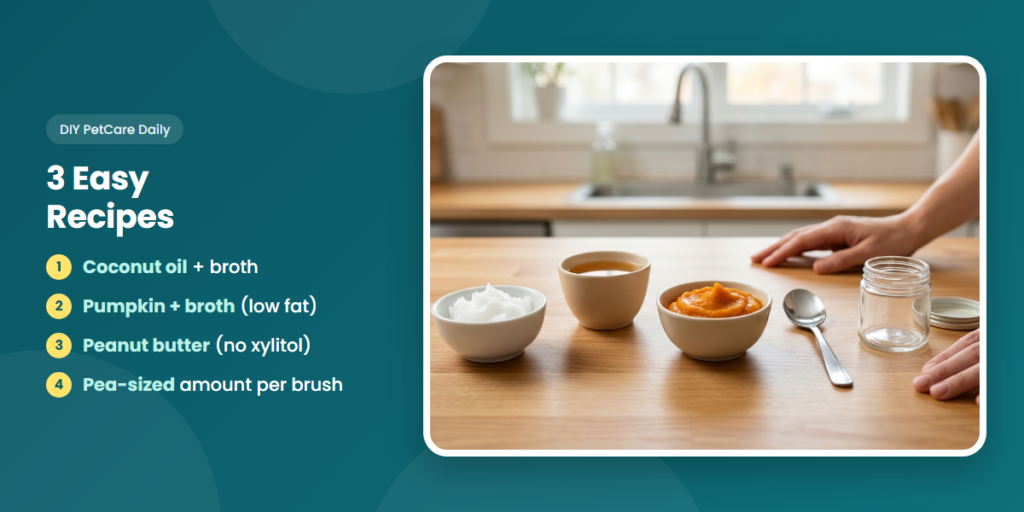
3 Easy Homemade Dog Toothpaste Recipes
All three recipes make a small batch. You only need a pea-sized amount for a small dog and a little more for a large dog.
Recipe 1: Coconut Oil and Chicken Broth (The Classic)
This is the most popular DIY dog toothpaste. Coconut oil gives it a soft paste texture, and broth adds a meaty flavor most dogs love.
Ingredients
- 2 tablespoons coconut oil (softened, not melted)
- 1 teaspoon low-sodium chicken or beef broth with no onion or garlic
- Optional: a small pinch of dried parsley for texture
How to make it
- Soften the coconut oil at room temperature until it’s like soft butter.
- Stir in the broth until smooth.
- Add the parsley if using, and mix again.
- Spoon it into a small clean jar with a lid.
Storage: Keep it in the fridge and use it within 1 week. Let it sit out for a few minutes before brushing so it softens.
A note on coconut oil: It’s high in fat. A tiny amount on a toothbrush is fine for most dogs, but skip it if your dog has a history of pancreatitis or a sensitive stomach. Recipe 2 is a better choice for those dogs.
Recipe 2: Pumpkin and Broth Paste (Low Fat)
This one works well for dogs who don’t do well with fat, and it’s a good choice if you don’t have coconut oil.
Ingredients
- 1 tablespoon plain canned pumpkin (100% pumpkin, not pumpkin pie filling)
- 1 teaspoon low-sodium chicken broth with no onion or garlic
How to make it
- Mix the pumpkin and broth in a small bowl until smooth.
- Add a few more drops of broth if it’s too thick to spread on a brush.
Storage: Fridge only, and use within 3 days. To save time, freeze extra in an ice cube tray and thaw one cube at a time.
Recipe 3: Peanut Butter Paste for Picky Dogs
For dogs who turn their nose up at everything, a thin peanut butter paste can get them interested in the brush.
Ingredients
- 1 teaspoon plain peanut butter (check the label: no xylitol, no added salt if you can find it)
- 1 to 2 teaspoons water
How to make it
- Mix the peanut butter with water until it’s thin enough to spread.
- Use a very small amount. Peanut butter is high in calories.
Storage: Make it fresh each time. It only takes a few seconds.
This recipe is best as a training tool. Once your dog is comfortable with brushing, switch to Recipe 1 or 2.
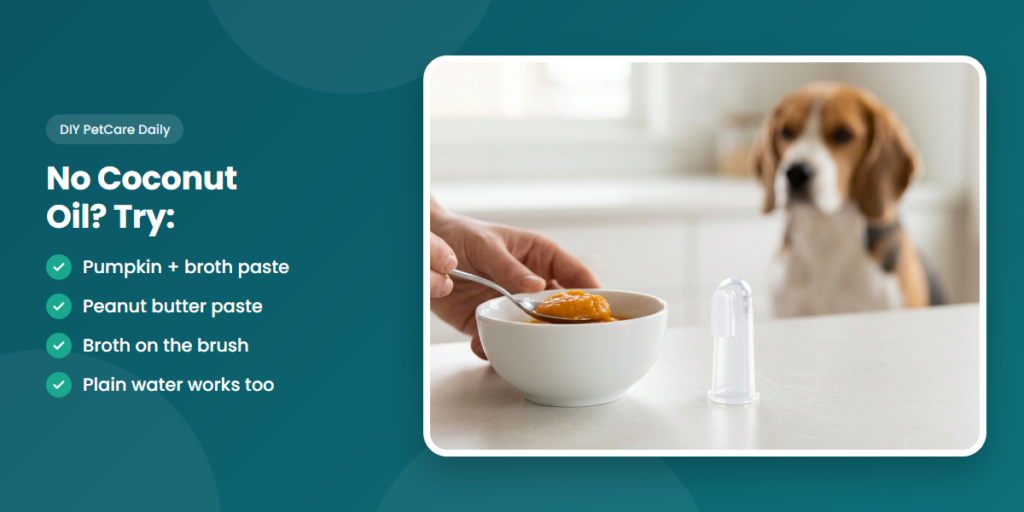
Homemade Dog Toothpaste Without Coconut Oil
Coconut oil is in almost every DIY recipe, but you don’t need it. Some dogs get an upset stomach from it, some owners want to keep fat low, and some people just don’t keep it in the house.
Good options without coconut oil:
- Pumpkin and broth paste (Recipe 2 above). This is the best all-around choice.
- Peanut butter and water paste (Recipe 3 above), checked for xylitol.
- Broth only. Dip the toothbrush in a little low-sodium, onion-free broth. It isn’t a paste, but it adds flavor and helps the bristles glide.
- Plain water. The brush still removes plaque. Water just isn’t as exciting for your dog.
If you’re avoiding coconut oil because your dog had pancreatitis, also go easy on peanut butter. The pumpkin or broth options are the lowest in fat.
Natural Dog Toothpaste vs. Vet Toothpaste
Not sure which way to go? Here’s how a homemade natural dog toothpaste compares with a store-bought enzymatic one:
| Homemade natural paste | Vet enzymatic toothpaste | |
| Safe to swallow | Yes, if made with safe ingredients | Yes |
| Helps remove plaque when brushing | Yes (the brush does the work) | Yes |
| Slows plaque between brushings | No | Yes, thanks to enzymes |
| Cost | Very low | Around $8 to $15 per tube |
| Flavor control | You choose it | Set flavors (poultry, beef, peanut butter) |
| Shelf life | 3 to 7 days in the fridge | Months |
| Best for | Picky dogs, simple ingredients, running out | Dogs with gum problems, busy owners |
Many owners use both: a vet toothpaste for most days and a homemade paste when they run out or when their dog needs a flavor boost. If you shop for toothpaste, look for the VOHC (Veterinary Oral Health Council) seal on dental products. It means the product has been tested to reduce plaque or tartar.
Dog Toothpaste Alternatives
What can you brush your dog’s teeth with instead of toothpaste? More than you might think. Here are the common alternatives, from most to least effective:
- A toothbrush with plain water or broth. You still get the plaque-scrubbing benefit of brushing.
- Gauze or a finger brush. Wrap a piece of gauze around your finger, dampen it with broth, and rub along the gumline. Great for small dogs and puppies.
- Dental wipes made for dogs. Easier than brushing, but they don’t reach between teeth as well.
- Dental chews and water additives. They help a little, but they don’t replace brushing. Our guide on dental chews vs. brushing for dogs explains what each one can and can’t do.
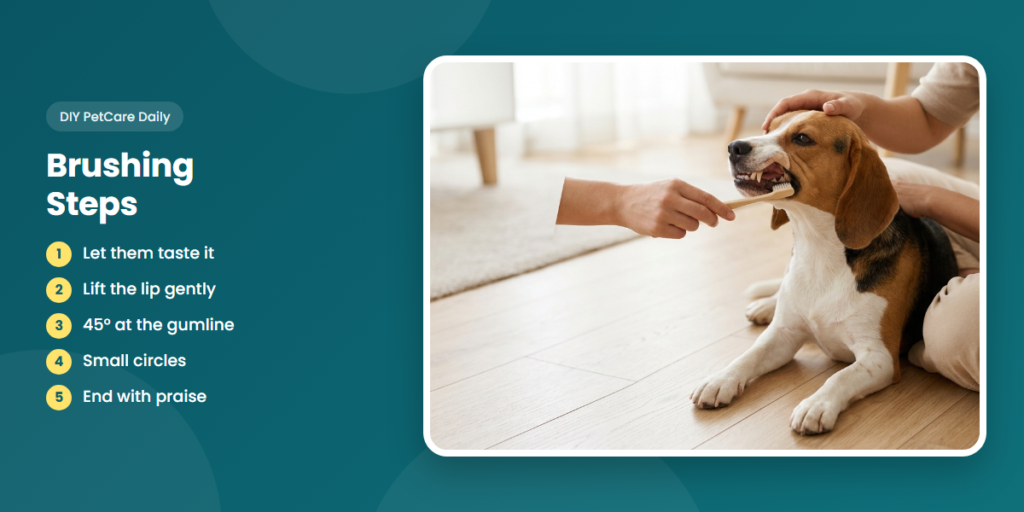
How to Brush Your Dog’s Teeth With Homemade Toothpaste
- Start with taste. For the first few days, just let your dog lick a little paste off your finger. Praise them.
- Touch the mouth. Lift your dog’s lip and touch their teeth and gums with your finger. Keep it short and positive.
- Bring in the brush. Put a small amount of paste on a soft dog toothbrush or finger brush. Let your dog lick it first.
- Brush the outside of the teeth. Hold the brush at a 45-degree angle to the gumline and use small circles. Focus on the back teeth and the large upper cheek teeth, where tartar builds up fastest.
- Keep it short. Thirty seconds per side is plenty at first. Work up to about 2 minutes total.
- Reward. End with praise, play, or a walk so your dog connects brushing with good things.
You don’t have to brush the inside surfaces of the teeth. A dog’s tongue helps keep those cleaner. If your dog fights the brush, our 7-day plan for brushing a dog who hates it breaks training into small, easy steps.
How Often Should You Brush?
Daily brushing is best. If that’s not realistic, aim for at least 3 times a week. Plaque starts hardening into tartar within days, so long gaps between brushings let it build up.
Tips for Making and Storing DIY Dog Toothpaste
- Make small batches. Homemade paste has no preservatives, so fresh is best.
- Use a clean spoon every time you scoop from the jar so you don’t add bacteria from the brush.
- Label the jar with the date you made it.
- Throw it out if it smells sour, changes color, or grows anything.
- Warm it up. Paste straight from the fridge is stiff and cold. Let it sit out for a few minutes.
- Replace the toothbrush every 3 months, or sooner if the bristles are bent.
- Check every broth label for onion, garlic, and high salt. Bone broth made for dogs is an easy safe option.
When to See Your Vet Instead
Homemade toothpaste is for healthy mouths. Brushing alone won’t fix a dental problem that’s already there. Call your vet if you notice:
- Bad breath that doesn’t get better with brushing
- Yellow or brown tartar along the gumline
- Red, swollen, or bleeding gums
- A loose, broken, or discolored tooth
- Drooling, pawing at the mouth, or chewing on one side
- Dropping food or not wanting to eat hard food
Your vet may suggest a professional cleaning first. After that, brushing at home with a safe homemade or enzymatic paste helps keep those teeth clean longer.
Looking for more easy projects? Browse our DIY Dog Projects section.
Frequently Asked Questions
What can I use to brush my dog’s teeth instead of toothpaste?
You can use plain water, low-sodium broth with no onion or garlic, or a simple homemade paste like coconut oil and broth. The brush does most of the cleaning, so the main goal is a safe flavor your dog accepts. Never use human toothpaste.
Is coconut oil good for dogs’ teeth?
Coconut oil makes a good base for homemade dog toothpaste because it’s safe to swallow in small amounts and has a texture dogs like. Don’t count on it to clean teeth by itself, though. Brushing is what removes plaque. Skip it for dogs with pancreatitis or a sensitive stomach.
Can I use baking soda to brush my dog’s teeth?
It’s better to leave it out. Baking soda tastes salty, many dogs dislike it, and dogs swallow everything you put on the brush. A simple broth or pumpkin paste works just as well because the brushing does the cleaning.
How long does homemade dog toothpaste last?
A coconut oil and broth paste lasts about 1 week in the fridge. Pumpkin paste lasts about 3 days, but you can freeze extra in an ice cube tray. Peanut butter paste is best made fresh each time.
Is homemade dog toothpaste as good as store-bought?
For cleaning during brushing, yes, because the brush does most of the work. Store-bought enzymatic toothpaste has one advantage: enzymes that keep working on plaque after you brush. Dogs with gum problems may do better with a vet toothpaste.