Table of Contents
- Table of Contents
- Is Peanut Butter Safe for Dogs?
- What You’ll Need
- Recipe 1: Classic Peanut Butter Dog Biscuits
- Recipe 2: Peanut Butter Pumpkin Dog Treats
- Recipe 3: No-Bake Peanut Butter Oat Bites
- Recipe 4: Soft Peanut Butter Chews for Senior Dogs
- How Many Peanut Butter Treats Can a Dog Have?
- How to Store Peanut Butter Dog Treats
- Ways to Use Peanut Butter Beyond Biscuits
- Frequently Asked Questions
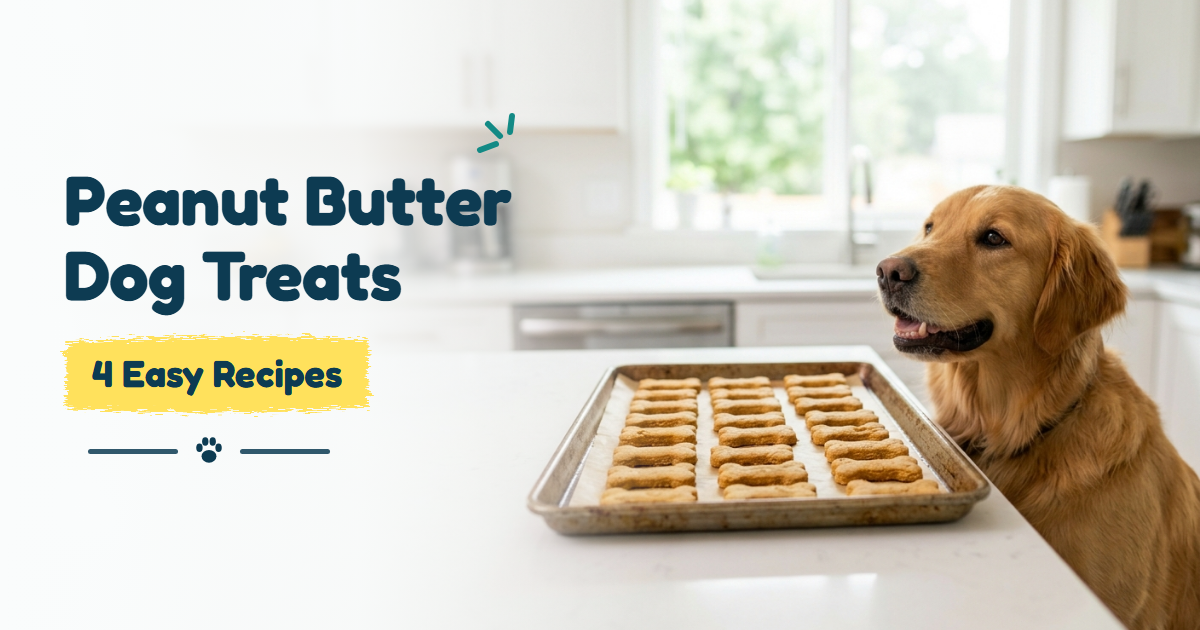
Quick answer: Peanut butter dog treats are easy to make with just whole wheat flour, an egg, water, and plain peanut butter, baked at 350°F for about 20 minutes. Always check the label first: the peanut butter must be free of xylitol (also called birch sugar), which is toxic to dogs. Pick an unsalted, no-sugar-added brand and keep treats to 10% of your dog’s daily calories.
Most dogs go wild for peanut butter. The smell alone can bring a sleeping dog running from the other side of the house. That makes it one of the easiest flavors to work with when you bake treats at home.
Homemade treats also let you skip the long ingredient lists on store-bought bags. You know exactly what goes in, you can fit them to your dog’s size, and a batch costs a few dollars.
Below are four simple recipes, including a no-bake option. First, though, there’s one safety check that matters more than any recipe.
Table of Contents
- Is Peanut Butter Safe for Dogs?
- What You’ll Need
- Recipe 1: Classic Peanut Butter Dog Biscuits
- Recipe 2: Peanut Butter Pumpkin Dog Treats
- Recipe 3: No-Bake Peanut Butter Oat Bites
- Recipe 4: Soft Peanut Butter Chews for Senior Dogs
- How Many Peanut Butter Treats Can a Dog Have?
- How to Store Peanut Butter Dog Treats
- Ways to Use Peanut Butter Beyond Biscuits
- Frequently Asked Questions
Is Peanut Butter Safe for Dogs?
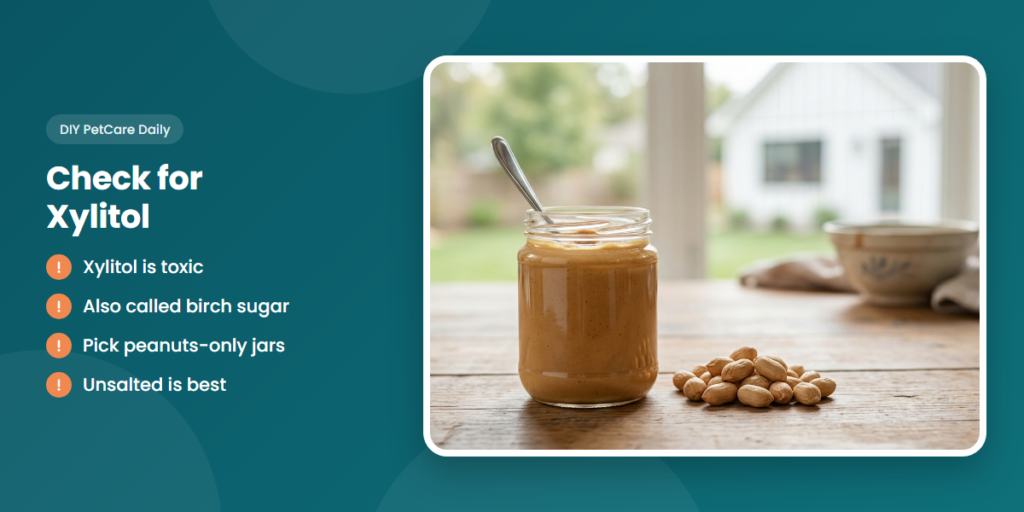
Yes, plain peanut butter is safe for most dogs in small amounts. It has protein, healthy fats, and vitamins like niacin and vitamin E. The problem isn’t the peanuts. It’s what some brands add to them.
The Xylitol Warning
Xylitol is a sugar substitute found in some “reduced sugar” or “sugar-free” peanut butters, and in many other foods. It’s harmless to people but very dangerous for dogs. Even a small amount can cause a sudden drop in blood sugar within 10 to 60 minutes. Larger amounts can lead to liver failure.
Xylitol sometimes appears on labels under other names, such as birch sugar or wood sugar. Read the ingredients list every time, even on a brand you’ve bought before, because recipes change.
Signs of xylitol poisoning include:
- Vomiting
- Weakness or wobbling
- Trembling or seizures
- Collapse
If you think your dog ate xylitol, call your vet or an emergency clinic right away. You can also call the ASPCA Animal Poison Control Center at (888) 426-4435 or the Pet Poison Helpline at (855) 764-7661 (a fee may apply).
How to Pick the Best Peanut Butter for Dog Treats
| Look for | Avoid |
| Ingredients: peanuts, maybe salt | Xylitol, birch sugar, wood sugar |
| Unsalted or low-salt | Added sugar or honey-roasted |
| Smooth or crunchy (both fine) | Chocolate or flavored spreads |
| Natural (oil on top is normal) | “Light” or “reduced fat” versions with extra sweeteners |
The simplest choice is a jar where the only ingredient is peanuts.
What You’ll Need
Basic pantry ingredients
- Whole wheat flour, or oat flour for a wheat-free option
- Rolled oats
- Eggs
- Canned pumpkin (plain puree, not pie filling)
- Ripe bananas
- Xylitol-free peanut butter
Tools
- Mixing bowl and spoon
- Rolling pin
- Cookie cutters (bone shapes are fun, but a knife works)
- Baking sheet and parchment paper
- Airtight container for storage
Recipe 1: Classic Peanut Butter Dog Biscuits
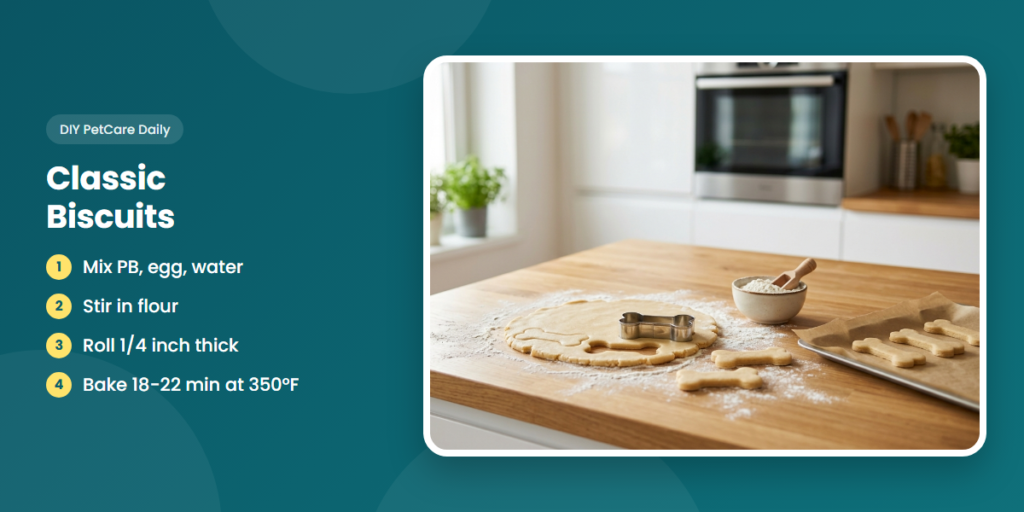
This is the go-to recipe. It makes crunchy biscuits that keep well.
Makes: about 30 two-inch biscuits
Ingredients
- 2 cups whole wheat flour
- 1/2 cup xylitol-free peanut butter
- 1 large egg
- 1/2 cup water (add a little more if the dough is dry)
Steps
- Heat your oven to 350°F and line a baking sheet with parchment paper.
- Mix the peanut butter, egg, and water in a bowl until smooth.
- Stir in the flour a little at a time until a stiff dough forms.
- Roll the dough out to about 1/4 inch thick on a floured surface.
- Cut into shapes and place them on the baking sheet.
- Bake for 18 to 22 minutes, until the edges are golden.
- Switch the oven off and leave the biscuits inside for an hour. This dries them out and makes them crunchier.
Tip: For small dogs, use a mini cookie cutter or cut the dough into 1-inch squares.
Recipe 2: Peanut Butter Pumpkin Dog Treats
Pumpkin adds fiber and a softer texture. This one is great for fall.
Makes: about 40 small treats
Ingredients
- 2 1/2 cups whole wheat or oat flour
- 1/2 cup plain canned pumpkin
- 2 large eggs
- 3 tablespoons xylitol-free peanut butter
- Water as needed
Steps
- Heat your oven to 350°F.
- Mix the pumpkin, eggs, and peanut butter.
- Add the flour and stir. Add a tablespoon of water at a time until the dough holds together.
- Roll to 1/4 inch thick and cut into shapes.
- Bake for 25 to 30 minutes.
- Cool completely on a wire rack.
Use plain pumpkin puree only. Pumpkin pie filling has sugar and spices like nutmeg that don’t belong in dog treats.
Recipe 3: No-Bake Peanut Butter Oat Bites
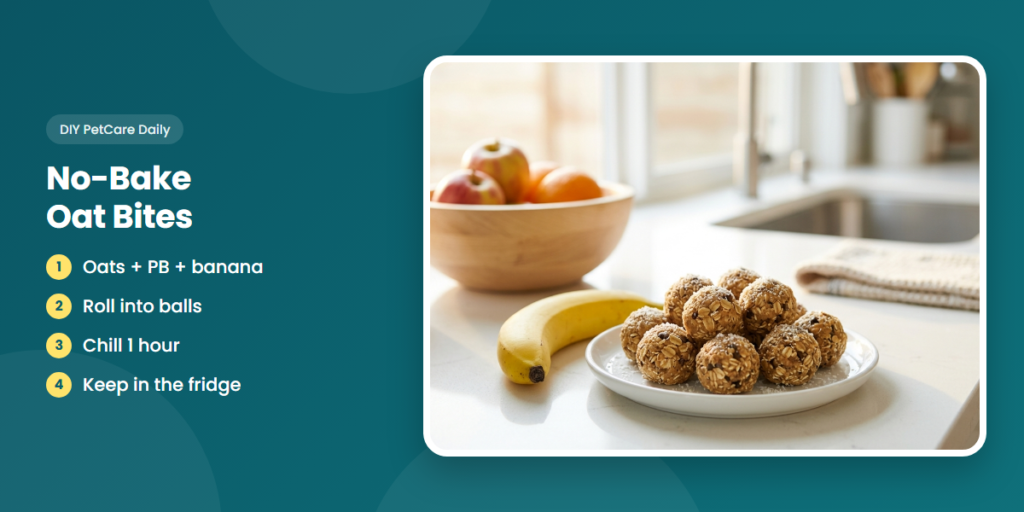
No oven needed. These are soft and chewy, and they come together in 10 minutes.
Makes: about 20 bites
Ingredients
- 1 cup rolled oats
- 1/3 cup xylitol-free peanut butter
- 1/4 cup mashed ripe banana
Steps
- Stir everything together in a bowl.
- If the mix is too sticky, add a few more oats. If it’s too dry, add a little more banana.
- Roll into balls about the size of a marble for small dogs, or a cherry for large dogs.
- Place on a plate and chill in the fridge for at least an hour.
Keep these in the fridge, since they have fresh banana and no baking to dry them out.
Recipe 4: Soft Peanut Butter Chews for Senior Dogs
Older dogs with sore teeth or missing teeth often struggle with crunchy biscuits. This softer version is easier to chew.
Makes: about 25 soft treats
Ingredients
- 1 1/2 cups oat flour
- 1/4 cup xylitol-free peanut butter
- 1/2 cup unsweetened applesauce
- 1 large egg
Steps
- Heat your oven to 325°F.
- Mix all ingredients into a soft dough.
- Drop small spoonfuls onto a lined baking sheet and press them flat.
- Bake for 12 to 15 minutes. Take them out while they’re still soft.
- Cool and store in the fridge.
If your dog is getting older, our guide on when a dog is considered a senior covers other changes to watch for.
How Many Peanut Butter Treats Can a Dog Have?
Peanut butter is high in fat and calories. One tablespoon has about 95 calories. Spread across a batch of biscuits, each treat ends up much lighter, but they still add up.
Vets often recommend the 10% rule: treats should make up no more than 10% of your dog’s daily calories. The rest should come from their regular, balanced food.
| Dog weight | Rough daily calories | Treat budget (10%) | Classic biscuits per day* |
| 10 lb | about 350 | about 35 | 1 |
| 20 lb | about 585 | about 59 | 2 |
| 50 lb | about 1,165 | about 116 | 3 to 4 |
| 70 lb | about 1,500 | about 150 | 4 to 5 |
*Based on about 30 calories per 2-inch classic biscuit. Smaller cutters mean smaller treats, so you can give more pieces.
Need a more exact number for your dog? Our guide on how many calories a dog needs walks you through it. If your dog is carrying extra weight, our list of low calorie dog treats has lighter options.
Dogs Who Should Skip Peanut Butter
- Dogs with a history of pancreatitis, since high-fat foods can trigger flare-ups
- Dogs on a weight-loss plan (save it for special occasions)
- The rare dog with a peanut allergy (watch for itching, hives, or swelling)
How to Store Peanut Butter Dog Treats
Homemade treats don’t have preservatives, so they don’t last as long as store-bought ones.
| Treat type | Counter (airtight) | Fridge | Freezer |
| Crunchy baked biscuits | Up to 1 week | 2 to 3 weeks | Up to 3 months |
| Soft baked chews | 2 to 3 days | Up to 1 week | Up to 3 months |
| No-bake oat bites | Not recommended | Up to 1 week | Up to 2 months |
Throw out any treats that smell off, feel slimy, or show mold.
Ways to Use Peanut Butter Beyond Biscuits
- Lick mats: Spread a thin layer on a lick mat to calm your dog during baths or nail trims.
- Stuffed toys: Smear a little inside a hollow rubber toy and freeze it. Our guide to frozen dog treats has more ideas.
- Pill pockets: Hide a pill in a small dab of peanut butter.
- Training: Break biscuits into tiny pieces for practice sessions.
Want more recipes? See our full guide to homemade dog treats, or browse the DIY Dog Projects section.
Frequently Asked Questions
What kind of peanut butter is safe for dogs?
Plain peanut butter with no xylitol is safe for most dogs. The best choice lists only peanuts, or peanuts and a little salt. Avoid any jar with xylitol, birch sugar, added sugar, or chocolate.
Can I use regular flour in dog treats?
Yes. All-purpose white flour works, but whole wheat flour adds more fiber. If your dog has a wheat sensitivity, use oat flour, which you can make by blending rolled oats until fine.
How long do homemade peanut butter dog treats last?
Crunchy baked biscuits last about a week in an airtight container on the counter, two to three weeks in the fridge, and up to three months in the freezer. Soft treats spoil faster, so keep them in the fridge.
Can puppies eat peanut butter dog treats?
Yes, in small amounts, once they’re eating solid food. Break treats into tiny pieces and count them as part of the puppy’s daily calories. Our guide on how much to feed a puppy helps you keep portions right.
Is too much peanut butter bad for dogs?
Yes. Peanut butter is high in fat and calories, so too much can lead to weight gain or an upset stomach. In some dogs, high-fat foods can trigger pancreatitis. Stick to the 10% treat rule.