Table of Contents
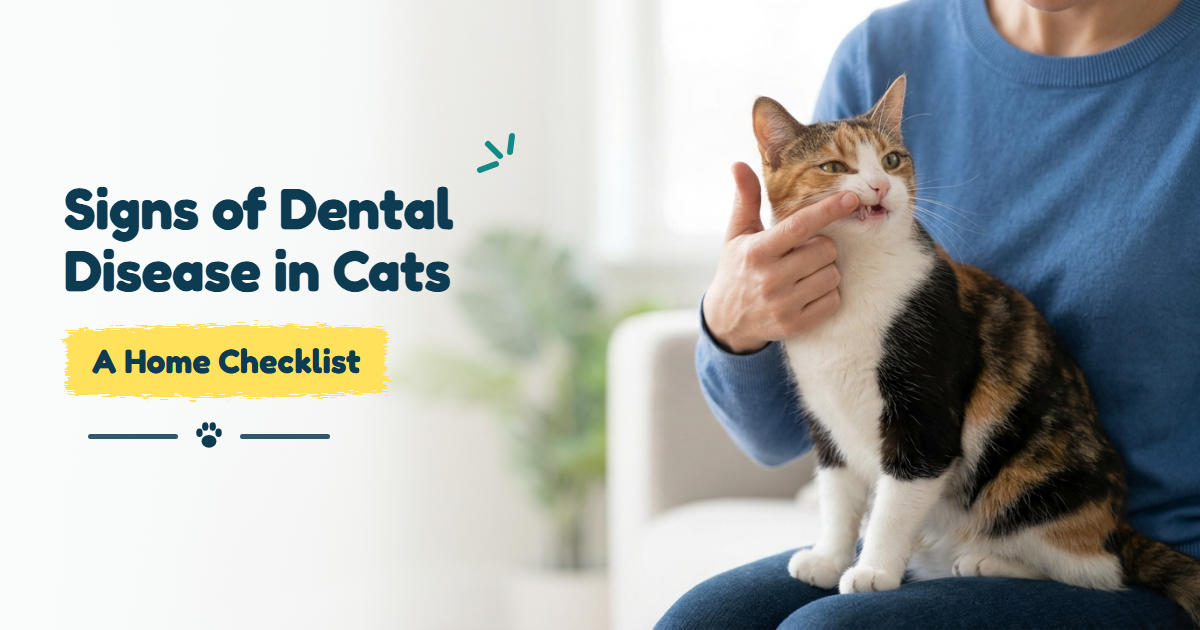
Quick answer: Early signs of dental disease in cats include bad breath, a red line along the gums, and yellow or brown tartar on the back teeth. Later signs include drooling, dropping food, chewing on one side, pawing at the mouth, bleeding gums, loose teeth, weight loss, and a messy coat. Cats hide mouth pain well, so check your cat’s mouth once a week and see your vet if you notice any of these signs.
Cats are experts at hiding pain, and mouth pain is no exception. A cat with sore teeth will often keep eating, keep purring, and act mostly normal, while the problem quietly gets worse. That’s one reason dental disease is so common in cats. Most cats over three years old have some form of it. The good news is that you can spot many of the signs at home if you know what to look for. Use this checklist of the signs of dental disease in cats to check your cat’s mouth and know when it’s time to call the vet.
Table of Contents
- What Is Dental Disease in Cats?
- Signs of Dental Disease in Cats: The Home Checklist
- How to Check Your Cat’s Mouth at Home
- Stages of Gum Disease in Cats
- Which Cats Are at Higher Risk?
- How Vets Treat Dental Disease in Cats
- How to Prevent Dental Disease at Home
- Frequently Asked Questions
What Is Dental Disease in Cats?
Dental disease is a broad term for problems with the teeth, gums, and mouth. In cats, the three most common types are:
Periodontal (Gum) Disease
This starts with plaque, a sticky film of bacteria on the teeth. Plaque hardens into tartar within a few days. The bacteria irritate the gums, causing gingivitis (red, swollen gums). If it isn’t treated, the infection moves below the gumline and damages the bone and tissue that hold the teeth. This later stage is called periodontitis.
Tooth Resorption
Tooth resorption is when the body slowly breaks down a tooth from the inside. It usually starts near the gumline and can be very painful. It’s one of the most common dental problems in cats, especially older cats. The cause isn’t known, and it can’t be prevented, but affected teeth can be removed to stop the pain.
Stomatitis
Stomatitis is severe swelling and redness of the gums and the back of the mouth. It’s very painful. The immune system seems to react too strongly to plaque.. Cats with stomatitis often drool, have very bad breath, and stop eating.
Signs of Dental Disease in Cats: The Home Checklist
Go through this list once a week. If you check even one box, it’s worth mentioning to your vet.
Early Signs
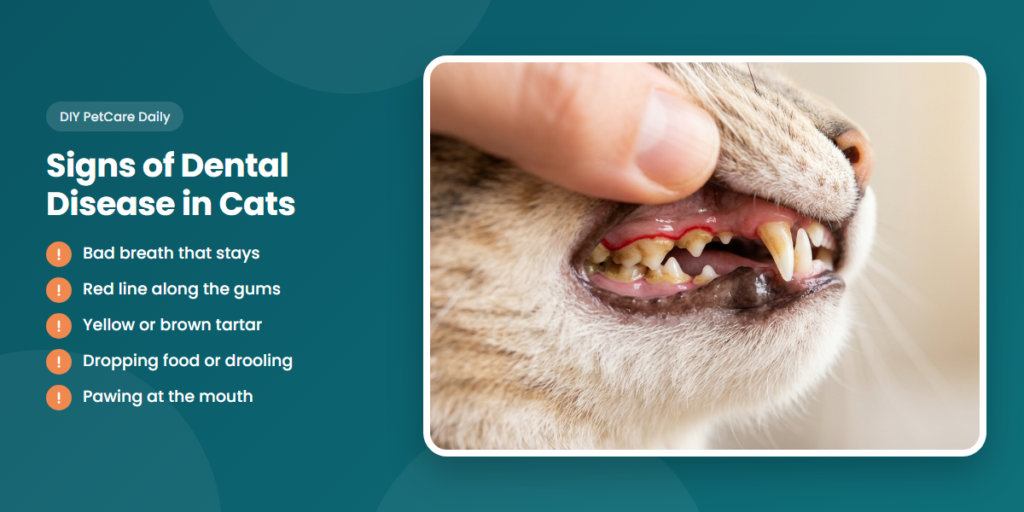
- Bad breath. A strong, sour, or rotten smell that stays all day. Our guide on why your cat’s breath smells covers the common causes.
- A red line along the gumline. Healthy gums are pink right up to the tooth. A thin red line where the gum meets the tooth is often the first sign of gingivitis.
- Yellow or brown tartar. Look at the big cheek teeth at the back of the upper jaw. Tartar shows up as a hard yellow, tan, or brown crust.
- Slightly puffy gums. Gums that look a little swollen around one or more teeth.
Signs in How Your Cat Eats
- Dropping food from the mouth while eating
- Chewing on one side or tilting the head while eating
- Eating slowly or walking away from the bowl and coming back
- Swallowing kibble whole without chewing
- Only eating wet food or ignoring dry food they used to like
- Jaw chattering or quivering while eating or yawning
- Approaching the food bowl, then not eating
Signs in Behavior
- Pawing at the mouth or rubbing the face on the floor
- Drooling, sometimes with blood or a bad smell
- Not grooming, which leads to a greasy, messy, or matted coat
- Hiding more or acting grumpy
- Not wanting the face touched
- Not playing with toys they used to chew
For more on how cats show pain, see our guide to signs of pain in cats.
Later or Serious Signs
- Bleeding gums, or blood on toys or in the water bowl
- Gums pulling back so more of the tooth root shows
- Loose, broken, or missing teeth
- A small pink or red bump on a tooth near the gumline (often tooth resorption)
- Very red gums at the back of the mouth (often stomatitis)
- Pus near the gumline
- Swelling of the face or under the eye, which can mean a tooth root abscess
- Sneezing or nasal discharge on one side, which can happen when an upper tooth root infection reaches the nose
- Weight loss or not eating
If you notice any of the later signs, book a vet visit soon. Your cat is very likely in pain, even if they’re still eating.
How to Check Your Cat’s Mouth at Home
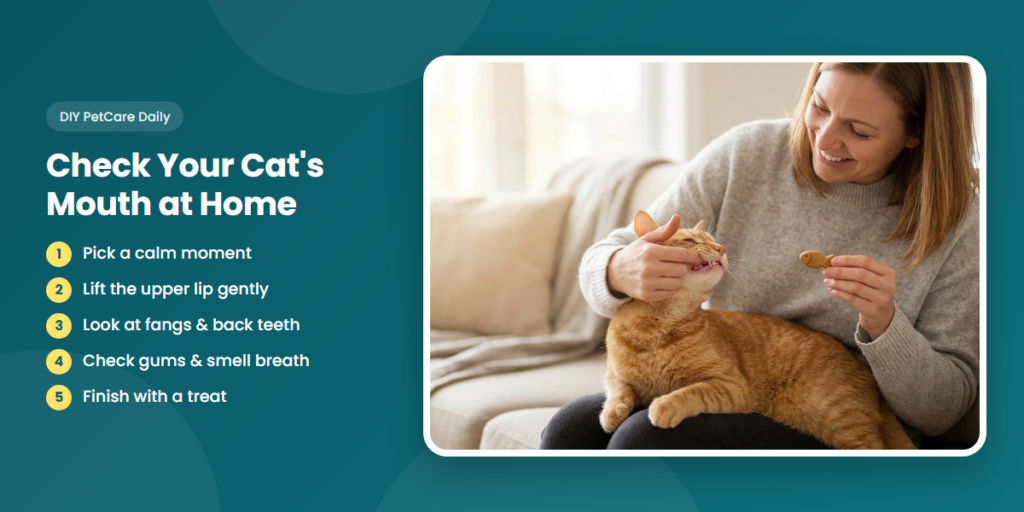
This takes less than a minute. Do it once a week when your cat is calm.
- Pick a quiet time, like after a meal or a nap. Have treats ready.
- Sit with your cat on your lap or beside you on the couch.
- Gently hold your cat’s head from above with one hand.
- With the other hand, lift the upper lip on one side using your thumb.
- Look at the front teeth, the canines (fangs), and the big cheek teeth at the back.
- Check the gum color and look for a red line, swelling, or tartar.
- Gently pull down the lower lip and look at the bottom teeth.
- Smell the breath.
- Repeat on the other side.
- Give a treat and praise.
You don’t need to open your cat’s mouth wide. Most problems show up on the outside of the teeth and along the gums.
What Healthy Cat Gums and Teeth Look Like
- Pink, firm gums (some cats have dark spots on their gums, which is normal)
- No red line at the edge of the teeth
- Clean white or cream-colored teeth
- Mild breath
When Gum Color Is an Emergency
Very pale, white, gray, blue, or yellow gums are not a dental problem. They can point to anemia, shock, liver disease, or trouble breathing. Call your vet or an emergency clinic right away.
Stages of Gum Disease in Cats
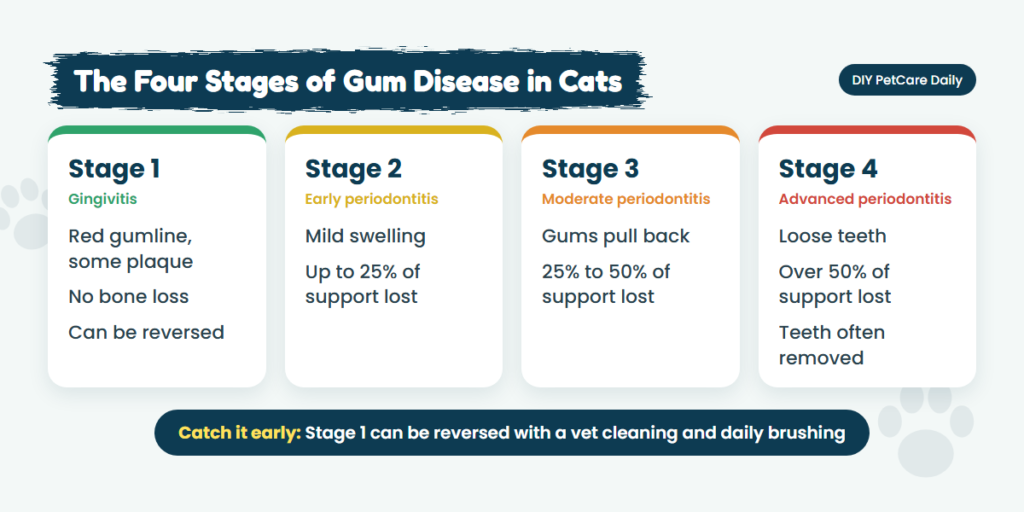
Vets often grade gum disease in four stages:
| Stage | What It Looks Like | Can It Be Reversed? |
| Stage 1: Gingivitis | Red gumline, some plaque | Yes, with a cleaning and home care |
| Stage 2: Early periodontitis | Mild swelling, up to 25% of support lost | Damage can be stopped |
| Stage 3: Moderate periodontitis | Gums pulling back, 25% to 50% lost | Damage can be stopped |
| Stage 4: Advanced periodontitis | Loose teeth, over 50% lost | Teeth often removed |
Catching gum disease at Stage 1 makes a huge difference. It’s the only stage where the damage can be fully reversed.
Which Cats Are at Higher Risk?
Any cat can get dental disease, but some are more likely to:
- Older cats, since plaque has had more years to build up
- Flat-faced breeds like Persians and Himalayans, because their teeth are crowded
- Purebred cats like Abyssinians, Siamese, and Maine Coons, which may be more prone to gum problems
- Cats with FIV, FeLV, kidney disease, or diabetes, which can weaken the immune system
- Cats who never have their teeth brushed
How Vets Treat Dental Disease in Cats
The main treatment is a professional dental cleaning under anesthesia. Anesthesia lets your vet clean below the gumline, where the real damage happens, and take dental X-rays. X-rays matter a lot in cats, because tooth resorption and root problems are often hidden below the gums.
During the cleaning, your vet will:
- Check your cat’s health first, often with blood work.
- Place your cat under anesthesia with careful monitoring.
- Clean and polish the teeth above and below the gumline.
- Take dental X-rays.
- Remove any teeth that are badly damaged, loose, or affected by resorption.
Most cats go home the same day. Cats handle tooth removal very well, and many eat better after painful teeth are gone, even if they lose several teeth.
Anesthesia-free cleanings only scrape the visible part of the teeth. They can make teeth look clean while disease keeps going under the gums, so most vets don’t recommend them.
In the US, a cat dental cleaning often costs several hundred dollars, and more if teeth need to be removed. Ask your vet for a written estimate.
How to Prevent Dental Disease at Home
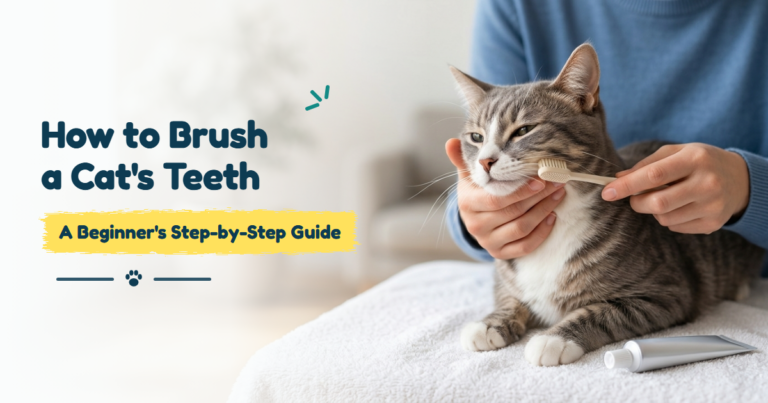
- Brush daily. It’s the most effective thing you can do. Our beginner guide shows you how to brush cat teeth step by step.
- Use cat toothpaste only. Human toothpaste isn’t safe for cats.
- Look for the VOHC seal. Dental treats, diets, and water additives with the Veterinary Oral Health Council seal have been tested to reduce plaque or tartar.
- Check your cat’s mouth weekly using the checklist above.
- Get a vet checkup every year, or every six months for senior cats.
For more dental guides, visit our Cat Teeth Care section, and browse Cat Health & Wellness for other health topics.
Frequently Asked Questions
At what age do cats get dental disease?
It can start young. Most cats show some signs of dental disease by age three. Older cats are even more likely to have gum disease and tooth resorption.
Can cats live without teeth?
Yes. Many cats live happy, comfortable lives with few or no teeth. They can still eat wet food, and many can even eat dry kibble. Removing painful teeth often makes cats feel and eat better.
Is dental disease painful for cats?
Yes, very often. Cats hide pain, so they may keep eating while their mouth hurts. Watch for chewing on one side, dropping food, drooling, or pawing at the mouth.
Can dental disease in cats affect other organs?
It can. Bacteria from infected gums can enter the bloodstream. Vets link long-term gum disease with problems in the kidneys, heart, and liver.
How often should my cat have a dental cleaning?
It depends on your cat. Some cats need a cleaning every year, while others go longer with good home care. Your vet will recommend a schedule based on what they see at your cat’s checkup.


One Response