Table of Contents
- Table of Contents
- Why Dog Paw Protection Matters
- How Hot Is Too Hot for Dog Paws?
- Signs of Burned Paw Pads
- Hot Pavement and Dog Paws: Summer Protection Tips
- How to Protect Dog Paws in Winter
- Dog Paw Protection Products Compared
- First Aid for Burned or Cracked Paws
- Make Paw Checks a Habit
- Frequently Asked Questions
Quick answer: Good dog paw protection starts with timing and a quick check. In summer, walk early in the morning or after sunset, stick to grass or shade, and use the 7-second test: press the back of your hand on the pavement, and if you can’t hold it there for 7 seconds, it’s too hot for paws. In winter, wipe your dog’s feet after every walk to remove salt and ice melt, use paw balm before you go out, and try booties for long walks. Check the pads often for cracks, redness, or blisters.
Your dog’s paw pads are tough, but they aren’t made for 140°F asphalt or sidewalks covered in rock salt. Many owners don’t realize there’s a problem until their dog starts limping, lifting a paw, or licking their feet nonstop after a walk.
The tricky part is that the weather can feel fine to you while the ground is far too hot or too harsh for your dog. This dog paw protection guide covers both seasons: how to protect dog paws from hot pavement in summer, how to protect dog paws in winter from salt and ice, and which products are worth buying.
Table of Contents
- Why Dog Paw Protection Matters
- How Hot Is Too Hot for Dog Paws?
- Signs of Burned Paw Pads
- Hot Pavement and Dog Paws: Summer Protection Tips
- How to Protect Dog Paws in Winter
- Dog Paw Protection Products Compared
- First Aid for Burned or Cracked Paws
- Make Paw Checks a Habit
- Frequently Asked Questions
Why Dog Paw Protection Matters
Paw pads are thick skin with a layer of fat underneath. They handle normal walking well, but they can still burn, crack, and get cut. Pads have sweat glands too, which is one way dogs release a bit of heat.
Surfaces like asphalt, concrete, metal, and artificial turf soak up heat from the sun and hold it. In winter, rock salt and chemical ice melt dry out the pads and can burn the skin. Dogs who lick their feet after a walk can also swallow those chemicals.
How Hot Is Too Hot for Dog Paws?
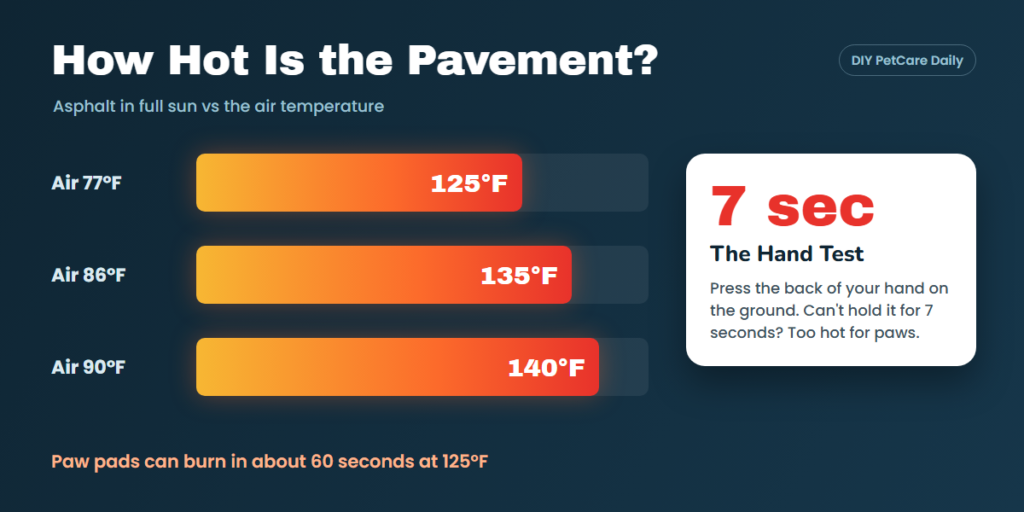
Pavement gets much hotter than the air. On a sunny day, asphalt can be 40 to 60 degrees hotter than the air temperature. Here’s a rough idea of what to expect in full sun:
| Air Temperature | Approximate Asphalt Temperature |
| 77°F | About 125°F |
| 86°F | About 135°F |
| 90°F | About 140°F or more |
Skin can burn in about a minute at 125°F. So even a warm spring day that feels pleasant to you can be risky on dark asphalt in direct sun. Concrete is a little cooler than asphalt but can still burn. Sand, metal manhole covers, truck beds, and artificial grass can get very hot too.
The 7-Second Test
Before a walk, press the back of your hand flat on the ground for 7 seconds. If it’s too hot for you to hold it there, it’s too hot for your dog’s paws. It’s a simple test, and it works on any surface.
Signs of Burned Paw Pads
Watch for these signs during or after a summer walk:
- Limping or refusing to walk
- Lifting one paw, then another, or trying to walk on grass only
- Licking or chewing at the feet
- Pads that look darker than normal, red, or shiny
- Blisters, peeling skin, or missing pieces of pad
- Raw or open spots on the pads
Burned pads are painful and can get infected. Any blistering, peeling, or open wound should be checked by your vet.
Hot Pavement and Dog Paws: Summer Protection Tips
Walk at the Right Time
The ground is coolest early in the morning, before about 8 a.m., and later in the evening, after the sun has gone down for a while. Midday walks on hot days are the biggest risk. Pavement can stay warm for hours after sunset, so do the 7-second test even in the evening.
Pick Cooler Routes
Grass, dirt trails, and shaded paths stay much cooler than sidewalks and parking lots. If you have to cross a hot street, keep it quick or carry a small dog across.
Try Dog Booties
Booties give your dog a full barrier against heat. Pick a pair with a light, flexible sole and a snug strap. Most dogs walk funny in them at first. Put them on for a few minutes at a time indoors, give treats, and slowly build up.
Use Paw Balm or Wax
A paw balm made for dogs helps keep pads moist so they’re less likely to crack. Paw wax adds a thin layer of protection. It won’t stop a burn on very hot pavement, but it helps with general wear and tear.
Toughen Pads Slowly
Dogs who walk on hard surfaces year-round tend to have tougher pads. If your dog spends most of the time indoors or on grass, build up sidewalk walking slowly in cooler weather before summer starts.
Watch for Heat Stress Too
If the pavement is too hot, the air is often too hot for long exercise as well. Short-nosed breeds, seniors, puppies, and overweight dogs overheat faster. Bring water, take breaks in the shade, and keep walks short on hot days.
How to Protect Dog Paws in Winter
Cold weather has its own paw problems. Ice, snow, and the salt used on roads and sidewalks all take a toll.
Does Salt Hurt Dogs’ Paws?
Yes, it can. Rock salt and many chemical ice melts dry out the skin on the pads, cause small cracks, and can sting or burn. Sharp ice can cut the pads, and snow can pack into balls between the toes. If your dog licks their feet after a walk, they may swallow the salt or chemicals, which can upset the stomach. Eating a lot of ice melt can be dangerous.
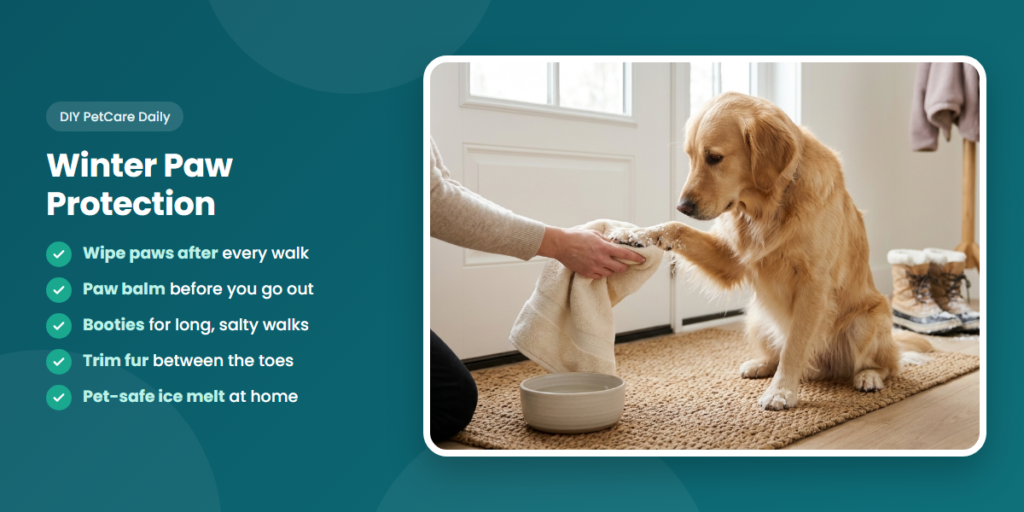
Wipe Paws After Every Walk
This is the most important winter habit. Keep a towel and a bowl of warm water by the door. Dip each paw, rinse between the toes, and dry well. Pet-safe wipes work too when you’re out.
Use Paw Balm Before You Go Out
A thin layer of paw balm before a walk helps keep salt from sticking to the pads and soaking into cracks. Apply it again after you wash and dry the feet at home.
Booties for Long Walks
Booties are the best protection from salt, ice, and cold. They’re worth trying if you walk on salted sidewalks every day or live somewhere with long, snowy winters.
Trim the Fur Between the Toes
Long fur between the toes collects snowballs and salt. Keep it trimmed level with the pads using small, blunt-tip scissors. Don’t cut down into the skin.
Use Pet-Safe Ice Melt at Home
On your own steps and driveway, choose an ice melt labeled pet-safe. These are usually gentler on paws, but it’s still smart to wipe your dog’s feet after walks. No ice melt is safe to eat.
Watch for Frostbite
In very cold weather, especially below freezing with wind, toes and pads can get frostbite. Signs include pale or gray skin that becomes red and swollen as it warms, or pain when touched. Keep walks short on very cold days and call your vet if you think your dog has frostbite.
Dog Paw Protection Products Compared
There’s no single best product. The right choice depends on the season, how long you walk, and how your dog feels about things on their feet.
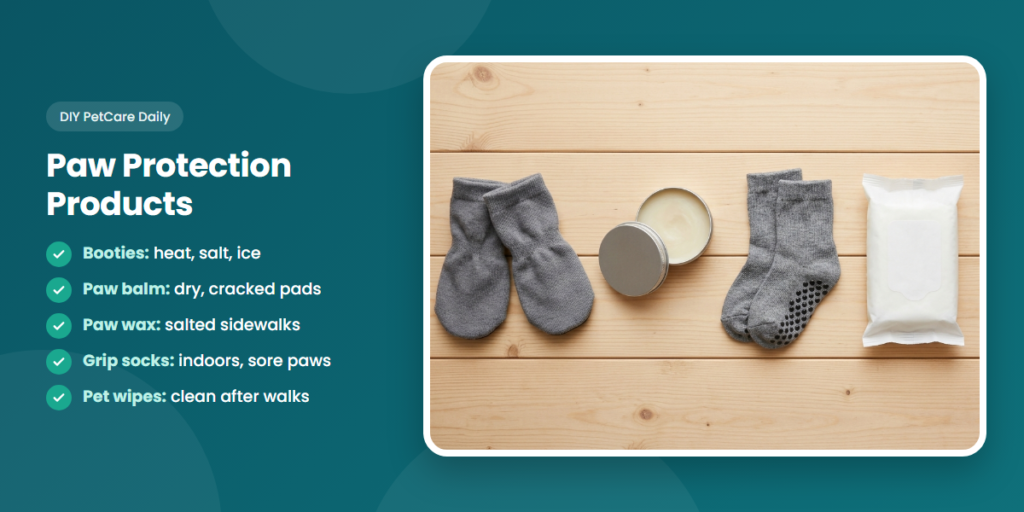
| Product | Best For | Pros | Cons |
| Dog booties | Hot pavement, salt, ice, rough trails | Full barrier from heat, salt, and cuts | Takes time to get used to; can slip off if the fit is wrong |
| Paw balm | Dry or cracked pads, daily care | Easy to use, helps pads heal and stay soft | Doesn’t block heat; needs reapplying |
| Paw wax | Winter walks on salted sidewalks | Thin protective layer, helps salt and snow slide off | Wears off on long walks; won’t stop burns |
| Dog socks with grips | Indoor floors, mild weather, covering a sore paw | Soft and comfortable, good for beginners | Not made for hot pavement or wet snow |
| Pet-safe wipes | Cleaning after walks | Quick way to remove salt, pollen, and dirt | Cleans only; doesn’t protect during the walk |
How to Pick the Right Booties
- Measure the paw. Have your dog stand on paper, mark the widest points, and match the measurement to the size chart. Measure the front paws, since they’re usually bigger.
- Look for a flexible, non-slip sole. Thick, stiff soles make walking awkward.
- Choose a secure strap. Adjustable straps keep booties from twisting or falling off.
- Pick for the season. Breathable, light booties work better in summer. Insulated, water-resistant ones are better in winter.
Start with short sessions indoors, give treats, and slowly build up time. Most dogs high-step for the first few tries and then forget they’re wearing them.
First Aid for Burned or Cracked Paws
If your dog’s paws get hurt, here’s what to do while you call your vet:
- Move your dog to a cool or warm, safe spot, depending on the season. Carry a small dog if you can.
- Cool burned pads with cool water, not ice, for several minutes. For winter, rinse off salt with lukewarm water.
- Pat the paw dry gently. Don’t rub.
- Keep your dog from licking. Use a clean sock or a cone if needed.
- Call your vet, especially for blisters, peeling skin, bleeding, or limping that lasts.
Don’t put human creams, butter, or oils on a burn. Your vet may need to clean the wound, give pain relief, or prescribe medicine to prevent infection.
Make Paw Checks a Habit
A quick paw check once a week helps you spot problems early. Look at the pads, between the toes, and at the nails. Long nails change how your dog stands and puts more pressure on the pads. If your dog has dark nails, our guide on how to cut black dog nails shows how to trim them without hitting the quick.
Constant paw licking after walks can mean irritation from salt, heat, or something else entirely. If it keeps happening, read about the common reasons why your dog licks his paws.
You can add paw care to your regular dog grooming schedule so it doesn’t get forgotten. For more tips, browse our Dog Nail & Paw Care section.
Frequently Asked Questions
What temperature is too hot to walk a dog on pavement?
When the air is around 77°F or higher in full sun, asphalt can reach 125°F, which is hot enough to burn paw pads in about a minute. Use the 7-second test with the back of your hand before every walk.
Do dog booties really work?
Yes. Booties are the most reliable way to protect paws from hot pavement, salt, and ice. The hard part is getting your dog used to them, so start indoors with short sessions and treats.
Can salt hurt dogs’ paws?
Yes. Salt can hurt dogs’ paws. Rock salt dries out and cracks the pads, can cause burning or stinging, and can make dogs sick if they lick a lot of it off their feet. Wipe the paws after every winter walk.
Can I put Vaseline on my dog’s paws?
A small amount won’t hurt, but dogs tend to lick it off, and it can make floors slippery. A paw balm made for dogs is a better choice.
How long do burned paw pads take to heal?
Mild burns may heal in about a week or two. Deeper burns can take several weeks and need vet care. Keep the paw clean, stop your dog from licking, and follow your vet’s advice.


One Response