
Table of Contents
Quick answer: Short coats need brushing once a week. Double coats need it two to four times a week, and every day in shedding season. Long, silky, and curly coats need brushing every day or every other day, plus a trim every 4 to 8 weeks. Every dog, whatever the coat, needs teeth brushing (daily is best), nail trims every 3 to 4 weeks, and a quick ear check each week.
A good dog grooming schedule keeps your dog clean and comfortable, and it saves you from bigger problems later, like painful mats, long nails, or sore gums. The hard part is knowing what to do and how often. That mostly comes down to your dog’s coat. This guide breaks it down by coat type, then gives you a simple daily, weekly, and monthly checklist you can follow at home.
Table of Contents
- Why a Dog Grooming Schedule Helps
- How to Tell Your Dog’s Coat Type
- Dog Grooming Schedule by Coat Type
- Grooming Tasks Every Dog Needs
- A Simple Weekly and Monthly Grooming Checklist
- How to Adjust the Schedule for Your Dog
- Frequently Asked Questions
Why a Dog Grooming Schedule Helps
Grooming isn’t just about looks. Regular brushing removes dead hair and dirt, spreads natural oils, and stops tangles before they turn into mats. It also gives you a chance to check your dog from nose to tail. You’ll notice lumps, ticks, sore spots, or bad breath much sooner.
A set schedule also makes grooming easier for your dog. When it happens often and in short sessions, it becomes normal. Dogs who only get groomed when they’re a mess tend to fight it. You’ll find more coat guides in our Dog Hair & Grooming Care section.

How to Tell Your Dog’s Coat Type
Most dogs fit into one of these five groups. Some mixed breeds fall in between, so pick the one closest to your dog.
- Short coat: short, smooth hair that lies flat (Beagles, Boxers, Pugs, Dalmatians)
- Double coat: a soft, thick undercoat under a longer top coat (Huskies, German Shepherds, Golden Retrievers, Corgis)
- Long, silky coat: long, fine hair with little or no undercoat (Shih Tzus, Maltese, Yorkies)
- Curly or wavy coat: hair that keeps growing and sheds very little (Poodles, Bichons, most doodles)
- Wire coat: rough, bristly hair (Schnauzers, many terriers, Wirehaired Dachshunds)
Dog Grooming Schedule by Coat Type
Short Coats
Weekly
- Brush once a week with a rubber curry brush or bristle brush
- Wipe the coat with a damp cloth if your dog gets dusty
Monthly
- Bathe every 1 to 3 months, or when your dog is dirty or smelly
- Check the skin for dry patches, bumps, or fleas
Short coats look easy, but many of them shed all year. A weekly brush keeps loose hair off your furniture.
Double Coats
Weekly
- Brush two to four times a week with a slicker brush
- Use an undercoat rake once a week to pull out dead undercoat
- In spring and fall shedding season, brush every day
Monthly
- Bathe every 4 to 8 weeks, then dry fully before brushing
- Trim the fur between the paw pads if it gets long
Never shave a double coat unless your vet tells you to. If your dog is dropping more hair than you expected, read our guide on why dogs shed so much.
Long, Silky Coats
Weekly
- Brush every day, or at least every other day, down to the skin
- Comb behind the ears, under the legs, and around the collar, where tangles start
- Wipe around the eyes to stop tear stains
Monthly
- Bathe every 3 to 4 weeks with a gentle shampoo and conditioner
- Book a trim every 4 to 6 weeks, or keep the coat in a shorter “puppy cut”
Curly and Wavy Coats
Weekly
- Brush every day or every other day with a slicker brush, then go over it with a metal comb
- Check for mats in armpits, behind the ears, and on the back legs
Monthly
- Bathe every 3 to 6 weeks
- Book a professional groom and haircut every 4 to 6 weeks
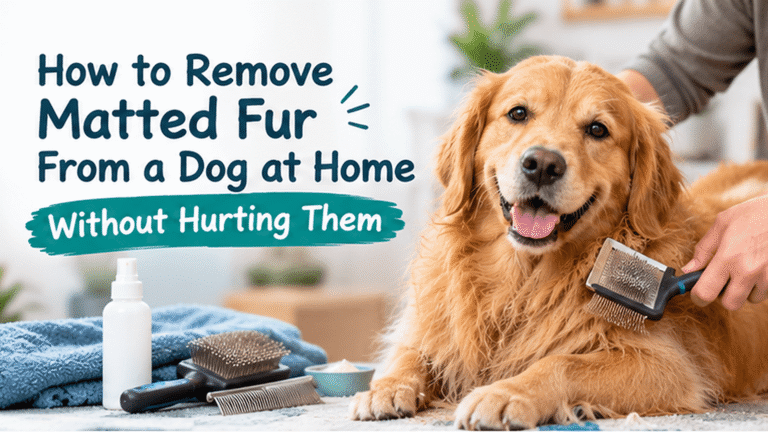
Curly coats hide mats well, so the comb check matters. If you find one, our guide on how to remove matted fur from a dog at home shows the safe way to take it out.
Wire Coats
Weekly
- Brush once or twice a week with a slicker brush
- Comb the beard and leg fur, which collect food and dirt
Monthly
- Bathe only when needed, about every 6 to 8 weeks, since frequent baths soften the coat
- Plan hand-stripping two to four times a year, or clipping if you don’t show your dog
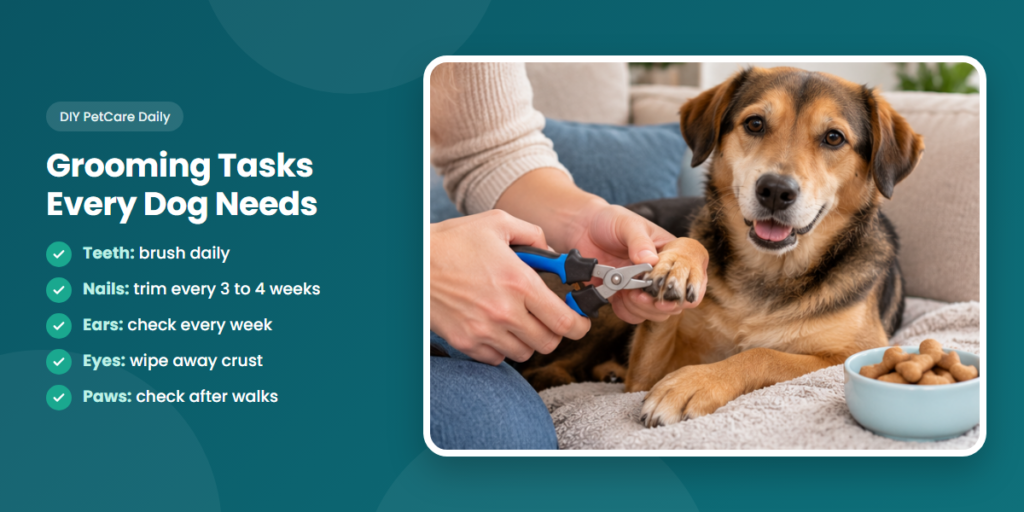
Grooming Tasks Every Dog Needs
Coat care changes from dog to dog, but these jobs apply to all of them.
Teeth
Brush every day if you can. A few times a week still helps. If your dog hates it, start with our 7-day plan for brushing a dog’s teeth. Chews can help in between, and we compare them in dental chews vs brushing for dogs.
Nails
Trim every 3 to 4 weeks. If your dog’s nails click on hard floors, they need a trim.. Dark nails are harder, and our guide on how to cut black dog nails shows how to find the quick.
Ears
Check the ears every week. Look for redness, dark wax, or a bad smell. Clean only when they look dirty, using a dog ear cleaner and a cotton ball. Don’t push anything into the ear canal.
Eyes and Face
Wipe away crust from the corners of the eyes with a damp, soft cloth. Dogs with face folds, like Bulldogs and Pugs, need those folds cleaned and dried a few times a week.
Paws
Check between the toes for burrs, cuts, and long fur after walks. In summer and winter, also protect your dog’s paws from hot pavement and winter salt. For more help, browse our Dog Nail & Paw Care section.
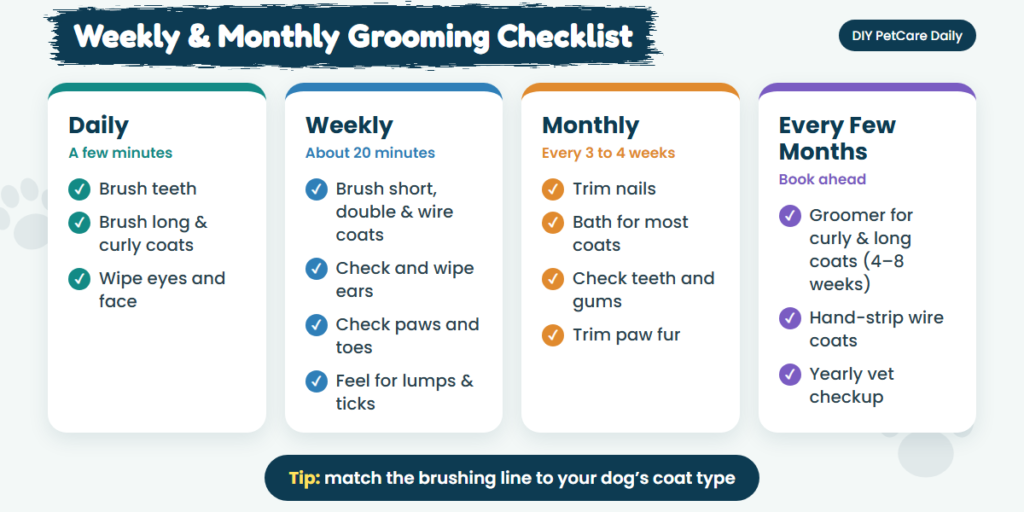
A Simple Weekly and Monthly Grooming Checklist
Copy this list and stick it on your fridge. Adjust the brushing line to match your dog’s coat.
Daily
- Brush teeth
- Brush the coat (long, silky, and curly coats)
- Quick wipe of the eyes and face
Weekly
- Brush the coat (short, double, and wire coats, as often as listed above)
- Check and wipe the ears
- Check paws and between the toes
- Run your hands over the whole body to feel for lumps, ticks, or sore spots
Monthly
- Trim nails (every 3 to 4 weeks)
- Bath for most coat types
- Check the teeth and gums for early signs of gum disease, like redness or tartar
- Trim paw fur and sanitary areas if needed
Every Few Months
- Professional groom for curly and long coats (every 4 to 8 weeks)
- Hand-stripping for wire coats
- Vet checkup, including a look at the teeth, at least once a year
How to Adjust the Schedule for Your Dog
Puppies
Start short sessions early. Touch the paws, ears, and mouth every day and give treats, so grooming feels normal by the time the adult coat comes in. Most groomers ask for proof of shots, so check your puppy’s dog vaccination schedule before booking.
Senior Dogs
Older dogs may have sore joints, so keep sessions short and let them lie down. Check more often for lumps and skin changes. It also helps to know your dog’s normal numbers, and our guide on how to check your dog’s heart rate, breathing, and temperature shows how.
Active and Outdoor Dogs
Dogs who swim, hike, or roll in things need more frequent brushing and rinsing, plus a tick check after every outing.
By Season
Weather changes what your dog needs, so adjust the plan a few times a year:
- Spring and fall: Double-coated dogs shed the most, so brush daily for a few weeks. Tick season also starts in spring across much of the US, so check the ears, armpits, and between the toes after walks.
- Summer: Rinse off chlorine or salt water after swims and dry the ears well to prevent infections. Keep long coats trimmed shorter if your dog spends a lot of time outside, but don’t shave double coats.
- Winter: Wipe paws after walks to remove ice-melt salt. Heated indoor air can dry out the skin, so you may need fewer baths and a moisturizing dog shampoo.
Frequently Asked Questions
How often should I groom my dog?
It depends on the coat. Short coats need brushing about once a week, double coats a few times a week, and long or curly coats every day or every other day. Nails, teeth, and ears need care no matter the coat type.
How often should a dog go to a professional groomer?
Dogs with curly or long coats usually need a groomer every 4 to 8 weeks. Short and double-coated dogs can often be done at home, with an occasional visit for a deshedding treatment or nail trim.
Can I bathe my dog too often?
Yes. Too many baths can dry out the skin and make it itchy. Most dogs do well with a bath every 4 to 8 weeks, unless they get dirty or your vet suggests a medicated shampoo.
What grooming tools do I need at home?
A slicker brush, a metal comb, nail clippers or a grinder, dog shampoo, a dog toothbrush and toothpaste, and ear cleaner cover most dogs. Add an undercoat rake for double coats.
What if my dog hates being groomed?
Keep sessions to five or ten minutes, use lots of treats, and stop before your dog gets upset. Work on one body part at a time. If your dog shows pain when touched, see your vet first.


One Response