Table of Contents
- Table of Contents
- Why Dog Skin Needs Different Shampoo
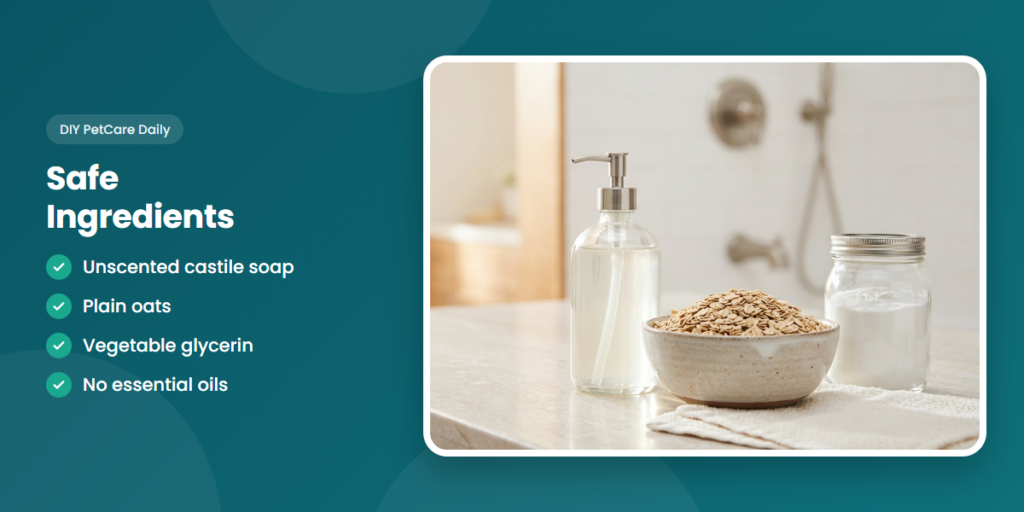
- Homemade Dog Shampoo Ingredients: What’s Safe and What’s Not
- Recipe 1: Gentle Everyday Castile Shampoo
- Recipe 2: Oatmeal Shampoo for Itchy Skin
- Recipe 3: Apple Cider Vinegar Rinse for Odor
- Recipe 4: No-Rinse Dry Shampoo
- Recipe 5: Skunk Odor Shampoo
- How to Give Your Dog a Bath the Right Way
- How Often Should You Bathe a Dog?
- When to See the Vet Instead
- Frequently Asked Questions
Quick answer: A simple homemade dog shampoo mixes 2 cups of warm water with 1/4 cup of unscented liquid castile soap. For itchy skin, a blended oatmeal wash soothes better. Skip human shampoo, dish soap for routine baths, and all essential oils, especially tea tree oil. Patch test any new recipe, rinse thoroughly, and stop if your dog’s skin gets red or itchy.
You reach for the dog shampoo and the bottle’s empty. Or your dog’s skin seems to get itchy after every bath with the store-bought stuff. Or you’d simply rather know what’s going on your dog’s coat.
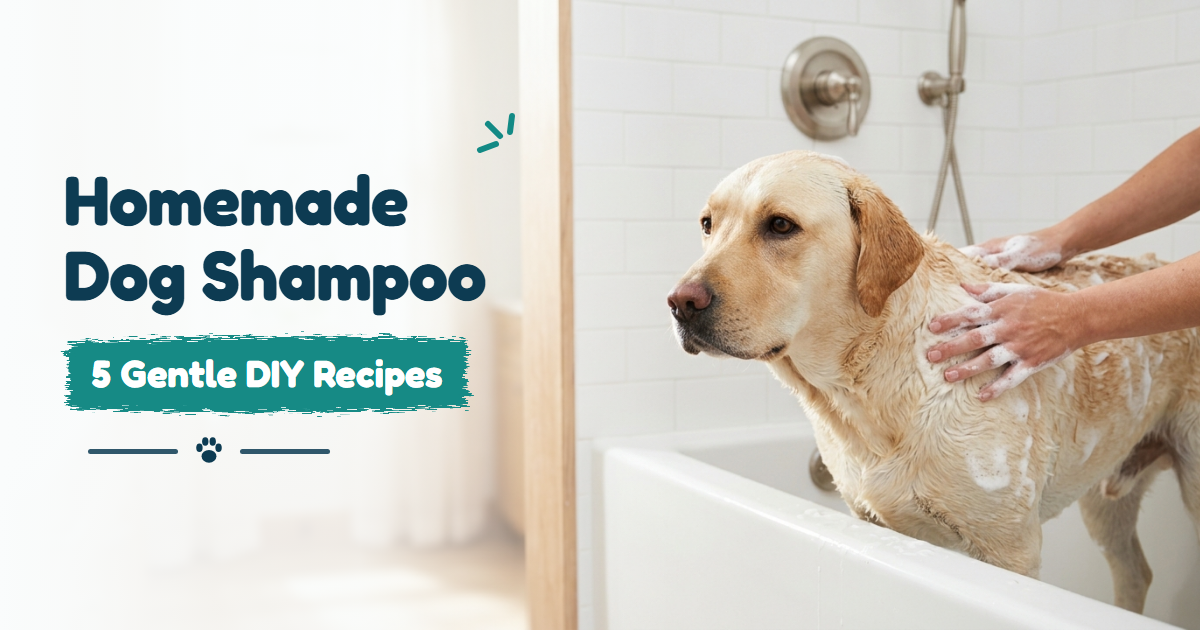
Homemade dog shampoo can be gentle, cheap, and easy. The key is knowing which ingredients are safe for dog skin and which ones cause problems. This guide gives you five recipes for different needs, the right way to bathe your dog, and a few common mistakes to skip.
Table of Contents
- Why Dog Skin Needs Different Shampoo
- Homemade Dog Shampoo Ingredients: What’s Safe and What’s Not
- Recipe 1: Gentle Everyday Castile Shampoo
- Recipe 2: Oatmeal Shampoo for Itchy Skin
- Recipe 3: Apple Cider Vinegar Rinse for Odor
- Recipe 4: No-Rinse Dry Shampoo
- Recipe 5: Skunk Odor Shampoo
- How to Give Your Dog a Bath the Right Way
- How Often Should You Bathe a Dog?
- When to See the Vet Instead
- Frequently Asked Questions
Why Dog Skin Needs Different Shampoo
Dog skin isn’t the same as ours. The biggest difference is pH, which measures how acidic or alkaline something is.
- Human skin is fairly acidic, around 5.5.
- Dog skin is closer to neutral, roughly 6.2 to 7.4, depending on the dog and the body area.
- Dog skin is also thinner than human skin, with fewer layers to protect it.
Human shampoo is made for our more acidic skin. Used on dogs, it can strip natural oils and leave skin dry, flaky, or itchy. That’s why vets recommend shampoo made for dogs, or a gentle homemade mix with simple ingredients.
Can You Use Dish Soap on Dogs?
Dish soap is great at cutting grease, which is why wildlife rescuers use it on birds after oil spills. That same strength strips the healthy oils from your dog’s skin and coat. It’s fine for a one-time emergency, like your dog rolling in motor oil, but don’t use it for regular baths.
Homemade Dog Shampoo Ingredients: What’s Safe and What’s Not
| Safe and gentle | Use with care | Avoid |
| Unscented liquid castile soap | Apple cider vinegar (always diluted) | Essential oils, especially tea tree |
| Plain rolled oats | Baking soda (small amounts) | Human shampoo and conditioner |
| Vegetable glycerin | Coconut oil (can leave coat greasy) | Heavy perfumes or fragrance oils |
| Aloe vera gel (pure, no alcohol) | Hydrogen peroxide (skunk wash only) | Dish soap for regular baths |
| Warm water | Anything with xylitol |
A Word on Essential Oils
Many online recipes add lavender, peppermint, eucalyptus, or tea tree oil “for a fresh smell.” Skip them. Dogs’ noses are far more sensitive than ours, and several essential oils can irritate skin or cause poisoning when absorbed or licked off. Tea tree oil is one of the worst. Even small amounts have caused weakness, drooling, and tremors in dogs.
Recipe 1: Gentle Everyday Castile Shampoo
This is the basic, all-purpose recipe for healthy dogs.
Ingredients
- 2 cups warm water
- 1/4 cup unscented liquid castile soap
- 1 tablespoon vegetable glycerin (optional, for extra moisture)
How to make it
- Pour everything into a clean squeeze bottle.
- Shake gently to mix.
- Shake again before each use.
Use about 1/4 to 1/2 cup for a medium dog. Store it at room temperature and use within 2 to 3 weeks. Homemade shampoo has no preservatives, so make small batches.
Recipe 2: Oatmeal Shampoo for Itchy Skin
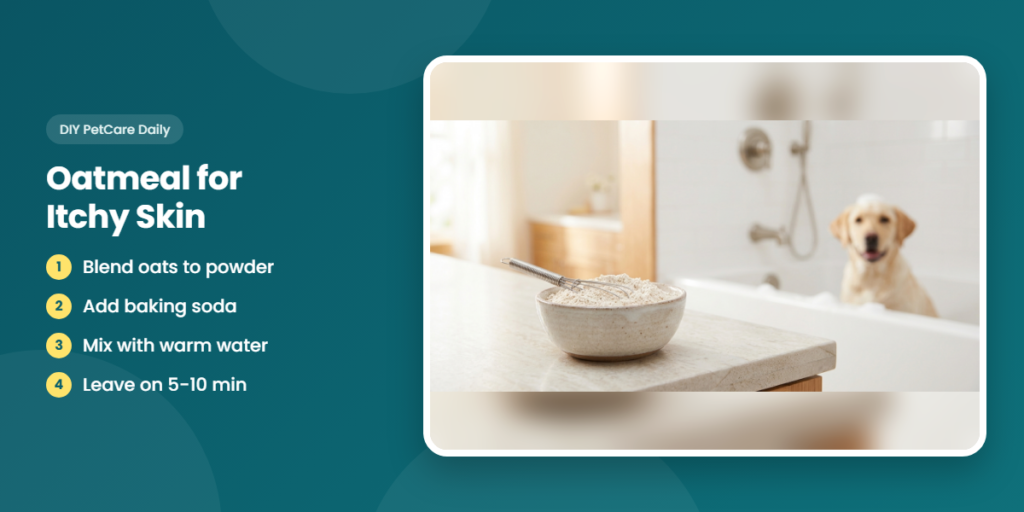
Oatmeal has natural compounds that calm itching and help skin hold moisture. It’s a favorite for dogs with dry or sensitive skin.
Ingredients
- 1 cup plain rolled oats (no flavors or sugar)
- 1/2 cup baking soda
- 4 cups warm water
How to make it
- Blend the oats in a blender until they become a very fine powder. It should feel silky between your fingers. This is sometimes called colloidal oatmeal.
- Mix the oat powder and baking soda in a large bowl or jug.
- Add the warm water and stir.
How to use it
Wet your dog, then pour the mix over their coat and work it into the skin. Let it sit for 5 to 10 minutes so the oats can soothe the skin. Rinse very well.
If your dog’s itching keeps coming back, it may be allergies or a skin infection rather than a dirty coat. Constant paw licking is a common sign. Our guide on why dogs lick their paws explains the most common causes.
Recipe 3: Apple Cider Vinegar Rinse for Odor
This isn’t a shampoo on its own. It’s a rinse you use after shampooing to cut leftover soap and reduce doggy smell.
Ingredients
- 1 cup apple cider vinegar
- 2 cups warm water
How to use it
- Shampoo and rinse your dog as usual.
- Pour the vinegar rinse over the coat, avoiding the face and eyes.
- Let it sit for a minute.
- Rinse again with plain water.
Don’t use vinegar on broken, raw, or scratched skin. It stings.
Recipe 4: No-Rinse Dry Shampoo
Perfect for between baths, for senior dogs who hate water, or on cold days.
Ingredients
- 1/2 cup cornstarch
- 1/2 cup baking soda
How to use it
- Mix the powders in a jar with a shaker lid.
- Sprinkle a small amount onto your dog’s coat, avoiding the face.
- Rub it in with your fingers down to the skin.
- Wait 5 minutes, then brush it out thoroughly.
The powder soaks up oil and odor. Use a light hand, and brush outdoors if you can. Don’t use it on dogs with breathing problems, since fine powder can irritate airways.
Recipe 5: Skunk Odor Shampoo
If your dog meets a skunk, tomato juice doesn’t really work. This well-known recipe breaks down the oils that cause the smell.
Ingredients
- 1 quart fresh 3% hydrogen peroxide
- 1/4 cup baking soda
- 1 to 2 teaspoons liquid dish soap
How to use it
- Mix in an open bucket right before use. Never store it in a closed bottle. It releases gas and can burst the container.
- Wearing gloves, work the mix deep into the dry coat, avoiding the eyes, nose, and mouth.
- Leave it on for about 5 minutes.
- Rinse thoroughly.
- Repeat if needed, then follow with a regular dog shampoo.
Hydrogen peroxide can lighten dark fur, so don’t leave it on longer than needed. If your dog was sprayed in the face, flush their eyes gently with clean water and call your vet if they stay red or squinty.
How to Give Your Dog a Bath the Right Way
A good bath technique matters as much as the shampoo.
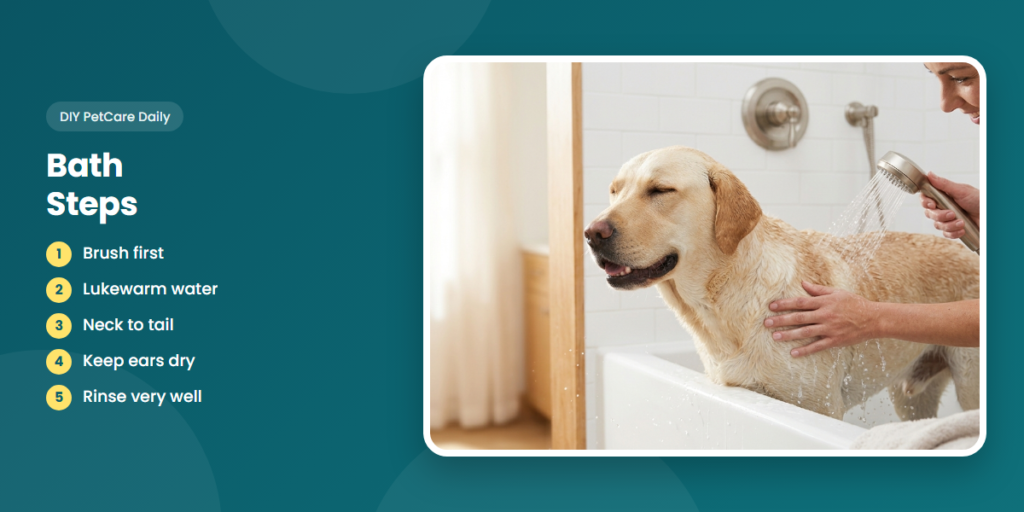
- Brush first. Brush out loose fur and tangles before you get your dog wet. Water tightens mats and makes them harder to remove. Our guide to removing matted dog hair can help if you hit a tough knot.
- Use lukewarm water. Test it on your wrist. Too hot can burn; too cold is unpleasant.
- Wet the coat fully. Thick double coats take longer to soak than you’d think.
- Lather from the neck back. Leave the face for last, and use a damp washcloth there instead of shampoo.
- Keep water out of the ears. Tilt the head down and avoid spraying into the ear canal.
- Rinse, rinse, rinse. Leftover shampoo is a top cause of itchy skin after a bath. Keep rinsing until the water runs clear and the coat doesn’t feel slippery.
- Dry well. Towel dry, then let your dog air-dry in a warm room, or use a pet dryer on a low, cool setting.
Do a Patch Test First
Before using any new recipe, rub a small amount on a patch of skin on your dog’s belly or inner leg. Rinse it off and wait 24 hours. If you see redness, bumps, or scratching, don’t use it.
How Often Should You Bathe a Dog?
Most dogs do well with a bath every 4 to 6 weeks. Some need more, some less.
| Dog type | How often |
| Most short and medium coats | Every 4 to 8 weeks |
| Oily coats (Basset Hound, Cocker Spaniel) | Every 2 to 4 weeks |
| Double coats (Husky, German Shepherd) | Every 6 to 12 weeks |
| Dogs with skin conditions | As your vet directs |
Bathing too often dries out the skin. Our full dog grooming schedule covers brushing, baths, and more by coat type. And if you’re fighting fur everywhere, read why your dog is shedding so much.
When to See the Vet Instead
Homemade shampoo works for everyday cleaning. It won’t fix skin problems that need treatment. Call your vet if you notice:
- Red, raw, or bleeding skin
- Bald patches or crusty spots
- A strong odor that comes back right after a bath
- Constant scratching, chewing, or licking
- Fleas or flea dirt (homemade shampoo won’t clear an infestation)
These can point to allergies, infections, or parasites that need medicated treatment. For more grooming and care projects, explore our DIY Dog Projects section.
Frequently Asked Questions
What can I use to wash my dog if I don’t have dog shampoo?
Mix 2 cups of warm water with 1/4 cup of unscented liquid castile soap for a gentle wash. For itchy skin, a blended oatmeal and baking soda mix works well. Avoid human shampoo and dish soap for regular baths.
Is baby shampoo safe for dogs?
Baby shampoo is milder than adult shampoo, so it’s a better backup choice in a pinch. It’s still made for human skin, though, so don’t use it as your regular dog shampoo.
Is homemade dog shampoo good for fleas?
No. Homemade shampoo may wash off a few fleas, but it won’t kill eggs or stop an infestation. Ask your vet about a proven flea preventive.
Can I add essential oils to homemade dog shampoo?
It’s best not to. Many essential oils, including tea tree, pennyroyal, wintergreen, and pine, can be toxic to dogs. Even “safe” oils can irritate skin and overwhelm a dog’s sensitive nose.
How long does homemade dog shampoo last?
Liquid homemade shampoo lasts about 2 to 3 weeks at room temperature. The dry shampoo powder keeps for months in a sealed jar. Make the skunk recipe fresh every time and never store it.