Table of Contents
- Table of Contents
- What Is Rabies?
- Is the Rabies Vaccine Required by Law?
- Rabies Vaccine Schedule for Dogs
- Rabies Vaccine Side Effects in Dogs
- What If My Dog Is Bitten by a Wild Animal?
- What If My Dog Bites Someone?
- Rabies Vaccine Cost for Dogs
- Traveling With Your Dog
- Tips to Stay on Track
- Frequently Asked Questions
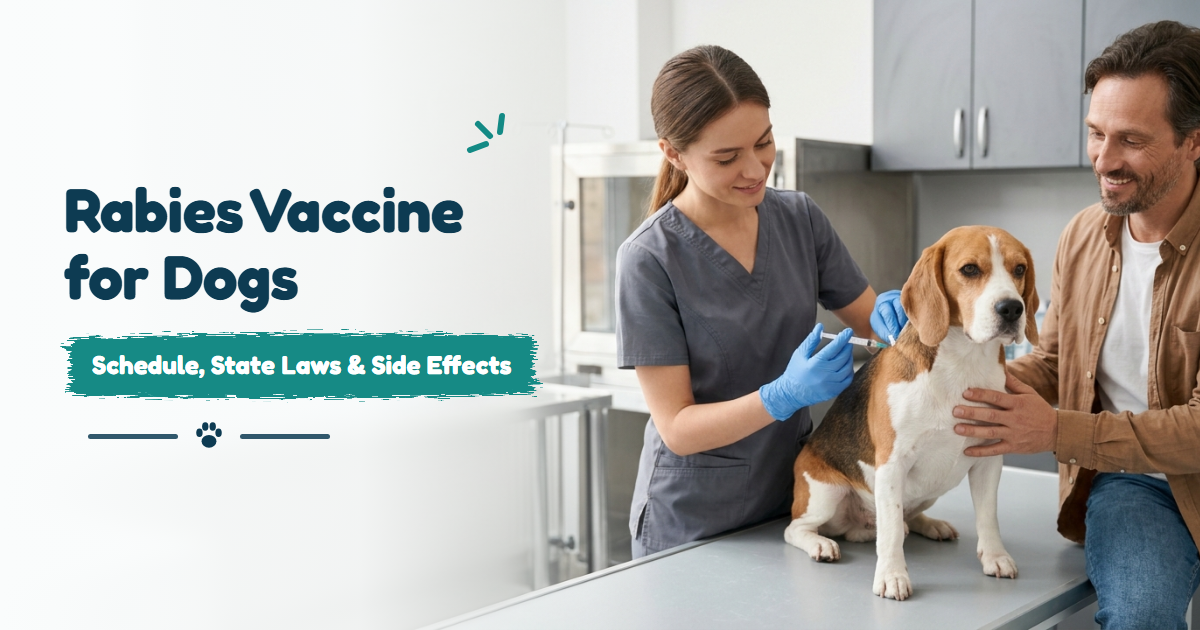
Quick answer: The rabies vaccine for dogs is required by law in nearly every US state. Puppies get their first dose at 12 to 16 weeks old, depending on the vaccine label and state law, and they’re considered protected about 28 days later. A booster is due 1 year after the first shot. After that, dogs get boosters every 1 or 3 years, based on the vaccine used and local rules. Side effects are usually mild, like soreness or tiredness for a day.
Rabies is one of the oldest and most feared diseases in the world, and for good reason. Once symptoms start, it’s almost always fatal, for dogs and for people. The good news is that the rabies shot for dogs is very effective, and widespread dog vaccination is the main reason dog rabies is now rare in the United States.
This guide covers when your dog needs the rabies vaccine, the difference between 1-year and 3-year shots, what state laws require, side effects, costs, and what to do if your dog is bitten or bites someone.
Table of Contents
- What Is Rabies?
- Is the Rabies Vaccine Required by Law?
- Rabies Vaccine Schedule for Dogs
- Rabies Vaccine Side Effects in Dogs
- What If My Dog Is Bitten by a Wild Animal?
- What If My Dog Bites Someone?
- Rabies Vaccine Cost for Dogs
- Traveling With Your Dog
- Tips to Stay on Track
- Frequently Asked Questions
What Is Rabies?
Rabies is a virus that attacks the brain and spinal cord. It spreads mainly through bites, when infected saliva gets into a wound. In the US, most cases are found in wildlife, especially:
- Bats (found in every state except Hawaii)
- Raccoons (East Coast)
- Skunks (Midwest and California)
- Foxes (Southwest and Alaska)
Dogs can catch rabies from a bite or scratch from any infected animal. Once signs appear, such as behavior changes, drooling, trouble swallowing, aggression, or paralysis, there’s no treatment. That’s why prevention through vaccination is so important.
Rabies can spread from dogs to people, so vaccinating your dog also protects your family and your community.
Is the Rabies Vaccine Required by Law?
Yes, in almost every state. Rabies laws are set by states, counties, and cities, so the exact rules depend on where you live. Most laws cover:
- The age your puppy must get their first shot (often by 12 to 16 weeks, or within a set time after that)
- How often boosters are required (every 1 or 3 years)
- Proof in the form of a rabies certificate and often a rabies tag
- Dog licensing, which in many cities requires a current rabies vaccine
Your vet will know your local rules. If you move to a new state, ask your new vet whether your dog’s current certificate meets local requirements.
Medical Exemptions
Some states allow a vet to write a medical exemption for dogs who are too sick or have had serious vaccine reactions. Rules vary a lot, and many states don’t allow exemptions. Even exempt dogs may face stricter rules if they’re exposed to rabies or bite someone.

Rabies Vaccine Schedule for Dogs
| Dog’s Age or Situation | Rabies Vaccine |
| Puppy, 12 to 16 weeks old | First dose (based on vaccine label and state law) |
| 28 days after the first dose | Considered protected |
| 1 year after the first dose | First booster (always a 1-year interval, even with a 3-year vaccine) |
| Adult dogs after that | Every 1 or 3 years, depending on the vaccine and state law |
| Adult with unknown history | One dose now, booster in 1 year, then every 1 or 3 years |
The rabies vaccine is usually given at the same visit as other puppy shots. See our full dog vaccination schedule for how it fits in with DHPP and other vaccines.
1-Year vs 3-Year Rabies Vaccines
Some rabies vaccines are labeled to protect for 1 year, and others for 3 years. Often the vaccine itself is very similar; the label depends on the studies done.
- The first rabies shot is always followed by a booster 1 year later, no matter which type was used.
- After that, a 3 year rabies vaccine for dogs can be given every 3 years if your state allows it.
- Some states or cities still require yearly rabies shots, regardless of the vaccine type.
What If My Dog’s Rabies Vaccine Is Overdue?
If your dog misses a booster, don’t panic. Under current US public health guidelines, an overdue dog who was vaccinated before is usually given a booster right away and is considered current immediately. But in the meantime, your dog may face stricter rules if they’re exposed to rabies, so get the booster as soon as you can.
Rabies Vaccine Side Effects in Dogs
Most dogs have no side effects or only mild ones that pass in a day or two.
Common, mild side effects:
- Soreness or mild swelling at the injection site
- A small, firm lump under the skin that goes away within a few weeks
- Tiredness or a mild fever
- Eating a little less for a day
Rare, serious reactions (go to a vet right away):
- Swelling of the face, muzzle, or around the eyes
- Hives or very itchy skin
- Vomiting or diarrhea soon after the shot
- Trouble breathing
- Collapse
Small dogs who get several vaccines at once may be at a slightly higher risk of reactions. If your dog has reacted before, tell your vet. They may give an antihistamine first or spread vaccines out over separate visits.
Call your vet if a lump at the injection site is still there after 3 months, or keeps growing.
What If My Dog Is Bitten by a Wild Animal?
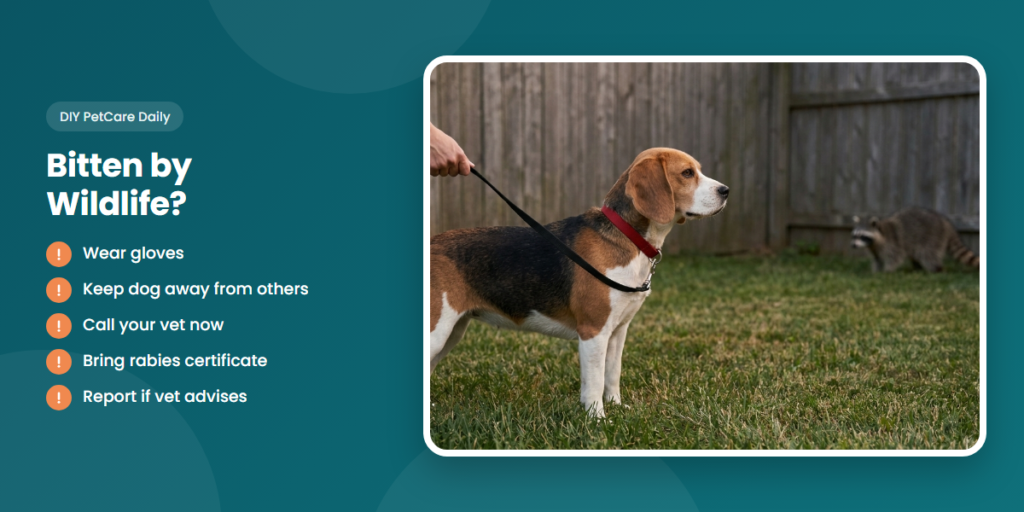
If your dog is bitten or scratched by a wild animal, especially a bat, raccoon, skunk, or fox:
- Don’t touch the wound with bare hands. Wear gloves to protect yourself from saliva.
- Keep your dog away from other pets and people as much as you can.
- Call your vet right away. Bring your dog’s rabies certificate.
- Report it to your local animal control or health department if your vet advises.
What happens next depends on your dog’s vaccine status:
| Your Dog’s Rabies Status | What Usually Happens |
| Current on rabies vaccine | Immediate booster, then observation at home, often for 45 days |
| Overdue but vaccinated before | Usually a booster and observation; your health department decides |
| Never vaccinated | Strict quarantine for several months or euthanasia, depending on local law |
This is one of the strongest reasons to keep the rabies vaccine current. It can be the difference between a simple booster and a long quarantine.
What If My Dog Bites Someone?
If your dog bites a person:
- Make sure the person washes the wound well with soap and water and gets medical advice.
- Share your dog’s rabies vaccine information.
- Expect a report to animal control. Many states require it.
- Your dog will usually need a 10-day observation period, often at home, even if they’re vaccinated. A dog who stays healthy for 10 days couldn’t have passed on rabies at the time of the bite.
Rabies Vaccine Cost for Dogs
| Service | Typical US Cost |
| Rabies vaccine at a vet clinic | $15 to $35 |
| Vet exam (if needed) | $50 to $90 |
| Low-cost or city rabies clinic | $5 to $20 |
| Dog license (varies by city) | $10 to $30 per year |
Many counties hold free or low-cost rabies clinics every year, often in spring. Animal shelters and pet stores also host affordable vaccine events.
Traveling With Your Dog
- Within the US: carry your dog’s rabies certificate when traveling across state lines. Some states and airlines ask for it.
- Hawaii: Hawaii is rabies-free and has strict entry rules, including a blood test that checks rabies antibody levels, completed months in advance.
- Other countries: many require a microchip, a current rabies vaccine, and sometimes a titer test. Bringing a dog back into the US also has strict federal rules. Start planning several months ahead and ask your vet.

Tips to Stay on Track
- Keep your dog’s rabies certificate in a safe place and a photo on your phone
- Put the rabies tag on your dog’s collar (a rabies tag for dogs shows they’re vaccinated if they get lost)
- Set a calendar reminder a month before the booster is due
- Keep your dog away from wildlife, especially bats, and never let them play with a bat
- Keep cats vaccinated too; cats now get rabies more often than dogs in the US
For more guides on keeping your dog healthy, visit our Dog Health & Wellness section.
Frequently Asked Questions
When do puppies get a rabies shot?
Puppies usually get their first rabies vaccine at 12 to 16 weeks of age, depending on the vaccine label and state law. They need a booster 1 year later, then every 1 or 3 years after that.
How often do dogs need rabies shots?
After the first shot and the 1-year booster, dogs need a rabies vaccine every 1 or 3 years. It depends on the type of vaccine your vet uses and what your state or city requires.
Is the rabies vaccine required for dogs?
Yes, in nearly every US state. Most states and cities require a current rabies vaccine and often a dog license. Rules differ by location, so ask your vet what applies where you live.
What are the side effects of the rabies vaccine in dogs?
Most dogs only have mild side effects, like soreness, a small lump, tiredness, or a mild fever for a day or two. Rarely, dogs have an allergic reaction with facial swelling, hives, vomiting, or trouble breathing, which needs immediate vet care.
Can an indoor dog skip the rabies vaccine?
No. The rabies vaccine is required by law in nearly every state, even for indoor dogs. Bats can get into homes, and indoor dogs can slip outside, so they still need protection.