Table of Contents
- Table of Contents
- Are Christmas Trees Toxic to Dogs? What the Tree Itself Can Do
- Is Christmas Tree Water Safe for Dogs?
- The Biggest Holiday Hazards Around the Tree
- Are Poinsettias Toxic to Dogs?
- How to Make Your Christmas Tree Dog-Friendly
- What to Do If Your Dog Ate Christmas Tree Needles or Decorations
- Frequently Asked Questions
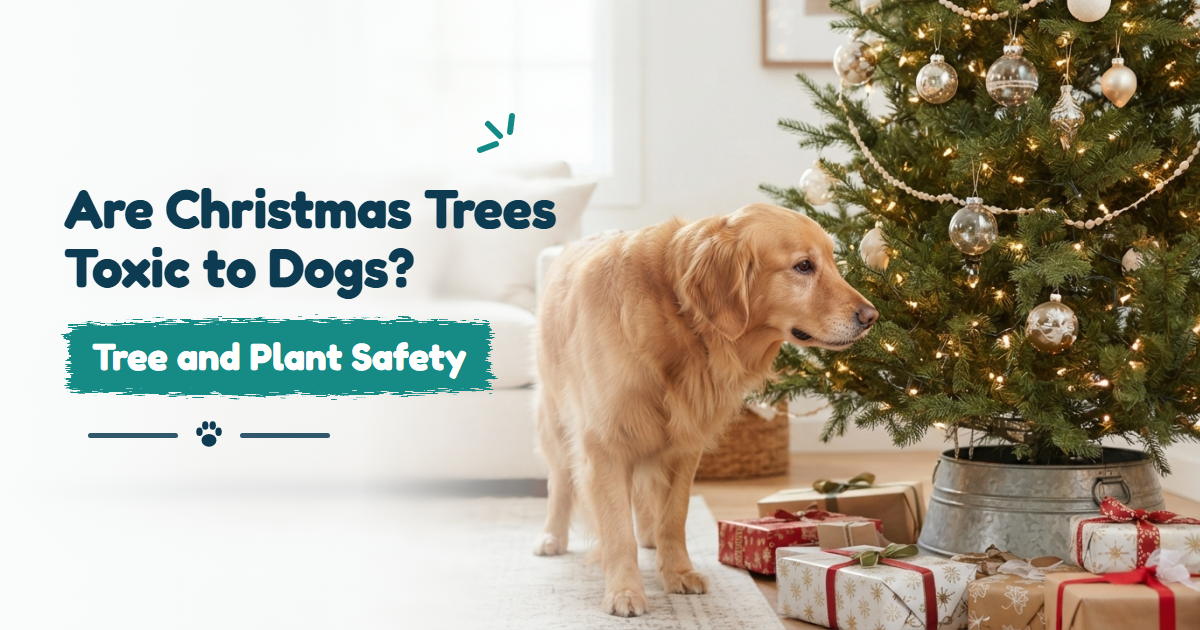
Quick answer: Are Christmas trees toxic to dogs? Real fir, pine, and spruce trees are only mildly toxic to dogs. Chewing needles can cause drooling, vomiting, or mouth irritation, and swallowed needles can upset or, rarely, block the gut. The bigger dangers around the tree are the water in the stand, light cords, glass ornaments, and food or chocolate wrapped as gifts underneath.
If your dog has ever sniffed every inch of a new Christmas tree, or tried to drink out of the stand, you’ve probably wondered whether that tree is safe to have in the house.
For most dogs, a real tree is fine with a few precautions. The tree itself is low risk. It’s everything that comes with it, from the water to the wrapped boxes of chocolate, that keeps emergency vets busy in December. Below, we’ll go through the tree, the water, the decorations, and the holiday plants, including whether poinsettias are toxic to dogs.
Table of Contents
- Are Christmas Trees Toxic to Dogs? What the Tree Itself Can Do
- Is Christmas Tree Water Safe for Dogs?
- The Biggest Holiday Hazards Around the Tree
- Are Poinsettias Toxic to Dogs?
- How to Make Your Christmas Tree Dog-Friendly
- What to Do If Your Dog Ate Christmas Tree Needles or Decorations
- Frequently Asked Questions
Are Christmas Trees Toxic to Dogs? What the Tree Itself Can Do
The trees most families buy in the US are firs (like Fraser, Douglas, and Noble fir), pines (like Scotch and White pine), and spruces (like Blue and Norway spruce). All of them are considered mildly toxic to dogs.
Here’s what can happen if your dog chews on one:
- Mouth and stomach irritation. The oils in the needles can cause drooling, vomiting, or mild diarrhea.
- Needle pokes. Fir and spruce needles are sharp. They can get stuck in the gums, tongue, or paws.
- Gut trouble. Needles don’t digest well. A few will usually pass, but a mouthful can irritate the stomach and intestines. In rare cases, a large amount can contribute to a blockage.
- Sap. Sticky sap on fur can lead to licking and some stomach upset.
Most dogs who nibble a branch or two only get a mild tummy ache. The tree becomes a bigger problem with puppies and heavy chewers who keep going back to it.
Real Tree vs Artificial Tree for Dogs
| Real tree | Artificial tree | |
| Needle oils | Mildly irritating | None |
| Falling needles | Yes, sharp, can be swallowed | Fewer, but plastic pieces can be chewed |
| Tree water | Yes, can be contaminated | No water |
| Tipping risk | Yes | Yes, often lighter |
| Best for | Calm adult dogs | Puppies and chewers (with supervision) |
Neither is perfectly “dog-proof.” An artificial tree avoids the water and needle oils, but plastic needles and wire can still be chewed and swallowed.
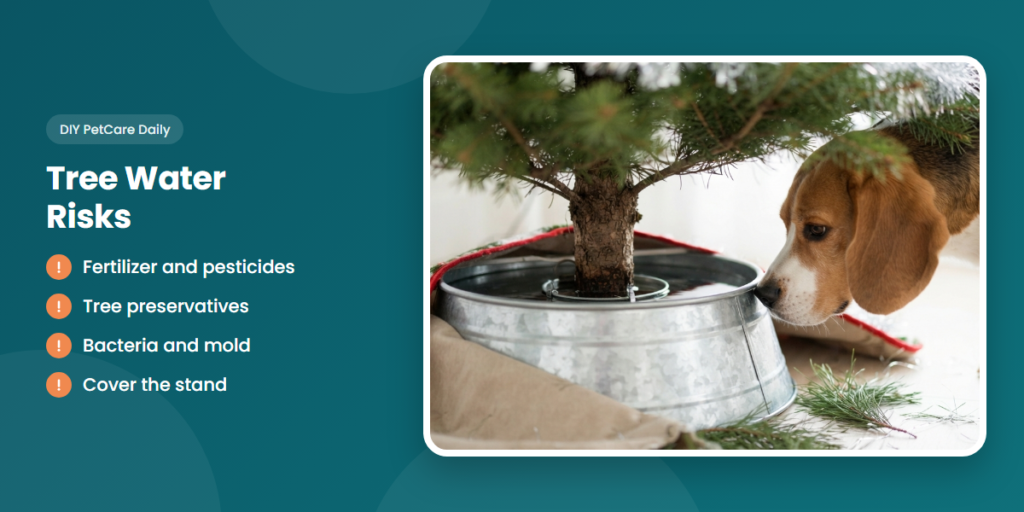
Is Christmas Tree Water Safe for Dogs?
No, keep your dog out of it. Tree stand water can contain:
- Fertilizers or pesticides that washed off the tree
- Tree preservatives or homemade “tree food” (like sugar, aspirin, or bleach mixes some people add)
- Bacteria and mold that grow as the water sits for days
A few laps of plain tree water might only cause mild vomiting or diarrhea. Water with additives can be more harmful. Easy fixes:
- Use a tree stand with a covered reservoir, or cover the top with a tree skirt plus foil or a tree collar
- Don’t add anything to the water but plain water
- Keep your dog’s own water bowl full and in its usual spot so they aren’t hunting for a drink
The Biggest Holiday Hazards Around the Tree
The tree is the least of it. These cause far more trouble for dogs every December.
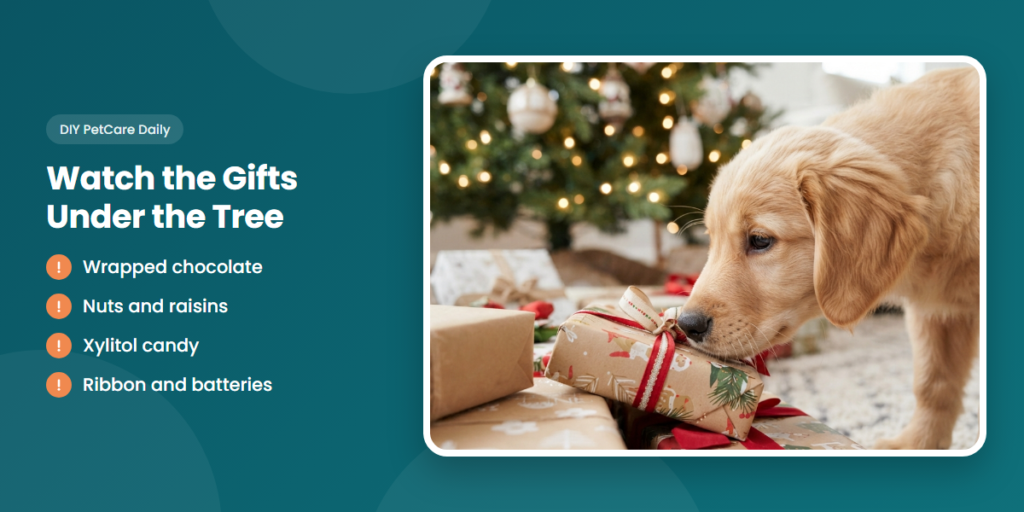
Gifts Under the Tree (Especially Chocolate)
Dogs can smell chocolate, candy, and food right through wrapping paper. A wrapped box of chocolates under the tree is one of the most common holiday poisonings vets see. Dark and baking chocolate are the most dangerous.
Keep food gifts on a high shelf until they’re opened. Also watch for:
- Gift baskets with nuts (macadamia nuts are toxic to dogs), raisins, or sugar-free candy with xylitol
- Ribbon, string, and curling ribbon, which can cause intestinal problems if swallowed
- Small toys and batteries. Button batteries and regular batteries can cause burns inside the mouth and gut
Light Cords
Puppies love to chew cords. A bite into a plugged-in wire can cause mouth burns, fluid in the lungs, and shock. Run cords up the back of the tree, use cord covers, and unplug lights when you’re out or asleep.
Glass Ornaments and Hooks
A wagging tail can clear the lower branches in one sweep. Broken glass can cut paws and mouths, and dogs sometimes chew or swallow ornaments that look like balls. Metal ornament hooks can be swallowed too. Keep fragile ornaments high and use ribbon or twist ties instead of hooks on lower branches.
Tinsel and Garland
Tinsel isn’t toxic, but long strands can tangle in the intestines and cause a serious blockage. Popcorn and cranberry garlands tempt dogs to eat the string along with the snack.
Salt Dough Ornaments
Homemade salt dough ornaments are a fun craft, but they’re packed with salt. A dog who eats one can get salt poisoning, with vomiting, extreme thirst, wobbliness, and seizures. Hang them high or skip them if you have a food-motivated dog.
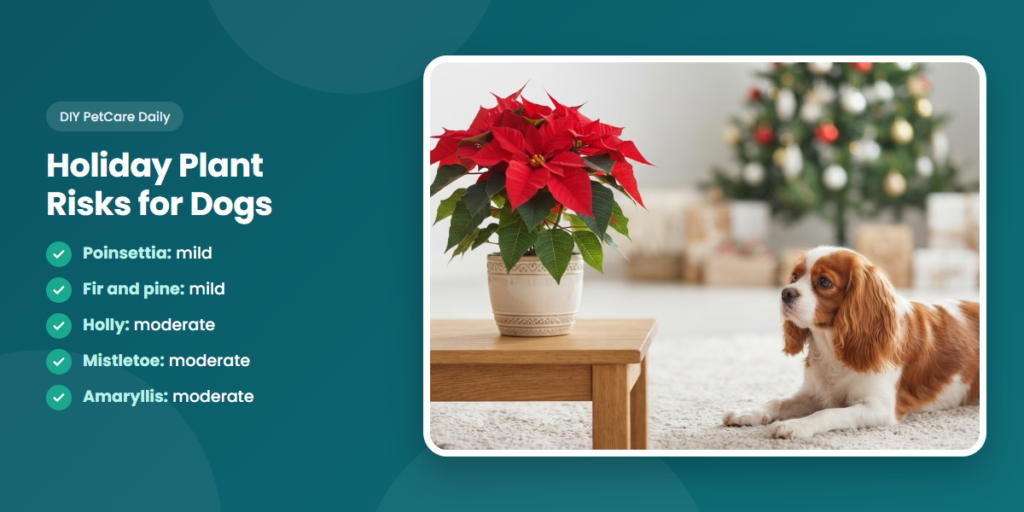
Are Poinsettias Toxic to Dogs?
Poinsettias are mildly toxic to dogs. The milky sap can irritate the mouth and stomach, causing drooling, licking, and sometimes vomiting or diarrhea. Their reputation as a “deadly” plant isn’t accurate. Serious problems are unlikely, and most dogs who chew one feel better within a day.
Still, keep poinsettias up on a table or shelf, especially if you have a puppy.
Other Holiday Plants and Their Risks for Dogs
| Plant | Toxicity to dogs | Common signs |
| Poinsettia | Mild | Drooling, mouth irritation, vomiting |
| Fir, pine, spruce | Mild | Drooling, vomiting, needle pokes |
| Holly | Moderate | Vomiting, diarrhea, drooling, mouth injury from spiky leaves |
| Mistletoe | Moderate (more with large amounts) | Vomiting, diarrhea; large amounts can affect heart rate and balance |
| Amaryllis | Moderate | Vomiting, diarrhea, drooling, belly pain (the bulb is worst) |
| Lilies | Mostly stomach upset in dogs | Upset stomach (lilies are far more dangerous to cats) |
| Christmas cactus | Low | Mild stomach upset if a lot is eaten |
If you share your home with cats too, read our guide on Christmas tree safety for cats. Lilies can cause kidney failure in cats, so the rules are stricter for them.
How to Make Your Christmas Tree Dog-Friendly
- Set up a barrier. An exercise pen or baby gate around the tree works well for puppies and young dogs.
- Anchor the tree. Tie the top to a wall hook with fishing line so a bump from a big dog won’t tip it over.
- Decorate the top two-thirds. Keep the bottom branches bare or use soft, unbreakable ornaments.
- Sweep up needles daily. Fewer needles on the floor means fewer in your dog’s mouth.
- Keep gifts off the floor until Christmas morning, or at least keep food gifts out.
- Train “leave it.” It’s the most useful holiday command. Practice with treats before the tree goes up.
- Supervise at first. Watch how your dog reacts for the first few days.
- Give them something better to chew. A stuffed chew toy, a DIY snuffle mat, or one of our homemade dog toys keeps busy mouths away from the branches.
Dogs that chew everything when they’re bored or alone may be dealing with more than holiday excitement. Our guide to dog separation anxiety can help if the chewing happens mostly when you leave.
What to Do If Your Dog Ate Christmas Tree Needles or Decorations
A few needles: Check their mouth for stuck needles, offer fresh water, and watch for vomiting or diarrhea over the next day. Most dogs are fine.
A lot of needles, or ongoing vomiting: Call your vet.
Tinsel, ribbon, an ornament, or a battery: Call your vet right away. Don’t pull on any string you see coming from the mouth or rear, and don’t make your dog vomit unless your vet tells you to.
Chocolate, salt dough, xylitol candy, or a toxic plant: Call your vet or a pet poison line right away. Have the packaging handy if you can. The ASPCA Animal Poison Control Center is (888) 426-4435 and the Pet Poison Helpline is (855) 764-7661. Both answer 24/7, and a fee may apply.
Go to an emergency vet for repeated vomiting, a swollen or painful belly, straining with no poop, pale gums, trouble breathing, collapse, or seizures.
The holiday table brings its own risks too. Before you share scraps, read our guides on whether dogs can eat ham and whether dogs can eat turkey.
Frequently Asked Questions
Can dogs eat pine needles?
They shouldn’t. Pine needles are mildly toxic and sharp. A few may only cause drooling or a mild upset stomach, but eating a lot can irritate the gut or, rarely, cause a blockage. Sweep up fallen needles and keep chewers away from the tree.
Is Christmas tree water poisonous to dogs?
It can make dogs sick. Tree water may contain fertilizer, pesticides, preservatives, and bacteria. Cover the stand and don’t add anything to the water if you have pets.
Are poinsettias toxic to dogs?
Poinsettias are mildly toxic to dogs. The sap can cause drooling, mouth irritation, and vomiting, but serious poisoning is rare. Keep them out of reach anyway, especially from puppies.
Is an artificial Christmas tree safer for dogs?
It removes the sap, needle oils, and tree water, which helps. But dogs can still chew plastic needles and wires or knock the tree over, so you’ll still need to anchor it and supervise.
How do I keep my puppy away from the Christmas tree?
Put an exercise pen or gate around the tree, keep the lower branches bare, hide cords, and practice “leave it.” Give your puppy plenty of chew toys and exercise so the tree isn’t the most interesting thing in the room.