Table of Contents
- Table of Contents
- Can Dogs Eat Turkey? The Short Version
- Why Plain Turkey Is Good for Dogs
- The Parts of a Holiday Turkey to Keep Away From Your Dog
- How to Prepare Turkey for Your Dog
- How Much Turkey Can a Dog Eat?
- What If My Dog Ate Turkey Skin, Bones, or Stuffing?
- Other Thanksgiving and Christmas Foods: Quick Safety Check
- Holiday Dinner Tips for Dog Owners
- Frequently Asked Questions
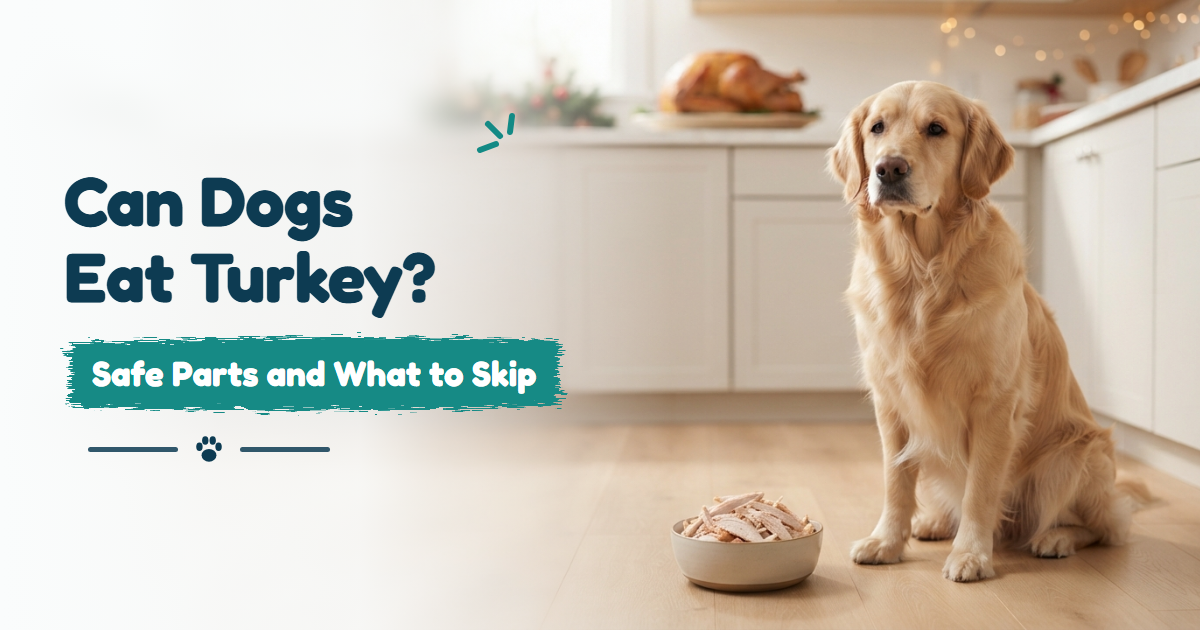
Quick answer: Can dogs eat turkey? Yes, plain cooked turkey breast with no skin, bones, or seasoning is safe for most dogs in small amounts. In fact, turkey is a common protein in commercial dog food. The risky parts are the skin, fat, drippings, gravy, stuffing, and cooked bones, which can cause stomach upset, pancreatitis, or a blockage.
Turkey is the star of Thanksgiving and a lot of Christmas tables, and your dog knows it. The good news: unlike ham, turkey can be a genuinely healthy treat for dogs, as long as you share the right part and prepare it the right way.
The catch is that a holiday turkey usually comes with butter, herbs, garlic, onion, crispy skin, and bones. Those extras are what send dogs to the vet in late November and December. Here’s how to give your dog a safe taste of turkey, plus what to do if they help themselves.
Table of Contents
- Can Dogs Eat Turkey? The Short Version
- Why Plain Turkey Is Good for Dogs
- The Parts of a Holiday Turkey to Keep Away From Your Dog
- How to Prepare Turkey for Your Dog
- How Much Turkey Can a Dog Eat?
- What If My Dog Ate Turkey Skin, Bones, or Stuffing?
- Other Thanksgiving and Christmas Foods: Quick Safety Check
- Holiday Dinner Tips for Dog Owners
- Frequently Asked Questions
Can Dogs Eat Turkey? The Short Version
| Turkey part or dish | Safe for dogs? | Why |
| Plain white meat, cooked, no skin | Yes | Lean, high-protein, easy to digest |
| Plain dark meat, cooked, no skin | In small amounts | Fattier than white meat |
| Turkey skin | No | High in fat, often seasoned with butter, garlic, and salt |
| Cooked turkey bones | No | Can splinter and cause injuries or blockages |
| Gravy and pan drippings | No | Fatty, salty, often has onion or garlic |
| Stuffing | No | Usually contains onion, garlic, and sometimes raisins |
| Raw turkey | No | Risk of Salmonella and other bacteria |
| Deli turkey | Rarely, tiny amounts | High in sodium and preservatives |
| Ground turkey, plain and cooked | Yes | Good for homemade meals and toppers |
Why Plain Turkey Is Good for Dogs
Plain turkey breast is a lean source of protein. It also gives dogs B vitamins like niacin and B6, plus minerals such as phosphorus and selenium. That’s why turkey shows up in so many dog foods and treats.
Because it’s mild and easy to digest, vets often suggest plain cooked turkey or chicken (usually with white rice) as a bland diet for dogs getting over a mild stomach upset. If your dog is on a weight-loss plan, a few pieces of plain white meat make a lower-calorie reward than most store-bought treats.
The Parts of a Holiday Turkey to Keep Away From Your Dog
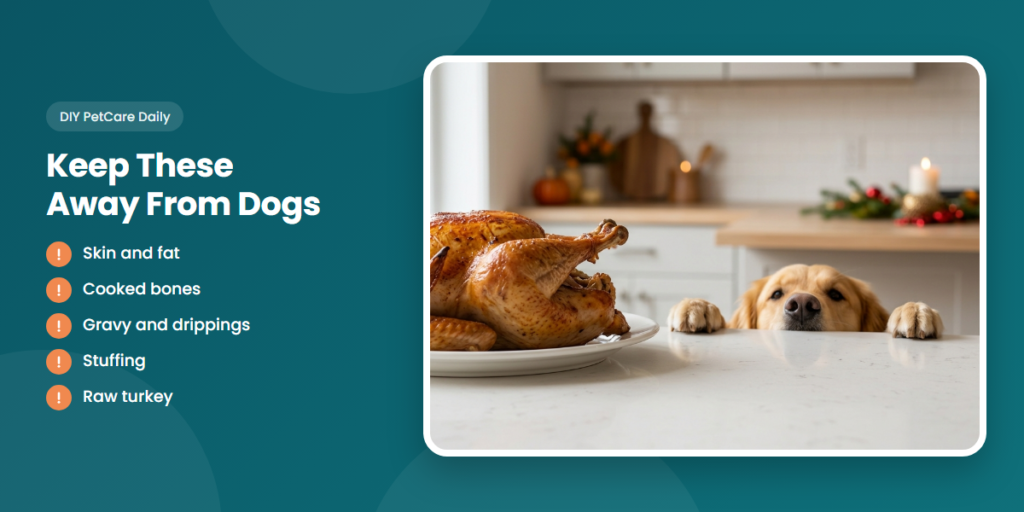
Skin and Fat
Turkey skin soaks up butter, oil, salt, and seasonings while it roasts. It’s also mostly fat. A sudden fatty meal can trigger pancreatitis, a painful inflammation of the pancreas. It’s one of the most common holiday emergencies vets see.
Watch for vomiting, belly pain, hunching, diarrhea, and refusing food in the day or two after a big holiday meal.
Bones
Cooked turkey bones are brittle. When a dog chews them, they can break into sharp shards that can cut the mouth or throat, or pierce the stomach or intestines. Larger pieces, like a drumstick bone or a turkey neck, can get stuck and cause a blockage.
The turkey carcass sitting in the trash after dinner is a big temptation. Bag it up and take it outside right away.
Seasonings, Garlic, and Onion
Onion, garlic, leeks, chives, and shallots belong to the allium family. They can damage a dog’s red blood cells, leading to anemia. This is true whether they’re fresh, cooked, or powdered. Many turkey rubs, brines, butter mixes, and stuffing recipes include them.
Herbs like sage, rosemary, and thyme aren’t a big concern in the small amounts used on a turkey, but the butter and salt that come with them are. Nutmeg, used in some holiday recipes, can be harmful to dogs in larger amounts.
Gravy and Stuffing
Gravy is basically fat, salt, and flour, often flavored with onion. Stuffing usually contains bread, butter, onion, celery, garlic, and sometimes raisins or dried fruit. Raisins and grapes can cause kidney failure in dogs, even in small amounts. Keep both dishes off your dog’s plate.
Raw Turkey
Raw turkey can carry Salmonella and Campylobacter, which can make dogs sick and can spread to people in the house. Keep raw turkey and its juices out of reach while you’re prepping, and clean up any drips on the floor.
How to Prepare Turkey for Your Dog
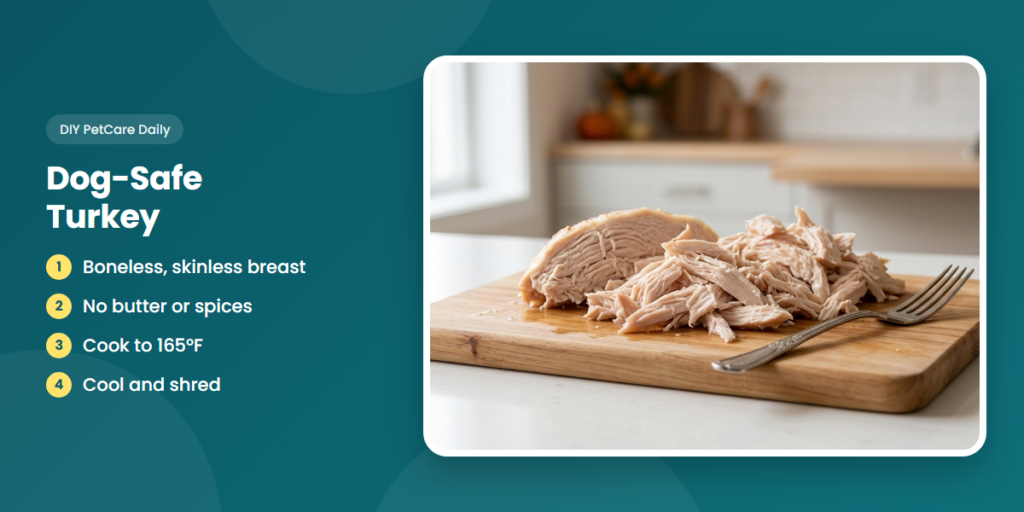
The easiest way is to set aside a portion before you season the bird. If that isn’t possible, pick pieces from the inside of the breast where the seasoning didn’t reach.
Simple dog-friendly turkey
- Take a boneless, skinless turkey breast or cutlet.
- Boil, bake, or pan-cook it with no oil, butter, salt, or spices. (Water or a splash of plain water in a covered pan works fine.)
- Cook until the thickest part reaches 165°F.
- Let it cool completely.
- Shred or cut it into small, bite-size pieces.
- Store leftovers in the fridge for up to 3 days, or freeze in small portions for up to 3 months.
Plain cooked ground turkey works too. Drain off the fat after browning it. You can mix a spoonful into your dog’s regular food as a holiday “topper.”
How Much Turkey Can a Dog Eat?
Turkey is a treat, not a meal replacement, unless it’s part of a properly balanced homemade diet. Keep all treats to about 10% of your dog’s daily calories.
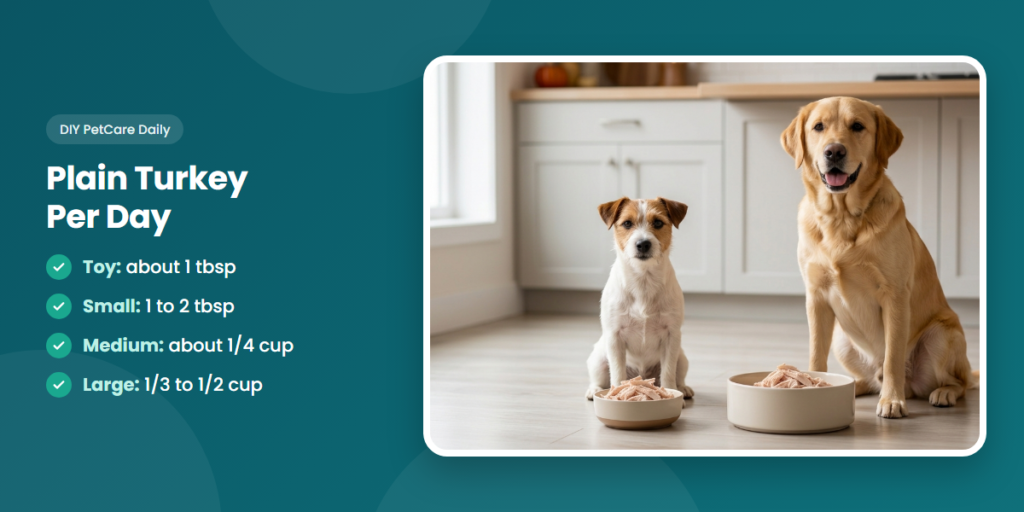
Plain cooked turkey breast has roughly 40 to 45 calories per ounce. Here’s a simple guide for a holiday portion:
| Dog size | Plain turkey breast per day |
| Toy (under 10 lb) | About 1 tablespoon, shredded |
| Small (10 to 25 lb) | 1 to 2 tablespoons |
| Medium (25 to 50 lb) | About 1/4 cup |
| Large (50 to 90 lb) | About 1/3 to 1/2 cup |
| Giant (90 lb and up) | Up to about 1/2 cup |
If you give more turkey than usual, cut back a little on their regular food that day. If you’re not sure how much your dog should eat overall, our dog calorie calculator can help you find a daily target.
Start small if your dog has never had turkey before. Some dogs have food sensitivities, and any new food can cause loose stools in dogs with sensitive stomachs.
What If My Dog Ate Turkey Skin, Bones, or Stuffing?
Skin or a Little Fat
One small piece of skin is unlikely to cause trouble in a healthy medium or large dog. Watch for 48 hours for vomiting, diarrhea, belly pain, or loss of appetite. Call your vet if any of those appear.
Cooked Bones or the Carcass
Call your vet right away for advice, even if your dog seems fine. Don’t try to make your dog throw up at home. Your vet may want you to watch closely at home or bring your dog in for X-rays. Go to an emergency vet if you see:
- Gagging, choking, or pawing at the mouth
- Repeated vomiting
- A swollen or painful belly
- Straining to poop, or no poop for more than a day
- Blood in vomit or stool
- Low energy or hiding
Stuffing or Gravy With Onion, Garlic, or Raisins
Call your vet or a pet poison hotline. Onion and garlic damage can take a few days to show up, with signs like weakness, pale gums, and dark urine. Raisins can cause vomiting and kidney problems. The ASPCA Animal Poison Control Center is (888) 426-4435 and the Pet Poison Helpline is (855) 764-7661. Both are available 24/7, and a fee may apply.
If your dog just has mild diarrhea after a rich meal, our guide on what to give a dog for diarrhea covers safe home care.
Other Thanksgiving and Christmas Foods: Quick Safety Check
Turkey usually isn’t the only thing on the table. Here’s how the rest of a typical holiday dinner stacks up:
Generally OK in small, plain amounts
- Green beans (no butter, salt, or fried onions)
- Carrots
- Plain sweet potato (no marshmallows or sugar)
- Plain canned pumpkin
- Plain cooked rice
- Apple slices with no seeds or core
- Fresh cranberries, a few at a time
Keep away from dogs
- Ham and ham bones (see our guide on whether dogs can eat ham)
- Mashed potatoes made with butter, cream, garlic, or onion
- Green bean casserole
- Stuffing and gravy
- Grapes, raisins, and fruitcake
- Chocolate and desserts made with it
- Anything sweetened with xylitol
- Unbaked yeast dough
- Alcohol, including eggnog with liquor
- Macadamia nuts
Want something festive that’s made for dogs? Try our Christmas dog treats recipes, or bake a simple cake from our dog birthday cake recipe for a holiday “pupcake.”
Holiday Dinner Tips for Dog Owners
- Make a dog plate ahead of time. Set aside plain turkey and veggies before anything gets seasoned.
- Tell guests the rules. Kids especially love to share. Give them a small bowl of plain turkey pieces they’re allowed to hand out.
- Clear the table quickly. Dogs are fast, and a plate left on the coffee table is fair game.
- Secure the trash. Turkey bones, strings, and foil-wrapped drippings in the trash can cause serious problems.
- Keep their routine. Regular walks and mealtimes help keep stomachs settled and stress low during busy days.
Frequently Asked Questions
Can dogs eat turkey meat every day?
Plain cooked turkey can be part of a dog’s daily diet in small amounts, and it’s a common ingredient in dog food. As a treat, keep it under 10% of daily calories. If you want to feed turkey as a full meal, work with your vet to balance it, since meat alone isn’t a complete diet. Our guide to homemade dog food recipes explains what a balanced meal needs.
Can dogs eat turkey bones?
No. Cooked turkey bones can splinter and cause choking, mouth injuries, or blockages in the stomach and intestines. Call your vet if your dog eats one.
Can dogs eat dark turkey meat?
Yes, in small amounts, if it’s plain and skinless. Dark meat is fattier than white meat, so white breast meat is the better choice, especially for small dogs and dogs with sensitive stomachs.
Can dogs eat deli turkey?
A tiny piece now and then is unlikely to cause harm, but deli turkey is high in sodium and often has added seasonings and preservatives. Fresh, plain cooked turkey is a much better option.
Can dogs eat turkey necks?
Cooked turkey necks are not safe because the bones can splinter. Some people feed raw necks as part of a raw diet, but raw bones carry bacteria and choking risks. Talk to your vet before giving any bones.