Table of Contents
- Table of Contents
- First, Check: Is It Safe to Treat at Home?
- Common Causes of Diarrhea in Dogs
- What to Give a Dog for Diarrhea: Safe Home Remedies
- Bland Diet Portions by Dog Size
- How to Help a Dog With Diarrhea: Step by Step
- What Can I Give My Dog to Stop Diarrhea Fast?
- What Helps a Dog’s Diarrhea? Foods That Help and Foods to Avoid
- Human Medicines: Don’t Give Them Without Your Vet
- Signs of Dehydration to Watch For
- Diarrhea in Special Cases
- How to Prevent Diarrhea in Dogs
- Frequently Asked Questions
Quick answer: For mild diarrhea in an otherwise healthy adult dog, give small meals of a bland diet, such as plain boiled chicken and white rice, for 2 to 3 days. Add a little plain canned pumpkin (about 1 teaspoon per 10 pounds of body weight per day) and keep fresh water available at all times. A dog probiotic can also help. Don’t give human medicines like Imodium or Pepto-Bismol without asking your vet first. Call your vet right away if your dog is a puppy, has blood in the stool, is vomiting, seems weak, or the diarrhea lasts more than 24 to 48 hours.
Few things send a dog owner running for paper towels faster than a sudden case of diarrhea. Most of the time, it’s a short-term upset from eating something they shouldn’t have, a food change, or stress. The good news is that many mild cases clear up in a day or two with simple care at home.
But diarrhea can also be a sign of something more serious, like parasites, an infection, or a blockage. This guide covers what to give a dog for diarrhea, how to help your dog feel better step by step, and the warning signs that mean it’s time to call the vet.
Table of Contents
- First, Check: Is It Safe to Treat at Home?
- Common Causes of Diarrhea in Dogs
- What to Give a Dog for Diarrhea: Safe Home Remedies
- Bland Diet Portions by Dog Size
- How to Help a Dog With Diarrhea: Step by Step
- What Can I Give My Dog to Stop Diarrhea Fast?
- What Helps a Dog’s Diarrhea? Foods That Help and Foods to Avoid
- Human Medicines: Don’t Give Them Without Your Vet
- Signs of Dehydration to Watch For
- Diarrhea in Special Cases
- How to Prevent Diarrhea in Dogs
- Frequently Asked Questions
First, Check: Is It Safe to Treat at Home?
Before you try any home remedy, make sure your dog doesn’t need a vet right away. Call your vet or an emergency vet now if your dog:
- Is a puppy, especially one who isn’t fully vaccinated (parvovirus is a real risk)
- Has bright red blood in the stool, or black, tarry stool
- Is vomiting too, especially more than once
- Seems weak, very tired, or won’t get up
- Has pale, gray, or very dry gums
- Has a swollen, hard, or painful belly
- Won’t eat or drink
- May have eaten something toxic, like chocolate, grapes, xylitol, or medicine
- May have swallowed a toy, bone, sock, or other object
- Is a senior or has a health condition like diabetes, kidney disease, or Addison’s disease
- Has diarrhea that is very frequent and watery, like water coming out
If your dog is acting normally, is still eating and drinking, and has had only a few loose stools, home care is usually a reasonable first step.
Common Causes of Diarrhea in Dogs
Knowing the cause helps you decide what to do. The most common ones include:
- Eating something they shouldn’t. Vets call this “garbage gut.” Trash, table scraps, rich or fatty foods, and dead animals are common culprits. Holiday leftovers like fatty ham are a classic trigger.
- A sudden food change. Switching foods overnight often leads to loose stool. Our guide on how to switch dog food shows how to do it slowly.
- Too many treats or new treats.
- Stress. Boarding, travel, a new home, or fireworks can all cause “stress colitis.”
- Parasites. Worms, Giardia, and coccidia are especially common in puppies.
- Viral or bacterial infections, including parvovirus in puppies.
- Food allergies or sensitivities.
- Medicines, especially antibiotics.
- Pancreatitis, often after a high-fat meal.
- Ongoing conditions like inflammatory bowel disease (IBD).
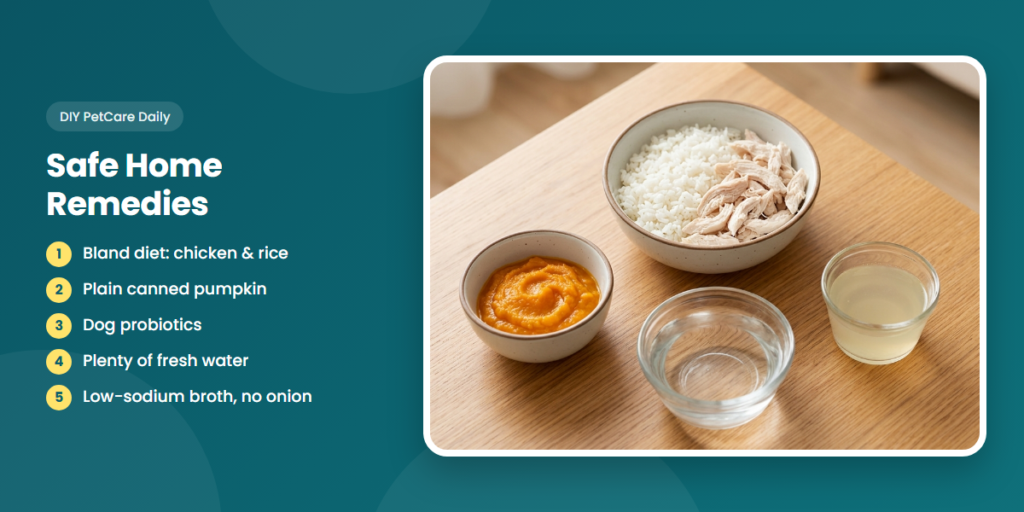
What to Give a Dog for Diarrhea: Safe Home Remedies
These are the remedies vets most often suggest for mild diarrhea in an adult dog. They’re simple, cheap, and easy on the stomach.
1. A Bland Diet
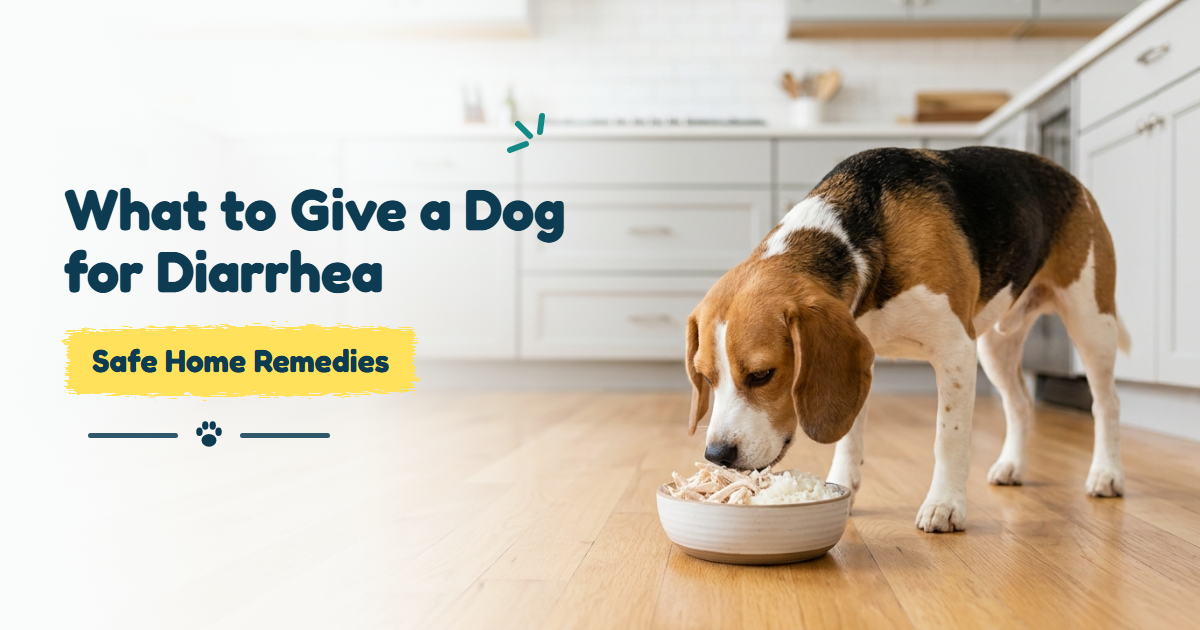
A bland diet is the number one home remedy. It’s low in fat, easy to digest, and helps firm up stool.
Classic recipe:
- 1 part plain boiled, skinless, boneless chicken breast (or lean ground turkey, boiled and drained)
- 2 parts plain cooked white rice
Cook without salt, butter, oil, onion, garlic, or seasoning. Let it cool before serving.
2. Plain Canned Pumpkin
Plain pumpkin is high in soluble fiber, which soaks up extra water in the gut and helps firm stool. Use 100 percent pure pumpkin, not pumpkin pie filling, which has sugar and spices.
How much: about 1 teaspoon per 10 pounds of body weight per day, split between meals.
3. Dog Probiotics
Probiotics add good bacteria to the gut and can help diarrhea clear up faster, especially after stress or antibiotics. Choose one made for dogs, often sold as a powder you sprinkle on food. Ask your vet which brand fits your dog.
4. Plenty of Fresh Water
Diarrhea pulls a lot of water out of the body, so keeping your dog hydrated is just as important as what they eat. Keep fresh water out at all times. If your dog drinks a lot at once and then vomits, offer small amounts often, or let them lick ice chips.
5. Low-Sodium Broth
A splash of plain, low-sodium chicken or bone broth poured over the bland diet can tempt a picky dog to eat and adds a little extra fluid. Make sure it has no onion or garlic.
6. Electrolyte Solution (Ask Your Vet First)
Some vets suggest small amounts of an unflavored pediatric electrolyte drink for mild dehydration. Ask your vet first, since some flavored versions contain sweeteners like xylitol that are toxic to dogs, and dogs with certain conditions shouldn’t have them.
Bland Diet Portions by Dog Size
Feed the bland diet in small meals, 3 to 4 times a day, instead of one or two big meals. These amounts are per meal, as a starting guide.
| Dog’s Weight | Bland Diet per Meal | Pumpkin per Day |
| Under 10 lbs | 2 to 4 tablespoons | about 1 teaspoon |
| 10 to 25 lbs | 1/4 to 1/2 cup | 1 to 2 1/2 teaspoons |
| 25 to 50 lbs | 1/2 to 1 cup | 2 1/2 teaspoons to 1 1/2 tablespoons |
| 50 to 75 lbs | 1 to 1 1/2 cups | 1 1/2 to 2 1/2 tablespoons |
| Over 75 lbs | 1 1/2 to 2 cups | 2 1/2 to 3 tablespoons |
Start at the lower amount on the first day. If the stool is firming up and your dog is keeping food down, you can move to the higher amount.
How to Help a Dog With Diarrhea: Step by Step
Step 1: Give the Stomach a Short Break (Healthy Adults Only)
Some vets suggest skipping one meal (no more than 12 hours) to let the gut rest. Many now prefer going straight to small bland meals instead. Never withhold food from puppies, toy breeds, seniors, or dogs with health problems. Always keep water available.
Step 2: Start Small Bland Meals
Offer a small portion of the bland diet. If your dog keeps it down for a few hours, offer another small meal. Keep meals small and frequent for the first day.
Step 3: Add Pumpkin or a Probiotic
Mix plain pumpkin or a dog probiotic into the bland diet. Both can help firm up stool within a day or two.
Step 4: Keep an Eye on Things
Track how many times your dog goes, what the stool looks like, and whether they’re eating, drinking, and acting normally. Our dog poop color chart can help you tell what different colors and textures mean.
Step 5: Return to Regular Food Slowly
Once your dog’s stool has been firm for about a day, usually after 2 to 3 days on the bland diet, start mixing their regular food back in over 3 to 5 days:
| Day | Bland Diet | Regular Food |
| Day 1 | 75% | 25% |
| Day 2 | 50% | 50% |
| Day 3 | 25% | 75% |
| Day 4 | 0% | 100% |
If the diarrhea comes back, go back a step and give it more time.
What Can I Give My Dog to Stop Diarrhea Fast?
There’s no instant fix, and stopping diarrhea too quickly isn’t always a good idea, since it’s the body’s way of clearing out something that upset it. But these steps work the fastest for most mild cases:
- Small bland meals of chicken and rice, started right away
- Plain pumpkin mixed into each meal
- A dog probiotic for a few days
- No treats, chews, or table scraps until stool is normal
- Rest and calm if stress is the cause
With this care, most mild cases improve within 24 to 48 hours. If they don’t, it’s time for a vet visit. Your vet can give medicines that are safe for dogs, check for parasites, and give fluids if your dog is dehydrated.
What Helps a Dog’s Diarrhea? Foods That Help and Foods to Avoid
| Helps | Avoid |
| Plain boiled chicken breast | Fatty meats, bacon, skin, and grease |
| Plain white rice | Dairy like milk, cheese, and ice cream |
| Plain canned pumpkin | Pumpkin pie filling |
| Lean boiled ground turkey | Spicy, salty, or seasoned food |
| Plain boiled potato (peeled) | Rich treats, bully sticks, and rawhide |
| Plain scrambled egg (no butter) | Onions, garlic, grapes, and raisins |
| Low-sodium, onion-free broth | New foods or new treats |
| Dog probiotics | Raw food diets during recovery |
Once your dog is better, some safe fruits and veggies make good gentle treats. Our list of what fruits can dogs eat shows which ones are safe.
Human Medicines: Don’t Give Them Without Your Vet
It’s tempting to reach into your own medicine cabinet, but many human diarrhea medicines can be risky for dogs.
- Imodium (loperamide): can be dangerous for herding breeds like Collies, Australian Shepherds, and Shelties, who often carry a gene (MDR1) that makes them very sensitive to it. It can also make things worse if the diarrhea is caused by an infection or toxin, because it keeps the problem inside the gut.
- Pepto-Bismol and Kaopectate: contain bismuth subsalicylate, a cousin of aspirin. It can cause bleeding problems and stomach ulcers in some dogs and turns stool black, which can hide signs of internal bleeding.
- Pain relievers like ibuprofen, naproxen, and acetaminophen: toxic to dogs. Never give these.
- Leftover antibiotics: don’t use them. The wrong antibiotic can make diarrhea worse.
Your vet may prescribe a dog-safe anti-diarrhea medicine, a probiotic, or a dewormer depending on the cause. Always call before giving anything.
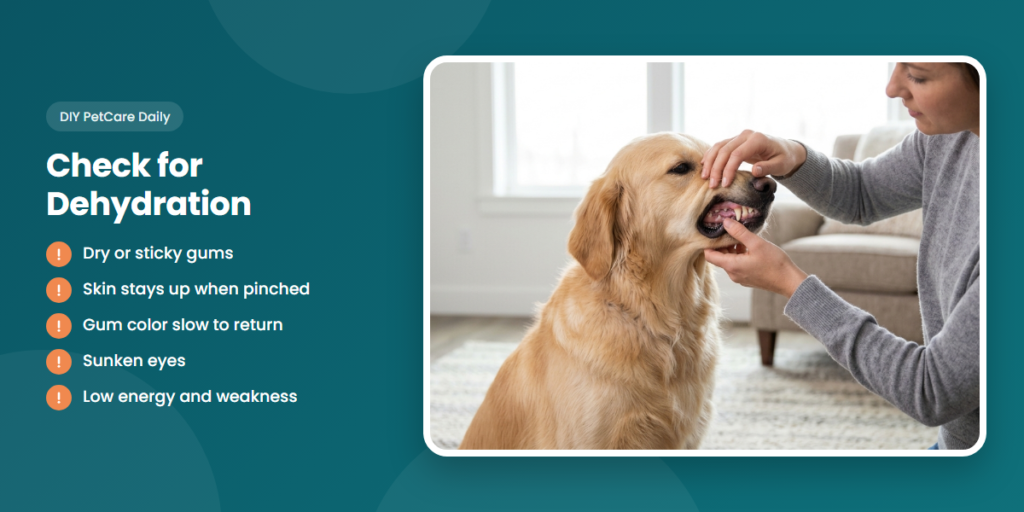
Signs of Dehydration to Watch For
Dogs with diarrhea can lose fluids fast, especially small dogs, puppies, and seniors. Check for these signs:
- Dry or sticky gums. Healthy gums are wet and slippery.
- Skin tent test. Gently pinch the skin between the shoulder blades and let go. It should snap back right away. If it stays up or slowly sinks, your dog may be dehydrated.
- Slow gum color return. Press a finger on the gums until they turn pale. Color should return in about 2 seconds.
- Sunken eyes
- Low energy and weakness
- Thick drool
If you notice any of these, call your vet. Dehydrated dogs often need fluids given by a vet.
Diarrhea in Special Cases
Puppies
Puppies can get dehydrated within hours and are at risk of serious infections like parvovirus. Call your vet for any puppy with diarrhea, especially if they haven’t finished their vaccine series. Don’t withhold food. If your puppy’s diarrhea came after a food change or overfeeding, our guide on how much to feed a puppy can help you get portions right.
Diarrhea With Vomiting
Diarrhea plus vomiting means your dog is losing fluids from both ends. Call your vet, especially if the vomiting happens more than once or your dog can’t keep water down.
Bloody Diarrhea
A small streak of bright red blood or mucus can happen with simple colitis, but it still needs a vet check if it continues. Large amounts of blood, raspberry-jam-like stool, or black, tarry stool need care right away.
Diarrhea That Keeps Coming Back
If your dog gets diarrhea often, or has loose stool for more than 2 to 3 weeks, it may be a sign of food allergies, parasites, IBD, or another health problem. Your vet may suggest stool tests, blood work, or a diet trial.
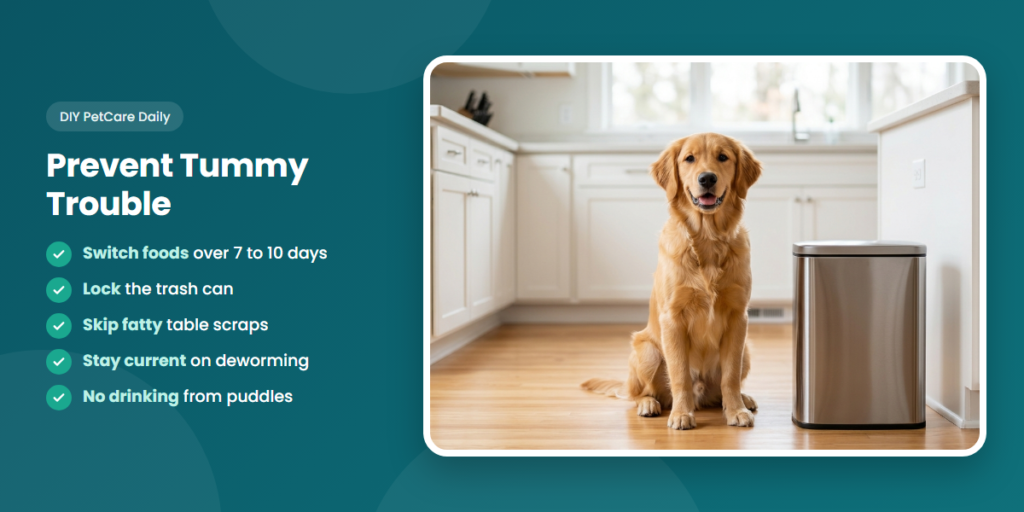
How to Prevent Diarrhea in Dogs
- Switch foods slowly over 7 to 10 days
- Keep trash locked and counters clear
- Skip table scraps, especially fatty or seasoned foods
- Keep treats to 10 percent of your dog’s daily calories. See our guide on how much dog food should I feed my dog for help with portions
- Stay up to date on deworming and parasite prevention
- Keep vaccines current, especially for puppies
- Don’t let your dog drink from puddles, ponds, or streams, which can carry Giardia
- Pick up toys and objects your dog might swallow
For more guides on keeping your dog healthy, visit our Dog Health & Wellness section.
Frequently Asked Questions
What can I give my dog for diarrhea at home?
For mild diarrhea in a healthy adult dog, give small meals of plain boiled chicken and white rice, a little plain canned pumpkin, and a dog probiotic. Keep fresh water available at all times. Call your vet if it doesn’t improve in 24 to 48 hours.
How long does dog diarrhea last?
Mild diarrhea from eating something new or a food change usually clears up in 1 to 3 days. If it lasts longer than 48 hours, keeps coming back, or comes with other signs like vomiting or low energy, see your vet.
Is scrambled egg good for dogs with diarrhea?
Yes, a plain scrambled egg cooked without butter, oil, milk, or salt is easy to digest and a good source of protein. Serve it on its own or with plain white rice.
Can I give my dog Pepto-Bismol for diarrhea?
It’s best not to without asking your vet first. Pepto-Bismol contains a type of salicylate, related to aspirin, which can cause bleeding and stomach ulcers in some dogs. It also turns stool black, which can hide signs of internal bleeding.
When should I worry about my dog’s diarrhea?
Call your vet if your dog is a puppy or senior, has blood in the stool, is vomiting, seems weak or tired, won’t eat or drink, shows signs of dehydration, or has diarrhea that lasts more than 24 to 48 hours.