Table of Contents
- Table of Contents
- Why a Slow Switch Matters
- Common Reasons to Switch Dog Food
- The 10-Day Plan for Transitioning Dog Food
- A Slower Plan for Sensitive Stomachs
- Check the Calories Before You Switch
- Signs the Switch Is Going Well
- Signs Your Dog Needs to Slow Down
- When to Call the Vet
- Special Situations
- What to Do If Your Dog Won’t Eat the New Food
- Tips for Switching Dog Food Smoothly
- Frequently Asked Questions
Quick answer: When switching dog food, mix the new food into the old food slowly over about 10 days. Feed 25 percent new food for days 1 to 3, 50 percent for days 4 to 6, 75 percent for days 7 to 9, and 100 percent new food on day 10. If your dog gets soft stool or gas, stay at the current step for a few extra days before moving on. Dogs with sensitive stomachs may need 2 to 3 weeks.
Maybe your puppy is growing up, your vet suggested a new diet, or your dog’s favorite food was discontinued. Whatever the reason, switching dog food overnight is one of the fastest ways to end up with diarrhea on the carpet.
A dog’s gut gets used to the food they eat every day. The good bacteria in their digestive system need time to adjust to new ingredients, fat levels, and fiber. That’s why a slow change works so much better than a sudden one.
Switching dog food doesn’t have to mean a week of messes. This guide shows you exactly how to transition dog food with an easy 10-day plan, plus what to do if your dog’s stomach gets upset along the way.
Table of Contents
- Why a Slow Switch Matters
- Common Reasons to Switch Dog Food
- The 10-Day Plan for Transitioning Dog Food
- A Slower Plan for Sensitive Stomachs
- Check the Calories Before You Switch
- Signs the Switch Is Going Well
- Signs Your Dog Needs to Slow Down
- When to Call the Vet
- Special Situations
- What to Do If Your Dog Won’t Eat the New Food
- Tips for Switching Dog Food Smoothly
- Frequently Asked Questions
Why a Slow Switch Matters
When you change your dog’s food all at once, their digestive system gets hit with new proteins, fats, and fibers it isn’t ready for. The result is often:
- Loose stool or diarrhea
- Gas and bloating
- Vomiting
- Picky eating or refusing the new food
A slow switch gives your dog’s gut bacteria time to adapt. It also gives you time to spot any problems with the new food, like an allergy or an ingredient that doesn’t agree with your dog, before it’s their entire diet.
Common Reasons to Switch Dog Food
- Life stage changes: puppy to adult, or adult to senior food
- Vet advice: weight loss, kidney support, allergies, or a sensitive stomach
- Skin or coat problems: sometimes linked to food allergies. Our post on why is my dog shedding so much covers how diet can affect the coat.
- Budget or availability: a cheaper option or a brand you can find easily
- Your dog stopped liking their food
If your dog suddenly stops eating a food they used to love, check with your vet first. A change in appetite can be a sign of dental pain or illness, not just boredom.
The 10-Day Plan for Transitioning Dog Food
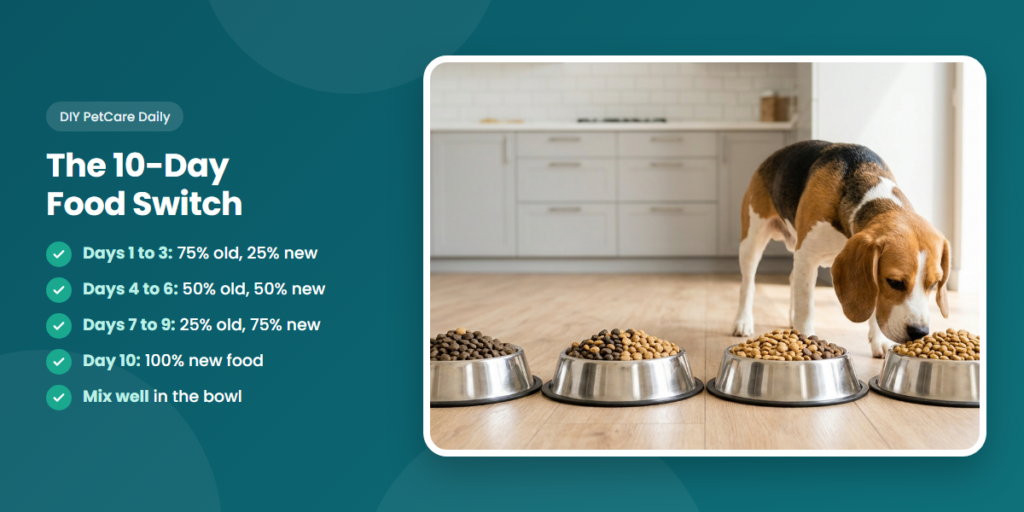
This is the plan most vets and pet food companies recommend. Measure your dog’s total daily amount, then split it between old and new food using these ratios.
| Days | Old Food | New Food | What to Watch For |
| Days 1 to 3 | 75% | 25% | Small changes in stool are normal |
| Days 4 to 6 | 50% | 50% | Stool should still be firm, gas should be mild |
| Days 7 to 9 | 25% | 75% | Appetite and energy should stay normal |
| Day 10 | 0% | 100% | Your dog is fully switched |
Example for a Dog Who Eats 2 Cups a Day
- Days 1 to 3: 1 1/2 cups old food + 1/2 cup new food
- Days 4 to 6: 1 cup old food + 1 cup new food
- Days 7 to 9: 1/2 cup old food + 1 1/2 cups new food
- Day 10: 2 cups new food
Mix the two foods well in the bowl so your dog can’t pick out just one. Split the daily amount into the usual number of meals.
A Slower Plan for Sensitive Stomachs
Some dogs need more time. Use a 14 to 21 day plan if your dog:
- Has a history of stomach upset or food sensitivities
- Is a senior or has a health condition
- Is moving to a very different food (for example, kibble to raw, or a big jump in fat or fiber)
- Had trouble with past food changes
| Days | Old Food | New Food |
| Days 1 to 4 | 90% | 10% |
| Days 5 to 8 | 75% | 25% |
| Days 9 to 12 | 50% | 50% |
| Days 13 to 16 | 25% | 75% |
| Day 17 and on | 0% | 100% |
You can stretch any step even longer. There’s no prize for finishing fast.
Check the Calories Before You Switch
Here’s a step many people miss: the new food may have a very different number of calories per cup. One brand might have 350 kcal per cup and another 450. If you feed the same number of cups, your dog could gain or lose weight without you noticing.
- Find the “kcal/cup” on both bags.
- Work out how much of the new food your dog needs per day.
- Use that new amount once you reach 100 percent.
Our guide on how much should I feed my dog has a feeding chart by weight and a simple way to work out daily calories.
Signs the Switch Is Going Well
- Stool stays firm and easy to pick up
- Normal energy and mood
- Your dog eats the new mix with interest
- Little or no extra gas
A slightly softer stool for a day or two after each step is common and usually nothing to worry about.
Signs Your Dog Needs to Slow Down
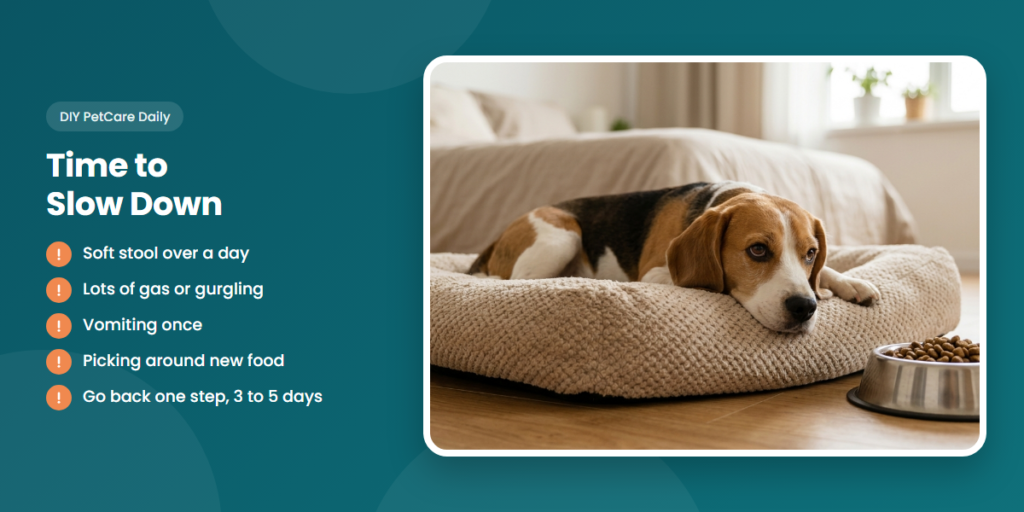
- Soft or loose stool that lasts more than a day
- Lots of gas or a gurgling stomach
- Vomiting once
- Eating less or picking around the new food
- More frequent bathroom trips
What to Do
- Go back one step. Return to the last ratio where your dog’s stool was normal.
- Stay there for 3 to 5 days until things settle.
- Move forward more slowly, using smaller jumps like 10 percent at a time.
- Add plain canned pumpkin (not pie filling) to firm up stool. Use about 1 teaspoon for small dogs, 1 tablespoon for medium dogs, and 2 tablespoons for large dogs, once or twice a day.
- Hold off on treats and table scraps so you know the stomach upset isn’t coming from somewhere else.
Some owners also use a dog probiotic during food changes. These can help support healthy gut bacteria. Ask your vet which one fits your dog. If the loose stool turns into real diarrhea, our guide on what to give a dog for diarrhea covers the bland diet and other safe home remedies.
When to Call the Vet
Stop the switch and call your vet if your dog has:
- Vomiting more than once, or vomiting with diarrhea
- Diarrhea that lasts more than 24 to 48 hours
- Blood in the stool or black, tarry stool
- No interest in food for more than a day
- Low energy, weakness, or a painful belly
- Itchy skin, ear infections, or hives after starting the new food
Puppies, small dogs, and seniors can get dehydrated faster, so call sooner for them. If you’re not sure what your dog’s stool is telling you, our dog poop color chart explains which colors and textures are normal.
Special Situations
Switching From Puppy Food to Adult Food
Most small breeds are ready for adult food around 9 to 12 months, medium breeds around 12 months, and large or giant breeds around 12 to 24 months. Use the same 10-day plan. Adult food has fewer calories, so watch your dog’s weight for the first month and adjust the amount if needed.
Switching From Dry to Wet Food (or the Reverse)
Wet food has much more water and fewer calories per ounce than kibble. When you mix the two, go by calories, not by volume. A slow switch is just as important here, because the change in texture and fat can upset the stomach.
Switching to Raw or Home-Cooked Food
These diets are very different from kibble, so give your dog at least 2 to 3 weeks. Home-cooked diets need to be balanced, so work with your vet or a board-certified veterinary nutritionist on a recipe. Raw diets carry a higher risk of bacteria like Salmonella for both pets and people, so handle them carefully.
Prescription Diets
Follow your vet’s instructions. Some prescription foods should be switched over quickly for medical reasons, while others can use the normal plan.
When You Have to Switch Right Away
Sometimes a slow switch isn’t possible, like during a food recall, if your dog reacts badly to their current food, or if you simply ran out. In that case:
- Feed smaller meals more often for the first few days
- Add a little plain pumpkin to meals
- Choose a new food with a similar protein and fat level if you can
- Ask your vet about a bland diet (plain boiled chicken and white rice) for a day or two
What to Do If Your Dog Won’t Eat the New Food
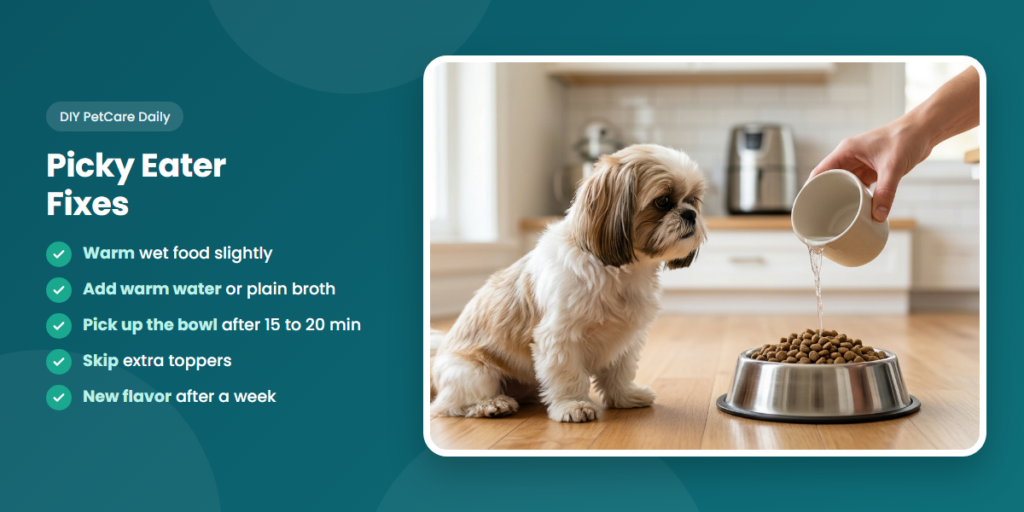
Some dogs are picky. If yours turns their nose up at the new mix:
- Warm wet food slightly to bring out the smell (test that it’s not hot).
- Add a spoonful of warm water or low-sodium, onion-free broth to dry food.
- Stick to meal times. Pick the bowl up after 15 to 20 minutes and offer it again at the next meal. Dogs learn fast when food doesn’t sit out all day.
- Don’t keep adding toppers. It can teach your dog to hold out for something better.
- Try a different flavor of the same brand if your dog still won’t eat it after a week.
A healthy adult dog can skip a meal or two without harm, but call your vet if your dog refuses food for more than a day, or for puppies and toy breeds, more than 12 hours.
Tips for Switching Dog Food Smoothly
- Change only one thing at a time. Don’t switch food and treats in the same week.
- Buy a small bag of the new food first to make sure your dog likes it.
- Keep some old food so you have enough to finish the switch.
- Store kibble in its original bag inside a sealed bin to keep it fresh.
- Stick to the same feeding times during the switch.
- Keep a short log of stool, appetite, and energy each day.
For more guides on feeding and nutrition, visit our Dog Food & Nutrition section. If you’re looking for healthy add-ins, see our list of fruits dogs can eat.
Frequently Asked Questions
How long does it take to switch dog food?
Most dogs do well with a 7 to 10 day switch. Dogs with sensitive stomachs, seniors, or dogs moving to a very different food may need 2 to 3 weeks.
Is it OK to switch dog food without mixing?
It’s best to avoid it. Switching cold turkey often causes diarrhea, gas, or vomiting. If you have to switch right away, feed smaller meals, add a little plain pumpkin, and watch your dog closely.
How long will my dog have diarrhea after changing food?
Mild soft stool usually clears up in 1 to 3 days. If diarrhea lasts more than 24 to 48 hours, or comes with vomiting, blood, or low energy, call your vet.
Can I switch between brands of the same flavor?
Yes, but still use a gradual switch. Different brands use different ingredients, fat levels, and fiber, even when the flavor sounds the same.
Is it OK to rotate dog foods?
Some dogs do well on rotation diets, where you switch between foods every few months. If you do, keep using a slow transition each time, and talk to your vet if your dog has a sensitive stomach.

One Response