Table of Contents
- Table of Contents
- What Does Healthy Dog Poop Look Like?
- Dog Poop Color Chart
- What Each Dog Poop Color Means
- Dog Poop Consistency Chart
- Mucus, Worms, and Other Things You Might See
- What Changes Dog Poop Color and Texture?
- When to Call the Vet About Your Dog’s Poop
- How to Keep Your Dog’s Poop Healthy
- Frequently Asked Questions
Quick answer: A healthy dog poop color is chocolate brown, and the texture should be firm, moist, log-shaped, and easy to pick up. Changes in dog poop color can point to diet, stress, or health problems. Yellow or orange can mean food moving too fast or a liver or bile issue. Green often means grass. Gray and greasy can point to the pancreas. White and chalky often means too much bone or calcium. Black, tarry poop or poop that looks like raspberry jam needs a vet right away.
Picking up after your dog isn’t the most fun part of the day. But it’s also one of the easiest health checks you can do. Your dog’s poop tells you a lot about their diet, digestion, and overall health, often before any other signs show up.
This guide gives you a simple dog poop color chart, a consistency chart vets use, and clear advice on which changes are normal and which mean it’s time to call the vet.
Table of Contents
- What Does Healthy Dog Poop Look Like?
- Dog Poop Color Chart
- What Each Dog Poop Color Means
- Dog Poop Consistency Chart
- Mucus, Worms, and Other Things You Might See
- What Changes Dog Poop Color and Texture?
- When to Call the Vet About Your Dog’s Poop
- How to Keep Your Dog’s Poop Healthy
- Frequently Asked Questions
What Does Healthy Dog Poop Look Like?
Vets often talk about the “4 Cs” of healthy dog poop: color, consistency, coating, and contents.
- Color: chocolate brown. The exact shade can vary a little with diet.
- Consistency: firm but not hard, log-shaped, and segmented. It should hold its shape when you pick it up and leave little or no mess on the grass.
- Coating: no thick film of mucus.
- Contents: no worms, hair clumps, foreign objects, or large bits of undigested food.
Most adult dogs poop 1 to 3 times a day. Puppies often go more. The amount depends on how much your dog eats and how much fiber is in their food. What matters most is what’s normal for *your* dog.
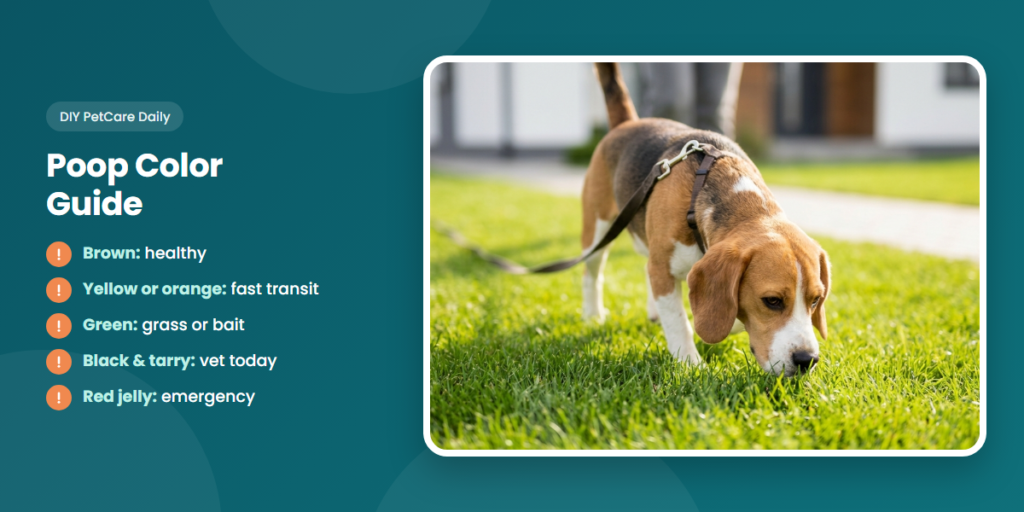
Dog Poop Color Chart
Use this chart as a quick guide to your dog’s poop color. One odd-looking poop after a new treat is usually not a worry. A change that lasts more than a day, or comes with other signs, is worth a call to your vet.
| Poop Color | What It May Mean | What to Do |
| Chocolate brown | Normal, healthy | Nothing; keep it up |
| Yellow | Food moving too fast, food intolerance, liver or gallbladder issue | Call your vet if it lasts more than a day or two |
| Orange | Fast transit, bile issue, or orange foods like carrots or pumpkin | Check diet; call your vet if it continues |
| Green | Eating grass or plants, green-colored treats, gallbladder issue, rodent bait | Call your vet right away if you suspect rodent bait |
| Gray and greasy | Fat not being digested, often a pancreas problem | Call your vet |
| White or chalky | Too much calcium or bone, often from raw diets | Adjust diet with your vet’s help |
| White specks | Worms, such as tapeworm segments that look like rice | Call your vet for deworming |
| Red streaks | Bleeding in the lower gut or rectum | Call your vet the same day |
| Black and tarry | Digested blood from the stomach or upper gut | See a vet today |
| Purple or pink, like raspberry jam | Bloody diarrhea, possibly a serious gut illness | Emergency, go now |
What Each Dog Poop Color Means
Brown Dog Poop
Brown is the color you want. It comes from bile, which the liver makes to help digest fat, and from the normal breakdown of food. Lighter or darker shades of brown are usually fine and often reflect the food you feed.
Yellow Dog Poop
Yellow dog poop often means food moved through the gut too quickly, so bile didn’t have time to turn it brown. This can happen with a food change, stress, or a food your dog doesn’t tolerate well. Yellow, mucus-covered poop is common with mild gut upset.
Yellow poop that keeps happening, especially with vomiting, weight loss, or yellow gums or eyes, can point to a liver or gallbladder problem. See your vet if it lasts more than a day or two.
Orange Dog Poop
Orange dog poop is often caused by foods like carrots, pumpkin, or sweet potato. It can also mean food moved too fast, or a problem with bile flow from the liver or gallbladder. If you haven’t fed anything orange and it keeps happening, call your vet.
Green Dog Poop
Green dog poop most often happens when a dog eats a lot of grass or plants. Some treats and dental chews with green coloring can do it too.
But green poop can also point to a gallbladder problem or parasites. Some rat and mouse poisons are dyed green or blue, so if there’s any chance your dog ate rodent bait, call your vet or an emergency clinic right away, even if your dog seems fine.
Gray Dog Poop
Gray, greasy, or shiny poop can mean your dog isn’t digesting fat well. One common cause is a condition called exocrine pancreatic insufficiency (EPI), where the pancreas doesn’t make enough digestive enzymes. These dogs are often hungry all the time and lose weight. A vet can test for it, and it’s very treatable.
White Dog Poop
White dog poop, especially chalky poop that crumbles, usually comes from eating too much calcium. This is common in dogs on raw diets with a lot of bone. It can also cause constipation. Talk to your vet about balancing the diet.
Small white specks or rice-like bits in the poop are different. They’re often tapeworm segments, which come from swallowing fleas. Your vet can prescribe a dewormer.
Black Dog Poop
Black dog poop that’s tarry and sticky (vets call it melena) usually means there’s bleeding high up in the digestive tract, such as the stomach or small intestine. The blood is digested on the way out, which turns it black.
Causes include stomach ulcers, some medicines like NSAID pain relievers, swallowed objects, or tumors. This needs a vet visit the same day. Note that some iron supplements, blueberries, or very dark food can darken poop too, but don’t assume that’s the cause without checking with your vet.
Red Streaks in Dog Poop
Bright red streaks usually mean bleeding in the large intestine or rectum. It’s often from colitis (inflammation of the colon), straining, or a minor irritation. It can also come from parasites, infections, or more serious problems. If you see more than a small streak, or it happens more than once, call your vet. Our guide on blood in dog stool explains the causes and warning signs.
Poop that looks like raspberry jam (mostly blood and mucus) can be a sign of a serious illness called acute hemorrhagic diarrhea syndrome, or of parvovirus in puppies. This is an emergency.
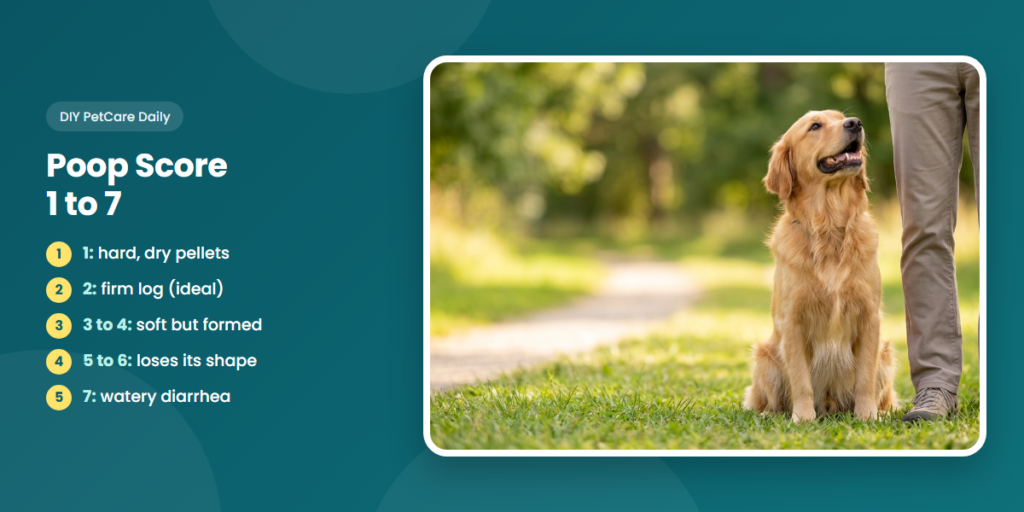
Dog Poop Consistency Chart
Color is only half the story. Vets use a fecal scoring chart, often from 1 to 7, to describe how firm poop is. A score of 2 is ideal.
| Score | What It Looks Like | What It Means |
| 1 | Very hard, dry pellets; hard to pass | Constipation or dehydration |
| 2 | Firm, segmented log; easy to pick up | Ideal |
| 3 | Moist log, little or no segments; leaves a slight mark | Normal for many dogs |
| 4 | Very moist, loses shape when picked up | Soft; watch closely |
| 5 | Piles that hold some shape but are hard to pick up | Too soft; check diet and stress |
| 6 | Has texture but no shape; pools on the ground | Diarrhea |
| 7 | Watery, no texture | Diarrhea; call your vet if it lasts or if your dog seems unwell |
If your dog has soft stool or diarrhea, our guide on what to give dog for diarrhea covers safe home care and when to see a vet.
Mucus, Worms, and Other Things You Might See
- Mucus: a small amount of clear mucus now and then is normal. A thick, jelly-like coating often means the colon is irritated, from stress, a diet change, or parasites. If it lasts more than a day or two, or comes with blood, call your vet. See our guide on mucus in dog poop for causes and home care.
- Worms: roundworms look like spaghetti. Tapeworm segments look like grains of rice. Whipworms and hookworms are too small to see. Your vet can check a stool sample.
- Grass: many dogs eat grass. Small amounts passing through are usually not a problem.
- Hair: some hair is normal, especially in heavy shedders. Lots of hair can point to overgrooming from allergies or itchy skin. Our guide on why is my dog shedding so much can help.
- Foreign objects: bits of toys, socks, or plastic mean your dog is chewing and swallowing things. Watch closely for vomiting, belly pain, or straining, which can signal a blockage.
- Undigested food: a few bits are fine. Lots of whole kibble can mean your dog is eating too fast or not chewing.
What Changes Dog Poop Color and Texture?
- A new food. Changing food too fast often causes soft or loose stool. See our guide on how to switch dog food for a slow, 10-day plan.
- Treats and table scraps. Fatty foods can cause loose, greasy poop or even pancreatitis. Holiday plates are a big one, so check whether dogs can eat turkey before you share.
- Fruits and veggies. Carrots, pumpkin, beets, and berries can tint poop. Check our guide on what fruits can dogs eat for safe options.
- Overfeeding. Too much food often means bigger, softer poops. Our how much should I feed my dog guide has a feeding chart by weight.
- Stress. Boarding, travel, or a new home can cause short-term soft stool with mucus.
- Medicines. Antibiotics and some other drugs can change poop for a while.
- Illness and parasites. Infections, worms, and organ problems can change color, texture, and smell.
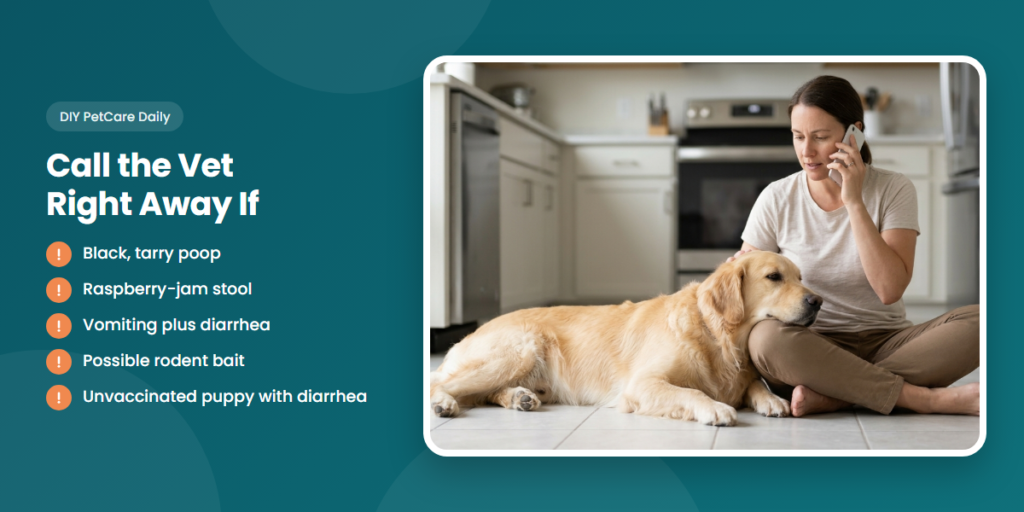
When to Call the Vet About Your Dog’s Poop
Go to the vet right away if your dog has:
- Black, tarry poop
- Poop that looks like raspberry jam, or lots of blood
- Diarrhea along with vomiting, weakness, or a swollen belly
- Possible rodent bait in the poop (green or blue color) or known poison exposure
- Diarrhea in a puppy who hasn’t finished their vaccines (parvo risk)
- Straining with nothing coming out, especially with vomiting
Call your vet the same day if:
- Diarrhea lasts more than 24 to 48 hours
- You see red streaks more than once
- Your dog isn’t eating or seems tired
- You see worms
Book a regular visit if:
- Yellow, gray, or greasy poop keeps happening
- Your dog has ongoing soft stool or mucus
- Your dog is losing weight
Bring a fresh poop sample (within 12 hours, kept cool in a sealed bag) to the appointment. It helps your vet a lot.
How to Keep Your Dog’s Poop Healthy
- Feed a complete, balanced food and measure meals
- Change foods slowly over 7 to 10 days
- Keep treats to 10 percent or less of daily calories
- Avoid fatty table scraps and anything from the trash
- Keep fresh water available at all times
- Stay on a regular deworming and flea prevention plan
- Get a yearly stool test at your dog’s checkup
- Keep vaccines current, especially in puppies; see our dog vaccination schedule
For more guides on keeping your dog healthy, visit our Dog Health & Wellness section.
Frequently Asked Questions
What color should healthy dog poop be?
Healthy dog poop should be chocolate brown. The shade can vary slightly with diet, but it should be brown, firm, log-shaped, and easy to pick up.
What does yellow dog poop mean?
Yellow dog poop often means food passed through the gut too quickly, from a food change, stress, or a food intolerance. If it lasts more than a day or two, or comes with vomiting or yellow gums, it can point to a liver or gallbladder issue, so see your vet.
Is black dog poop an emergency?
Black, tarry dog poop can mean bleeding in the stomach or upper intestines and should be checked by a vet the same day. Some foods and iron supplements can darken poop, but your vet should rule out bleeding first.
Why is my dog’s poop white?
White, chalky poop usually comes from too much calcium, often from bones or raw diets. White specks that look like rice may be tapeworm segments. Call your vet for advice on diet or deworming.
Why is my dog’s poop green?
Green dog poop is often caused by eating grass or green-colored treats. If there’s any chance your dog ate rat or mouse poison, which is often dyed green or blue, call your vet or an emergency clinic right away.