Table of Contents
Quick answer: Blood in dog stool is often caused by colon irritation (colitis) from stress, a diet change, or eating something they shouldn’t, and a small streak of bright red blood in a dog who’s acting normal is usually not an emergency. But call your vet the same day if it happens more than once. Go to a vet right away if the poop is black and tarry, looks like raspberry jam, has a lot of blood, or if your dog is vomiting, weak, has pale gums, or is a puppy who isn’t fully vaccinated.
Seeing your dog pooping blood is scary. Your mind may jump straight to the worst. The good news is that many causes are mild and clear up quickly. The key is knowing what kind of blood you’re seeing and what other signs to watch for.
This guide explains what different types of blood in dog stool mean, the most common causes, what you can do at home, and when you need to see a vet right away.
Table of Contents
- Bright Red vs Black: Two Types of Blood
- Common Causes of Blood in Dog Stool
- Bloody Diarrhea in Dogs: When It’s an Emergency
- How Worried Should You Be?
- What to Do at Home for Mild Cases
- What Your Vet May Do
- How to Prevent Blood in Your Dog’s Stool
- Frequently Asked Questions
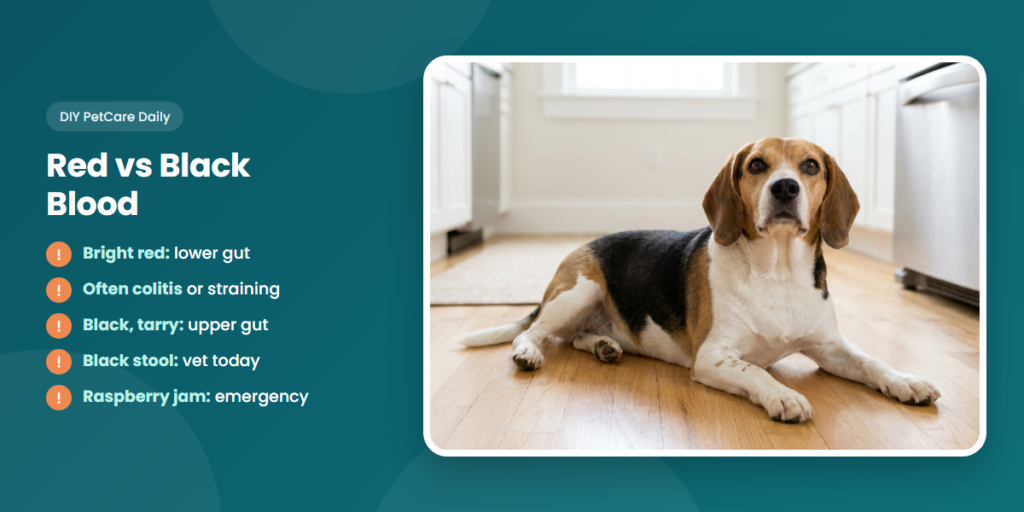
Bright Red vs Black: Two Types of Blood
The color of the blood tells your vet where it may be coming from.
| What You See | Medical Name | Where It’s Likely From | What It Usually Means |
| Bright red streaks or drops | Hematochezia | Lower gut: colon or rectum | Often colitis, straining, or anal gland issues; sometimes more serious |
| Black, tarry, sticky poop | Melena | Upper gut: stomach or small intestine | Digested blood; can mean ulcers, swallowed objects, or other serious problems |
| Red jelly, like raspberry jam | Bloody diarrhea with mucus | Whole intestinal lining | Can be a serious illness; emergency |
Bright red blood in dog stool is fresh, because it hasn’t traveled far. Black blood has been digested on its way through the gut. Both should be checked by a vet, but black, tarry stool is more likely to be serious.
Common Causes of Blood in Dog Stool
Colitis (Inflamed Colon)
Colitis is the most common cause of bright red blood in dog stool. The colon gets irritated and may produce mucus and a little blood, so dog poop with blood and mucus is a classic sign. Read more in our guide to colitis in dogs. Your dog may poop more often, strain, and pass small, soft stools. Common triggers include:
- Stress, like boarding, travel, or a new home
- A sudden food change
- Eating garbage, table scraps, or something found on a walk
- Fatty treats
Diet Changes and Eating the Wrong Things
Switching foods too fast can irritate the gut. Our guide on how to switch dog food shows a slow, 10-day plan. Bones, sticks, and other hard objects can also scratch the gut lining on the way out.
Straining and Constipation
A dog who’s constipated may strain hard enough to cause a little bleeding from the rectum. Usually you’ll see a small streak on the outside of a firm stool.
Anal Gland Problems
Dogs have two small glands on either side of the anus. If they get impacted, infected, or form an abscess, you may see blood on or around the stool, scooting, and licking the area.
Parasites
Several worms and parasites can cause bloody stool, especially in puppies:
- Hookworms (can cause serious blood loss in puppies)
- Whipworms
- Coccidia
- Giardia
A stool test at your vet can check for these, and most are easy to treat.
Parvovirus
Parvo causes severe vomiting and bloody, very smelly diarrhea. It’s most common in puppies who aren’t fully vaccinated. Parvo is an emergency. Keeping your puppy on track with our dog vaccination schedule is the best protection.
Acute Hemorrhagic Diarrhea Syndrome (AHDS)
Formerly called HGE, this condition causes sudden, large amounts of bloody diarrhea that looks like raspberry jam, often with vomiting. It’s most common in small and toy breeds. Dogs can become dehydrated very fast, so it’s an emergency, but most dogs recover well with quick treatment.
Rat and Mouse Poison
Many rodent poisons stop the blood from clotting. Dogs can bleed internally, and you may see blood in the stool, urine, gums, or skin. If there’s any chance your dog ate rodent bait, go to a vet right away, even if they seem fine.
Medicines and Stomach Ulcers
Some pain medicines, including human drugs like ibuprofen and naproxen, can cause stomach ulcers and black, tarry stool. Never give your dog human pain medicine.
Food Allergies and Inflammatory Bowel Disease
Dogs with food allergies or long-term gut inflammation may have repeated bouts of soft stool with mucus and blood. Your vet may suggest a diet trial.
Other Causes
- Bacterial infections, such as Clostridium or Salmonella
- Swallowed objects or blockages (like tinsel and ornaments at Christmas)
- Polyps or tumors, more common in older dogs
- Injury to the rectum
- Clotting disorders
Bloody Diarrhea in Dogs: When It’s an Emergency
A little blood in a formed stool is very different from bloody diarrhea. Bloody diarrhea in dogs means the gut lining is badly irritated or damaged, and dogs can lose fluids quickly. It’s more urgent when:
- The diarrhea is watery and happens many times a day
- It looks like raspberry jam
- Your dog is also vomiting or won’t drink
- Your dog is a puppy, a small breed, or a senior
- Your dog seems weak, cold, or has pale gums
Common causes include parvovirus in unvaccinated puppies, acute hemorrhagic diarrhea syndrome, infections, toxins, and swallowed objects. Don’t wait it out at home. Call your vet or go to an emergency clinic.
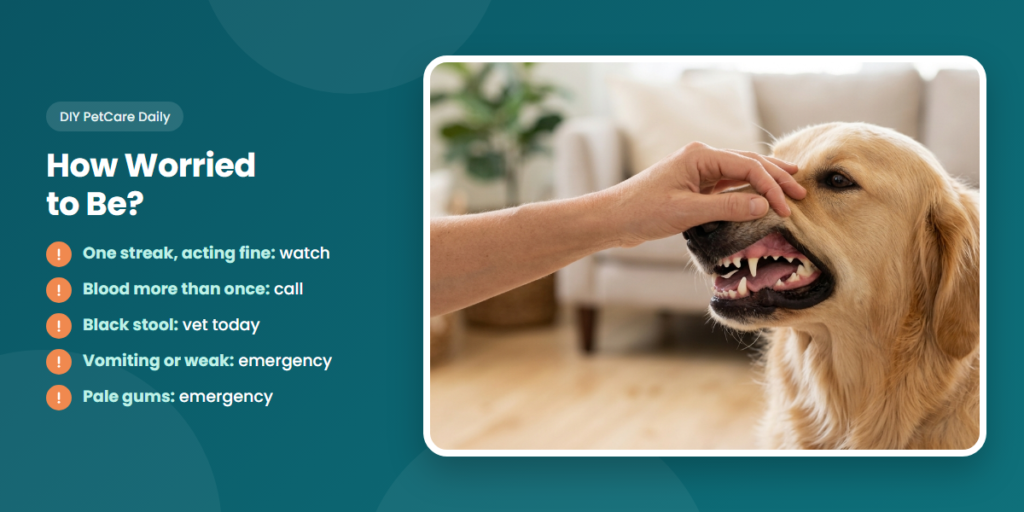
How Worried Should You Be?
Use this guide to decide how fast to act.
| Situation | What to Do |
| One small streak of red blood, dog acting normal, eating, and playing | Watch for 24 hours and call your vet if it happens again |
| Red blood more than once, or with mild diarrhea | Call your vet the same day |
| Bloody diarrhea lasting more than 24 hours | See your vet today |
| Black, tarry stool | See your vet today |
| Raspberry jam-like stool or large amounts of blood | Emergency, go now |
| Blood plus vomiting, weakness, or not eating | Emergency, go now |
| Pale, white, or gray gums | Emergency, go now |
| Possible rodent poison or toxin | Emergency, go now |
| Puppy not fully vaccinated with bloody diarrhea | Emergency, go now (parvo risk) |
Not sure what your dog’s gums should look like? Our guide on normal heart rate for dogs shows how to check gum color and other vital signs at home.
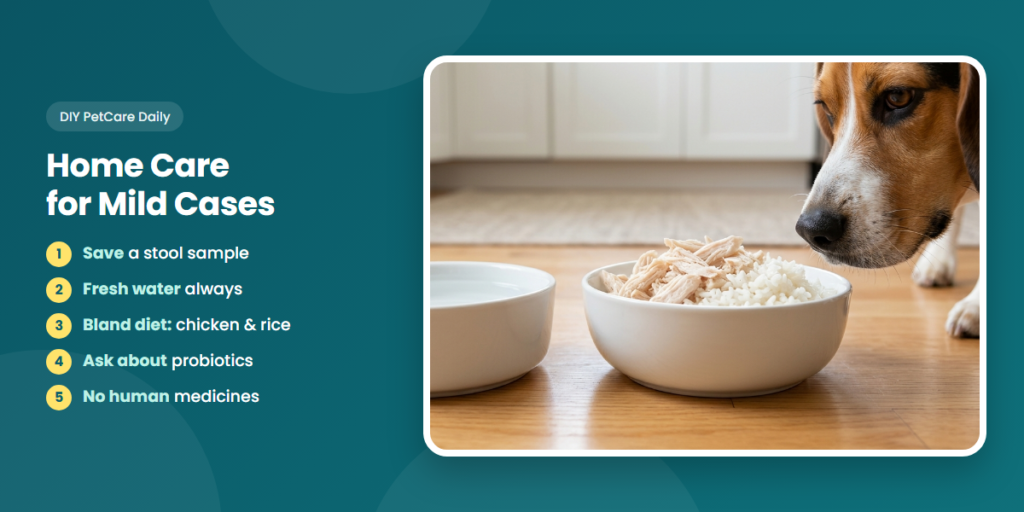
What to Do at Home for Mild Cases
These tips are only for a dog who has a small amount of bright red blood, is otherwise acting normal, and has been okayed by your vet for home care.
- Take a photo and save a sample. Put a fresh sample in a sealed bag and keep it cool. Your vet may want to test it.
- Keep water available. Make sure your dog keeps drinking.
- Rest the gut. Some vets suggest skipping one meal for adult dogs, but never do this with puppies, small toy breeds, or dogs with diabetes.
- Feed a bland diet. Small meals of plain boiled chicken (no skin or bones) and white rice for 2 to 3 days. Our guide on what to give dog for diarrhea explains bland diet portions.
- Skip treats and table scraps.
- Ask about probiotics. A dog-specific probiotic may help the gut recover.
- Watch closely. If blood continues, gets worse, or other signs show up, call your vet.
Don’t give human medicine. Pepto-Bismol and similar products contain salicylates and can turn poop black, which makes it harder for your vet to see what’s going on. Ibuprofen, naproxen, and aspirin can cause bleeding ulcers.
What Your Vet May Do
Your vet will ask about your dog’s diet, recent changes, and how long the blood has been there. They may:
- Do a full exam, including checking the gums, belly, and rectum
- Test a stool sample for parasites
- Run a parvo test for puppies
- Do blood tests to check for anemia, infection, and organ problems
- Run clotting tests if rodent poison is possible
- Take X-rays or an ultrasound to look for objects or masses
- Give fluids, anti-nausea medicine, or gut-protecting medicine
- Prescribe a dewormer, a special diet, or other treatment based on the cause
How to Prevent Blood in Your Dog’s Stool
- Change foods slowly over 7 to 10 days
- Keep trash cans closed and avoid fatty table scraps
- Don’t give cooked bones
- Stay on a regular deworming schedule and get a yearly stool test
- Keep puppies on schedule with their vaccines
- Store rodent poisons and medicines where your dog can’t reach them
- Keep stress low during travel and boarding
- Learn what normal looks like with our dog poop color chart
For more guides on keeping your dog healthy, visit our Dog Health & Wellness section.
Frequently Asked Questions
Is blood in dog stool an emergency?
Not always. A small streak of red blood in a dog who’s acting normal is often from mild colitis. But it’s an emergency if the stool is black and tarry, looks like raspberry jam, has a lot of blood, or if your dog is vomiting, weak, has pale gums, or is a puppy who isn’t fully vaccinated.
Why does my dog have blood in stool but is acting normal?
The most common reason is colitis, an irritated colon, often from stress, a diet change, or eating something they shouldn’t. Straining and anal gland issues can also cause a little blood. If it happens more than once, call your vet.
What does black tarry stool in dogs mean?
Black, tarry poop usually means there’s bleeding higher up in the digestive tract, such as the stomach or small intestine. The blood is digested, which turns it black. This needs a vet visit the same day.
What can I give my dog for bloody stool?
Only give home care if your vet agrees. For mild cases, vets often suggest a bland diet of boiled chicken and white rice, plenty of water, and sometimes a dog probiotic. Never give human medicines like Pepto-Bismol, ibuprofen, or aspirin.
Can stress cause blood in dog stool?
Yes. Stress from boarding, travel, moving, or loud events can cause colitis, which often leads to soft stool with mucus and a little bright red blood. It usually clears in a day or two, but call your vet if it doesn’t.