Table of Contents
Quick answer: Colitis in dogs is inflammation of the colon (large intestine). It causes frequent, urgent trips outside, straining, small soft stools, mucus, and sometimes streaks of bright red blood. Most cases are short-term and caused by stress, a sudden food change, or eating something they shouldn’t, and they often clear up in 1 to 3 days with a bland diet. Colitis that keeps coming back, lasts more than a few days, or comes with vomiting, weight loss, or low energy needs a vet visit.
If your dog suddenly needs to go out every hour, strains to poop, and leaves small, slimy piles with a bit of blood, there’s a good chance it’s colitis. It’s one of the most common gut problems vets see in dogs.
The good news is that most cases are mild and short. But some dogs have colitis that keeps coming back, and that needs a closer look. This guide explains colitis symptoms, causes, how vets diagnose and treat it, what you can do at home, and how to prevent flare-ups.
Table of Contents
- What Is Colitis?
- Symptoms of Colitis in Dogs
- What Causes Colitis in Dogs?
- How Vets Diagnose Colitis
- Treatment for Colitis in Dogs
- Home Care for a Colitis Flare
- When to Call the Vet
- How to Prevent Colitis Flare-Ups
- Frequently Asked Questions
What Is Colitis?
The colon is the last part of your dog’s digestive tract. Its main jobs are to absorb water and store stool until it’s time to go. When the colon gets inflamed, it can’t absorb water well and becomes irritated. That leads to soft stool, extra mucus, and a strong urge to go often.
Vets usually describe two types:
| Type | How Long It Lasts | Common Causes |
| Acute colitis | Starts suddenly; usually gets better in 1 to 3 days | Stress, eating garbage, sudden diet change, some infections |
| Chronic colitis | Lasts more than 2 to 3 weeks, or keeps coming back | Food allergies, inflammatory bowel disease, parasites, breed-related conditions |
Symptoms of Colitis in Dogs
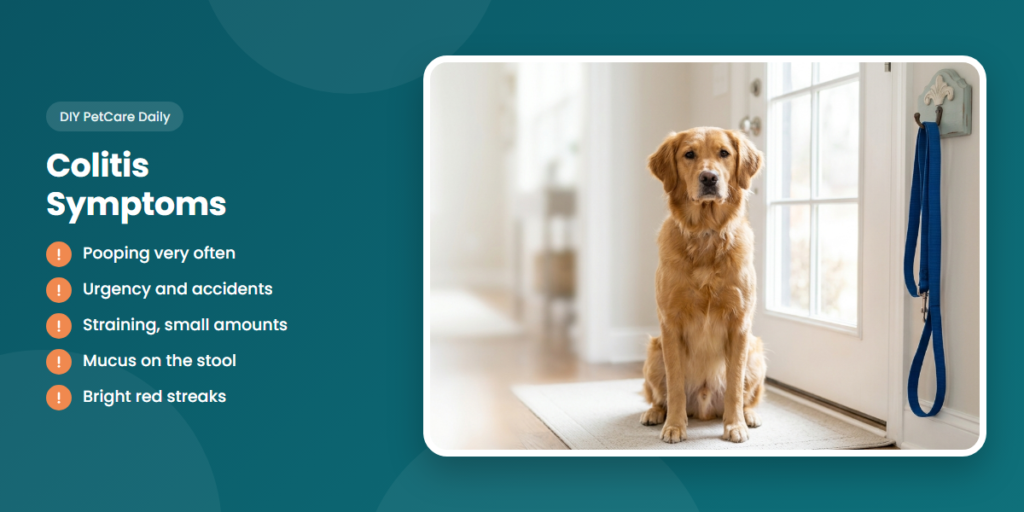
Colitis in dogs symptoms follow a very typical pattern. Watch for:
- Pooping much more often than usual, sometimes 4 to 10 times a day
- Urgency, like rushing to the door or having accidents in the house
- Straining, with only a small amount coming out
- Small amounts of soft stool, often changing from formed to soft in one walk
- Mucus, a slimy or jelly-like coating on the poop
- Bright red blood, usually small streaks or drops
- Gas and gurgling belly sounds
- Normal appetite and energy in many dogs with mild colitis
Vomiting, weight loss, and low energy are less common with colitis alone. If you see them, your dog may have a bigger problem that needs a vet.
For more on the mucus and blood you may see, read our guides on mucus in dog poop and blood in dog stool.
Large Bowel vs Small Bowel Diarrhea
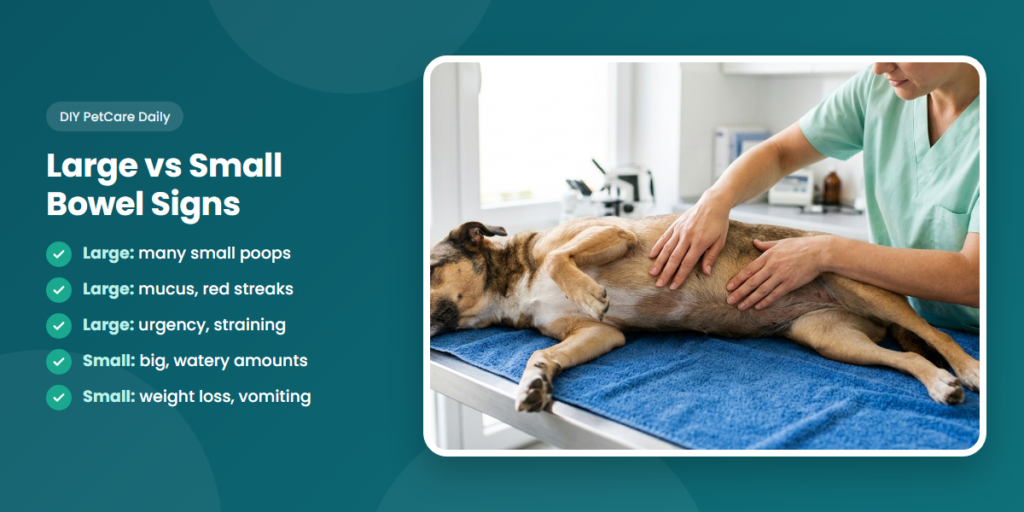
Vets often sort diarrhea into “large bowel” (colon) and “small bowel” types, because it helps narrow down the cause.
| Sign | Large Bowel (Colitis) | Small Bowel |
| How often | Many times a day | A few times a day |
| Amount | Small amounts | Large amounts |
| Urgency and straining | Common | Less common |
| Mucus | Common | Uncommon |
| Blood | Bright red streaks | Dark or black, if present |
| Weight loss | Uncommon | More common |
| Vomiting | Less common | More common |
What Causes Colitis in Dogs?
Stress Colitis in Dogs
Stress colitis in dogs is very common. Boarding, travel, moving, a new pet, visitors, storms, or fireworks can all trigger a flare. It usually starts within a day or two of the stressful event. If loud nights are the trigger, our tips for a dog scared of fireworks can help.
Eating Something They Shouldn’t
Garbage, table scraps, fatty foods, sticks, grass, bones, and other things found on walks can irritate the colon. This is often called “dietary indiscretion” and is one of the most common causes.
Sudden Food Changes
Switching food too fast can upset the gut. Use a slow change over 7 to 10 days. Our guide on how to switch dog food has a simple plan.
Parasites
Whipworms are a classic cause of colitis, and they can be hard to find on a stool test. Giardia and coccidia are also common, especially in puppies and dogs from shelters. Your vet may deworm your dog even if the stool test is negative.
Bacterial Infections
Bacteria such as Clostridium can overgrow in the colon, often after a diet change or stress. Salmonella and Campylobacter are less common causes, sometimes linked to raw diets.
Food Allergies or Intolerances
Some dogs react to proteins like beef, chicken, or dairy, or to other ingredients. These dogs may have repeated colitis flares, sometimes with itchy skin or ear infections.
Inflammatory Bowel Disease (IBD)
IBD is long-term inflammation of the gut. When it affects the colon, dogs have repeated or ongoing colitis. German Shepherds and some other breeds are more prone to it.
Breed-Related Colitis
Young Boxers and French Bulldogs can develop a specific type called granulomatous (or histiocytic ulcerative) colitis, linked to a type of bacteria that invades the colon wall. These dogs have ongoing bloody, mucus-filled stool and need specific treatment from a vet.
Other Causes
- Swallowed objects that scratch or irritate the colon (Christmas tinsel and pine needles are common ones)
- Polyps or tumors, more common in older dogs
- Pancreatitis or other illnesses that affect nearby organs
- Some medicines
How Vets Diagnose Colitis
For a mild, first-time case in an otherwise healthy dog, your vet may just do an exam and suggest treatment. For repeated or severe cases, they may:
- Do a physical exam, including a rectal exam
- Test stool samples for parasites (sometimes more than once)
- Run blood tests to check overall health
- Test for specific infections
- Take X-rays or an ultrasound of the belly
- Suggest a diet trial for 8 to 12 weeks
- Recommend a colonoscopy with biopsies for chronic or severe cases
Bring a fresh stool sample, taken within 12 hours and kept cool in a sealed bag. A short log of how often your dog goes, what the poop looks like, and any recent changes helps a lot too.
Treatment for Colitis in Dogs
Colitis in dogs treatment depends on the cause and how long the colitis has lasted.
For Mild, Short-Term Colitis
- A bland, easy-to-digest diet for a few days, like plain boiled chicken and white rice, or a prescription gut-friendly diet
- Extra fiber, such as plain canned pumpkin or a fiber supplement your vet recommends. Fiber helps the colon work more normally.
- Probiotics made for dogs
- Plenty of fresh water
- Deworming if parasites are possible
Many vets now avoid antibiotics for mild colitis, because most dogs get better without them and antibiotics can upset the gut’s healthy bacteria. Your vet will decide if medicine is needed.
For Chronic or Severe Colitis
- Diet changes, such as a high-fiber diet, a hydrolyzed protein diet, or a novel protein diet for food allergies
- Anti-inflammatory medicine for IBD, prescribed and monitored by your vet
- Specific antibiotics for certain infections or breed-related colitis
- Long-term fiber and probiotic support
- Stress management for dogs whose flares are triggered by stress
With the right plan, chronic colitis in dogs can usually be managed, and most dogs live comfortably with few flare-ups.
Dog Colitis Diet: What to Feed a Dog With Colitis
Diet is one of the most helpful tools for colitis. A good dog colitis diet depends on whether your dog is having a short flare or has long-term colitis.
| Situation | What to Feed |
| Short flare (1 to 3 days) | Small, frequent meals of plain boiled chicken and white rice, or a prescription gut diet |
| Recovery | Mix the bland diet with regular food over 3 to 5 days |
| Repeated or chronic colitis | A high-fiber diet, or a hydrolyzed or novel protein diet if food allergy is suspected |
| Any time | Fresh water, and plain pumpkin or a vet-approved fiber supplement |
There’s no single best dog food for colitis that works for every dog. Some dogs do best on extra fiber, while others need a diet with a protein they’ve never eaten before. Your vet can help you choose, and it may take a few weeks of a diet trial to know what works. Avoid fatty foods, rich treats, and frequent food changes.
Home Care for a Colitis Flare
These steps are for an adult dog who is otherwise bright, eating, and drinking. Check with your vet first, especially for puppies, seniors, or dogs with other health problems.
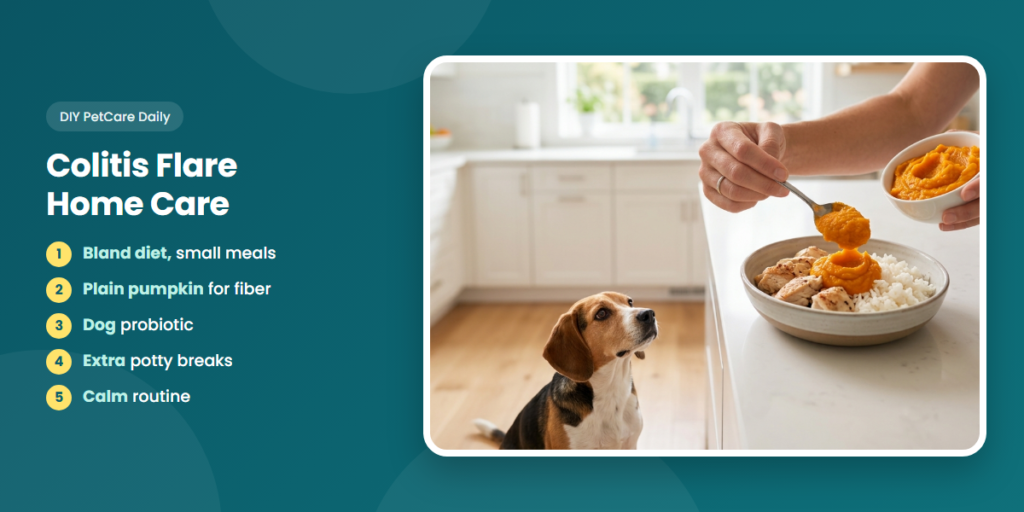
- Keep water available at all times.
- Feed a bland diet of small, frequent meals for 2 to 3 days. Our guide on what to give dog for diarrhea explains portions.
- Add 1 to 4 tablespoons of plain canned pumpkin per meal, depending on your dog’s size. Use plain pumpkin, not pie filling.
- Give a dog probiotic if your vet recommends one.
- Take more potty breaks. Your dog may need to go out often for a day or two.
- Skip treats and chews until stool is back to normal.
- Keep things calm and stick to a routine.
- Switch back to regular food slowly over several days.
Don’t give human medicines like Pepto-Bismol, Imodium, or pain relievers unless your vet tells you to. Some are unsafe for dogs and can hide important signs.
When to Call the Vet
Go to a vet right away if your dog has:
- A lot of blood, or stool that looks like raspberry jam
- Repeated vomiting
- Weakness, collapse, or pale gums
- A swollen or painful belly
- Possible poison or a swallowed object
- Bloody diarrhea as a puppy who isn’t fully vaccinated
Call your vet soon if:
- Signs last more than 2 to 3 days
- Colitis keeps coming back
- Your dog is losing weight
- Your dog isn’t eating or seems tired
How to Prevent Colitis Flare-Ups
- Change foods slowly over 7 to 10 days
- Keep trash cans closed and avoid fatty table scraps
- Don’t give cooked bones
- Feed a consistent, high-quality diet in measured portions; see how much should I feed my dog
- Stay on a regular deworming schedule and get a yearly stool test
- Pick up poop promptly to cut down on parasites
- Plan ahead for stressful events, like boarding or holidays, and ask your vet about fiber or probiotics during those times
- Keep a simple log of flares to spot patterns
- Know what normal poop looks like with our dog poop color chart
For more guides on keeping your dog healthy, visit our Dog Health & Wellness section.
Frequently Asked Questions
What are the symptoms of colitis in dogs?
The most common symptoms of colitis in dogs are frequent, urgent pooping, straining, small amounts of soft stool, mucus, and streaks of bright red blood. Many dogs still eat and act normally.
How long does colitis last in dogs?
Most cases of acute colitis get better in 1 to 3 days with a bland diet and rest. Colitis that lasts more than 2 to 3 weeks, or keeps coming back, is called chronic colitis and needs a vet workup.
What should I feed a dog with colitis?
During a flare, feed small meals of a bland diet, like plain boiled chicken and white rice, with a little plain pumpkin for fiber. For long-term colitis, your vet may suggest a high-fiber, hydrolyzed, or novel protein diet.
Can stress cause colitis in dogs?
Yes. Stress from boarding, travel, moving, or loud events is one of the most common causes of colitis. It usually shows up within a day or two and clears up within a few days.
Is colitis in dogs serious?
Most cases are mild and short. But colitis with lots of blood, vomiting, weakness, or weight loss, or colitis that keeps coming back, can point to a more serious problem and should be checked by a vet.