Table of Contents
- Table of Contents
- Signs of Separation Anxiety in Dogs
- Is It Really Separation Anxiety?
- What Causes Separation Anxiety?
- The Step-by-Step Training Plan
- Dog Separation Anxiety Crate Training: Does It Help?
- How to Help a Dog With Separation Anxiety Using Medication
- What Doesn’t Help
- When to Get Professional Help
- Frequently Asked Questions
Quick answer: Dog separation anxiety training works by teaching your dog that being alone is safe, in steps so small your dog never panics. Start with absences of a few seconds, watch for signs of stress, and only add time when your dog stays relaxed. Most dogs need several weeks to a few months, and some also need medication from a vet.
You come home to a chewed door frame, a puddle by the entrance, and a note from the neighbor about howling. Or maybe your dog starts pacing and panting the minute you pick up your keys. These moments are stressful for everyone, and they’re especially hard on your dog.
Separation anxiety in dogs isn’t spite or bad manners. It’s real panic about being left alone. The good news is that it can improve with the right plan. This guide explains how to tell if your dog truly has separation anxiety, what causes it, and a step-by-step training plan you can follow at home.
Table of Contents
- Signs of Separation Anxiety in Dogs
- Is It Really Separation Anxiety?
- What Causes Separation Anxiety?
- The Step-by-Step Training Plan
- Dog Separation Anxiety Crate Training: Does It Help?
- How to Help a Dog With Separation Anxiety Using Medication
- What Doesn’t Help
- When to Get Professional Help
- Frequently Asked Questions
Signs of Separation Anxiety in Dogs
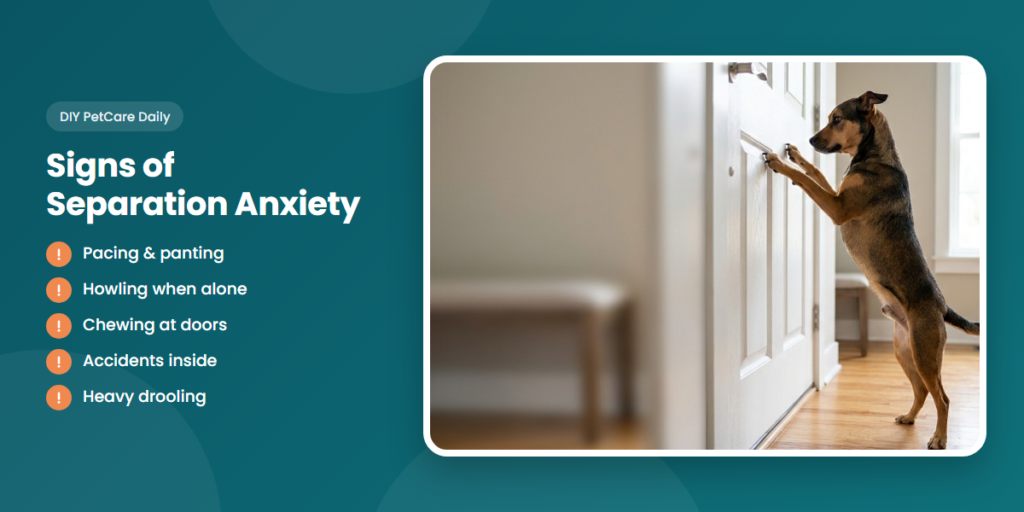
Dogs with separation anxiety show distress mainly when they’re alone or about to be left alone. The behavior usually starts within the first 30 minutes after you leave. Common signs of separation anxiety in dogs include:
- Pacing, panting, whining, or trembling as you get ready to leave
- Howling or dog barking when left alone, often for long stretches
- Chewing or scratching at doors, door frames, and windows, especially exits
- Peeing or pooping inside, even in a fully house-trained dog
- Drooling heavily, sometimes leaving wet spots on the floor
- Trying to escape from a crate or room, sometimes hurting their mouth or paws
- Refusing food or treats while you’re gone
- Over-the-top greetings when you come home
A simple test: set up a phone or pet camera and record the first 30 to 60 minutes after you leave. A dog that naps or chews a toy is fine. A dog that paces, cries at the door, or can’t settle is showing you what’s happening inside.
Is It Really Separation Anxiety?
Several other problems look like separation anxiety. Getting this right matters, because the fix is different for each one.
| What You See | Separation Anxiety If… | Something Else If… |
| Chewing and destruction | It happens only when alone and targets exits | It happens when you’re home too (boredom, teething) |
| Accidents in the house | Only when alone, in a house-trained dog | Also when you’re home (house training gap, bladder problem) |
| Barking | Starts right after you leave and keeps going | Triggered by noises outside, like mail carriers or other dogs |
| Restlessness | Linked to your leaving | Happens at night or randomly (pain, aging, illness) |
If your dog is having accidents everywhere or seems unwell, talk to your vet first. Urinary infections, stomach upsets, and pain can all cause similar behavior. If you’ve also noticed loose stools, our guide on what to give a dog for diarrhea explains when it’s safe to treat at home.
What Causes Separation Anxiety?
Vets and behaviorists don’t know every cause, but certain things show up again and again:
- A change in routine. A new work schedule, the end of summer break, or a return to the office after working from home.
- A move. A new home can unsettle a dog, especially if they’re often left alone right away.
- Loss of a person or pet. A death, divorce, or a child leaving for college.
- Shelter history. Dogs that have been rehomed seem to be at higher risk, though many rescues never have a problem.
- Never learning to be alone. Puppies who were with someone 24/7 may never have practiced alone time.
- Aging. Senior dogs with fading hearing, vision, or memory can become more anxious when left alone.
Can Puppies Get Separation Anxiety?
Puppy separation anxiety is common, but a lot of puppy crying is just normal adjustment. A puppy who whines for a few minutes and then settles is learning. A puppy who screams nonstop, drools, or tries to break out of a crate for long periods needs a slower plan. Start alone-time practice in the first weeks at home, in tiny steps, so it becomes normal.
The Step-by-Step Training Plan
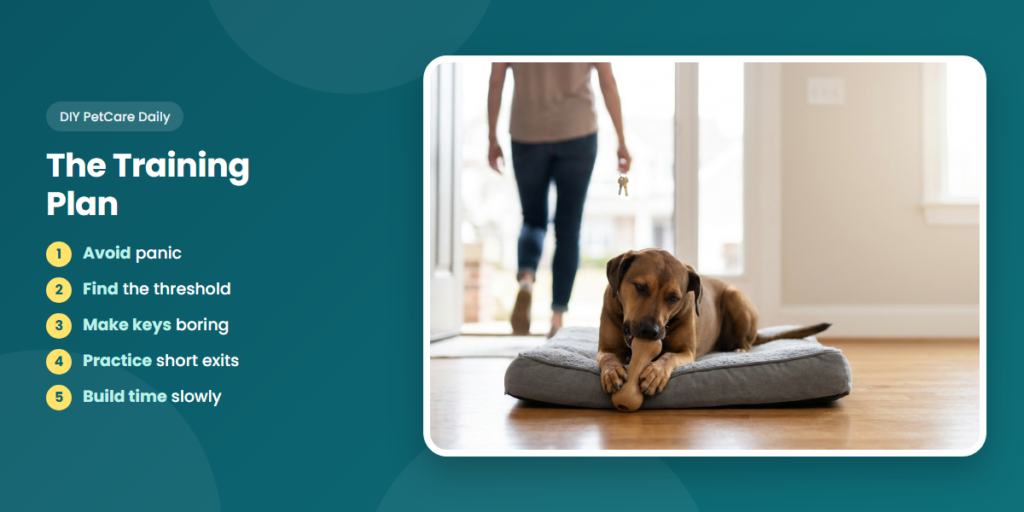
The core idea behind dog separation anxiety training is simple: never let your dog reach the point of panic. Each time your dog panics, the fear grows stronger. Each calm absence makes the next one easier.
Step 1: Stop Leaving Your Dog Alone Past Their Limit
This is the hardest part, but it matters most. While you train, try not to leave your dog alone longer than they can handle. Options include doggy daycare, a dog sitter, a friend or neighbor, or taking your dog to work if that’s allowed.
Every panic episode sets training back, so the more you avoid them, the faster you’ll move.
Step 2: Find Your Dog’s Starting Point
Use your camera. Step out the door and watch your dog. Note how many seconds or minutes pass before you see the first signs of stress, like pacing, whining, or staring at the door. That’s their threshold.
For some dogs it’s 20 minutes. For others it’s 10 seconds. Both are fine starting points. You’ll train just below that number.
Step 3: Make Departure Cues Boring
Dogs learn the signs that you’re about to leave: shoes, keys, a jacket, a purse. Several times a day, pick up your keys and sit down on the couch. Put on your shoes and make coffee. Over time, these cues stop predicting that you’re leaving, so they stop triggering panic.
Step 4: Practice Short Absences
Now the real training starts. Walk out the door and come back before your dog shows stress. If their threshold is 30 seconds, start with 10 or 15. Keep departures and returns quiet. No big goodbyes or excited hellos.
Repeat several short absences in one session, with a calm break between each. Mix up the lengths so your dog can’t predict them. For example: 10 seconds, 25 seconds, 5 seconds, 20 seconds.
Step 5: Build Time Slowly
Add time only when your dog stays relaxed. A good rule is to increase by a small amount after a few calm repeats in a row. If your dog shows stress, go back to the last length that worked and stay there for a few sessions.
Here’s what progress might look like for a dog who starts at 30 seconds. Every dog moves at their own speed, so treat this as an example, not a schedule.
| Training Week | Typical Absence Length | Goal |
| Week 1 | 5 to 30 seconds | Dog stays relaxed when you step out |
| Week 2 | 30 seconds to 2 minutes | Dog ignores keys and shoes |
| Week 3 to 4 | 2 to 10 minutes | Dog lies down or sniffs around calmly |
| Week 5 to 8 | 10 to 45 minutes | Dog naps or chews a toy |
| Month 3 and on | 1 hour or more | Dog handles real errands and work shifts |
Five to six short sessions a week often work better than one long session. Progress usually slows down at certain points, like the 20 to 40 minute range. That’s normal.
Step 6: Add Helpful Extras
These won’t fix separation anxiety alone, but they can support your training:
- Exercise before you leave. A sniffy walk or a game of fetch helps your dog settle.
- A food puzzle or lick mat. Some dogs enjoy these during short absences. If your dog won’t eat while you’re gone, that’s a sign the absence is too long.
- Calming background noise. Soft music or white noise can mask outside sounds. It also helps on noisy nights like New Year’s Eve and the Fourth of July.
- A safe resting spot. A bed in a quiet room, away from the front door.
Dog Separation Anxiety Crate Training: Does It Help?
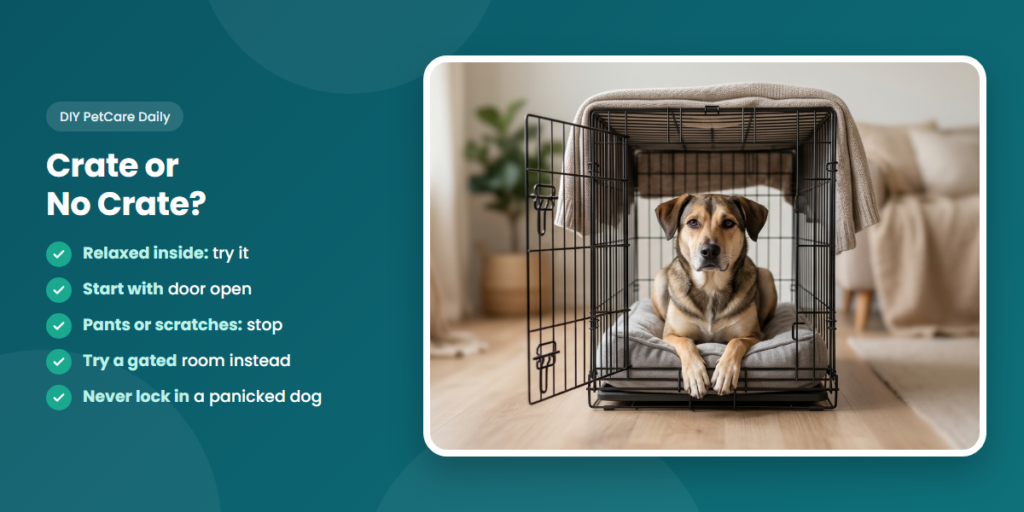
A crate helps some dogs and makes others much worse. Dogs who already love their crate may feel safer there. But many dogs with separation anxiety panic when confined. They may bend bars, break teeth, or cut their paws trying to get out.
Use the camera test. If your dog relaxes in the crate with the door open while you’re home, try short absences with the crate open. If your dog pants, scratches, or tries to escape the crate, try a dog-proofed room or a baby gate instead. Never leave a panicked dog locked in a crate for hours.
How to Help a Dog With Separation Anxiety Using Medication
For moderate to severe cases, medication can make training possible. It lowers anxiety enough for your dog to learn. Two drugs are FDA-approved for separation anxiety in dogs:
- Fluoxetine (Reconcile): a once-a-day chewable tablet for dogs 6 months and older
- Clomipramine (Clomicalm and a generic version): also for dogs 6 months and older
Both are meant to be used together with a behavior training plan, not on their own. They usually take several weeks to reach full effect. Your vet may also suggest a short-acting medicine for specific events, like the first days back at the office.
Never give your dog human anxiety medicine. Only your vet can choose a safe drug and dose for your dog’s weight, age, and health.
What Doesn’t Help
Some common advice can make dog separation anxiety worse:
- Punishing your dog for chewing or accidents. The behavior comes from panic, so punishment only adds more fear.
- Getting a second dog just to fix the problem. Many anxious dogs are attached to their person, not just company.
- “Letting them cry it out.” Long panic sessions make the fear stronger.
- Bark collars. They punish a symptom of fear without changing the fear itself.
When to Get Professional Help
Call your vet or a veterinary behaviorist if your dog hurts themselves trying to escape, if training makes no progress after a few weeks, or if your dog shows other anxiety signs, like fear of noises or strangers. A sudden onset of clingy or anxious behavior in a senior dog also needs a vet visit.
Some dogs who struggle when left alone also follow their owners from room to room. If that sounds like your dog, read our guide on the velcro dog to learn where normal attachment ends and anxiety begins. For walking stress, see how to leash train a dog.
Frequently Asked Questions
How long does separation anxiety training take for dogs?
Mild cases can improve in a few weeks. Moderate to severe cases often take several months of steady practice. Progress isn’t always a straight line, so expect some setbacks. Short, calm sessions done most days give the best results.
What are the first signs of separation anxiety in dogs?
Early signs include whining, pacing, or panting as you get ready to leave, plus following you closely before you go. When alone, a dog may bark, howl, chew exits, or have accidents, usually within the first 30 minutes.
Should I crate my dog with separation anxiety?
Only if your dog is relaxed in the crate. Many anxious dogs panic when confined and can hurt themselves trying to escape. Test with a camera first. If your dog seems stressed in the crate, use a safe room or a baby gate instead.
Can dogs grow out of separation anxiety?
Most dogs don’t grow out of true separation anxiety on their own. Without training, it often stays the same or gets worse. With a step-by-step plan, and sometimes medication, many dogs improve a lot and can stay home alone comfortably.
Does a second dog help with separation anxiety?
Sometimes, but often not. Many dogs with separation anxiety are worried about being away from their person, not about being without another dog. Try training first, and test with a friend’s calm dog before you adopt.