Table of Contents
Quick answer: Is my dog overweight? Your dog is probably carrying extra weight if you can’t easily feel their ribs, can’t see a waist from above, or don’t see a belly tuck from the side. A dog who tires quickly or pants more than usual may also be overweight. These checks take about two minutes, and you only need your hands and eyes.
It’s easy to miss weight gain in a dog you see every day. It usually creeps on slowly, and a fluffy coat can hide a lot. Surveys from the Association for Pet Obesity Prevention suggest that more than half of US dogs are overweight or obese, and many owners don’t realize their own dog is one of them.
You don’t need a special scale or a vet visit to get a good first answer. Here are five simple checks you can do at home right now, along with what your results mean and what to do next.
Table of Contents
- Is My Dog Overweight? 5 Checks to Find Out
- What Your Results Mean
- Why a Few Extra Pounds Matter
- Why Dogs Gain Weight
- What to Do If Your Dog Is Overweight
- When to Call the Vet
- Frequently Asked Questions
Is My Dog Overweight? 5 Checks to Find Out
Do these checks while your dog is standing and relaxed. A few treats can help keep them still, but make them small ones. Use your hands as well as your eyes, especially if your dog has a long or thick coat.
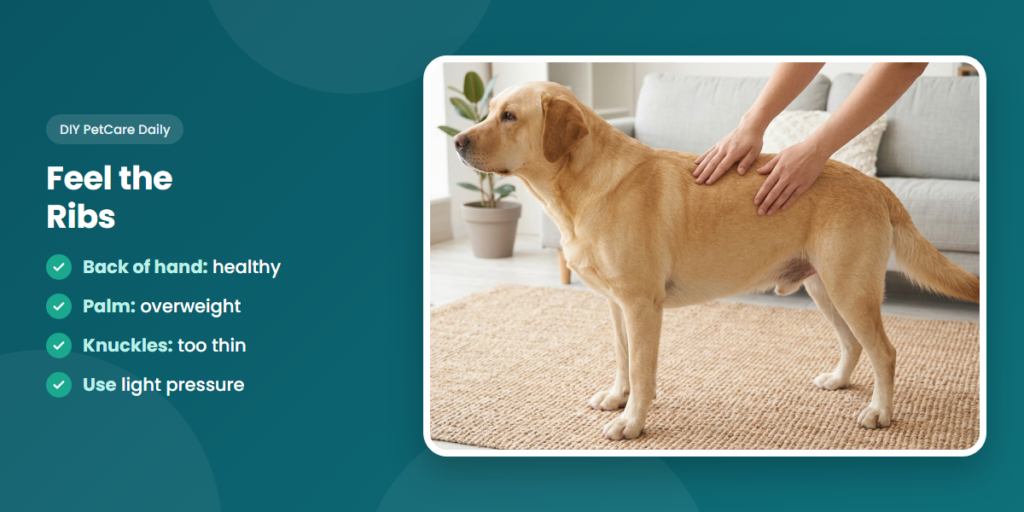
Check 1: Feel the Ribs
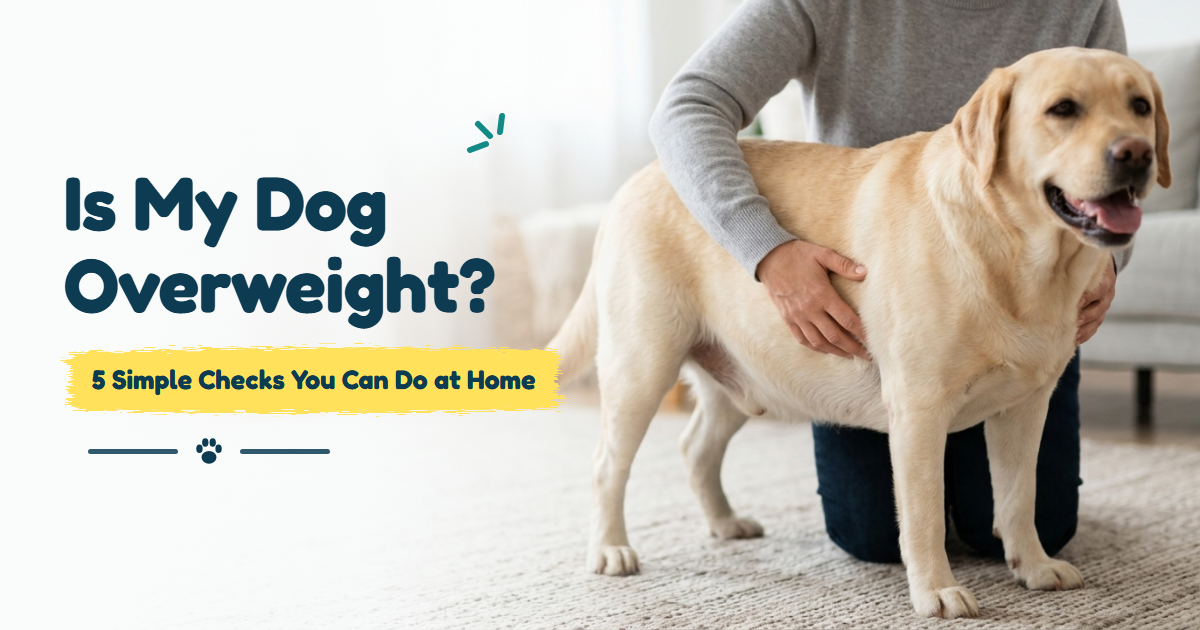
This is the most useful check. Place both hands on your dog’s sides and gently glide your fingers along the ribs.
Here’s an easy way to judge it. Hold your own hand out, palm down, and feel your knuckles and the back of your hand.
- Back of your hand: The ribs should feel like this, with a light covering. This is healthy.
- Your palm: If the ribs feel more like the fleshy part of your palm, or you have to press to find them, your dog is probably overweight.
- Your knuckles: If the ribs feel sharp and bony, like knuckles, your dog may be too thin.
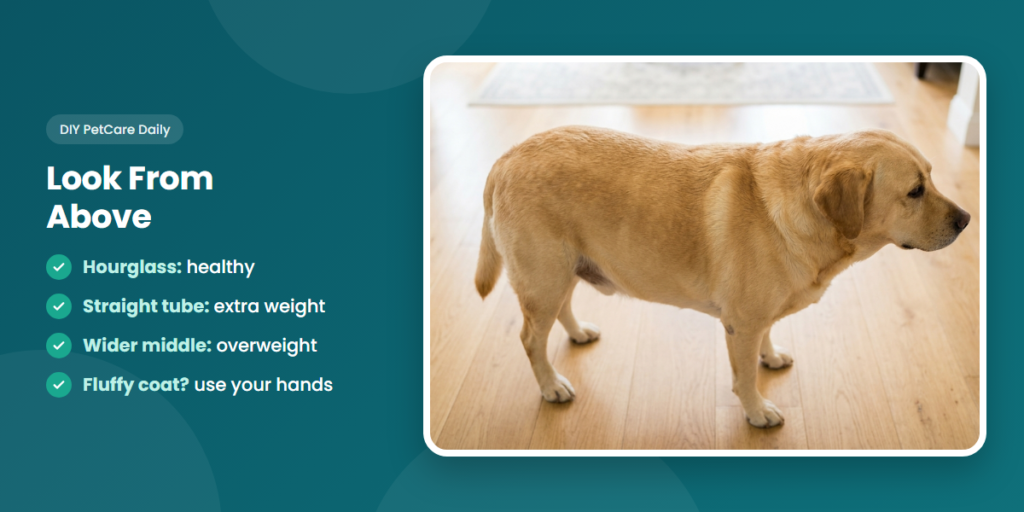
Check 2: Look for a Waist From Above
Stand over your dog and look down. A healthy dog narrows behind the ribs, creating a waist before the hips. Think of a gentle hourglass shape.
If your dog looks like a straight tube from shoulders to hips, or wider in the middle, that’s a sign of extra weight.
Check 3: Look for a Belly Tuck From the Side
Now crouch down and look at your dog’s profile. The belly line should slope up from the bottom of the chest toward the back legs.
If the belly line runs straight across, or it sags downward, your dog is likely carrying extra fat. A hanging belly can also have other causes, so mention it to your vet, especially if it appeared suddenly.
Check 4: Check the Scale and Their History
Weigh your dog and compare today’s number with their past records. Here’s the easy way to do it at home:
- Step on the scale by yourself and write down your weight.
- Pick up your dog and step on again.
- Subtract the first number from the second.
If your dog is too big to lift, most vet clinics will let you stop by and use their scale. Their weight at about 1 to 2 years old, if they looked lean back then, is a helpful reference. A breed chart can also give you a rough idea. Our dog weight chart lists healthy ranges for popular breeds, but remember that frames vary a lot, so don’t rely on the number alone.
Check 5: Watch How They Move and Breathe
Pay attention to your dog on an ordinary day. Overweight dogs often:
- Tire or pant quickly on walks
- Lag behind or lie down early
- Struggle to jump into the car or onto the couch
- Have trouble getting up
- Have trouble grooming themselves or develop skin problems
- Snore more than they used to
Some of these signs can point to pain, heart disease, or breathing problems, so they aren’t proof of weight gain by themselves. Still, they’re a good reason to take a closer look.
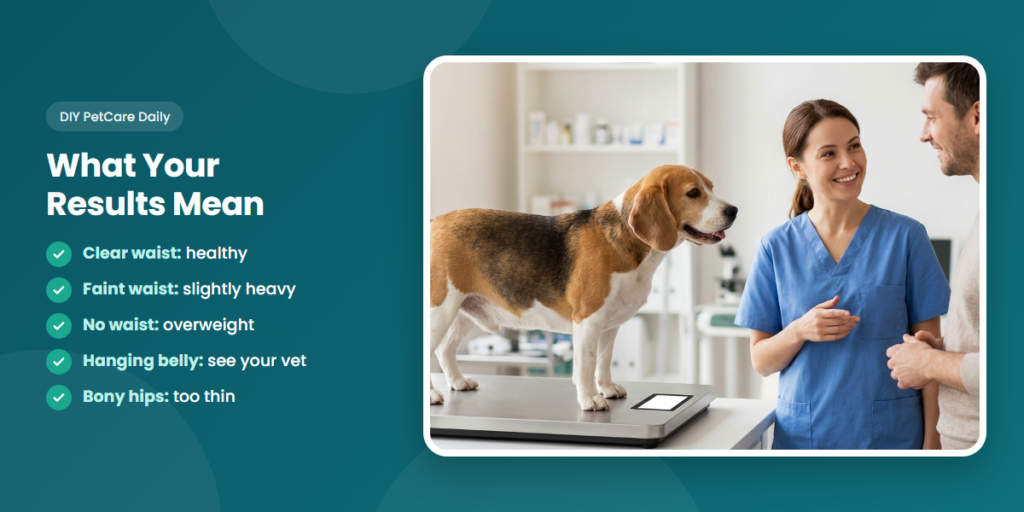
What Your Results Mean
Add up what you’ve found, then see where your dog fits best.
| What You Found | What It Likely Means | Next Step |
| Ribs easy to feel, clear waist, clear tuck | Healthy weight | Keep it up and recheck monthly |
| Ribs take some pressure to feel, faint waist | Slightly overweight | Measure food and cut back on treats |
| Ribs hard to feel, no waist, flat belly line | Overweight | Start a slow plan with your vet |
| Ribs can’t be felt, belly hangs, fat over the hips | Obese | See your vet before starting a plan |
| Ribs and hips stick out, sharp waist | Too thin | Book a vet visit |
If your dog looks too thin, see our guide on why a dog may be so skinny.
For a more exact result, try our dog BMI calculator. It estimates ideal weight from your dog’s score. You can also learn how vets rate dogs on the 9-point scale in our guide to the dog body condition score.
How Much Extra Weight Is Too Much?
A common rule of thumb says each body score point above ideal is about 10% extra weight. That sounds small, but it adds up fast. For a 20 lb dog, even 2 extra pounds is like a 150 lb person gaining 15 pounds.
Why a Few Extra Pounds Matter
Extra weight isn’t just about looks. It can affect how your dog feels every day and how long they stay active. Being overweight is linked with:
- Arthritis and joint pain
- Torn knee ligaments and other injuries
- Trouble breathing, especially in flat-faced breeds
- Diabetes
- Heat intolerance
- Skin problems
- Higher surgery and anesthesia risk
- A shorter life
In a well-known study, Labrador Retrievers kept lean lived almost 2 years longer than their littermates who ate more. They also developed joint problems and other long-term diseases later. For more on the years your dog can gain, read our guide on how long dogs live.
Why Dogs Gain Weight
Knowing the cause makes it much easier to fix.
Too Much Food
This is the most common reason. Scoops are easy to overfill, and bag feeding guides are only a starting point. Our guide on how much dog food to feed explains how to find a better amount.
Too Many Treats and Table Scraps
Treats should make up no more than 10% of daily calories. A big biscuit, a chew stick, and a bit of cheese can easily go over that. Our low calorie dog treats guide lists better options.
Not Enough Exercise
As dogs age, they often slow down, but their portions stay the same. Rainy seasons and busy schedules can do the same thing.
Spay or Neuter
Spayed and neutered dogs often burn fewer calories. They can still stay lean, but their portions may need to change after surgery.
Age and Breed
Older dogs often need fewer calories. Some breeds also gain weight more easily, including Labrador Retrievers, Beagles, Pugs, Dachshunds, and Cocker Spaniels.
Medical Problems
Hypothyroidism, Cushing’s disease, and some medicines can cause weight gain. So can pain that keeps your dog from moving. If your dog is gaining weight despite measured meals, ask your vet to check.
What to Do If Your Dog Is Overweight
You don’t need a strict diet to start making progress. Small changes usually work best.
- See your vet first. This rules out any medical causes and gives you a target weight.
- Work out their calories. Our dog calorie calculator gives you a starting number.
- Measure every meal. Use a kitchen scale or a real measuring cup, not a random scoop.
- Count all treats. Ask everyone in the house to follow the same rules.
- Add a little more movement. Start with a few extra minutes and build up slowly.
- Weigh every 2 weeks. Most dogs can safely lose about 1% to 2% of their body weight per week.
Our full guide on how to help a dog lose weight walks you through a complete plan, and our dog weight calculator can estimate how long it may take.
When to Call the Vet
Most slow weight gain is about food and activity, but some patterns need a closer look. Call your vet if your dog has:
- Weight gain even though they’re eating measured portions
- A swollen or hanging belly that appeared quickly
- Tiredness, hair loss, or a thin coat
- Much more thirst, hunger, or peeing
- Trouble breathing or a new cough
A hard, swollen belly with restlessness or retching is an emergency. Go to a vet right away.
For more guides like this one, visit our Dog Health & Wellness section.
Frequently Asked Questions
How can I tell if my dog is overweight?
Feel for your dog’s ribs, look for a waist from above, and look for a belly tuck from the side. If the ribs are hard to feel or the waist and tuck are missing, your dog is probably overweight.
Is my dog overweight or just fluffy?
A thick coat can fool your eyes, so use your hands. If you can feel the ribs easily under the fur and find a waist, your dog is probably at a healthy weight.
How much should my dog weigh?
It depends on breed, frame, and sex. A breed chart gives you a general range, but body shape is a better guide. Your vet can help you set a goal weight.
Can a dog be overweight and still eat very little?
Yes. Many small meals and treats add up, and some dogs need fewer calories than their bag suggests. Medical problems such as low thyroid can also cause weight gain, so check with your vet.
Is it hard for an overweight dog to lose weight?
Most dogs do well with measured meals, fewer treats, and a little more activity. Progress can feel slow, but about 1% to 2% of body weight per week is a safe pace for most dogs.