Table of Contents
Quick answer: How long do dogs live? Most dogs live about 10 to 13 years, but size makes a big difference. Small dogs often reach 12 to 16 years, medium dogs 11 to 15, large dogs 10 to 13, and giant dogs just 7 to 10. Breed, weight, genetics, and regular vet care all play a part.
Almost every dog owner asks this question at some point, usually while looking at a puppy who seems like they’ll be around forever, or at an old friend who has started to slow down.
There’s no single number that fits every dog. A Chihuahua and a Great Dane are the same species, but they age at very different speeds. This guide breaks down the typical lifespan by size and breed, explains why small dogs usually outlive big ones, and shares the everyday habits that give your dog the best shot at a long, comfortable life.
Table of Contents
- How Long Do Dogs Live on Average?
- Dog Lifespan by Size
- Average Dog Lifespan by Breed
- What Affects How Long a Dog Lives?
- How to Help Your Dog Live Longer
- Signs an Older Dog Needs a Vet Visit
- Frequently Asked Questions
How Long Do Dogs Live on Average?
Across all sizes and breeds, the average dog lives about 10 to 13 years. A large 2024 study from the UK looked at more than 580,000 dogs and found a median lifespan of about 12.5 years. Median means half of the dogs lived longer than that and half lived less.
That’s a useful starting point, but averages hide a lot. Your dog’s size group tells you much more.
Dog Lifespan by Size
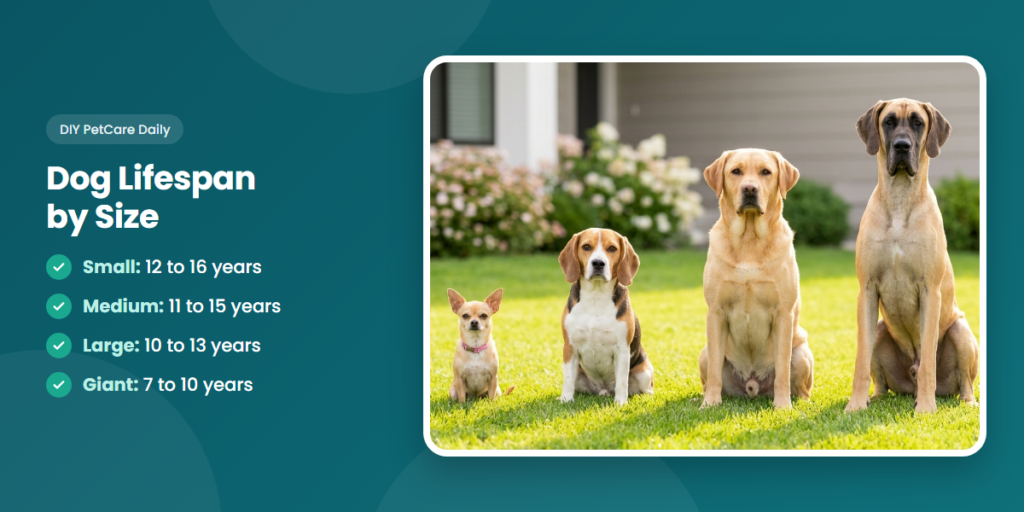
Here’s a quick look at what to expect for each size group. These are general ranges for healthy dogs, not promises.
| Size | Adult Weight | Typical Lifespan |
| Small | 20 lb or less | 12 to 16 years |
| Medium | 21 to 50 lb | 11 to 15 years |
| Large | 51 to 90 lb | 10 to 13 years |
| Giant | Over 90 lb | 7 to 10 years |
Want to see how far along your dog is right now? Our dog age calculator converts their age into human years based on size and shows where they sit in a typical lifespan.
Why Do Small Dogs Live Longer Than Big Dogs?
In most animals, bigger species live longer. Elephants outlive mice, for example. Dogs are the odd exception, and researchers are still working out why. Here’s what seems to matter:
- Fast growth: A giant puppy may grow from about 1 pound to more than 100 pounds in under 2 years. That rapid growth may take a toll on the body.
- Earlier aging: Large dogs appear to age faster once they are adults, so joint problems and other age-related diseases show up sooner.
- Higher cancer risk: Some large and giant breeds have much higher rates of certain cancers, including bone cancer.
- Size-related health problems: Hip dysplasia and a life-threatening stomach problem called bloat are more common in big, deep-chested dogs.
Average Dog Lifespan by Breed
These ranges come from common breed references. Individual dogs can fall above or below them, and mixed-breed dogs often land near the range for their size.
| Breed | Size | Typical Lifespan |
| Chihuahua | Small | 14 to 16 years |
| Dachshund | Small | 12 to 16 years |
| Yorkshire Terrier | Small | 11 to 15 years |
| Shih Tzu | Small | 10 to 16 years |
| Pug | Small | 13 to 15 years |
| French Bulldog | Small to medium | 10 to 12 years |
| Beagle | Medium | 10 to 15 years |
| Cocker Spaniel | Medium | 10 to 14 years |
| Border Collie | Medium | 12 to 15 years |
| Siberian Husky | Medium | 12 to 14 years |
| Labrador Retriever | Large | 11 to 14 years |
| Golden Retriever | Large | 10 to 12 years |
| Boxer | Large | 10 to 12 years |
| German Shepherd | Large | 7 to 10 years |
| Rottweiler | Giant | 9 to 10 years |
| Bernese Mountain Dog | Giant | 7 to 10 years |
| Great Dane | Giant | 7 to 10 years |
| Irish Wolfhound | Giant | 6 to 8 years |
You’ll notice a pattern, but also a few exceptions. Flat-faced breeds, such as French Bulldogs, often have shorter lives than their small size suggests, because breathing problems and other health issues can follow them throughout life.
Do Mixed-Breed Dogs Live Longer?
Often a little, yes. Mixed-breed dogs are less likely to inherit some of the health problems that run in specific purebred lines. Still, size matters more than pedigree. A giant mix will rarely match a small mix for years, and many purebred dogs from careful breeders live long, healthy lives.
What’s the Oldest Dog on Record?
The dog most often cited is Bluey, an Australian cattle dog who lived to 29 years and 5 months and died in 1939. Dogs who pass 20 are rare, so don’t feel you’ve done anything wrong if your dog doesn’t come close. A healthy life that matches their size is a great outcome.
What Affects How Long a Dog Lives?
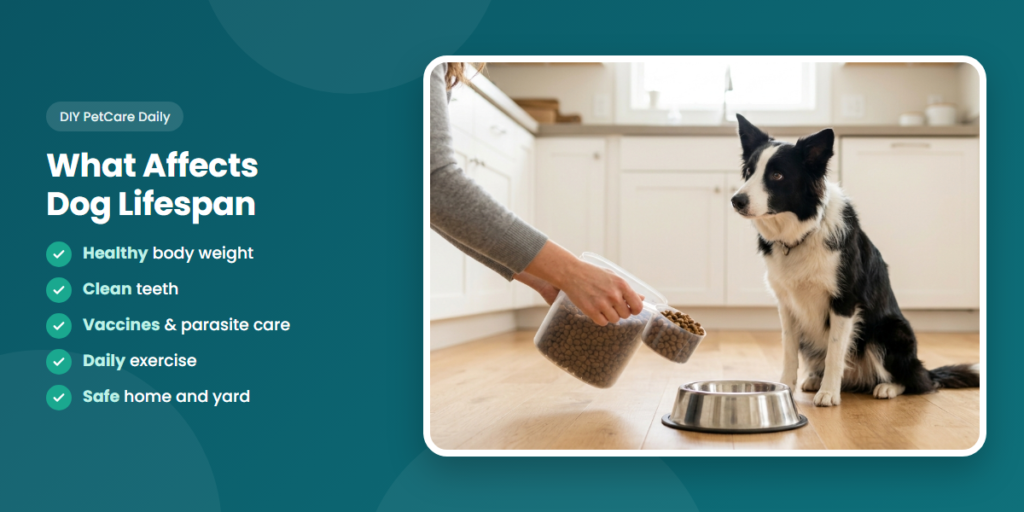
You can’t change your dog’s breed or genes, but plenty of what shapes a dog’s lifespan is in your hands.
Body Weight
This is one of the biggest factors you can control. In a long-running study of Labrador Retrievers, dogs kept lean through careful feeding lived almost 2 years longer than their littermates who ate more. They also developed long-term health problems later in life.
Not sure where your dog stands? Try our dog BMI calculator, or go through our simple checks in is my dog overweight.
Dental Health
Gum disease is painful and common, and it can affect more than the mouth. Daily brushing helps a lot. If your dog fights the toothbrush, our 7-day tooth brushing plan can help, and these signs of gum disease tell you when to get a vet’s opinion.
Vaccines and Parasite Prevention
Parvo, distemper, rabies, heartworm, and tick-borne diseases can all shorten a dog’s life. Most of them are far easier to prevent than to treat. Keep up with your dog vaccination schedule and give parasite prevention all year if your vet recommends it.
Spaying and Neutering
Studies often find that spayed and neutered dogs live longer on average. The best timing can vary by breed and size, especially for large dogs, so talk to your vet about what makes sense for your dog.
Exercise and Mental Activity
Daily walks, play, and new smells help keep muscles strong, weight down, and minds sharp. Adjust the activity to your dog’s age and ability. An old dog may do better with two short walks than one long hike.
Safety
Accidents take many young dogs. A fenced yard, a secure leash, a seat belt or crate in the car, and keeping toxic foods out of reach all help. So does a microchip with up-to-date contact details.
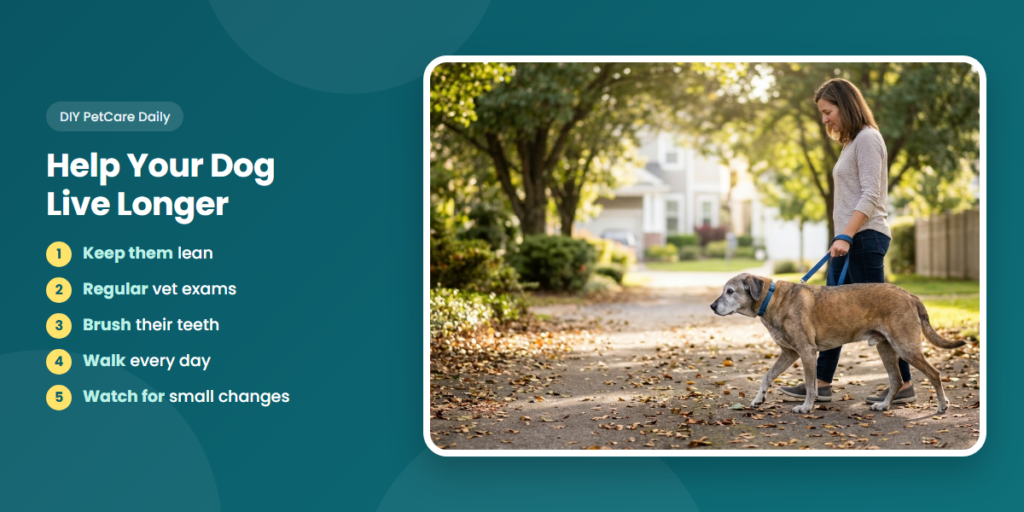
How to Help Your Dog Live Longer
None of these steps is complicated. Most of them come down to doing simple things consistently.
- Keep them lean. Measure every meal and count treats. Our guide on how much dog food to feed is a good place to start.
- Feed a complete and balanced food. Look for the AAFCO statement on the label, and match the food to your dog’s life stage.
- See the vet regularly. Most adult dogs need a yearly exam. Older dogs often do better with an exam every 6 months.
- Brush their teeth. Aim for daily, but a few times a week still helps.
- Keep them moving. Regular activity protects joints, muscles, and mood.
- Protect them from parasites. Ask your vet which heartworm, flea, and tick products fit your area.
- Keep their brain busy. Training games, puzzle feeders, and new walking routes all count.
- Watch for small changes. Note changes in appetite, thirst, weight, sleep, or mobility, and tell your vet early.
Know When the Senior Years Begin
Large dogs reach their senior years sooner than small dogs, so care should change at different ages. Our guide on when a dog is considered a senior lists the ages and signs to watch for each size. If you adopted your dog and aren’t sure of their age, here’s how to tell a dog’s age from their teeth and body.
Signs an Older Dog Needs a Vet Visit
Slowing down is normal with age. But many problems that look like “just getting old” can be treated. Call your vet if you notice:
- Weight loss without trying; read more about why a dog may be losing weight
- Drinking or peeing much more than usual
- Trouble standing, climbing stairs, or jumping
- Confusion, getting stuck in corners, or changes in sleep patterns
- Bad breath, trouble chewing, or dropping food
- New lumps or lumps that are growing
- Coughing, trouble breathing, or getting tired quickly
Go to a vet right away if your dog collapses, can’t breathe well, has a swollen, tight belly, or stops eating and drinking.
For more guides on keeping your dog comfortable at every age, visit our Dog Health & Wellness section.
Frequently Asked Questions
How long do dogs live on average?
Most dogs live about 10 to 13 years. Small dogs often live longer, up to about 16 years, while giant breeds usually live 7 to 10 years.
Which dog breeds live the longest?
Small breeds usually live the longest. Chihuahuas, Dachshunds, and many small terriers often reach their mid-teens, and some live longer than that.
Which dog breeds have the shortest lifespan?
Giant breeds tend to have the shortest lives. Great Danes, Bernese Mountain Dogs, and Irish Wolfhounds often live about 6 to 10 years.
Is 13 old for a dog?
For most dogs, yes. A 13-year-old small dog is about 68 in human years, while a 13-year-old large dog is about 82. Many dogs at this age need more frequent checkups and a gentler routine.
Can a dog live to 20?
It’s possible but rare. Some small dogs have reached 20, but most dogs don’t. Good genes, a lean body, and regular vet care all improve the odds of a long life.