Cat Behavior
Cat behavior can be puzzling, but almost everything your cat does has a reason. These guides explain common habits and signals in plain English, so you can understand your cat better.
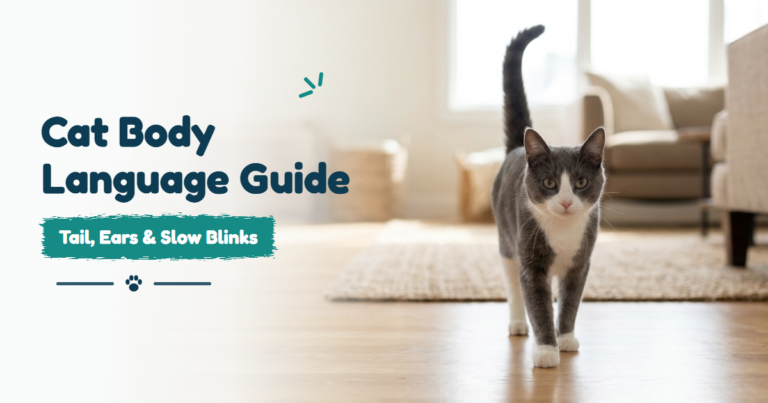
Cat Body Language Guide: What Tail, Ears and Slow Blinks Mean
Quick answer: Cat body language is how cats show their mood through their tail, ears, eyes, whiskers, and posture. An upright tail...
Read More →
Why Do Cats Make Biscuits? 7 Real Reasons Cats Knead
Quick answer: Why do cats make biscuits? It starts in kittenhood, when kittens knead their mother’s belly to help the milk flow....
Read More →
Why Does My Cat Bite Me? Love Bites vs Aggression
Quick answer: Why does my cat bite me? Most cat bites are gentle “love bites,” play, or a signal that your cat...
Read More →Understanding What Your Cat Is Telling You
Cats talk mostly with their bodies. The tail, ears, eyes, and posture all send signals, and learning to read them helps you avoid scratches, build trust, and spot stress early. Many “strange” habits, like kneading blankets or nipping during petting, turn out to be completely normal once you know why cats do them.
- Cat body language: what tail positions, ear angles, and slow blinks mean
- Why cats make biscuits: the real reasons cats knead
- Why your cat bites you: love bites vs aggression, and how to stop it
When Behavior Changes Matter
A sudden change in behavior, like hiding, new aggression, or avoiding the litter box, can be a sign of pain or illness rather than a “bad attitude.” If your cat starts acting differently, read our guide on signs of pain in cats and check in with your vet. Bored indoor cats also do better with daily play; our DIY cat toys are an easy place to start.