Table of Contents
- Table of Contents
- What Dogs Need in a Homemade Diet
- Step 1: Start With Balanced Homemade Dog Food Recipes
- Step 2: Understand the Basic Formula
- Sample Turkey and Rice Dog Food Recipe
- Foods to Never Put in Dog Food
- How Much Homemade Food to Feed
- How to Switch to Homemade Dog Food
- Batch Cooking and Storage Tips
- Easy Start: Homemade Toppers
- Frequently Asked Questions
Quick answer: Good homemade dog food recipes combine a lean protein (like turkey or chicken), a cooked carb (like rice or sweet potato), vegetables, a little healthy fat, and a calcium and vitamin supplement made for homemade dog diets. That last part matters most: meat, rice, and veggies alone are not complete. Get a vet-approved recipe, switch foods slowly, and weigh your dog every few weeks.
More and more dog owners want to cook for their dogs. Fresh food looks and smells great, picky eaters often love it, and you know exactly what’s going in the bowl. Some dogs with allergies or sensitive stomachs do better on a simple homemade diet, too.
But there’s a catch most online recipes skip. A well-known study from UC Davis looked at 200 homemade dog food recipes from books and websites, and only a handful provided all the nutrients dogs need. Most were short on several important vitamins and minerals. That doesn’t mean homemade food is bad. It means you need the right recipe and the right supplements.
This guide covers what dogs need, how a balanced recipe is built, a sample turkey and rice recipe, how much to feed, and how to batch cook to save time.
Table of Contents
- What Dogs Need in a Homemade Diet
- Step 1: Start With Balanced Homemade Dog Food Recipes
- Step 2: Understand the Basic Formula
- Sample Turkey and Rice Dog Food Recipe
- Foods to Never Put in Dog Food
- How Much Homemade Food to Feed
- How to Switch to Homemade Dog Food
- Batch Cooking and Storage Tips
- Easy Start: Homemade Toppers
- Frequently Asked Questions
What Dogs Need in a Homemade Diet
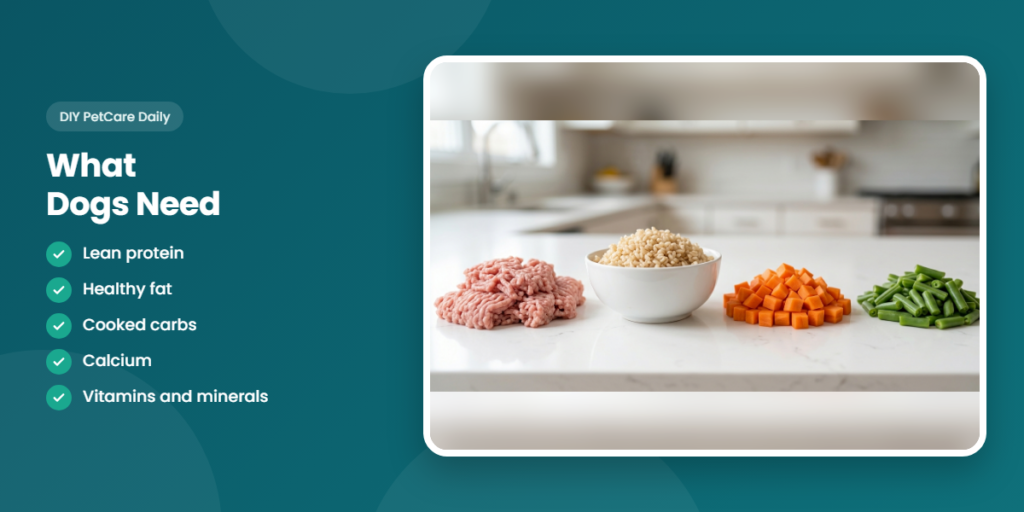
Dogs need more than meat and rice. A complete diet covers six groups of nutrients.
| Nutrient | Why dogs need it | Good sources |
| Protein | Muscles, organs, immune system | Turkey, chicken, lean beef, fish, eggs |
| Fat | Energy, skin, coat, brain | Meat fat, fish oil, vegetable oil |
| Carbohydrates | Energy and fiber | Rice, oats, sweet potato, quinoa |
| Calcium | Bones and teeth | Supplement or ground eggshell (meat is very low) |
| Vitamins | Vision, nerves, energy, immunity | Liver (small amounts), vegetables, supplement |
| Minerals (zinc, iron, iodine, and more) | Skin, blood, thyroid | Meat, supplement |
The Most Common Gaps
Homemade dog diets most often fall short on:
- Calcium. Meat has lots of phosphorus but almost no calcium. Over time, this weakens bones, especially in puppies.
- Vitamin D and vitamin E.
- Zinc and copper. Low zinc can cause skin and coat problems.
- Choline. Important for the liver and brain.
- Omega-3 fatty acids. Support skin, joints, and heart.
That’s why vet-built recipes almost always include a supplement mix made for homemade dog food.
Step 1: Start With Balanced Homemade Dog Food Recipes
The safest way to start is with a recipe made for your dog by a vet or a board-certified veterinary nutritionist. They’ll factor in your dog’s age, weight, activity level, and any health problems. Some online services let your vet create a balanced recipe and recommend the right supplement.
This is especially important if your dog has kidney disease, liver disease, pancreatitis, diabetes, allergies, or is a growing puppy.
Step 2: Understand the Basic Formula
Most balanced adult dog recipes follow a similar pattern, though exact amounts vary by recipe:
- Protein: about 40 to 50% of the recipe by weight (cooked lean meat, eggs, or fish)
- Carbs: about 25 to 40% (cooked rice, oats, sweet potato, or pasta)
- Vegetables: about 10 to 20% (cooked or finely chopped)
- Fat: a small amount, usually from the meat plus a teaspoon or two of oil
- Supplement: a calcium and vitamin-mineral mix, exactly as directed
Use this as a way to understand recipes, not as a substitute for one. The supplement is what makes the meal complete.
Sample Turkey and Rice Dog Food Recipe
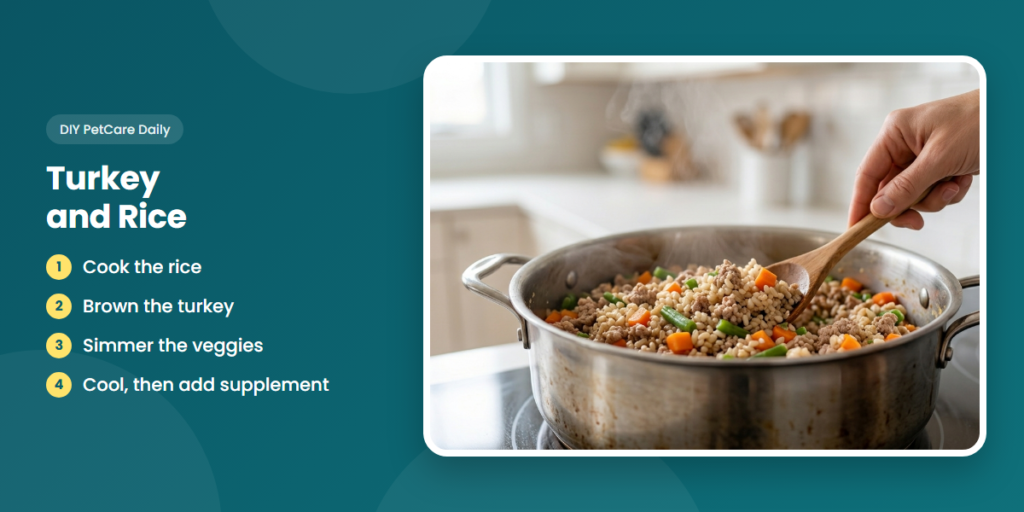
This sample shows how a cooked homemade recipe comes together. Pair it with a complete supplement made for homemade dog food, used exactly as the label directs, or ask your vet to adjust it.
Makes: about 9 cups (roughly 4 to 5 days for a 30 to 40 lb adult dog; amounts vary by dog)
Ingredients
- 2 lb lean ground turkey (93% lean)
- 1 1/2 cups brown rice (uncooked), or 4 cups cooked
- 2 cups chopped carrots and green beans
- 1 cup chopped zucchini or pumpkin
- 2 large eggs
- 1 tablespoon fish oil or sunflower oil
- Supplement mix for homemade dog food (amount per label)
Steps
- Cook the rice according to the package, using plain water and no salt.
- Brown the turkey in a large pot over medium heat, breaking it into small pieces. Cook until no pink remains (165°F). Don’t add onion, garlic, salt, or seasoning.
- Add the vegetables and a cup of water. Cover and simmer for 10 to 15 minutes, until soft.
- Scramble in the eggs and stir until cooked.
- Stir in the rice.
- Cool the mixture to room temperature.
- Add the oil and supplement after cooking, so heat doesn’t break down the vitamins.
- Portion into daily containers.
Easy Swaps
- Protein: chicken, lean beef, or white fish instead of turkey
- Carbs: oats, sweet potato, quinoa, or plain pasta instead of rice
- Vegetables: peas, spinach (small amounts), broccoli (small amounts), or butternut squash
Make one change at a time and keep the supplement the same.
Foods to Never Put in Dog Food
| Toxic or risky | Why |
| Onions, garlic, chives, leeks (including powder) | Damage red blood cells |
| Grapes and raisins | Can cause kidney failure |
| Chocolate and caffeine | Toxic to the heart and nerves |
| Xylitol | Causes low blood sugar and liver damage |
| Macadamia nuts | Weakness, tremors |
| Cooked bones | Splinter and cause tears or blockages |
| Fatty trimmings and skin | Can trigger pancreatitis |
| Heavy salt and seasoning | Upsets the stomach; dangerous in large amounts |
Want to add fruit? Our guide on fruits dogs can eat lists safe choices and amounts.
A Note on Grain-Free Recipes
Unless your vet recommends it, there’s usually no need to cut out grains. The FDA has looked into a possible link between some grain-free diets heavy in peas, lentils, and other legumes and a heart condition called dilated cardiomyopathy (DCM) in dogs. Rice and oats are fine for most dogs.
How Much Homemade Food to Feed
Every dog is different. Size, age, activity level, and whether they’re spayed or neutered all change how much they need. Our guide on how many calories a dog needs helps you find your dog’s daily target. Our dog feeding guide covers portions in more detail.
As a very rough starting point, many adult dogs eat about 2 to 3% of their body weight in fresh food per day. A 40 lb dog would get about 0.8 to 1.2 lb (13 to 19 oz) daily, split into two meals. Adjust from there.
Weigh your dog every two weeks after switching. If they’re gaining, feed a little less. If they’re losing or look thin, feed a little more. Our guide on whether your dog is overweight shows you how to check by feel.
Puppies need more calcium, protein, and calories, and mistakes can affect growth. Only feed a puppy a recipe made for puppies by a vet nutritionist. See our guide on how much to feed a puppy.
How to Switch to Homemade Dog Food
A sudden change can upset your dog’s stomach. Switch over 7 to 10 days.
| Days | Old food | Homemade food |
| 1 to 2 | 75% | 25% |
| 3 to 5 | 50% | 50% |
| 6 to 8 | 25% | 75% |
| 9 and on | 0% | 100% |
If you see loose stools, slow down. Our guide on how to switch dog food has more tips. And remember, plain chicken and rice is a short-term bland diet for upset stomachs, not a long-term meal. Our guide on what to give a dog for diarrhea explains when to use it.
Batch Cooking and Storage Tips
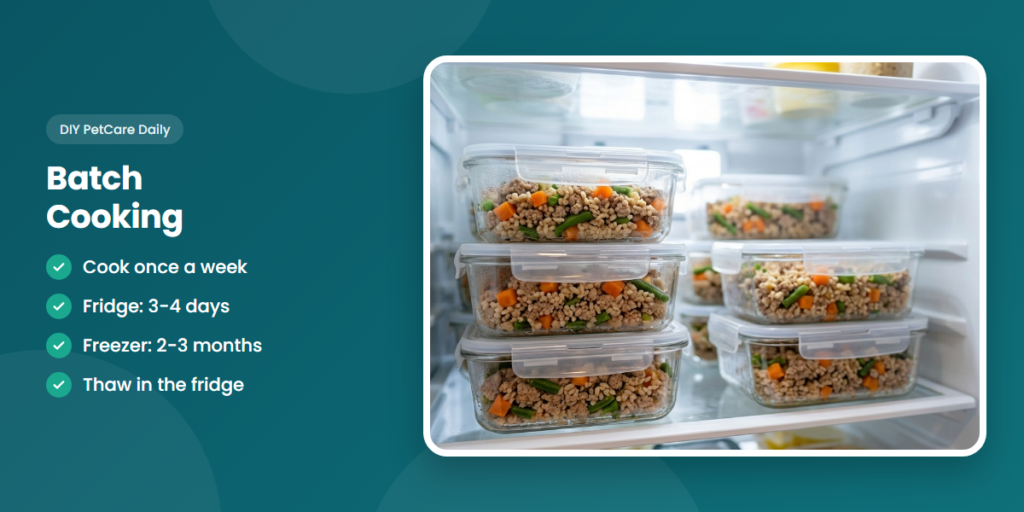
Cooking every day isn’t realistic for most people. Batch cooking makes homemade food easy.
- Cook once a week and portion into daily containers.
- Fridge: keep up to 3 to 4 days’ worth.
- Freezer: store the rest for up to 2 to 3 months.
- Thaw overnight in the fridge, never on the counter.
- Serve at room temperature or slightly warm. Never microwave in a way that leaves hot spots.
- Label every container with the date.
A slow cooker or large stockpot makes big batches easy. Freezing in silicone muffin trays gives you neat single portions for small dogs.
Easy Start: Homemade Toppers
Not ready to switch completely? Add a spoonful of homemade food on top of a complete commercial diet. Keep toppers to about 10% of daily calories so the main food stays balanced. Plain cooked turkey, scrambled egg, steamed green beans, or a bit of pumpkin are all great options.
For more kitchen projects, try our homemade dog treats recipes, or browse the DIY Dog Projects section.
Frequently Asked Questions
Is homemade dog food better than store-bought?
Not automatically. Homemade food is only better if it’s complete and balanced. A good commercial food labeled “complete and balanced” is safer than a homemade recipe that’s missing nutrients. A vet-built homemade recipe with the right supplement can be an excellent choice.
What is the healthiest homemade dog food?
A recipe made for your dog by a vet or board-certified veterinary nutritionist, using lean protein, a cooked carb, vegetables, a little fat, and a supplement that adds calcium, vitamins, and minerals.
Can I feed my dog chicken and rice every day?
Not on its own. Chicken and rice lacks calcium and several vitamins and minerals. It’s fine as a short-term bland diet for an upset stomach, but a long-term diet needs supplements and more variety.
How long does homemade dog food last?
About 3 to 4 days in the fridge and 2 to 3 months in the freezer. Thaw frozen portions in the fridge overnight.
Do I need to add supplements to homemade dog food?
Yes, in almost every case. Meat, grains, and vegetables alone don’t provide enough calcium, vitamin D, vitamin E, zinc, and other nutrients. Use a supplement made for homemade dog diets, as your vet recommends.