Table of Contents
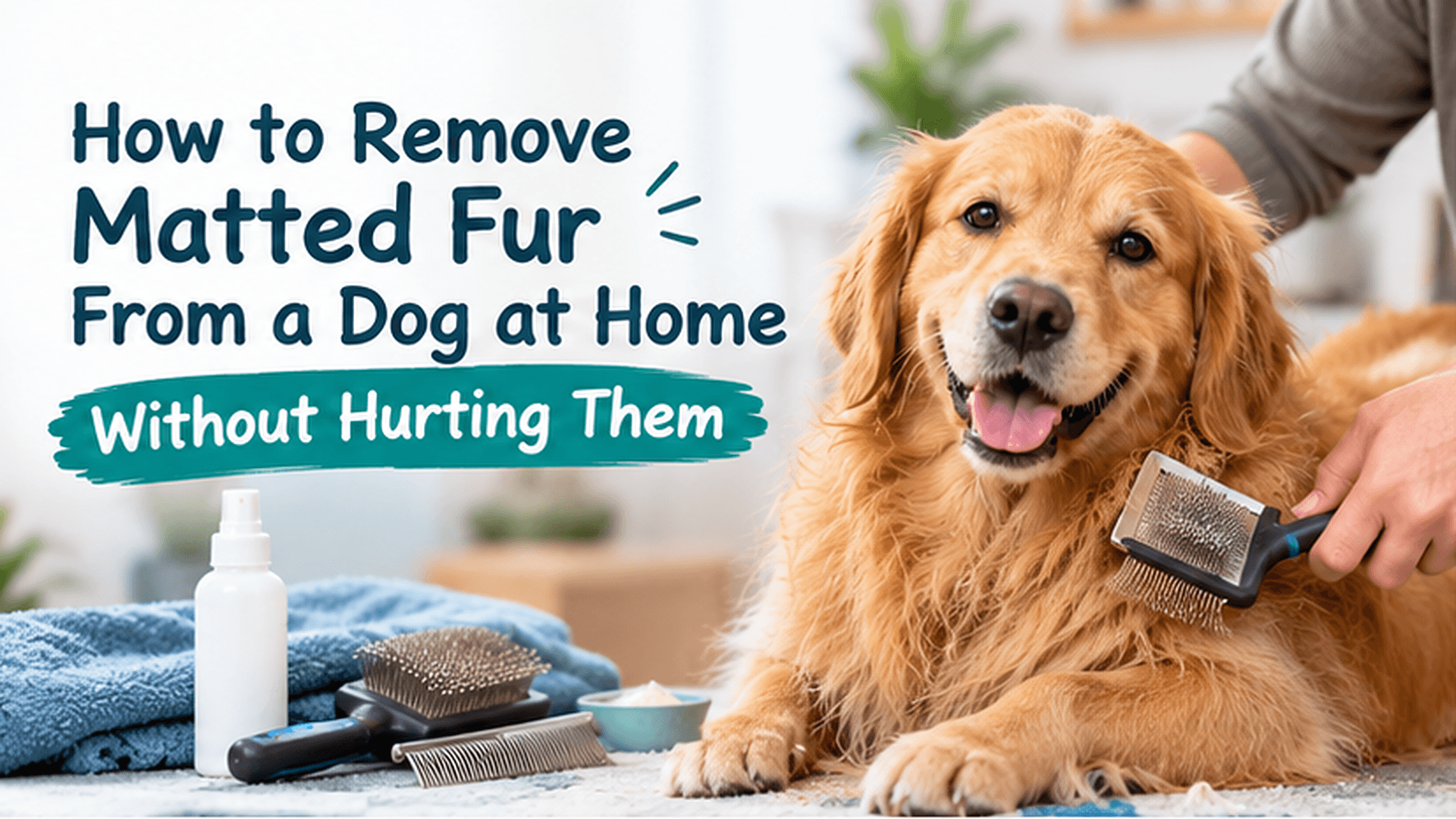
Quick answer: Keep your dog’s coat dry, rub in a little cornstarch or dog detangling spray, and pull the mat apart gently with your fingers. Then comb it out slowly, starting at the tip of the mat and working toward the skin. Don’t cut it out with scissors. If the mat is tight against the skin, or the skin looks red or sore, see a groomer or vet.
Mats are one of the most common grooming problems for dogs, and one of the easiest to make worse. Pulling hard, bathing a matted dog, or snipping with scissors can hurt your dog and even cut their skin. This guide shows the safe way to take mats out at home, what tools to use, and when to stop and call a professional.
What Are Mats in a Dog’s Fur and Why Do They Hurt?
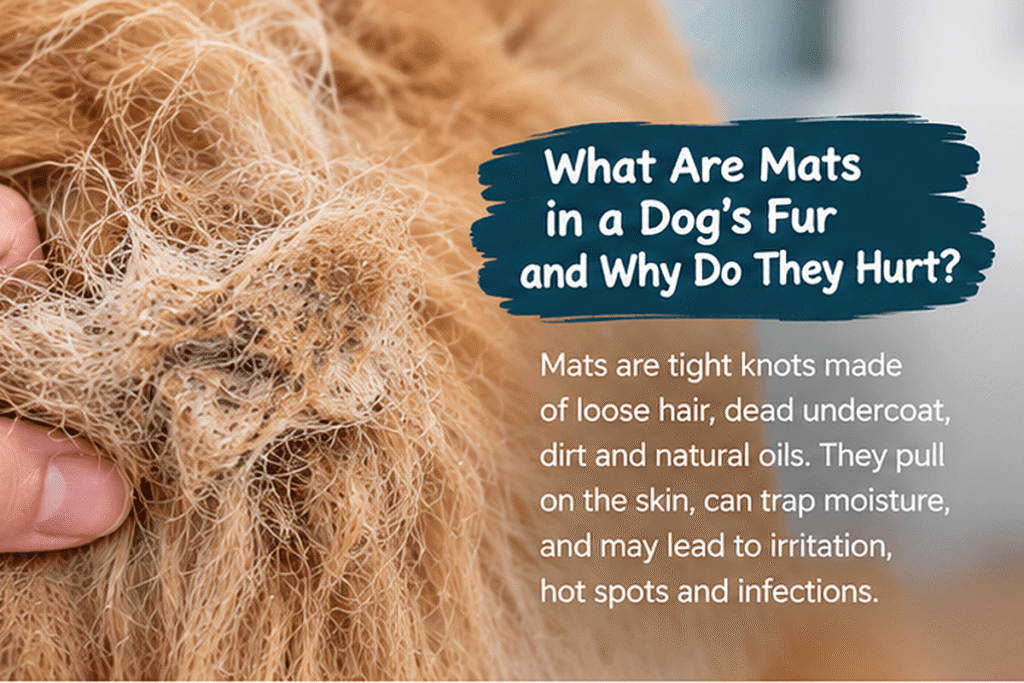
A mat is a tight knot made of loose hair, dead undercoat, dirt, and natural oils. It usually starts as a small tangle that’s easy to miss. Every time your dog walks, runs, or turns, the knot pulls a little tighter on the skin.
That pulling is what makes mats painful. Big mats can also trap moisture against the skin, which can lead to rashes, hot spots, and infections that you can’t see under the fur.
Any dog can get mats, but long, curly, and double-coated dogs get them the most. Poodles, doodles, Shih Tzus, Maltese, Cocker Spaniels, and Golden Retrievers are common examples. Short-haired dogs can get small mats too, usually behind the ears or under a collar.
What You Need Before You Start
Get everything ready first so you don’t have to leave your dog halfway through.
- A slicker brush
- A metal comb with both wide and narrow teeth
- Dog detangling spray, or plain cornstarch
- Treats your dog loves
- A towel or non-slip mat for your dog to stand on
- Optional: a mat splitter or dog clippers
Pick a calm time, like after a walk when your dog is tired. If your dog moves around a lot, ask someone to help by giving treats and keeping your dog still.
How to Remove Mats From a Dog’s Fur, Step by Step
Step 1: Keep the Coat Dry
Don’t bathe your dog yet. Water makes mats shrink and tighten, so they get harder to remove. Brush out the mats first, then give the bath.
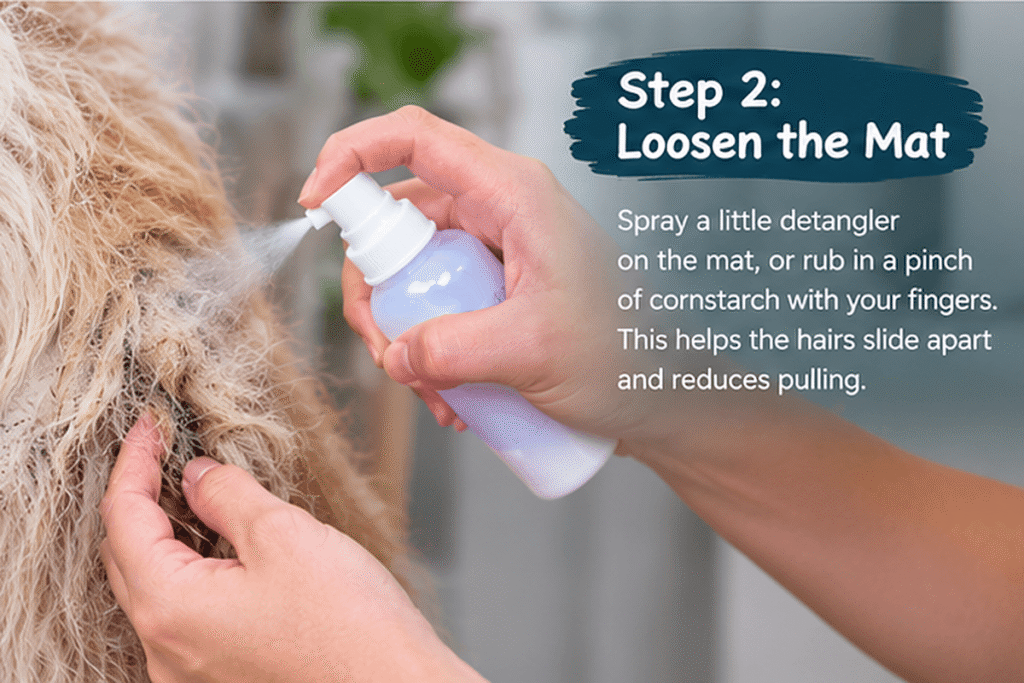
Step 2: Loosen the Mat
Spray a little detangler on the mat, or rub in a pinch of cornstarch with your fingers. Both help the hairs slide apart so there’s less pulling.
Step 3: Pull the Mat Apart With Your Fingers
Hold the fur at the base, between the mat and the skin. This keeps the skin from being tugged while you work. Then split the mat into smaller pieces with your fingers. Smaller pieces are much easier to comb out than one big knot.
Step 4: Comb From the Tips Toward the Skin
Start with the wide teeth of the comb. Comb the outer end of the mat first, a few hairs at a time, and slowly move closer to the skin. Don’t push the comb in at the skin and drag it out through the mat. That’s the move that hurts. When the pieces are loose, switch to the slicker brush to finish.
Step 5: Stop Early and Give a Treat
Keep the session to 10 or 15 minutes. If your dog gets tense, stop and try again later. Several short sessions are better than one long, stressful one. A dog who has a bad time with grooming gets harder to groom each time.
Should You Cut a Mat Out of Your Dog’s Fur?
Skip the scissors. A dog’s skin is thin and loose, and it can get pulled up into a mat without you noticing. Many dogs get cut this way, and the cut is often right next to the skin where you can’t see it.
A mat splitter is safer than scissors. It has a blade that slices through the mat lengthwise so you can comb the pieces out. Use it only on small mats that sit away from the skin.
Clippers can work for stubborn mats, but only if you’ve used them before and your dog sits still. If not, let a groomer do it. A short shave-down isn’t a failure. For badly matted dogs it’s often the kindest choice, and the fur grows back.
When to See a Groomer or Vet
Some mats aren’t a home job. Get help if you see any of these:
- Mats cover a large area, or the coat feels like felt (groomers call this pelting)
- The mat sits tight against the skin
- The skin underneath is red, scabby, wet, or smells bad
- Your dog cries, snaps, or bites when you touch the area
- Mats around the eyes, ears, armpits, or back end
- Your dog is old, very nervous, or in pain
A groomer can shave the coat safely. A vet can check for skin infections and treat them. For more routine grooming help, browse our Dog Hair & Grooming Care section.
Where Do Mats Form Most Often?
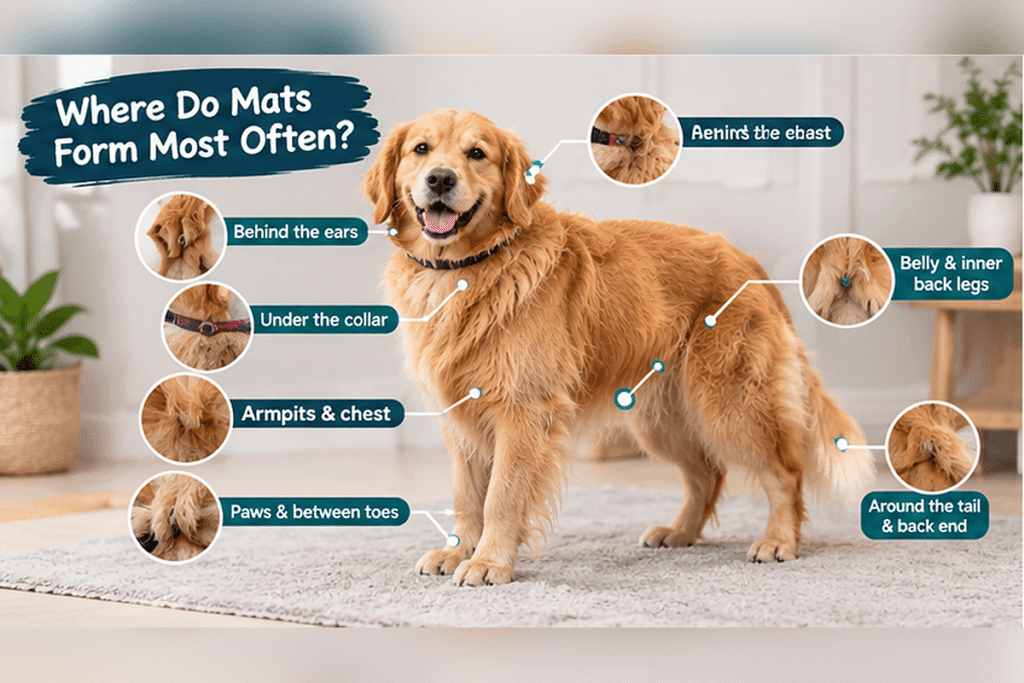
Mats like places where fur rubs together or against something. Check these spots with your fingers, since mats often hide under the top layer of fur:
- Behind the ears
- Under the collar or harness
- Armpits and chest
- Belly and inner back legs
- Around the tail and back end
- Between the toes and around the paws
Paw fur needs its own care, and our Dog Nail & Paw Care section covers that.
How to Keep Mats From Coming Back
Taking mats out is the hard part. Keeping them away is much easier.
Brush on a schedule. Dogs with long or curly coats need brushing every day or every other day. Medium coats do fine with a few times a week. Short coats need it about once a week. You can find a full plan in our guide to dog grooming schedules by coat type.
Brush down to the skin. Brushing only the top layer leaves tangles underneath. Part the fur and brush it in layers.
Dry your dog fully after baths and rain. Damp fur tangles fast.
Watch shedding season. Loose undercoat gets trapped in the coat and forms mats. If your dog sheds a lot, read why dogs shed so much.
Book regular grooming. Long-coated dogs usually do well with a trim every 4 to 8 weeks.
Keep it a habit. Grooming works best as part of a routine. Tooth brushing fits in well too, and our 7-day plan for brushing a dog’s teeth helps if your dog fights it.
Frequently Asked Questions
Should I bathe a matted dog?
No. Water tightens mats and makes them harder to remove. Brush out the mats first while the coat is dry, then bathe your dog.
Does brushing out mats hurt dogs?
It can pull a little, especially with bigger mats. Holding the fur at the base, working in small sections, and taking breaks keeps it comfortable. If your dog cries out, stop.
Is it okay to shave a matted dog?
Yes, when mats are close to the skin or cover large areas. A groomer can shave them safely. The coat grows back, and it’s better than leaving painful mats in place.
How often should I brush my dog to prevent mats?
Long and curly coats need brushing every day or every other day. Medium coats need it a few times a week, and short coats about once a week.
Can matted fur make a dog sick?
It can. Mats can cause skin irritation, hot spots, and infections, and they can hide fleas or ticks. Severe mats can also be painful and limit movement.


2 Responses