Table of Contents
- Table of Contents
- How Plaque and Tartar Build Up
- How Brushing Works
- How Dental Chews Work
- Dog Dental Chews vs Brushing: Side-by-Side
- What About Other Dental Products?
- How to Choose a Safe Dental Chew
- The Best Routine: Use Both
- How to Tell If Your Dog’s Dental Routine Is Working
- Common Mistakes to Avoid
- When Neither Is Enough
- Frequently Asked Questions
Quick answer: Brushing works better. A toothbrush reaches the gumline, where gum disease starts, and dental chews mostly clean the tips and sides of the teeth your dog chews with. Chews are a helpful extra, not a replacement. The best routine is daily brushing plus one approved dental chew a day, and a vet dental check once a year.
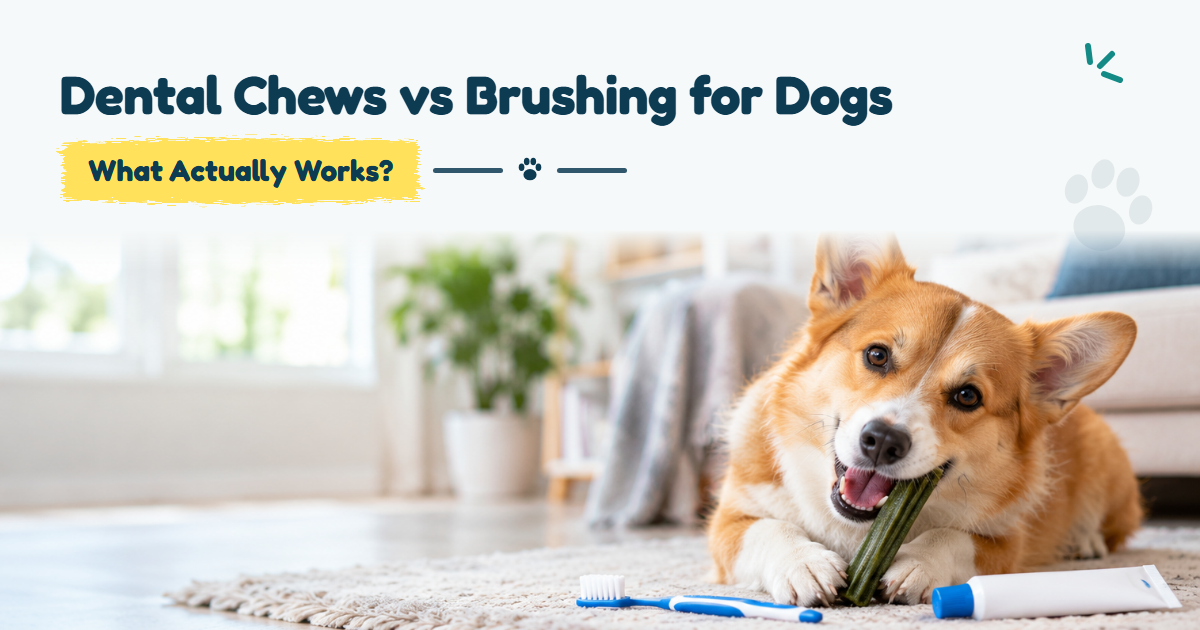
Dental chews are easy. You hand one over, your dog is happy, and it feels like you’ve done something good for their teeth. Brushing takes more effort, and many dogs don’t love it at first. So it’s fair to ask whether chews are enough. This guide compares dog dental chews vs brushing, explains what each one really does, and shows you how to build a simple routine that keeps your dog’s mouth healthy.
Table of Contents
- How Plaque and Tartar Build Up
- How Brushing Works
- How Dental Chews Work
- Dog Dental Chews vs Brushing: Side-by-Side
- What About Other Dental Products?
- How to Choose a Safe Dental Chew
- The Best Routine: Use Both
- How to Tell If Your Dog’s Dental Routine Is Working
- Common Mistakes to Avoid
- When Neither Is Enough
- Frequently Asked Questions
How Plaque and Tartar Build Up
To know what works, it helps to know what you’re fighting. Plaque is a soft coating of bacteria that builds up on teeth each day.. It’s easy to remove while it’s soft. Within a few days, though, it mixes with minerals in saliva and hardens into tartar. Tartar can’t be brushed or chewed off. Only a vet cleaning removes it.
The most important spot is the gumline. Plaque that sits there irritates the gums and, over time, leads to gum disease. If you want to know what that looks like, read our guide on signs of gum disease in dogs.
How Brushing Works
Brushing removes plaque by hand, before it has the chance to harden. The bristles reach the gumline and the small gaps between teeth.
Pros of Brushing
- Cleans the gumline, where gum disease starts
- Reaches every tooth, including the back ones
- Costs very little once you have a brush and toothpaste
- No extra calories
- Gives you a daily look at your dog’s mouth, so problems get caught early
Cons of Brushing
- Takes a few minutes every day
- Many dogs need training before they’ll accept it
- Hard to keep up when life gets busy
The training part is easier than most people think. Our 7-day plan for brushing a dog’s teeth helps even dogs who hate having their mouth touched.
How Dental Chews Work
Most dental chews work by scraping. As your dog chews, the texture rubs against the teeth and wipes off some plaque. Some chews also contain ingredients that slow tartar from forming.
Pros of Dental Chews
- Easy, with no training needed
- Dogs enjoy them
- Some products are tested and shown to reduce plaque or tartar
- Helpful on days you can’t brush
Cons of Dental Chews
- Mostly clean the tips and sides of the chewing teeth, not the gumline
- Dogs who gulp them get little cleaning benefit
- Add calories, which can lead to weight gain
- Some are too hard and can crack teeth
- Can be a choking risk if the size is wrong
- Cost adds up over time
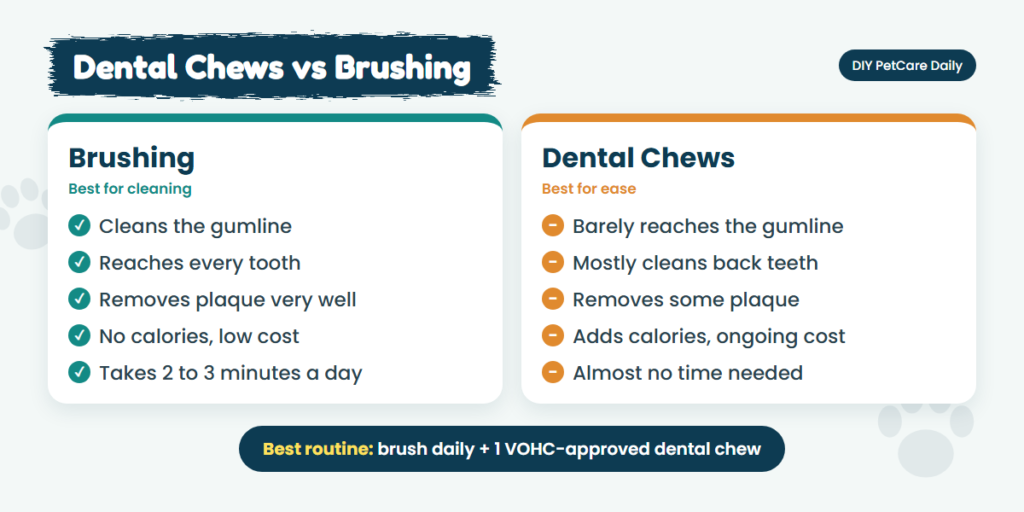
Dog Dental Chews vs Brushing: Side-by-Side
| What matters | Brushing | Dental chews |
| Cleans the gumline | Yes | Very little |
| Reaches all teeth | Yes | Mostly the back chewing teeth |
| Removes plaque | Very well, if done daily | Some |
| Removes hardened tartar | No | No |
| Daily time | 2 to 3 minutes | Almost none |
| Training needed | Yes, at first | No |
| Calories | None | Yes |
| Ongoing cost | Low | Medium to high |
Which One Wins?
Brushing wins on cleaning. Chews win on ease. The honest answer is that chews alone won’t prevent gum disease, but they do make a good routine better.
Which Option Fits Your Dog?
Every dog is different, so think about yours:
- Small and toy breeds: Their crowded teeth trap plaque fast, so daily brushing matters most. Pick small-size chews only.
- Dogs who gulp food: Chews do little for them and can be a choking risk. Focus on brushing or dental wipes.
- Puppies: Start brushing early while they’re easy to handle. Use soft, puppy-labeled chews during teething.
- Senior dogs: Brushing is still the best choice. Skip hard chews if your dog has worn or loose teeth.
- Dogs who won’t accept a brush yet: Use chews and wipes while you train them to accept the brush, a few minutes a day.
What About Other Dental Products?
Water Additives
You add these to your dog’s water bowl. Some help slow plaque a little. They’re easy, but some dogs drink less if they don’t like the taste.
Dental Wipes
Wipes are a middle step between nothing and brushing. They clean the outer tooth surfaces fairly well but don’t reach the gumline as well as bristles.
Dental Diets
Some prescription and special kibbles are made to scrub the teeth as your dog chews. They can help, especially for dogs who won’t accept brushing. Ask your vet if one fits your dog. If you make the change, follow our 10-day plan for switching dog food to avoid an upset stomach.
Chew Toys
Rubber chew toys keep dogs busy and may wipe off a little plaque. They aren’t a dental treatment on their own.
How to Choose a Safe Dental Chew
Not every chew sold as “dental” does much. Use this checklist:
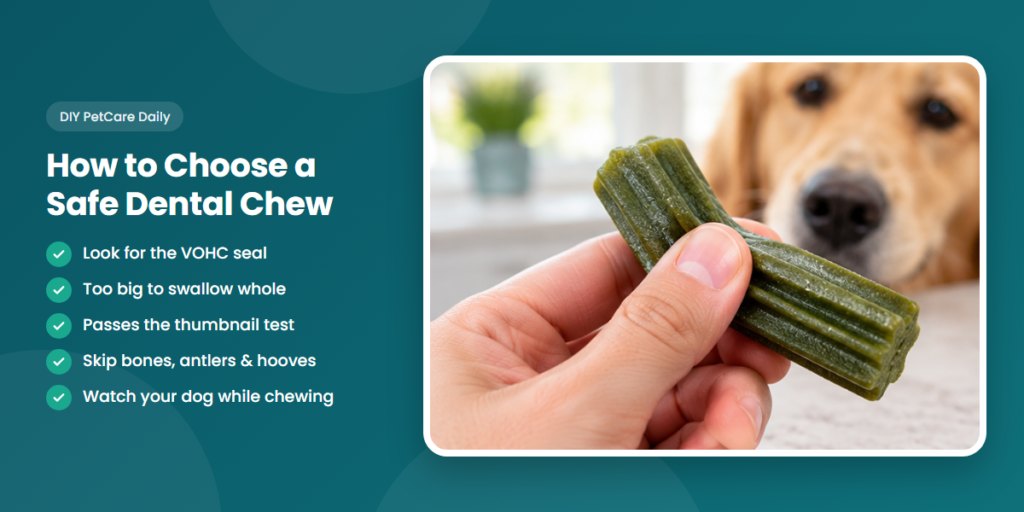
- Look for the VOHC seal. The Veterinary Oral Health Council seal on the pack means the product was tested and shown to reduce plaque or tartar.
- Pick the right size. It should be too big to swallow whole. Follow the weight guide on the package.
- Do the thumbnail test. If you can’t press a dent into it with your fingernail, it’s too hard and could break a tooth.
- Skip bones, antlers, and hooves. These are common causes of broken teeth.
- Count the calories. Cut back on treats or meals a little to make room for the chew. Our dog feeding chart by weight and age helps you adjust portions.
- Watch your dog chew. Take it away once it’s small enough to swallow.
The Best Routine: Use Both
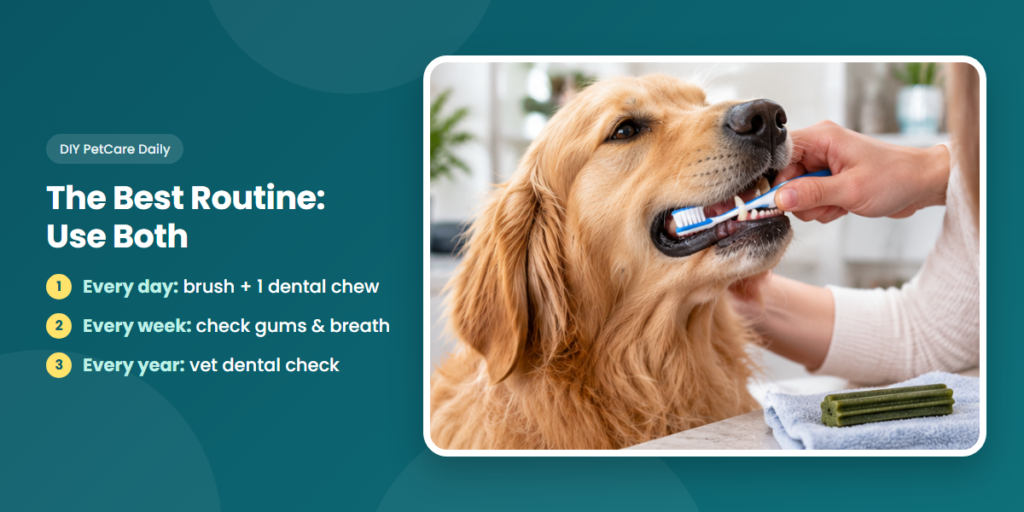
You don’t have to choose. Most vets suggest a mix.
Every Day
- Brush your dog’s teeth for about a minute, focusing on the outside of the teeth and the gumline.
- Give one VOHC-approved dental chew, sized for your dog.
Every Week
- Lift the lips and check the gums for redness, swelling, or tartar.
- Smell the breath. A new bad smell is worth a closer look.
Every Year
- Have a vet check the teeth and gums.
- Book a professional cleaning when your vet says it’s needed.
Teeth care is easier to remember when it’s part of a full routine. Our dog grooming schedule by coat type shows where brushing fits alongside nails, ears, and coat care.
How to Tell If Your Dog’s Dental Routine Is Working
Give any new routine about a month, then look for these signs:
- Breath smells milder, not sour
- Gums stay pink along the gumline, with no red line
- Less yellow or brown buildup on the back teeth
- No bleeding when you brush
- Your dog chews normally on both sides of the mouth
If things look the same or worse after a month, the routine isn’t enough, or there’s already tartar that only a vet can remove. Take a photo of the back teeth each month. It’s an easy way to spot slow changes you might miss day to day.
Common Mistakes to Avoid
- Thinking a chew a day means you can skip brushing. It slows plaque a little, but the gumline still gets missed.
- Using human toothpaste. It can contain fluoride and xylitol, and dogs swallow it. Use dog toothpaste only.
- Giving chews that are too small. Dogs swallow them in a few bites, which gives no cleaning and can cause choking.
- Only brushing the front teeth. Tartar builds up most on the big upper teeth at the back, so lift the lip and reach them.
- Waiting for bad breath. By the time breath smells strong, plaque has often turned into tartar. Start the routine early, ideally while your dog is still young.
When Neither Is Enough
If your dog already has heavy tartar, red or bleeding gums, loose teeth, or bad breath that won’t go away, home care won’t fix it. Tartar has to be removed by a vet under anesthesia. After the cleaning, brushing and chews help keep the teeth clean for longer. For more help, browse our Dog Teeth Care and Dog Food & Nutrition sections.
Frequently Asked Questions
Can dental chews replace brushing my dog’s teeth?
No. Chews clean some plaque from the chewing surfaces, but they don’t reach the gumline well. Brushing is still the most effective way to prevent gum disease at home.
How many dental chews can I give my dog a day?
Usually one a day. Check the package for your dog’s weight, and count the chew as part of their daily calories.
Are dental chews safe for puppies?
Some are made for puppies, but many adult chews are too hard or too big. Pick a chew labeled for puppies of your dog’s size, and always watch while they chew.
How often should I brush my dog’s teeth?
Daily is best, because plaque starts hardening into tartar within a few days. If you can’t manage daily, a few times a week still helps a lot.
Do dental chews help with bad breath?
They can freshen breath for a short time. But bad breath that keeps coming back is often a sign of plaque buildup or gum disease, so it’s worth a vet check.
This article is for general information and does not replace advice from your veterinarian.