Table of Contents
- Table of Contents
- Why Fruits and Veggies Make Good Dog Treats
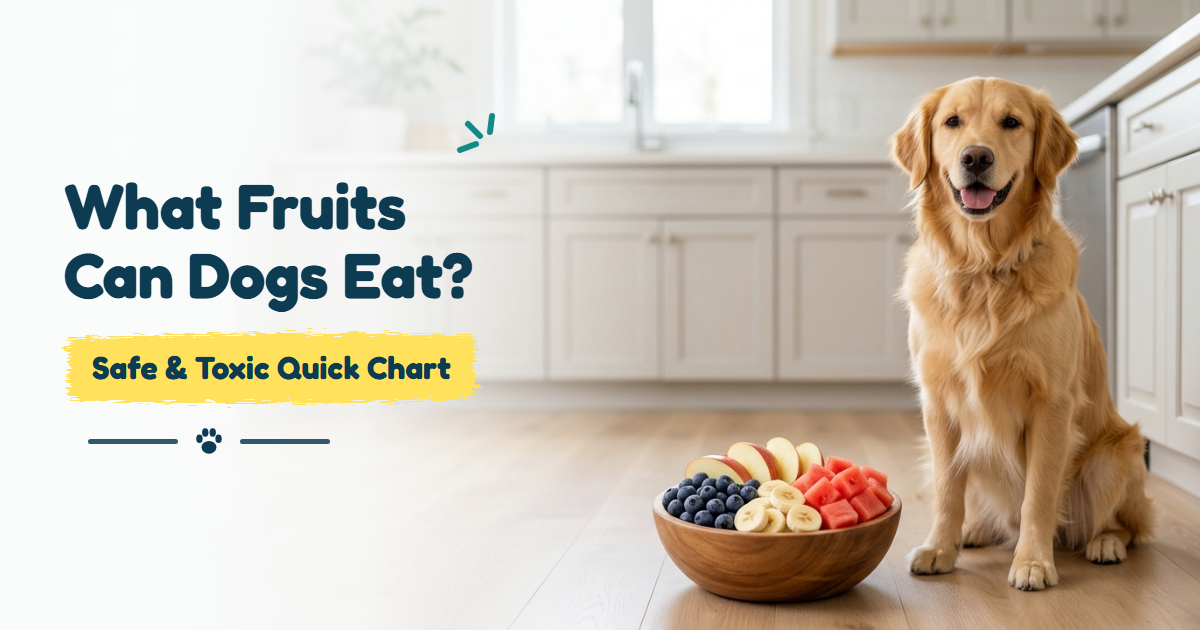
- What Fruits Can Dogs Eat? Quick Chart
- A Closer Look at the Best Fruits for Dogs
- Fruits Dogs Cannot Eat
- Vegetables Dogs Can Eat: Quick Chart
- Vegetables Dogs Cannot Eat
- How Much Fruit Can a Dog Have? Serving Sizes by Size
- How to Prepare Fruits and Veggies for Your Dog
- Watch Out for Xylitol
- What to Do If Your Dog Eats Something Toxic
- Adding Fruits and Veggies to Meals
- Frequently Asked Questions
Quick answer: Safe fruits dogs can eat include apples (no core or seeds), bananas, blueberries, strawberries, seedless watermelon, cantaloupe, mango (no pit), and pineapple. Safe vegetables include carrots, green beans, cucumber, peas, plain pumpkin, and cooked sweet potato. Never give grapes, raisins, onions, garlic, leeks, or chives, since even small amounts can make dogs very sick. Keep all fruit and veggie treats to about 10 percent of your dog’s daily calories.
Your dog stares at you while you slice an apple, and you start to wonder: can they have a piece? Often the answer is yes. Many fruits and vegetables make healthy, low-calorie treats for dogs. But a few common foods in your kitchen can be dangerous, even in small amounts.
So, what fruits can dogs eat, and which ones should stay off the menu? This guide gives you a quick reference chart of fruits dogs can eat, vegetables that are safe, and the ones to keep off the menu. You’ll also find serving sizes by dog size and simple prep tips so treat time stays safe.
Table of Contents
- Why Fruits and Veggies Make Good Dog Treats
- What Fruits Can Dogs Eat? Quick Chart
- A Closer Look at the Best Fruits for Dogs
- Fruits Dogs Cannot Eat
- Vegetables Dogs Can Eat: Quick Chart
- Vegetables Dogs Cannot Eat
- How Much Fruit Can a Dog Have? Serving Sizes by Size
- How to Prepare Fruits and Veggies for Your Dog
- Watch Out for Xylitol
- What to Do If Your Dog Eats Something Toxic
- Adding Fruits and Veggies to Meals
- Frequently Asked Questions
Why Fruits and Veggies Make Good Dog Treats
Dogs don’t need fruits and vegetables if they eat a complete and balanced dog food. But as treats, the right ones offer real benefits:
- Low in calories. A baby carrot has about 4 calories. A typical store-bought biscuit can have 30 to 100.
- High in water and fiber. Good for hydration and regular digestion.
- Full of vitamins and antioxidants. Blueberries, for example, are packed with them.
- Great for training. Small pieces of fruit or veggie work well as quick rewards.
They’re especially useful for dogs who need to lose weight. Swapping a few biscuits for green beans or cucumber slices can cut a surprising number of calories. Our guide on how much should I feed my dog explains how treats fit into your dog’s daily total.
What Fruits Can Dogs Eat? Quick Chart
| Fruit | Safe? | How to Serve |
| Apples | Yes | Remove the core and seeds. Slice thin. |
| Bananas | Yes, in small amounts | Peeled, a few slices. High in sugar. |
| Blueberries | Yes | Fresh or frozen, whole for medium and large dogs. |
| Strawberries | Yes | Remove the stem. Cut into pieces. |
| Watermelon | Yes | Seedless, no rind. Cubed. |
| Cantaloupe | Yes | No rind or seeds. Cubed. |
| Mango | Yes | Peeled, no pit. Small cubes. |
| Pineapple | Yes | Fresh only, peeled and cored. No canned in syrup. |
| Pears | Yes | Remove the core and seeds. |
| Peaches | Yes, flesh only | Remove the pit completely. Fresh, not canned. |
| Oranges | Yes, a little | Peeled, seeds removed, a segment or two. |
| Raspberries and blackberries | Yes, a few | Small handful at most. |
| Cranberries | Yes, a few | Plain fresh or dried, no added sugar. |
| Kiwi | Yes, a little | Peeled, small pieces. |
| Grapes, raisins, currants | No, toxic | Never give. Can cause kidney failure. |
| Cherries | No | Pits, stems, and leaves contain cyanide. |
| Avocado | No | Large pit is a choking risk. Skin and pit can upset the stomach. |
| Plums, apricots, persimmons | Not recommended | Pits can block the gut. Seeds and pits contain toxins. |
| Star fruit | No | Contains oxalates that can harm the kidneys. |
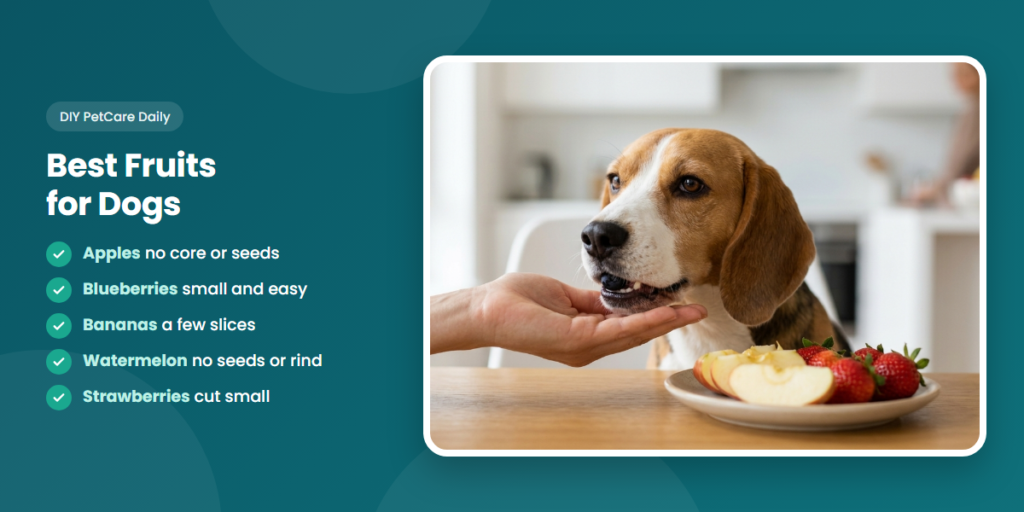
A Closer Look at the Best Fruits for Dogs
Apples
Apples are crunchy, sweet, and full of fiber and vitamin C. Always cut out the core and seeds. Apple seeds contain a small amount of a compound that releases cyanide, and the core can be a choking hazard.
Blueberries
Blueberries are one of the easiest dog treats there is. They’re small, low in calories, and loaded with antioxidants. Frozen blueberries make a cool summer snack. For tiny dogs, cut them in half.
Bananas
Bananas are high in potassium and fiber, but also in sugar. Give a few thin slices, not a whole banana. Too much can cause constipation.
Watermelon and Cantaloupe
Both are mostly water, which makes them perfect on hot days. Remove all seeds and the rind. The rind is hard to digest and can cause a blockage.
Strawberries
Strawberries have fiber and vitamin C. Cut them into small pieces, especially for small dogs, and skip anything coated in sugar or chocolate.
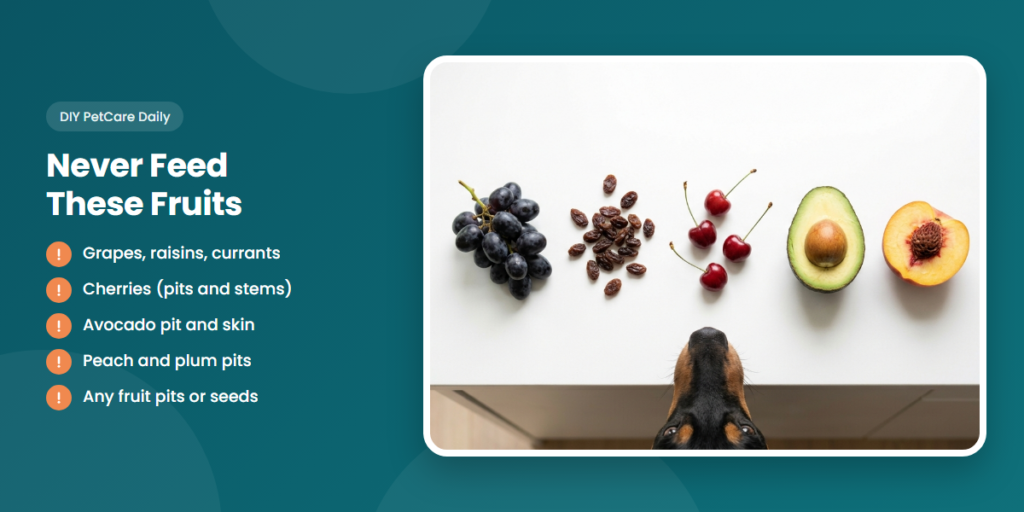
Fruits Dogs Cannot Eat
Grapes, Raisins, and Currants
These are the most important ones to remember. Grapes and raisins can cause sudden kidney failure in dogs, and there’s no known safe amount. Some dogs get sick after eating just a few. Research points to tartaric acid in grapes as the likely cause, and dogs seem to vary a lot in how sensitive they are.
Watch out for hidden raisins in trail mix, cereal, bagels, cookies, and baked goods. Signs of grape poisoning include vomiting, diarrhea, weakness, not eating, and drinking or peeing less. These can show up within a few hours to a day. Want to bake for your dog this season? Our dog Christmas cookies are raisin-free and dog-safe.
Cherries
Cherry flesh isn’t toxic, but the pits, stems, and leaves contain cyanide, and pits can also block a dog’s intestines. It’s simpler to skip cherries completely.
Avocado
Avocado contains persin, which is a bigger problem for birds and horses than dogs. The real risk for dogs is the large pit, which can cause choking or a gut blockage. The skin and high fat content can also cause stomach upset or, in some dogs, pancreatitis.
Fruits With Pits
Peaches, plums, apricots, and persimmons have pits or seeds that can block the intestines, and some contain cyanide compounds. A small piece of peach flesh is fine, but always remove the pit and never let your dog chew on it.
Vegetables Dogs Can Eat: Quick Chart
| Vegetable | Safe? | How to Serve |
| Carrots | Yes | Raw or cooked. Baby carrots make good chews. |
| Green beans | Yes | Plain, fresh, frozen, or canned with no added salt. |
| Cucumber | Yes | Sliced. Great low-calorie snack. |
| Peas | Yes | Green, snap, or snow peas. Skip canned peas with added salt. |
| Pumpkin | Yes | Plain cooked or canned pure pumpkin, not pie filling. |
| Sweet potato | Yes, cooked | Baked or boiled, no butter or seasoning. Never raw. |
| Broccoli | Yes, small amounts | Small pieces. Too much can upset the stomach. |
| Cauliflower | Yes, small amounts | Plain, cooked or raw. Can cause gas. |
| Celery | Yes | Cut into small pieces to prevent choking. |
| Zucchini | Yes | Raw or cooked, plain. |
| Bell peppers | Yes | Seeds and stem removed. Red ones have the most vitamins. |
| Spinach | Yes, a little | Small amounts only. |
| Brussels sprouts | Yes, a little | Cooked and plain. Can cause lots of gas. |
| Corn kernels | Yes | Plain kernels only. Never the cob. |
| Onions, garlic, leeks, chives | No, toxic | Damage red blood cells. Cooked, raw, or powdered. |
| Wild mushrooms | No | Some are deadly. Plain store-bought ones are usually fine, but skip them to be safe. |
| Raw or green potatoes | No | Contain solanine. Plain cooked potato is OK in small amounts. |
| Rhubarb | No | Leaves and stalks contain oxalates. |
| Tomato plants and green tomatoes | No | Leaves, stems, and unripe fruit contain solanine. A bite of ripe red tomato is OK. |
Vegetables Dogs Cannot Eat
Onions, Garlic, Leeks, and Chives
These belong to the allium family. They damage a dog’s red blood cells and can cause a type of anemia. It doesn’t matter if they’re raw, cooked, dried, or powdered. Onion and garlic powder hide in many human foods, including soups, gravy, baby food, pizza, and seasoned meats. That’s one big reason not to share table scraps.
Signs can take a few days to show and include weakness, pale gums, fast breathing, red or brown urine, and low energy. Japanese breeds such as Akitas and Shiba Inus are known to be more sensitive.
Corn on the Cob
Plain corn kernels are fine. The cob is the danger. Dogs often swallow chunks of it, and it can get stuck in the intestines. This is one of the most common blockage surgeries vets see in summer.
Raw Potatoes and Tomato Plants
Raw and green potatoes, plus tomato leaves and stems, contain solanine, which can cause stomach upset, weakness, and confusion. Ripe red tomatoes and plain cooked potatoes are fine in small amounts.
How Much Fruit Can a Dog Have? Serving Sizes by Size
Follow the 10 percent rule: treats of any kind, including fruits and vegetables, should make up no more than 10 percent of your dog’s daily calories. These amounts are a good everyday guide.
| Dog Size | Example Breeds | Fruit or Veggie Treat per Day |
| Extra small (2 to 10 lbs) | Chihuahua, Yorkie | 1 to 2 small pieces (bite-size) |
| Small (11 to 20 lbs) | Pug, Dachshund, Shih Tzu | 2 to 3 small pieces |
| Medium (21 to 50 lbs) | Beagle, Border Collie, Bulldog | 5 to 6 small pieces |
| Large (51 to 90 lbs) | Labrador, Boxer, German Shepherd | A small handful |
| Extra large (91+ lbs) | Great Dane, Mastiff | A large handful |
Start with one or two pieces the first time you give a new food. Some dogs get gas or loose stools from a new fruit or veggie, especially high-fiber ones.
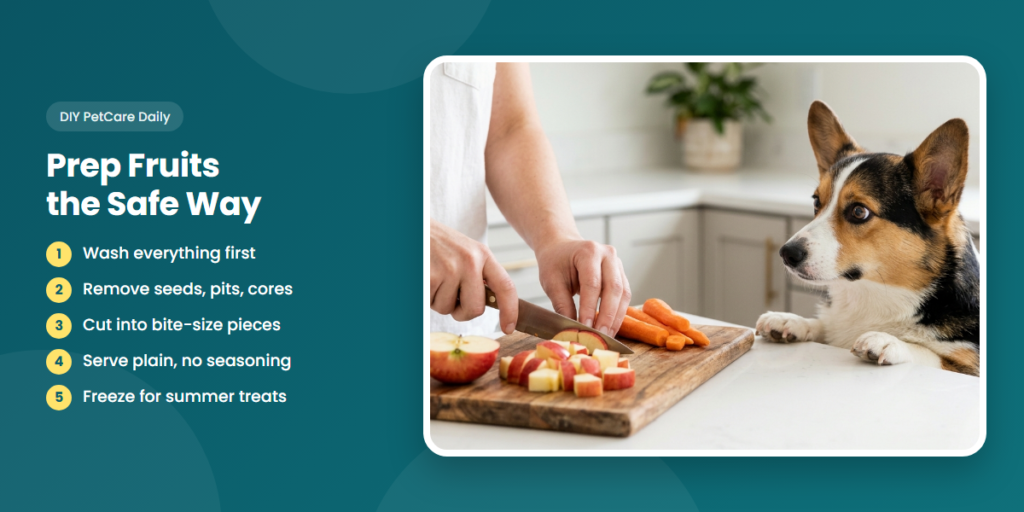
How to Prepare Fruits and Veggies for Your Dog
- Wash everything to remove pesticides and dirt.
- Remove seeds, pits, cores, stems, and rinds.
- Cut into bite-size pieces that match your dog’s size, so they can’t choke.
- Serve plain. No salt, butter, oil, sugar, garlic, or seasoning.
- Steam or cook hard veggies like sweet potato, squash, and broccoli for easier digestion.
- Freeze for summer treats. Frozen blueberries, banana slices, or watermelon cubes are a hit.
- Skip canned fruit in syrup and anything with added sugar.
Watch Out for Xylitol
Xylitol is a sugar substitute that’s very toxic to dogs. It can cause a fast drop in blood sugar and liver failure. It’s not in fresh fruit, but it can show up in fruit products like sugar-free yogurt, jams, baked goods, fruit snacks, gum, and some peanut butters. Always check labels before sharing a fruit-flavored human food.
What to Do If Your Dog Eats Something Toxic
- Stay calm and remove any leftover food so your dog can’t eat more.
- Figure out what and how much your dog ate, and when.
- Call your vet or an emergency vet right away. You can also call the ASPCA Animal Poison Control Center at (888) 426-4435 or the Pet Poison Helpline at (855) 764-7661. A consultation fee may apply.
- Don’t make your dog vomit unless a vet tells you to.
Act fast with grapes, raisins, and xylitol. Treatment works best when it starts early, often before signs show up.
If your dog has an upset stomach after trying a new food, our dog poop color chart can help you tell when a change in stool needs a vet visit.
Adding Fruits and Veggies to Meals
You can mix a spoonful of plain pumpkin, chopped green beans, or a few blueberries into your dog’s regular food to add variety. Keep the amount small so it doesn’t throw off their balanced diet. If you’re planning a bigger change to your dog’s diet, our guide on how to switch dog food shows how to do it slowly.
For more guides on what and how to feed your dog, visit our Dog Food & Nutrition section.
Frequently Asked Questions
What fruits can dogs eat safely?
Safe fruits for dogs include apples (no core or seeds), bananas, blueberries, strawberries, seedless watermelon, cantaloupe, mango, pineapple, pears, and peeled oranges. Serve them plain, in small pieces, and in small amounts.
What fruit is toxic to dogs?
Grapes, raisins, and currants are the most dangerous fruits for dogs because they can cause kidney failure. Cherries, avocado, and fruits with pits like plums and apricots should also be avoided because of cyanide compounds and choking or blockage risks.
Can dogs eat bananas every day?
A few slices a day is fine for most dogs, but bananas are high in sugar, so they’re best as an occasional treat. Too much banana can cause constipation or weight gain.
What vegetables are bad for dogs?
Onions, garlic, leeks, and chives are toxic to dogs in any form, including powders. Also avoid wild mushrooms, raw or green potatoes, rhubarb, tomato leaves and stems, and corn cobs.
Can puppies eat fruits and vegetables?
Yes, puppies can have small pieces of safe fruits and veggies, like blueberries, apple slices, or carrots. Keep the amount very small, since puppies need most of their calories from complete puppy food, and cut pieces tiny to prevent choking.