Table of Contents
- Table of Contents
- What Is Bordetella (Kennel Cough)?
- Does My Dog Need the Bordetella Vaccine?
- Types of Bordetella Vaccines
- Bordetella Vaccine Schedule
- Bordetella Vaccine Side Effects
- Can a Vaccinated Dog Get Kennel Cough?
- What to Do If Your Dog Has Kennel Cough
- Bordetella Vaccine Cost
- Is the Bordetella Vaccine Required by Law?
- Frequently Asked Questions
Quick answer: The Bordetella vaccine helps protect dogs against kennel cough, a contagious cough that spreads where dogs gather. It’s recommended for dogs who go to boarding kennels, daycare, groomers, dog parks, or training classes, and most of those places require it. It comes as nose drops, a liquid placed in the mouth, or a shot. Most dogs need a booster every year, and some facilities ask for one every 6 months. Side effects are usually mild, like a few days of sneezing.
If you’ve ever booked a boarding kennel, a grooming visit, or a puppy class, you’ve probably been asked, “Is your dog up to date on Bordetella?” Often called the kennel cough vaccine, it’s one of the most commonly required dog vaccines in the US, even though it isn’t required by law.
This guide explains what the Bordetella vaccine protects against, which dogs need it, the different types, how often to give it, what side effects to expect, and how much it usually costs.
Table of Contents
- What Is Bordetella (Kennel Cough)?
- Does My Dog Need the Bordetella Vaccine?
- Types of Bordetella Vaccines
- Bordetella Vaccine Schedule
- Bordetella Vaccine Side Effects
- Can a Vaccinated Dog Get Kennel Cough?
- What to Do If Your Dog Has Kennel Cough
- Bordetella Vaccine Cost
- Is the Bordetella Vaccine Required by Law?
- Frequently Asked Questions
What Is Bordetella (Kennel Cough)?
Bordetella bronchiseptica is a type of bacteria that infects a dog’s airways. It’s one of the main causes of kennel cough, which vets also call canine infectious respiratory disease. Kennel cough is usually caused by a mix of germs, including Bordetella, parainfluenza virus, adenovirus, canine influenza, and others.
How Kennel Cough Spreads
Kennel cough spreads through:
- Coughing and sneezing (tiny droplets in the air)
- Nose-to-nose contact
- Shared water bowls, toys, and surfaces
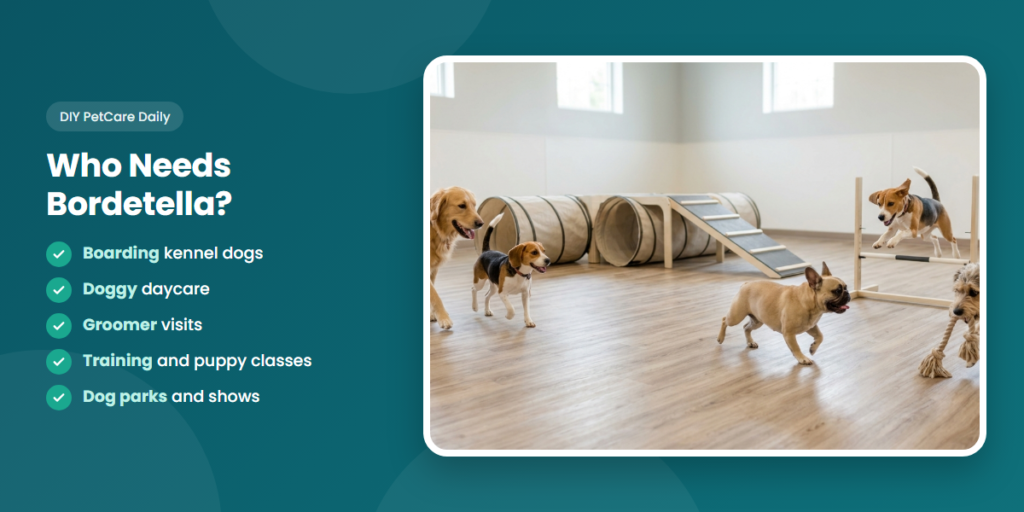
That’s why it spreads fast in places where many dogs are close together, like kennels, daycares, shelters, groomers, dog parks, and dog shows.
Kennel Cough Symptoms
- A loud, honking cough, often worse with excitement or pulling on the leash
- Gagging or retching, sometimes bringing up white foam
- Sneezing and a runny nose
- Mild tiredness
- Normal appetite in most dogs
Most healthy adult dogs recover in 1 to 3 weeks. But puppies, senior dogs, flat-faced breeds, and dogs with other health problems can develop pneumonia, which needs prompt vet care.
Does My Dog Need the Bordetella Vaccine?
Bordetella is a lifestyle vaccine, not a core vaccine. Whether your dog needs it depends on how much time they spend around other dogs.
| Your Dog | Bordetella Vaccine? |
| Goes to boarding kennels | Yes, almost always required |
| Goes to doggy daycare | Yes, almost always required |
| Visits groomers | Yes, often required |
| Goes to training classes or puppy classes | Yes, often required |
| Visits dog parks or dog beaches | Recommended |
| Goes to dog shows or sports events | Recommended |
| Lives in a shelter or foster home | Recommended |
| Rarely meets other dogs | Often optional; ask your vet |
Even if your dog doesn’t board, the vaccine can be a good idea if they meet lots of dogs on walks or at the park. Your vet will help you decide.
Types of Bordetella Vaccines
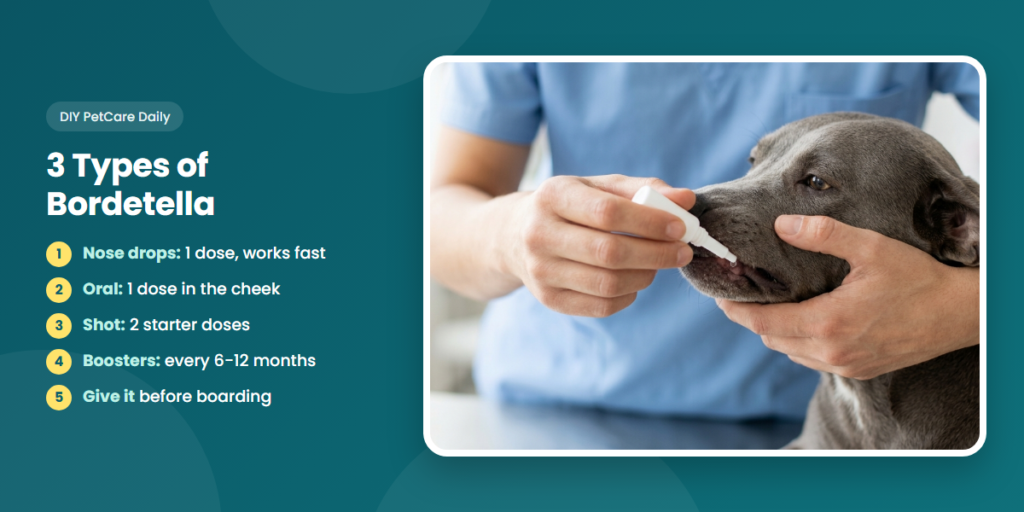
There are three ways to give the Bordetella vaccine. All three work, but they differ in how fast they protect and how many doses they need.
| Type | How It’s Given | Starter Doses | How Fast It Works | Things to Know |
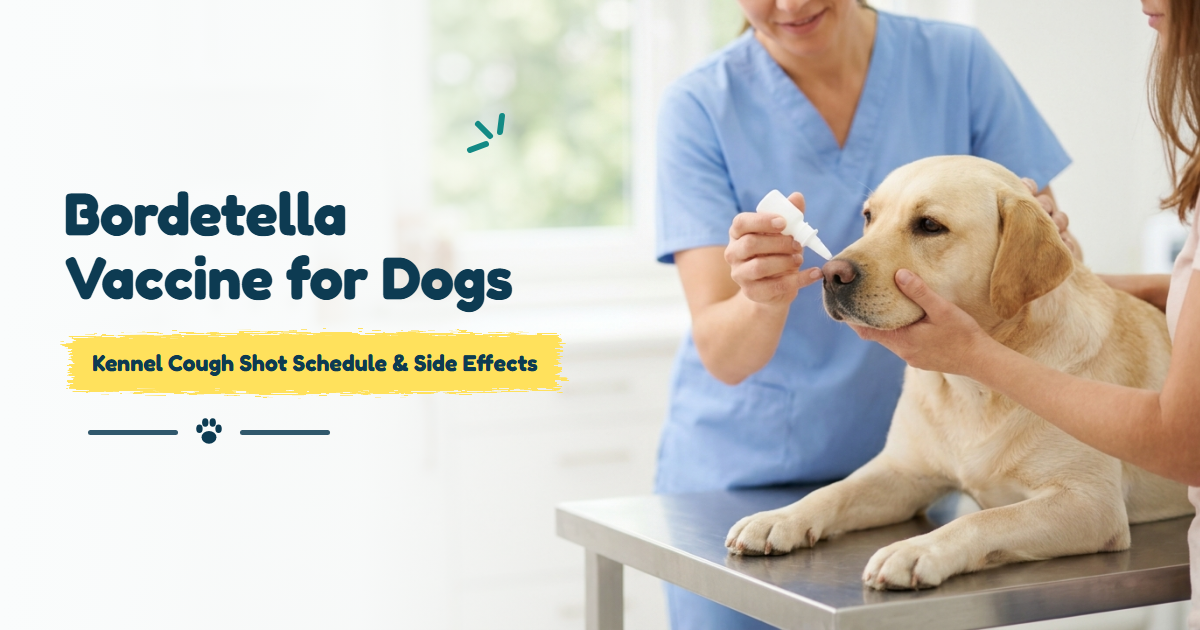
| Intranasal | Drops squirted into the nose | 1 dose | Often within about 3 days | Works right where the germs enter; may cause sneezing for a few days; often combined with parainfluenza |
| Oral | Liquid placed inside the cheek | 1 dose | Within about a week | Easier for dogs who hate nose drops |
| Injectable | Shot under the skin | 2 doses, 2 to 4 weeks apart | About 1 to 2 weeks after the second dose | Good for dogs who won’t tolerate nose or mouth drops |
Many vets prefer the intranasal Bordetella vaccine or the oral Bordetella vaccine because they protect the airways directly and work quickly. Your vet will choose based on your dog’s age, temperament, and schedule.
Bordetella Vaccine Schedule
Puppies
Puppies can usually get the intranasal or oral Bordetella vaccine as early as 3 to 8 weeks of age, depending on the brand. The injectable version is usually started at 8 weeks or older and needs two doses.
Many vets give Bordetella around the same time as the first DHPP shots, especially if the puppy will start puppy classes, grooming, or daycare early. Our full dog vaccination schedule shows how it fits in with the other puppy shots.
Adult Dogs
| Situation | How Often |
| Most adult dogs at risk | Once a year |
| Dogs who board, go to daycare, or show often | Every 6 to 12 months (some facilities require every 6 months) |
| Adult dog with no Bordetella history | 1 dose (nose or mouth) or 2 doses (shot), then yearly |
Timing Before Boarding
Plan ahead. Most facilities want the vaccine given at least 3 to 7 days before your dog’s stay, and sometimes 2 weeks for the injectable type. If you’re booking a trip, check your dog’s records early and ask the facility what they require.
Bordetella Vaccine Side Effects
Most dogs handle the Bordetella vaccine well.
Common, mild side effects (usually 1 to 3 days):
- Sneezing or a runny nose (mostly after the nose-drop type)
- A mild cough
- Slight tiredness
- Soreness or a small lump at the injection site (shot type)
Call your vet if:
- The cough lasts more than a few days or gets worse
- Your dog stops eating or seems very tired
- There’s thick yellow or green nasal discharge
Go to an emergency vet right away if you see signs of an allergic reaction:
- Swelling of the face, muzzle, or around the eyes
- Hives or very itchy skin
- Vomiting or diarrhea soon after the vaccine
- Trouble breathing or collapse
Serious reactions are rare and usually happen within minutes to a few hours.
Can a Vaccinated Dog Get Kennel Cough?
Yes. Kennel cough is caused by many different germs, and the Bordetella vaccine only covers some of them. Also, no vaccine is 100 percent effective. But vaccinated dogs who catch kennel cough usually have milder symptoms and recover faster.
To lower the risk even more:
- Keep your dog up to date on the core vaccines, which include parainfluenza and adenovirus
- Ask your vet about the canine influenza vaccine if your dog is very social
- Avoid shared water bowls at parks
- Keep your dog home if they’re coughing, so they don’t spread it
Bordetella vs Canine Flu Vaccine
These two are often confused. The Bordetella vaccine targets a bacteria, while the canine influenza vaccine targets the dog flu virus. Both cause coughing and spread where dogs gather, so many daycares and kennels now ask for both.
| Bordetella Vaccine | Canine Influenza Vaccine | |
| Protects against | Bordetella bacteria (kennel cough) | Dog flu viruses (H3N2 and H3N8) |
| Starter doses | 1 (nose or mouth) or 2 (shot) | 2 shots, 2 to 4 weeks apart |
| Boosters | Every 6 to 12 months | Every year |
| Commonly required by | Most kennels, daycares, groomers | Some kennels and daycares |
What to Do If Your Dog Has Kennel Cough
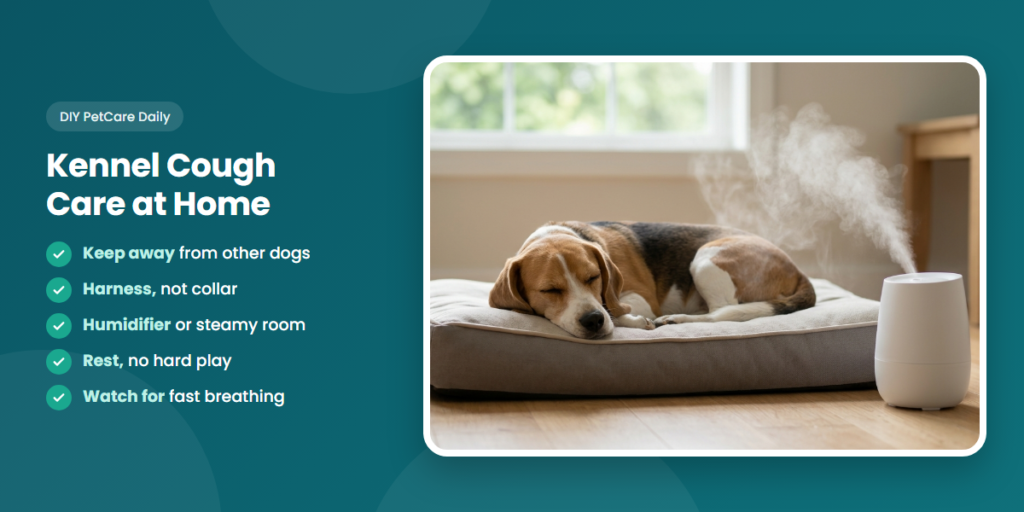
- Call your vet to confirm it’s kennel cough and not something else, like heart disease or a collapsing trachea.
- Keep your dog away from other dogs for at least 1 to 2 weeks after the cough stops.
- Use a harness instead of a collar to avoid pressure on the throat.
- Run a humidifier or let your dog sit in a steamy bathroom to soothe the airways.
- Let them rest and skip hard exercise.
- Watch for warning signs like fast breathing, fever, low energy, or not eating, which can point to pneumonia. Our guide on normal heart rate for dogs explains normal breathing rates and temperature.
Never give human cough medicine without your vet’s okay. Many contain ingredients that are dangerous for dogs.
Bordetella Vaccine Cost
| Service | Typical US Cost |
| Bordetella vaccine (one dose) | $20 to $45 |
| Vet exam (if needed) | $50 to $90 |
| Low-cost vaccine clinic | $15 to $30 |
Some boarding and daycare facilities partner with local vets or host vaccine clinics, so it’s worth asking.
Is the Bordetella Vaccine Required by Law?
No. Rabies is the only dog vaccine required by law in nearly every US state. But most boarding kennels, daycares, groomers, and training facilities require Bordetella, and many also require DHPP and rabies. Some ask for proof of a Bordetella vaccine within the last 6 months.
For more guides on keeping your dog healthy, visit our Dog Health & Wellness section.
Frequently Asked Questions
What does the Bordetella vaccine protect against?
The Bordetella vaccine protects against Bordetella bronchiseptica, one of the main bacteria behind kennel cough. Some nose-drop versions also protect against parainfluenza virus, another common cause.
How often do dogs need Bordetella?
Most dogs need a Bordetella booster once a year. Dogs who board, go to daycare, or attend shows often may need it every 6 months, depending on the facility’s rules and your vet’s advice.
Which Bordetella vaccine is best: nasal, oral, or shot?
All three work. Nose-drop and oral types usually need just one dose and protect faster, often within days. The shot needs two starter doses but can be easier for dogs who won’t tolerate drops. Your vet will help you choose.
How long after the Bordetella vaccine can my dog board?
Most facilities want the vaccine given at least 3 to 7 days before boarding. The injectable type may need up to 2 weeks after the second dose to fully work. Always check your facility’s rules.
Can the Bordetella vaccine cause a cough?
Yes, sometimes. The nose-drop type can cause mild sneezing, a runny nose, or a light cough for a few days. If the cough lasts longer or your dog seems unwell, call your vet.