Table of Contents
Quick answer: Here’s how to tell how old a cat is: check their teeth first, then their eyes, coat, and muscle. Kittens are easiest because of clear growth milestones, including adult teeth that are usually all in by about 6 months. Adult cats are harder to age, so expect an estimated range rather than an exact number.
If you’ve rescued a stray or adopted an adult cat from a shelter, you may have no record of your new friend’s birthday. Unfortunately, cats don’t make it easy. A healthy 8-year-old can look just like a 3-year-old.
Even so, there are plenty of clues. Together they can give you a useful estimate, and that helps you choose the right food, vaccines, and vet care. This guide covers what to check at every age, from newborn kittens to older cats, plus how a vet can narrow things down.
Table of Contents
- How to Tell How Old a Cat Is by Age Group
- How to Tell a Kitten’s Age
- How to Tell a Cat’s Age by Their Teeth
- Eyes: Another Useful Clue
- Coat and Skin
- Muscles and Body Shape
- How Vets Estimate a Cat’s Age
- Why Knowing Your Cat’s Age Matters
- Frequently Asked Questions
How to Tell How Old a Cat Is by Age Group
Start by working out which group your cat seems to fit, then use the details below.
| Life Stage | Approximate Age | Main Clues |
| Newborn kitten | Under 2 weeks | Eyes closed or just opening, can’t walk, under 1/2 lb |
| Young kitten | 2 to 8 weeks | Baby teeth coming in, wobbly walking, blue eyes |
| Older kitten | 2 to 6 months | Adult teeth coming in, about 1 lb per month of age |
| Young adult | 6 months to 2 years | Clean white teeth, soft fur, clear eyes, lots of energy |
| Adult | 3 to 6 years | Some tartar, firm body, steady energy |
| Mature adult | 7 to 10 years | More tartar, possibly less active |
| Senior | Over 10 years | Worn or missing teeth, cloudy eyes, thin body, coarse coat |
Once you have a rough idea, our cat age calculator converts it into human years. It also has an option for when your age is a guess.
How to Tell a Kitten’s Age
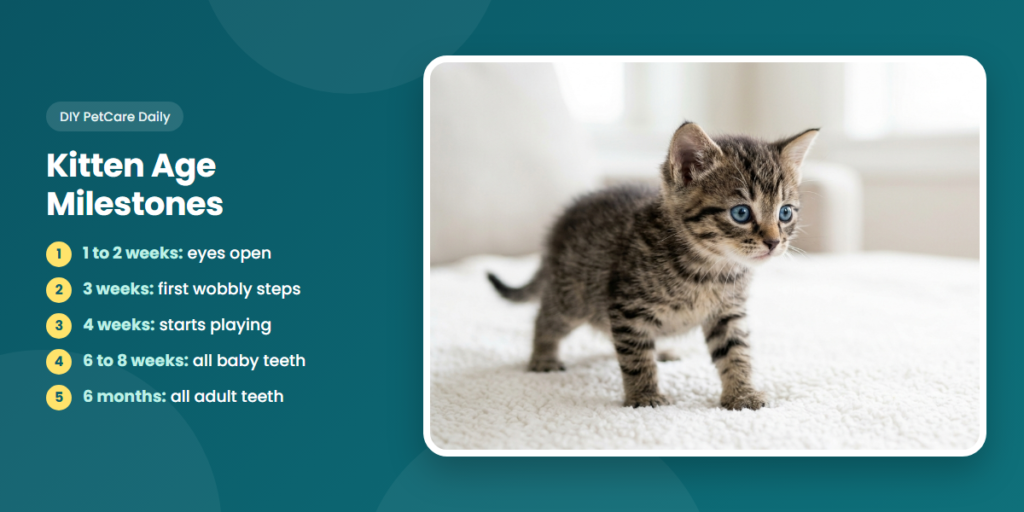
Kittens are much easier to age than adults, since they change so quickly. Each week brings new milestones.
| Age | Weight (About) | What You’ll See |
| Birth to 1 week | 3 to 8 oz | Eyes closed, ears folded, umbilical cord may still be attached |
| 1 to 2 weeks | 6 to 10 oz | Eyes start to open at about 7 to 14 days; eyes are blue |
| 2 to 3 weeks | 8 to 12 oz | Ears open and stand up, baby teeth start to appear, first wobbly steps |
| 3 to 4 weeks | 12 to 16 oz | Walking more steadily, starting to play |
| 4 to 6 weeks | 1 to 1.5 lb | Starting to use the litter box and eat wet food |
| 6 to 8 weeks | 1.5 to 2 lb | All baby teeth are in; eye color starts to change |
| 3 months | About 3 lb | Adult incisors start coming in |
| 4 months | About 4 lb | Adult canines start coming in |
| 6 months | About 5 to 6 lb | All adult teeth are usually in |
A rough rule is about 1 pound per month of age for the first several months. Sick, stray, or underfed kittens often weigh less, so check the other clues too.
Very young kittens need urgent help. A kitten under 4 weeks old needs bottle feeding and warmth, and can go downhill quickly. Call a vet or local rescue right away if you find one without their mother.
How to Tell a Cat’s Age by Their Teeth
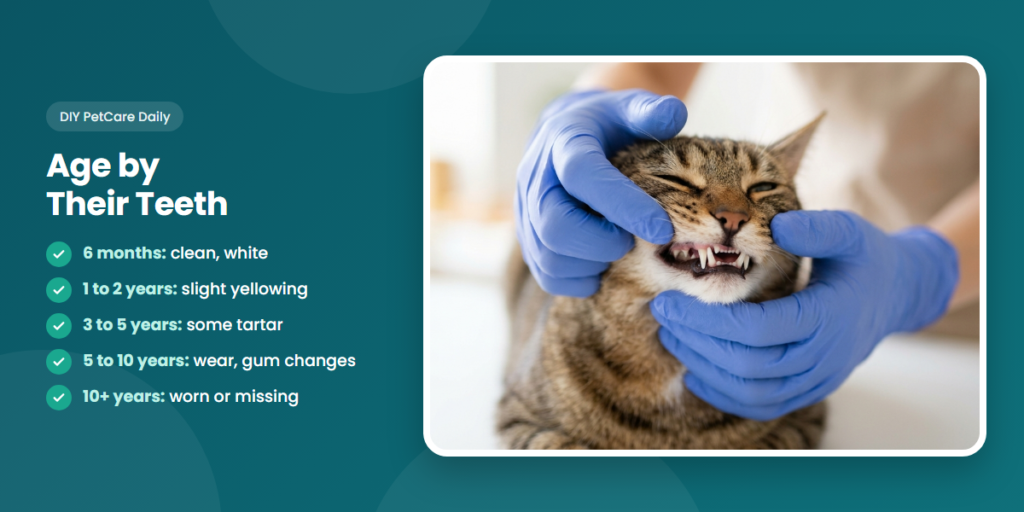
Teeth are one of the most useful clues. Kittens have 26 baby teeth, and adult cats have 30 permanent teeth.
| Approximate Age | How the Teeth Usually Look |
| 2 to 4 weeks | Tiny baby incisors and canines come in |
| 6 to 8 weeks | All baby teeth are in |
| 3 to 6 months | Baby teeth fall out and adult teeth come in |
| 6 months to 1 year | Clean, bright white adult teeth |
| 1 to 2 years | White teeth, maybe slight yellowing on the back teeth |
| 3 to 5 years | Yellowing and tartar on some teeth |
| 5 to 10 years | More tartar, some wear, possible gum disease |
| 10 years or older | Heavy tartar, worn teeth, some teeth may be missing |
Teeth can only give you a range. Diet, genetics, and dental care all play a part, so a young cat can have the mouth of a much older one. Tooth resorption is also common and can cause missing teeth even in middle-aged cats.
If your cat’s gums look red or swollen, it may be a health issue. Our guide to the signs of dental disease in cats can help, and so can our guide on why a cat’s breath may smell.
Be gentle. Only check the teeth of a calm cat who trusts you. Gently lift the lip with a finger. Leave it to your vet if your cat is nervous, in pain, or new to you.
Eyes: Another Useful Clue
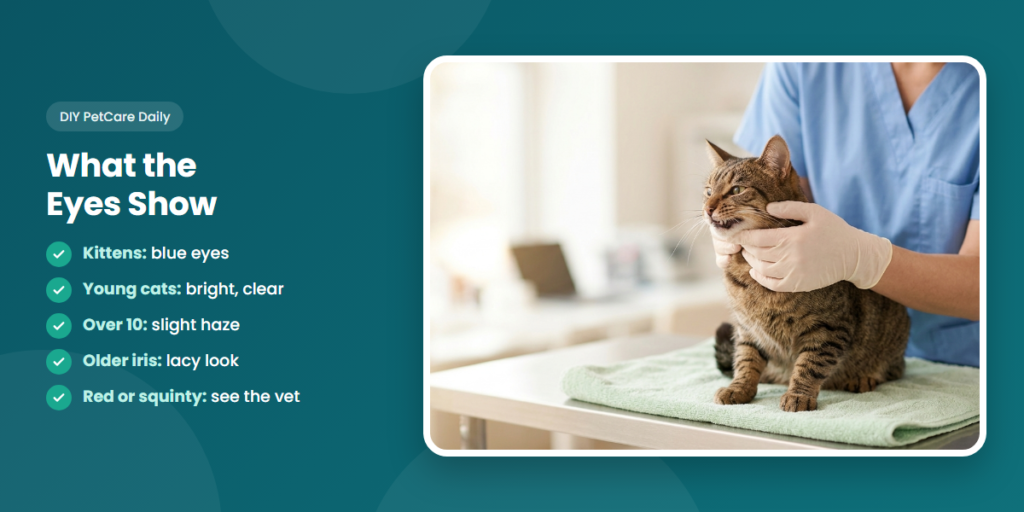
Eyes change gradually as cats age.
- Young cats: Eyes are bright and clear, with a smooth iris (the colored part).
- Kittens: All kittens are born with blue eyes. Adult color starts to appear at about 6 to 7 weeks and can continue to change for several months.
- Older cats: Many cats over about 10 develop a slight haze in the lens, called lenticular sclerosis. It’s usually a normal part of aging.
- Iris changes: The iris can look more lacy or thin in older cats. This is called iris atrophy.
Don’t confuse aging with illness. Very cloudy, red, squinting, or painful eyes need a vet visit at any age. A sudden loss of vision can be related to high blood pressure, which is common in older cats.
Coat and Skin
A cat’s coat can tell you a lot, especially about their overall health.
- Young cats: Usually have soft, fine, shiny fur.
- Adult cats: Have a thicker, sleek coat.
- Older cats: May have coarser, thinner, or more clumped fur. Dark cats may have gray patches.
- Poor grooming: Older cats may groom less because of stiffness, so mats can form along the back.
A poor coat doesn’t always mean an old cat, though. Stray cats and cats with parasites or poor food can look years older than they are. Coat quality often improves dramatically with good care.
Muscles and Body Shape
Run your hands gently along your cat’s body. Here’s what you may feel:
- Young adults: Lean, firm muscles and a good layer of fat over the ribs.
- Middle-aged cats: Often rounder, and this is when many gain weight. Our guide, is my cat overweight, can help you check.
- Seniors: A thinner build, with a bonier spine and hips and less muscle over the back and legs.
Cats also usually slow down with age. A young cat may race around the house at midnight, while an older cat naps most of the day and jumps less often. Still, energy depends a lot on personality, so treat it as a small clue only.
Size and Sexual Maturity
Most cats reach adult size at about 12 months, and some big breeds take longer. A cat who is still long and lanky may be under a year old. Kittens can have kittens as early as 4 to 6 months, so don’t assume that a small, young-looking cat can’t get pregnant. To see how much your younger cat may still grow, read our guide on how big a kitten will get.
How Vets Estimate a Cat’s Age
Your vet looks at the whole cat. They may check teeth, eyes, heart, joints, muscle, and body condition, and they may also suggest:
- Blood and urine tests: These can’t give an age, but they can reveal age-related changes.
- X-rays: These can show arthritis or growth plates that haven’t closed.
- An eye exam: This helps tell normal aging from illness.
Expect a range, such as “probably 5 to 8 years old.” That’s fine for most care decisions. Knowing your cat’s approximate life stage lets your vet plan vaccines, tests, and diet. See our guide to cat vaccines for what’s usually recommended.
Tip: Choose a “birthday” based on your vet’s estimate. Having a set date makes it much easier to track vet visits and life stage changes.
Why Knowing Your Cat’s Age Matters
You don’t need the exact date, but a good estimate helps you plan.
- Food: Kittens need kitten food. Our cat calorie calculator adjusts for age.
- Vet visits: Older cats need more frequent exams. See when a cat is considered a senior.
- Health screening: Older cats often need bloodwork to look for kidney and thyroid problems.
- Home setup: Older cats may need low-sided litter boxes and easier access. Our senior cat care checklist has more ideas.
- Planning ahead: Our guide on how long cats live gives you an idea of what to expect.
For more guides, visit our Cat Health & Wellness section.
Frequently Asked Questions
Can a vet tell how old my cat is?
A vet can give a good estimate from the teeth, eyes, coat, and overall condition. It’s most accurate in kittens. For adults, expect a range rather than an exact age.
How can I tell how old a kitten is?
Check their weight, eyes, teeth, and walking. A rough rule is 1 pound per month of age. Eyes open at about 1 to 2 weeks, and all adult teeth are in by about 6 months.
How do you tell a cat’s age by their teeth?
Baby teeth are in by 6 to 8 weeks, and adult teeth are in by about 6 months. After that, more yellowing and tartar generally suggest more age, but it’s only a rough guide.
At what age do a cat’s eyes get cloudy?
Many cats develop a slight haze at about 10 years or older. This is usually normal. Cloudy eyes that appear suddenly or come with squinting need a vet visit.
How do I know if my cat is still a kitten?
Most cats are considered kittens until 1 year old. If your cat’s adult teeth are new and white, they’re lanky, and they still have lots of kitten energy, they may be under a year.