Table of Contents
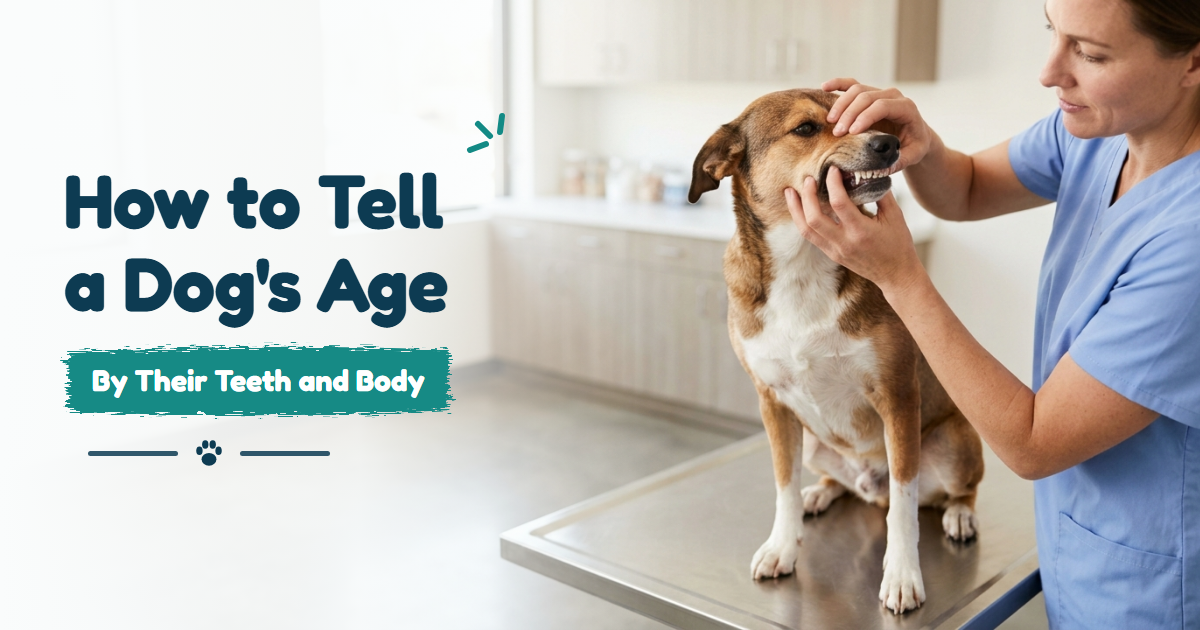
Quick answer: The best way to learn how to tell a dog’s age is to start with the teeth, then check the eyes, coat, muscles, and energy. Puppies are the easiest, since their teeth come in on a fairly set schedule and all adult teeth are usually in by about 7 months. For adult dogs, you can only estimate an age range, and a vet can help narrow it down.
Shelter paperwork often says “about 3 years old,” and that’s usually an educated guess. If you’ve adopted a dog or found a stray, you may never know their real birthday.
The good news is that a dog’s body offers plenty of clues. None of them is perfect, but together they can give you a useful range. This guide walks you through what to check, how to read each sign, and why getting close matters for your dog’s food, vet care, and vaccines.
Table of Contents
- How to Tell a Dog’s Age by Their Teeth
- Other Body Clues to a Dog’s Age
- Dog Age Estimate at a Glance
- How Vets Estimate a Dog’s Age
- Why Your Dog’s Age Matters
- Frequently Asked Questions
How to Tell a Dog’s Age by Their Teeth
Teeth are the first thing most vets look at. Puppies are easy to age this way because their teeth arrive in a predictable order. Adult dogs are harder, since tooth wear depends on diet, chewing habits, and dental care.
Puppy Teeth Timeline
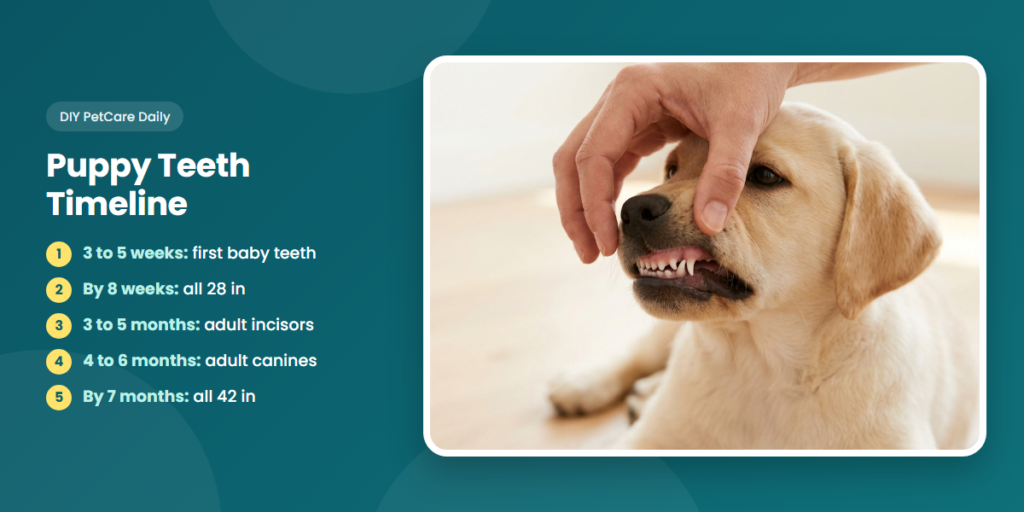
Puppies are born without teeth. They grow 28 baby teeth, then replace them with 42 adult teeth.
| Age | What You’ll See |
| Under 2 weeks | No teeth; eyes may still be closed |
| 3 to 5 weeks | Baby incisors and canines come in |
| 4 to 8 weeks | Baby premolars come in; all 28 baby teeth are usually in by about 8 weeks |
| 3 to 5 months | Baby incisors fall out and adult incisors appear |
| 4 to 6 months | Adult canines and premolars come in |
| 4 to 7 months | Adult molars come in; all 42 adult teeth are usually in by about 7 months |
Small breeds can lose baby teeth more slowly and sometimes keep them too long. If a baby tooth is still there when the adult tooth has come in, ask your vet to take a look, because retained baby teeth can trap food and cause gum problems.
Adult Dog Teeth by Age
This chart is a rough guide for a dog who hasn’t had regular dental care. It’s much less exact than the puppy timeline.
| Approximate Age | How the Teeth Usually Look |
| 7 months to 1 year | Clean, bright white, with little or no wear |
| 1 to 2 years | Mostly white, with slight yellowing on the back teeth |
| 3 to 5 years | Yellowing and tartar on some teeth, with some wear on the incisors |
| 5 to 10 years | More tartar, more visible wear, possible gum recession |
| 10 years or older | Heavy tartar, worn or missing teeth, frequent gum disease |
Why Teeth Can Fool You
Teeth are a clue, not a birth certificate. They can make a dog look older or younger than they are:
- A dog who has had regular brushing or dental cleanings may look years younger.
- A young, neglected dog can have the tartar and gum disease of an older dog.
- Dogs who chew rocks, tennis balls, or fences can wear their teeth down early.
- Small breeds often get dental disease sooner than big breeds.
If your dog’s mouth looks red, swollen, or smelly, it may be a health problem regardless of age. Our guide to signs of gum disease in dogs shows what to look for.
How to Safely Check Your Dog’s Teeth
Only do this with a calm dog you trust. Gently lift the lip on each side and look at the front and back teeth. Don’t pry the mouth open or force it. If your dog is nervous, in pain, or new to you, leave this check for your vet.
Other Body Clues to a Dog’s Age
Once you’ve looked at the teeth, check the rest of your dog. Several clues pointing the same way will give you a better estimate.
Eyes
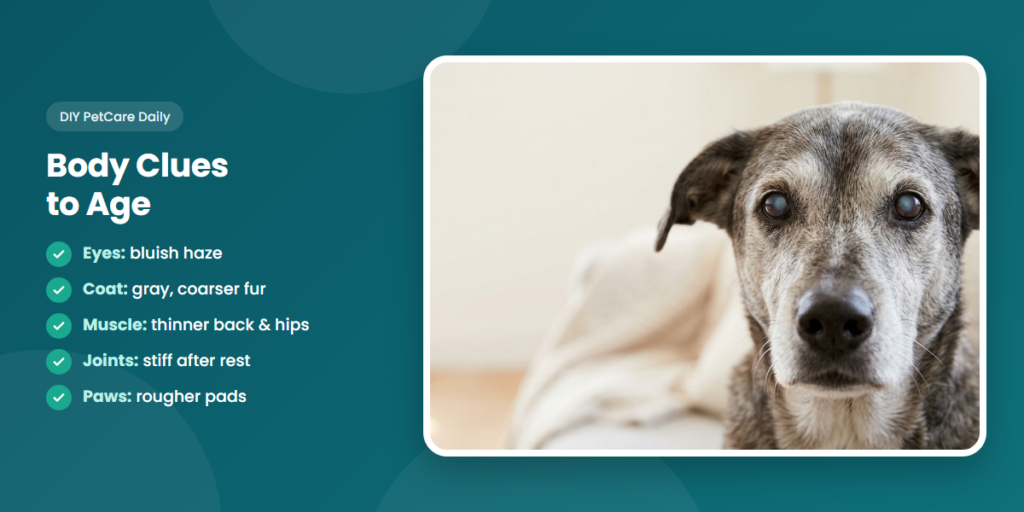
Young dogs usually have clear, bright eyes. Starting at about age 6 to 8, many dogs develop a bluish haze in the lens called lenticular sclerosis. It’s a normal part of aging and usually doesn’t cause much trouble with vision.
A thick white look may be a cataract, which can happen at any age and often affects vision. Red, painful, or suddenly cloudy eyes need a prompt vet visit.
Coat and Gray Hair
Young dogs often have soft, shiny coats. Older dogs may have thinner, coarser fur. Gray hair usually starts around the muzzle and eyes, but it isn’t a reliable clock. Some dogs go gray in their first few years, especially dark-coated dogs, and research has linked early graying with anxiety and impulsive behavior in some young dogs.
Muscles and Body Shape
Young adult dogs tend to be lean and well muscled. Older dogs often lose muscle along the back and thighs, and they may carry more fat around the belly. Sharp hip bones or a sunken look over the spine can suggest an older dog or a health problem.
Joints and Movement
Puppies are often clumsy, and young adults are quick and springy. Older dogs may be stiff after rest, slower on stairs, or reluctant to jump. Arthritis can also show up early in large dogs or after an injury, so this clue works best alongside the others.
Paws and Skin
Young dogs have smoother paw pads and more elastic skin. Older dogs may have rougher pads, thicker calluses on the elbows, and more lumps under the skin. Many older dogs develop harmless fatty lumps, but any new lump should still be checked.
Energy and Behavior
Energy is one of the weakest clues, since breed and personality matter so much. Still, it can help a bit:
- Puppies: They chew everything, play in bursts, and nap often.
- Adolescents: They’re full of energy and may test limits.
- Adults: They’re generally settled and have steady energy.
- Older dogs: They sleep more and may not hear as well.
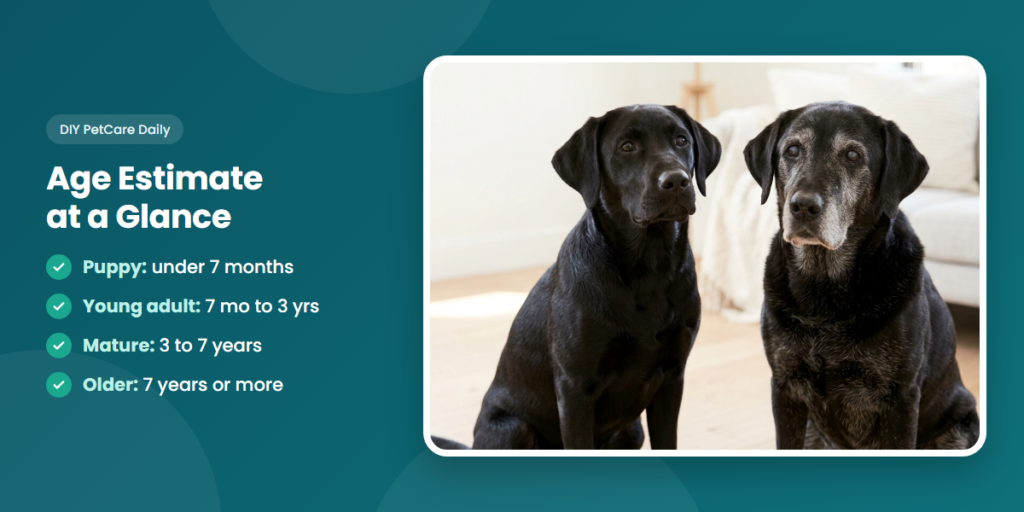
Dog Age Estimate at a Glance
Put your findings together using this chart. If your dog falls between rows, use a range.
| Life Stage | Approximate Age | Teeth | Coat and Body |
| Puppy | Under 7 months | Baby teeth or new adult teeth | Soft fur, round belly, clumsy movement |
| Young adult | 7 months to 3 years | White, little tartar | Shiny coat, lean muscle, high energy |
| Mature adult | 3 to 7 years | Some tartar and wear | Steady energy, maybe a few gray hairs |
| Older adult | 7 years or older | More tartar, worn or missing teeth | Gray muzzle, cloudy eyes, less muscle, stiffness |
Size matters here too. A large or giant dog at 7 is much further along in life than a small dog of the same age. Once you have a rough number, our dog age calculator converts it into human years and shows the life stage for your dog’s size.
How Vets Estimate a Dog’s Age
Your vet looks at the same clues as you, but with a trained eye and a look at the whole dog. They may also use:
- A full mouth exam: This shows wear, tartar, and gum health more clearly.
- An eye exam: This helps tell normal aging from cataracts.
- X-rays: These can show arthritis or growth plates that haven’t closed yet, which suggests a dog is still young.
- Bloodwork: It can’t give an age, but it can reveal age-related changes in the organs.
For adult dogs, expect an answer like “probably 4 to 6 years old” rather than an exact number. Some companies sell DNA-based age tests. They can be interesting, but they still give an estimate, so don’t rely on them for medical decisions.
Why Your Dog’s Age Matters
You don’t need an exact number, but getting close helps you make better decisions about care.
- Food: Puppies need growth food and correct portions, as explained in our guide on how much to feed a puppy. Adult calorie needs change with age, and our dog calorie calculator can give you a starting point.
- Vaccines: A puppy may need a full series of shots. If you don’t have their records, ask your vet what they need and read our dog vaccination schedule to see how the shots are usually timed.
- Vet visits: Older dogs usually need more frequent checkups. See when a dog is considered a senior for your dog’s size.
- Exercise: Young large-breed dogs may need limits to protect growing joints, and older dogs need gentler routines.
- Planning: Knowing roughly how long dogs live helps you plan for care and costs over the years.
Tip: Choose a “birthday” based on your vet’s estimate. Having a set date makes it much easier to keep track of vaccines and life stage changes.
If you have a young dog and want to know how much more they might grow, read our guide on how big a puppy will get.
For more ways to keep your dog healthy, check out our Dog Health & Wellness section.
Frequently Asked Questions
What is the most accurate way to tell a dog’s age?
A vet exam is the most accurate option, using teeth, eyes, joints, and overall condition together. Puppy ages are easier to judge because their teeth come in on a predictable schedule.
Can you tell a dog’s age by their teeth?
Yes, especially in puppies. In adults, teeth only give a rough range, since tartar and wear depend on diet, chewing, and dental care.
What age do dogs get a gray muzzle?
Many dogs start to gray at around 7 to 10 years, but some go gray much earlier. Gray hair alone isn’t a reliable sign of age.
At what age do a dog’s eyes get cloudy?
Many dogs develop a slight bluish haze at around 6 to 8 years. It’s usually normal, but sudden or white clouding should be checked by a vet.
How can I find out my rescue dog’s birthday?
You usually can’t find the exact date unless records exist. Ask your vet for an age estimate, then pick a birthday close to it and use it to plan care each year.