Table of Contents
Quick answer: When is a dog considered a senior? A dog is usually considered a senior during about the last 25% of their expected lifespan. That works out to around 10 to 11 years for small dogs, 9 to 10 for medium dogs, about 8 for large dogs, and 6 to 7 for giant breeds.
One day your dog is racing you to the door. The next, you notice a gray muzzle or a little hesitation at the stairs. It can be hard to tell when normal aging starts, because it usually happens slowly.
There isn’t a single birthday that makes a dog a senior. A 7-year-old Great Dane and a 7-year-old Chihuahua are at very different points in life. This guide gives you the age range for each size, the signs to look for, and the care changes that matter most once your dog reaches their later years.
Table of Contents
- When Is a Dog Considered a Senior by Size?
- Signs Your Dog Is Getting Older
- What Changes When Your Dog Becomes a Senior
- Common Health Problems in Older Dogs
- When to Call the Vet
- Frequently Asked Questions

When Is a Dog Considered a Senior by Size?
The American Animal Hospital Association (AAHA) describes a dog’s senior stage as roughly the last 25% of their expected life. Since big dogs have shorter lifespans, they get there earlier.
| Size | Adult Weight | Typical Lifespan | Senior Starts Around |
| Small | 20 lb or less | 12 to 16 years | 10 to 11 years |
| Medium | 21 to 50 lb | 11 to 15 years | 9 to 10 years |
| Large | 51 to 90 lb | 10 to 13 years | About 8 years |
| Giant | Over 90 lb | 7 to 10 years | 6 to 7 years |
These are estimates, and each dog ages at their own pace. A fit 9-year-old Lab may act younger than an overweight 6-year-old. If you have a mixed breed, go by the weight your dog would be at a healthy body shape.
Our dog age calculator can show your dog’s human-year age and life stage in a few seconds. For a look at what’s normal for your dog’s breed, read our guide on how long dogs live.
Senior vs Geriatric: Is There a Difference?
You may hear both words at the vet. “Senior” usually means your dog has entered their later years, while “geriatric” is sometimes used for very old dogs or those with several age-related problems. AAHA also describes an end-of-life stage, which can happen at any age when a dog has a terminal illness.
Signs Your Dog Is Getting Older
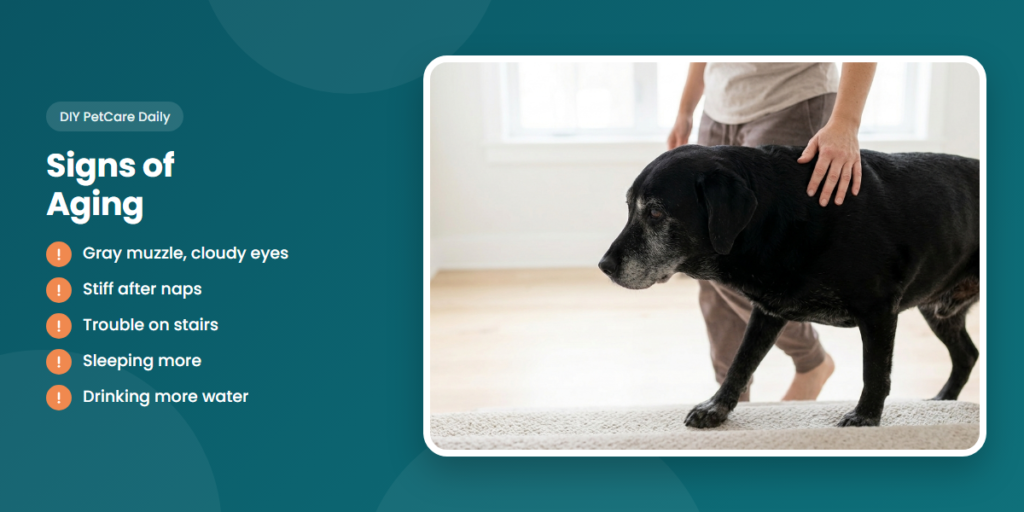
Age shows up in lots of small ways. You probably won’t see all of these, and some can also point to a health problem that can be treated.
Physical Signs
- Gray hair around the muzzle, eyes, and paws
- A thinner or duller coat
- Eyes that look a little cloudy or bluish
- Thicker calluses or more brittle nails
- More lumps and bumps under the skin
- Changes in body shape, such as less muscle over the back and hips
- Bad breath or brown tartar on the teeth
Movement Signs
- Stiffness after a nap, especially in the morning
- Trouble with stairs, jumping into the car, or getting on the couch
- Slipping on smooth floors
- Lagging behind on walks, or wanting to turn back sooner
Behavior Signs
- Sleeping more during the day
- Less interest in play
- Not hearing you call, or not reacting to the doorbell
- More clinginess, or wanting more time alone
- Restless nights or pacing
Bathroom and Appetite Signs
- Drinking more water
- More accidents in the house
- A smaller appetite, or being pickier about food
- Weight gain from doing less, or weight loss from muscle loss
Don’t write these off as old age. Pain, thyroid disease, kidney disease, and diabetes can all look like normal aging. A vet visit can often find something you can treat, and your dog may feel years younger afterward.
What Changes When Your Dog Becomes a Senior
Your dog doesn’t need a whole new life once they reach this stage. A few small changes will go a long way.
Vet Visits
Exams every 6 months are a smart plan for most older dogs. Six months can be a long time in an older dog’s life, and problems are usually easier to treat when found early. Your vet may suggest:
- Bloodwork and a urine test, to check organ function
- A blood pressure check
- A dental exam
- A thyroid test
- X-rays if your dog has joint pain or a cough
Food and Weight
Older dogs often burn fewer calories, but some struggle to keep muscle on. Your vet can help you decide if a senior food makes sense. There’s no legal standard for “senior” on a dog food label, so read the label and look for an AAFCO statement that covers adult dogs.
Weigh your dog monthly so you can spot changes early. Our dog calorie calculator includes a setting for seniors, and our guide on how much to feed your dog has more on portions. If your dog needs to slim down, this dog weight loss plan can help.
Exercise
Keep your older dog moving, but change how you do it. Several short walks are usually better than a single long one. Swimming, gentle hill walks, and easy sniff walks all keep joints working without too much strain. Stop if your dog limps, pants hard, or tries to quit.
Teeth
Gum disease gets more common with age and can make eating painful. Keep brushing if your dog allows it, and watch for these signs of gum disease. Being older doesn’t automatically rule out a dental cleaning, so ask your vet about the risks and benefits for your dog.
Comfort at Home
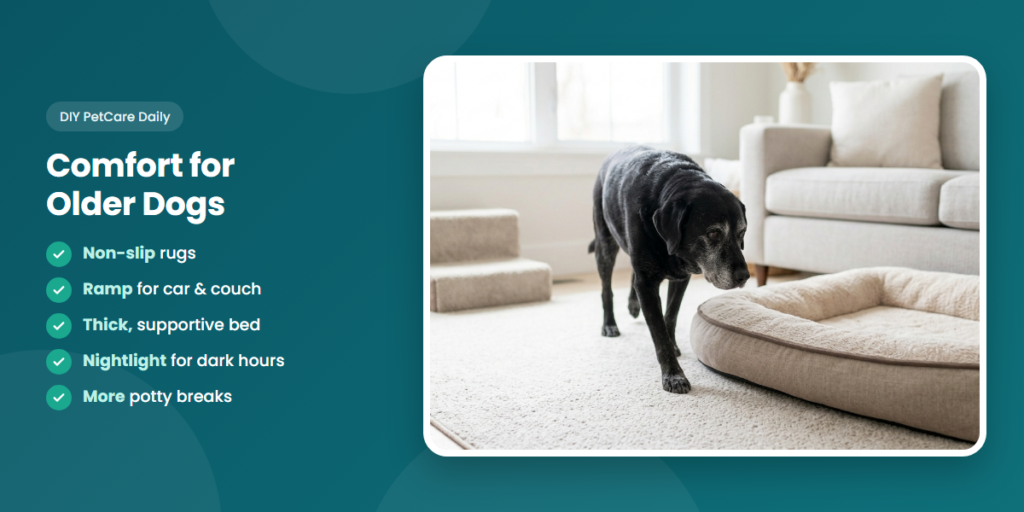
Small changes can make daily life much easier:
- Add rugs or non-slip runners on slick floors
- Use a ramp or pet stairs for the car and the couch
- Offer a thick, supportive bed away from drafts
- Raise food and water bowls if that seems more comfortable
- Keep furniture in the same place, especially if your dog’s vision is fading
- Add a nightlight for dogs who get confused in the dark
- Take more frequent potty breaks
Grooming
Older dogs may need more help with grooming, especially if they stop moving as much. Nails often need more frequent trims, since less walking means less natural wear. Our dog grooming schedule can be adjusted for older dogs. While you groom, check for new lumps and sore spots.
Common Health Problems in Older Dogs
Being familiar with these problems makes it easier to spot them early.
| Condition | What You Might Notice |
| Arthritis | Stiffness, trouble getting up, slowing down on walks |
| Dental disease | Bad breath, dropping food, chewing on one side |
| Kidney disease | More thirst and urination, weight loss, poor appetite |
| Heart disease | Coughing, tiring quickly, fast breathing at rest |
| Diabetes | More thirst and urination, weight loss, big appetite |
| Hypothyroidism | Weight gain, low energy, thin coat |
| Cancer | New or growing lumps, weight loss, low energy |
| Canine cognitive dysfunction | Confusion, staring at walls, new accidents, restless nights |
If breathing seems different, it helps to know what’s normal. Our guide on normal heart rate for dogs shows how to check at home.
Canine Cognitive Dysfunction
This condition is similar to dementia in people. Your dog may get stuck behind furniture, forget house training, stare into space, or stay up pacing at night. Medicine, diet changes, and steady routines can help, so talk to your vet early.
When to Call the Vet
Go to a vet right away if your older dog:
- Collapses or can’t stand
- Has trouble breathing
- Has a swollen, hard belly
- Vomits again and again
- Has a sudden loss of balance
- Can’t pee or stops eating and drinking
Book a visit soon if your dog has:
- Weight loss without trying
- Much more thirst or peeing
- New limping or stiffness that doesn’t improve
- Confusion or a sudden change in personality
- New lumps, or lumps that grow quickly
For more guides on older dogs and overall health, visit our Dog Health & Wellness section.
Frequently Asked Questions
At what age is a dog considered a senior?
It depends on size. A dog is usually considered a senior at about 10 to 11 years if small, 9 to 10 years if medium, around 8 years if large, and 6 to 7 years if giant.
Is a 7-year-old dog a senior?
It depends on the dog’s size. A 7-year-old giant breed is a senior, and a large dog is close. Most small and medium dogs are still mature adults at age 7.
How often should a senior dog see the vet?
Most vets suggest an exam every 6 months for older dogs. Dogs with ongoing health problems may need more frequent visits.
Do senior dogs need senior dog food?
Not always. A healthy older dog may do fine on their current food. If your dog is gaining or losing weight or has a health problem, ask your vet which food fits best.
How much exercise does an older dog need?
Most older dogs still need daily activity, but in shorter, gentler sessions. Let your dog’s comfort be your guide, and check with your vet if they seem sore or tired after walks.