Table of Contents
Quick answer: Why is my dog so skinny? The most common reasons are too few calories, intestinal parasites, dental pain, stomach or gut problems, stress, and illnesses like diabetes or kidney disease. Some breeds are also naturally lean. If your dog’s ribs, spine, and hips stick out, or they’ve gotten thin without a clear reason, it’s time to see a vet.
Maybe people keep asking if you feed your dog enough. Maybe you’ve just adopted a thin dog, or your dog eats well and still can’t seem to put on weight. Either way, it’s stressful, and it’s natural to wonder if something is wrong.
Sometimes nothing is wrong at all. Plenty of healthy dogs are simply lean. In other cases, a thin body is the first clue to a health problem. This guide helps you tell the difference, walks through the most common causes, and explains how to help your dog gain weight safely.
Table of Contents
- Is Your Dog Actually Too Skinny?
- Why Is My Dog So Skinny? Common Causes
- Skinny vs Losing Weight: Why the Difference Matters
- How to Help a Skinny Dog Gain Weight
- When to Worry and Call the Vet
- Frequently Asked Questions
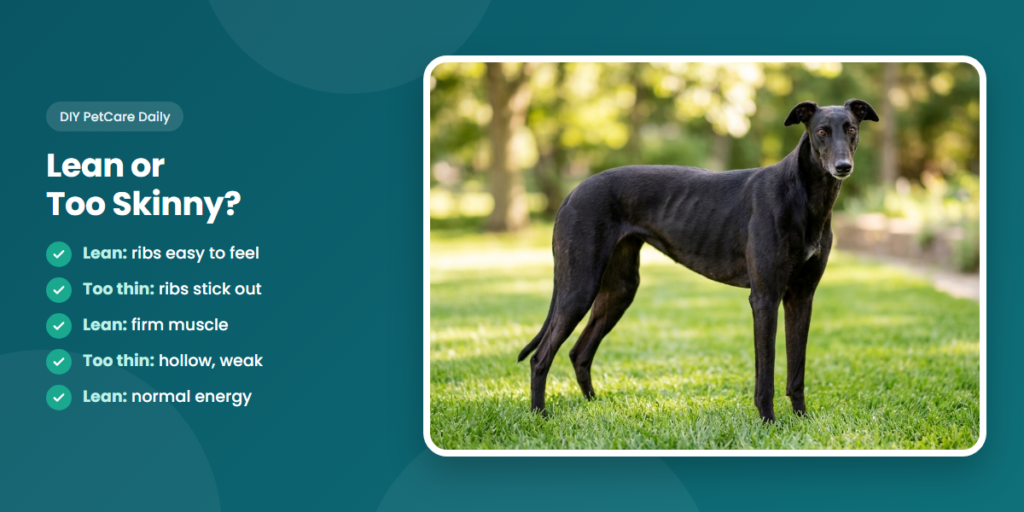
Is Your Dog Actually Too Skinny?
Before you look for a cause, check your dog’s body. A lean dog with a healthy coat and plenty of energy is very different from one whose bones are showing.
| What You Notice | Healthy but Lean | Too Thin |
| Ribs | Easy to feel, maybe a slight outline | Sharp and clearly visible from across the room |
| Spine and hips | Easy to feel, covered with some muscle | Stick out, with no covering |
| Waist | Clear waist | Extreme hourglass shape |
| Muscle | Firm over the back and thighs | Wasted, weak, or hollow-looking |
| Coat | Shiny and full | Dull, dry, or thin |
| Energy | Normal for their age | Low, tired, or weak |
The ribs are a good test. They should feel like the back of your hand, while too-thin ribs feel more like your knuckles. For a fuller check, use the 9-point dog body condition score or our dog BMI calculator. Scores of 1 to 3 are below ideal.
Some Dogs Are Naturally Slim
Greyhounds, Whippets, Salukis, and other sighthounds usually show a bit of rib and hip even at a healthy weight. Young, active dogs and teenage large breeds often go through a lanky stage too, where they grow up before they fill out. If your dog is energetic and eating well, has a healthy coat, and has always looked this way, they may just be built that way. Your vet can confirm it.
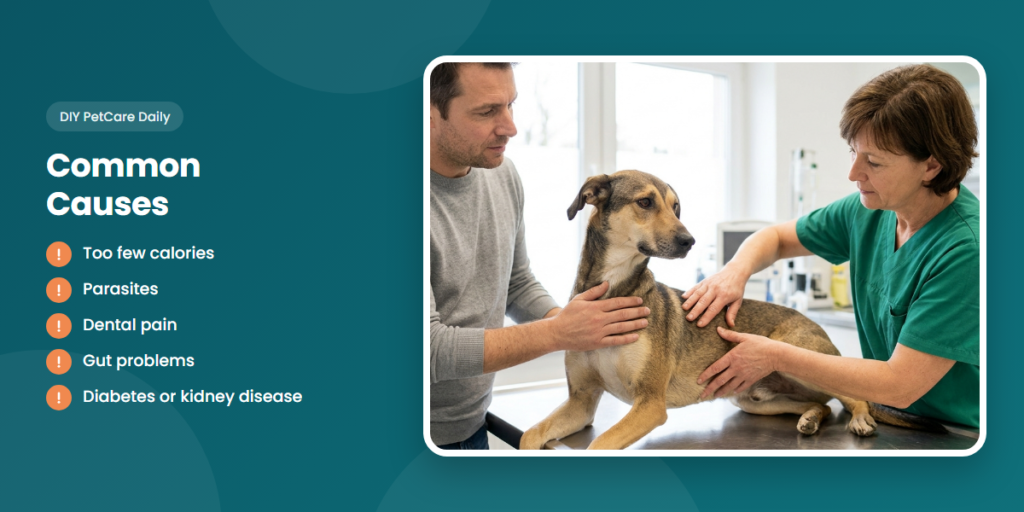
Why Is My Dog So Skinny? Common Causes
Not Enough Calories
This is the simplest explanation, and it’s easy to miss. A food with fewer calories per cup, a new activity routine, or a bag guide that’s too low for your dog can all leave them short. Active dogs, working dogs, and growing dogs need far more than couch potatoes.
Our dog calorie calculator can show you if your dog is getting enough, and our guide on how much dog food to feed explains how to measure it.
Competition at the Bowl
In a multi-dog home, a shy dog may lose food to a bolder one. A dog who eats a little and walks off may not be getting a full meal if another pet finishes it. Feed your dogs separately and watch how much each one really eats.
Intestinal Parasites
Roundworms, hookworms, whipworms, and tapeworms all steal nutrients. Giardia can do it too. Parasites are especially common in puppies, rescue dogs, and dogs who spend a lot of time outdoors. You won’t always see worms in the stool, so ask your vet for a fecal test and a deworming plan.
Dental Pain
A sore mouth can make eating unpleasant, even if your dog still acts hungry. Watch for bad breath, dropping food, chewing on one side, or pawing at the mouth. Our checklist of signs of gum disease in dogs can help you spot it.
Stomach and Gut Problems
Some dogs eat well but can’t absorb what they eat. Ongoing diarrhea, soft stool, gas, or vomiting are important clues. Possible causes include:
- Inflammatory bowel disease (IBD): Long-term gut inflammation
- Exocrine pancreatic insufficiency (EPI): The pancreas doesn’t make enough enzymes, so dogs eat a lot, stay thin, and pass large, greasy, pale stools. German Shepherds are at higher risk.
- Food allergies or sensitivities: These can cause long-term stomach or skin signs.
If your dog’s stool looks unusual, our dog poop color chart can help you describe it to your vet.
Stress and Anxiety
A new home, a new pet, boarding, or other big changes can put a dog off their food. Rescue dogs often take weeks to settle and gain weight. This is usually temporary, but check with your vet if your dog doesn’t improve within a couple of weeks.
Medical Conditions
A dog who stays thin or keeps getting thinner may have a medical problem. Common ones include:
| Condition | Other Signs to Watch For |
| Diabetes | Much more thirst and peeing, big appetite |
| Kidney disease | More thirst and peeing, poor appetite, vomiting |
| Liver disease | Poor appetite, vomiting, yellow gums or eyes |
| Addison’s disease | Comes and goes: weakness, vomiting, diarrhea |
| Heart disease | Coughing, tiring easily, fast breathing |
| Cancer | Low energy, poor appetite, new lumps |
| Hyperthyroidism (rare in dogs) | Big appetite, restlessness, fast heartbeat |
These aren’t things you can diagnose at home. A physical exam, blood work, urine test, and a stool test can usually narrow things down quickly.
Aging
Older dogs often lose muscle, so they can look bony even at the same weight. Pain, poor appetite, and dental trouble can make it worse. It’s common, but it isn’t something to ignore. Read our guide on when a dog is considered a senior for the changes to expect.
Skinny vs Losing Weight: Why the Difference Matters
A dog who has always been lean is usually less worrying than a dog who is getting thinner. If you’ve noticed a recent drop on the scale, read our separate guide on dog losing weight. Losing 10% or more of body weight without trying is a reason to see a vet soon.
Weigh your dog now, and write it down. It gives you and your vet a starting point for tracking change.
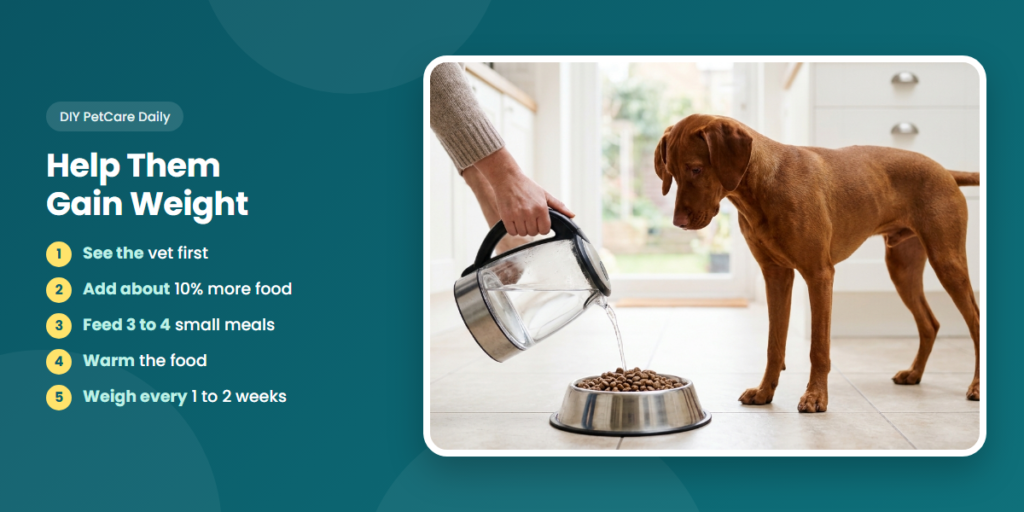
How to Help a Skinny Dog Gain Weight
Check with your vet first, so you don’t feed around a problem that needs treatment. Once medical issues are ruled out, try these steps.
- Set a goal weight. Ask your vet, or get an estimate from our dog weight calculator.
- Add calories slowly. Increase daily food by about 10%, then adjust after 1 to 2 weeks. Big jumps can cause diarrhea.
- Feed more often. Three or four small meals are easier than one or two large ones, especially for dogs who eat slowly or get full quickly.
- Choose a calorie-dense food. A food labeled for performance or for all life stages often packs more calories per cup. Ask your vet which one suits your dog.
- Add moisture and smell. Warm water or a little wet food can make dry food more tempting.
- Add safe extras. Small amounts of plain cooked chicken, plain canned pumpkin, or cooked egg can help picky eaters. Keep extras small so the diet stays balanced.
- Change foods gradually. Follow our guide on how to switch dog food to avoid an upset stomach.
- Weigh every 1 to 2 weeks. You’re looking for slow, steady gains.
- Keep gentle exercise going. Regular walks help build muscle, not just fat.
A note on severely underweight dogs: Very thin rescue dogs need special care, since feeding too much at once can be dangerous. Follow your vet’s plan, which often starts with small, frequent meals.
What Not to Do
- Don’t feed cooked bones, fatty trimmings, or lots of table scraps. Fatty foods can trigger pancreatitis. Salty holiday meats count too. Here’s why ham is risky for dogs.
- Don’t switch foods every few days. It can upset the gut and make it harder to find the cause.
- Don’t give human weight-gain products. Some aren’t safe for dogs, and some contain xylitol, which is toxic to dogs.
- Don’t assume a dog is just picky without getting them checked.
When to Worry and Call the Vet
Call your vet soon if your dog:
- Is skinny but eats a lot
- Keeps getting thinner, or has lost 10% or more of their weight
- Has ongoing diarrhea, vomiting, or greasy stool
- Is drinking and peeing more than usual
- Has a dull coat, low energy, or muscle loss
- Is a puppy who isn’t gaining weight
Go to a vet right away if your dog:
- Refuses food for more than 24 hours, or sooner for puppies and small dogs
- Is weak, collapses, or has pale gums
- Has trouble breathing
- Has repeated vomiting or black or bloody stool
For more on keeping your dog healthy, visit our Dog Health & Wellness section.
Frequently Asked Questions
Why is my dog so skinny even though they eat a lot?
The most common reasons are parasites, EPI, IBD, and diabetes, along with simply needing more calories than you think. A dog who eats well but stays thin should get a vet exam and a stool test.
Is it OK if I can see my dog’s ribs?
A faint outline of the last ribs can be normal in lean, active dogs and sighthounds. If several ribs are obvious from a distance, or the spine and hips stick out, your dog is likely too thin.
What can I feed my dog to gain weight?
Start with more of their complete and balanced food, or switch to a more calorie-dense one. Add small amounts of plain cooked chicken or egg if needed, and ask your vet for a target.
How long does it take a skinny dog to gain weight?
Most dogs need a few weeks to a few months, depending on how much they need to gain. Slow, steady progress is safer than large meals, especially for very thin dogs.
Can worms make a dog skinny?
Yes. Intestinal parasites take nutrients from your dog’s food and can lead to weight loss, a pot belly, and a dull coat. Your vet can check with a fecal test and recommend the right dewormer.