Table of Contents
Quick answer: A dog losing weight without a diet usually has a reason that needs attention, such as parasites, dental pain, diabetes, kidney disease, gut problems, or cancer. Stress or a change in food can also cause it. If your dog has lost 10% or more of their body weight, or is losing weight while eating normally, call your vet.
Maybe your dog feels bonier when you pet them. Maybe the vet’s scale shows a lower number than last time. Unexplained weight loss can be easy to miss, because it often happens slowly.
Sometimes the fix is simple, like adjusting portions or treating worms. Other times, weight loss is the first sign of an illness that’s easier to treat when caught early. This guide helps you figure out what’s going on, what the clues mean, and how quickly your dog needs to be seen.
Table of Contents
- How Much Weight Loss Is Too Much?
- Is Your Dog Losing Weight While Eating Normally?
- Common Causes of Weight Loss in Dogs
- What to Do If Your Dog Is Losing Weight
- How to Support Your Dog at Home
- When to Worry and Call the Vet
- Frequently Asked Questions
How Much Weight Loss Is Too Much?
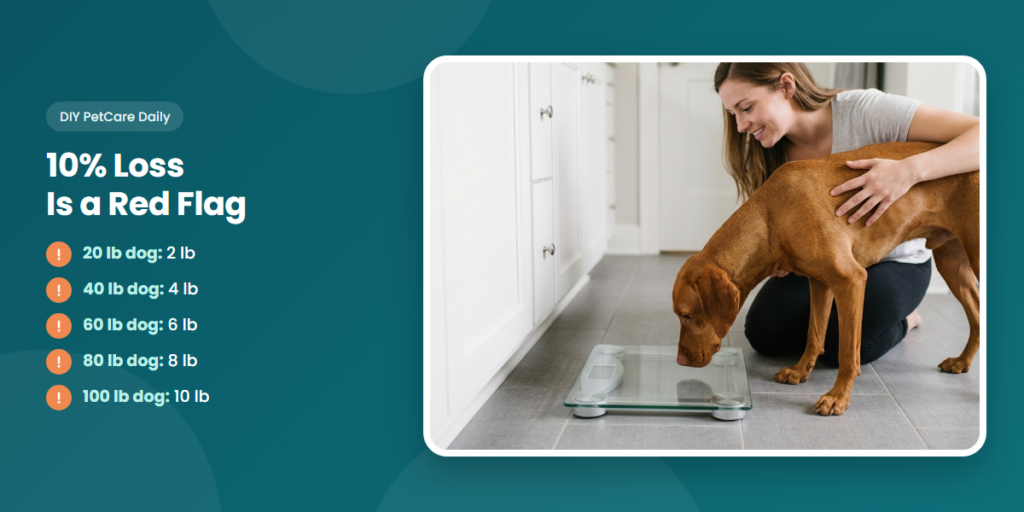
Vets usually consider unintentional weight loss of 10% or more of body weight to be significant. Here’s what that looks like in pounds.
| Normal Weight | 5% Loss | 10% Loss |
| 10 lb | 0.5 lb | 1 lb |
| 20 lb | 1 lb | 2 lb |
| 40 lb | 2 lb | 4 lb |
| 60 lb | 3 lb | 6 lb |
| 80 lb | 4 lb | 8 lb |
| 100 lb | 5 lb | 10 lb |
For small dogs, this can be only a pound or two. That’s why regular weigh-ins matter. Don’t wait for the 10% mark if you’ve noticed other changes, or if the loss happened quickly.
Our dog BMI calculator can help you see where your dog stands now. If your dog has always been thin but isn’t losing, our guide on why a dog is so skinny may be more useful.
Is Your Dog Losing Weight While Eating Normally?
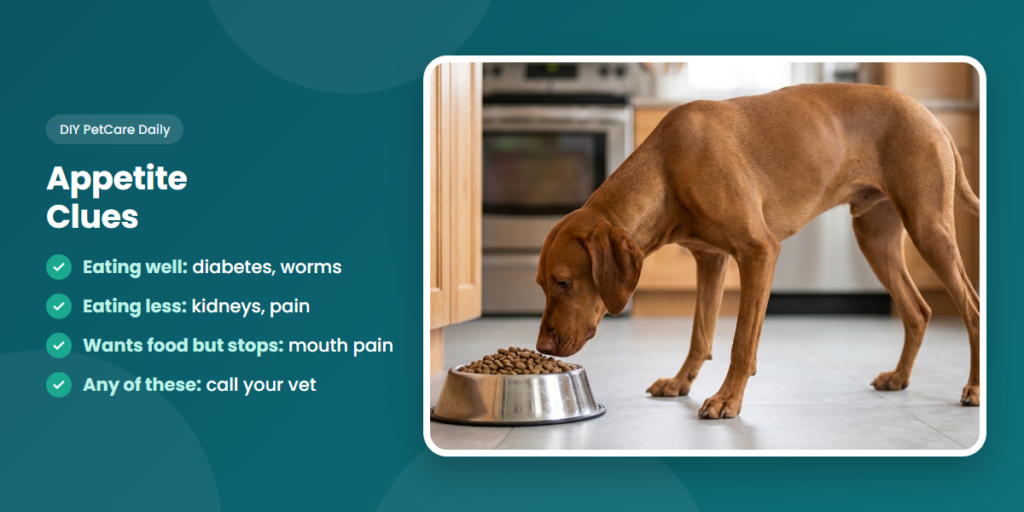
Appetite is one of the biggest clues, and it’s the first thing your vet will ask about. Start by working out which group your dog fits.
| Appetite | Common Causes |
| Eating normally or more than usual | Diabetes, intestinal parasites, malabsorption, exocrine pancreatic insufficiency (EPI), too few calories for their activity level |
| Eating less or refusing food | Dental pain, kidney disease, liver disease, nausea, cancer, stress, any painful condition |
| Wants to eat but seems unable | Mouth pain, a stuck object, trouble swallowing, nerve or muscle problems |
Watch your dog at a meal. Do they come running and eat it all? Do they sniff, walk away, or try to eat and then back off? That small detail can really help your vet.
Common Causes of Weight Loss in Dogs
Food and Routine Changes
Not every cause is a disease. Weight loss may come from:
- A new food with fewer calories per cup
- A longer walking or running routine
- A growing, active young dog who needs bigger portions
- Another pet stealing food
- Hot weather, which can reduce appetite for a while
Check your food’s calorie count and use our dog calorie calculator to see if your dog is getting enough. Our guide on how many calories a dog needs explains the numbers.
Stress and Anxiety
A move, new baby, new pet, boarding, or the loss of a companion can all affect appetite. Stress-related weight loss usually gets better as your dog settles. If there’s no improvement in a week or two, see your vet.
Intestinal Parasites
Worms and other parasites take nutrients from your dog’s food, often causing a dull coat, a pot belly, or loose stool. They’re very common in puppies and rescue dogs. You won’t always see them, so bring in a fresh stool sample for testing.
Dental Disease
Painful teeth can make a dog eat more slowly, drop food, or avoid hard kibble. Bad breath is another clue. Our checklist of signs of gum disease in dogs tells you what to look for.
Diabetes
A dog with diabetes can’t use sugar from their food properly. A classic pattern is weight loss with a big appetite, plus much more thirst and peeing. Diabetes is treatable, but it needs a vet’s care right away.
Kidney Disease
Kidney disease is common in older dogs. Signs include more thirst and peeing, weight loss, poor appetite, vomiting, and bad breath. Early treatment and diet changes can often help dogs feel better for longer.
Liver Disease
The liver helps process nutrients, so problems here can cause weight loss, vomiting, poor appetite, and sometimes yellow gums or eyes.
Gut and Absorption Problems
Inflammatory bowel disease, food allergies, and other gut disorders can prevent your dog from absorbing food. Dogs with EPI don’t make enough digestive enzymes, so they eat a lot while losing weight and pass large, pale, greasy stools. If you see vomiting or changes in stool, our dog poop color chart can help you describe what you’re seeing.
Heart Disease
A dog with heart disease burns more energy and may lose interest in food. This can cause muscle loss along with coughing, tiring easily, and fast breathing. If you’re not sure what’s normal, read our guide on normal heart rate for dogs.
Cancer
Some cancers cause weight loss even before you notice other signs, especially in older dogs. Watch for new lumps, low energy, poor appetite, and vomiting. Not all cancers are the same, and many can be managed or treated.
Addison’s Disease
This hormone disorder happens when the adrenal glands don’t make enough hormones. Signs tend to come and go and can include weight loss, weakness, vomiting, and diarrhea.
Aging and Muscle Loss
Older dogs naturally lose some muscle, and their back legs and spine may look bonier. But don’t assume all weight loss is simply age. Older dogs are also more prone to kidney disease, cancer, and dental pain. Our guide on when a dog is considered a senior explains how often they should see the vet.
What to Do If Your Dog Is Losing Weight
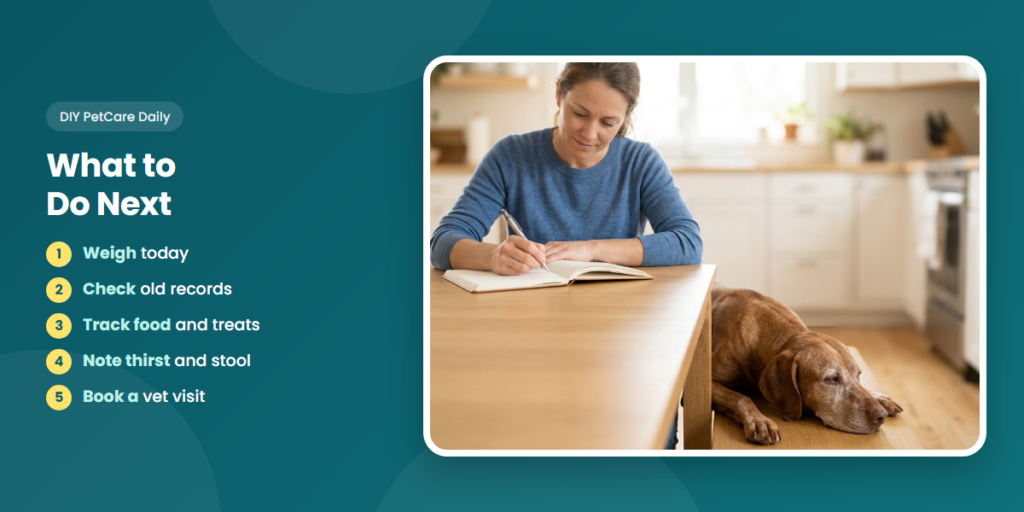
These steps will give your vet useful information and help you catch changes early.
- Weigh your dog now. Write down the date and number. Use the same scale each time.
- Check their old records. Look at past vet visits or ask the clinic to send you a weight history.
- Check their body. Feel the ribs, spine, and hips, and compare with our dog body condition score guide.
- Measure their food. Write down what your dog eats, including treats, for a few days.
- Watch their drinking and bathroom habits. Note any changes in thirst, urine, or stool.
- Look in their mouth, if your dog is comfortable with that.
- Take a video of any odd eating behavior, coughing, or weakness.
- Bring a fresh stool sample to your appointment.
What Your Vet May Do
Your vet may start with an exam and a weight history. Common tests include:
- Blood work and a urine test
- A stool test for parasites
- A dental exam
- X-rays or an ultrasound
- Tests for thyroid, adrenal, or pancreatic problems
Getting the cause right comes first. Feeding more without knowing why can delay treatment.
How to Support Your Dog at Home
Once you’ve spoken to your vet, these simple steps can help:
- Offer small, frequent meals. They’re often easier than large ones.
- Warm the food. A little warm water brings out the smell.
- Try wet food. Many dogs with sore mouths find it easier to eat.
- Choose a quiet spot. Keep them away from other pets at mealtime.
- Change foods slowly. Follow our guide on how to switch dog food.
- Keep water available. Dogs who are sick can get dehydrated quickly.
- Track weight weekly. A simple note on your phone can show whether things are improving.
Don’t give human appetite boosters or medicines unless your vet tells you to. For long-term help with a healthy target weight, our dog weight calculator is a useful tool.
When to Worry and Call the Vet
Call your vet this week if your dog:
- Has lost 10% or more of their body weight
- Is losing weight while eating normally
- Is drinking or peeing much more than usual
- Has ongoing diarrhea or vomiting
- Seems less active, or has a dull coat or muscle loss
- Has new lumps or bad breath with trouble eating
- Is an older dog with any unexplained loss
Go to a vet right away if your dog:
- Won’t eat for more than 24 hours, or sooner if they’re a puppy or a small dog
- Is vomiting repeatedly, or has black or bloody stool
- Is weak, collapses, or has pale or yellow gums
- Has trouble breathing or a swollen belly
- Seems confused or suddenly much worse
For more guides on keeping your dog healthy, visit our Dog Health & Wellness section.
Frequently Asked Questions
Why is my dog losing weight but still eating?
Common causes are diabetes, intestinal parasites, poor absorption, EPI, and simply needing more calories. A dog who is eating well but losing weight should see a vet, even if they seem happy.
How much weight loss is concerning in a dog?
Losing 10% or more of body weight without trying is usually significant. For a 40 lb dog, that’s 4 lb. Quick loss, or any loss along with other signs, needs attention sooner.
Why is my older dog losing weight?
Older dogs often lose muscle, but weight loss can also point to kidney disease, cancer, dental pain, or arthritis. Have your vet check any older dog who’s getting thinner.
Can stress make a dog lose weight?
Yes. Stress can lower appetite for a short time. Weight loss should improve as your dog settles. If it lasts more than a week or two, see your vet to rule out other causes.
Can worms cause weight loss in dogs?
Yes. Intestinal worms can take nutrients from your dog’s food and lead to weight loss, a dull coat, and sometimes diarrhea. A stool test and the right dewormer usually solve the problem.