Table of Contents
- Table of Contents
- How a Dog’s Ear Works
- Which Dogs Need Regular Ear Cleaning?
- Is a Homemade Dog Ear Cleaner Safe?
- 2 Gentle DIY Dog Ear Cleaner Recipes
- What Never to Put in Your Dog’s Ears
- How to Clean Your Dog’s Ears Step by Step
- Signs of a Dog Ear Infection
- Make Ear Checks Part of Your Routine
- Frequently Asked Questions
Quick answer: A homemade dog ear cleaner can be a simple mix of equal parts white vinegar and water, or a mild saline rinse, used only on healthy ears for routine cleaning. Never use it on red, swollen, smelly, or painful ears, which may be infected or have a damaged eardrum. Skip hydrogen peroxide, essential oils, and cotton swabs, and see your vet if your dog shakes their head or scratches their ears.
Dogs’ ears can get dirty fast, especially if your dog has long, floppy ears, loves to swim, or spends a lot of time rolling around outside. A quick cleaning now and then helps keep wax and debris from building up.
You’ve probably seen lots of DIY ear cleaner recipes online. Some are gentle and reasonable. Others can actually hurt your dog. This guide explains which homemade solutions are safe for healthy ears, how to clean your dog’s ears the right way, what to never put in them, and when a vet visit is the better choice.
Table of Contents
- How a Dog’s Ear Works
- Which Dogs Need Regular Ear Cleaning?
- Is a Homemade Dog Ear Cleaner Safe?
- 2 Gentle DIY Dog Ear Cleaner Recipes
- What Never to Put in Your Dog’s Ears
- How to Clean Your Dog’s Ears Step by Step
- Signs of a Dog Ear Infection
- Make Ear Checks Part of Your Routine
- Frequently Asked Questions
How a Dog’s Ear Works
A dog’s ear canal is shaped like an “L.” It goes straight down first, then turns toward the eardrum. That bend makes it easy for wax, water, and dirt to get trapped deep inside, where it’s warm and damp. Yeast and bacteria love that kind of spot.
This is also why you should never push anything deep into a dog’s ear. The bend protects the eardrum, but a cotton swab can push debris further down or even damage it.
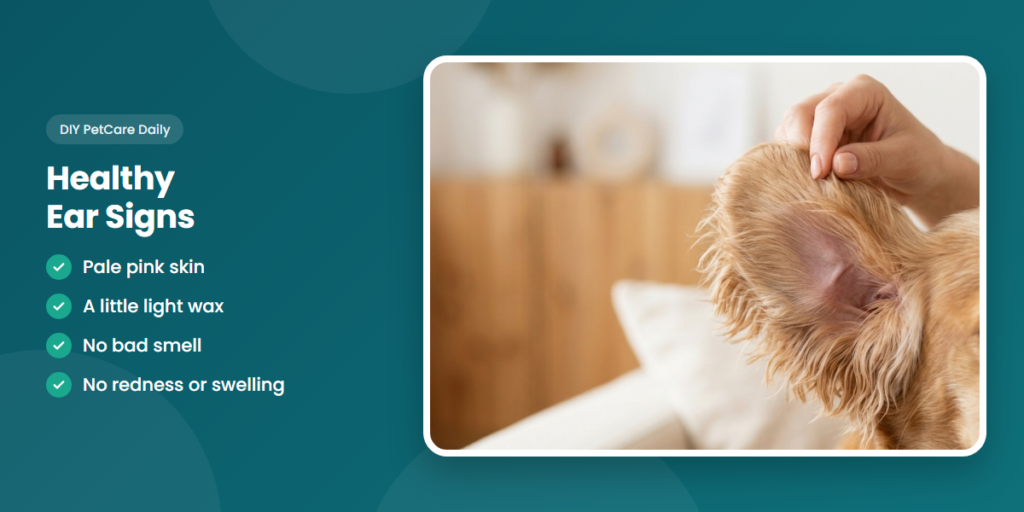
What a Healthy Dog Ear Looks Like
- Pale pink skin inside
- A small amount of light tan or yellow wax
- No strong smell
- No redness, swelling, or crusty spots
- Your dog doesn’t mind you touching it
If your dog’s ears look and smell like this, they may not need cleaning at all. Many dogs keep their ears clean on their own.
Which Dogs Need Regular Ear Cleaning?
| Dog type | Why | How often to check |
| Floppy-eared breeds (Cocker Spaniel, Basset Hound, Labrador) | Ears trap heat and moisture | Weekly |
| Swimmers and water lovers | Water stays in the canal | After every swim |
| Dogs with hairy ear canals (Poodle, Shih Tzu) | Hair traps wax and debris | Weekly |
| Dogs with allergies | Allergies often cause ear inflammation | Weekly |
| Upright-eared dogs (German Shepherd, Husky) | Better airflow | Every 2 to 4 weeks |
Checking is not the same as cleaning. Look and sniff weekly, but only clean when you see dirt or wax buildup. Cleaning too often can irritate the ear.
Is a Homemade Dog Ear Cleaner Safe?
For a healthy ear with no infection, a simple homemade cleaner is generally safe for routine care. Many owners use one between grooming visits.
But here’s the important part: you can’t see a dog’s eardrum at home. If the eardrum is torn, some liquids can travel into the middle ear and cause pain or even hearing problems. Infected ears are often red and sore, and acidic cleaners like vinegar sting badly on raw skin.
That’s why the safest approach is:
- Use homemade cleaners only on ears that look and smell normal.
- Use a vet-approved commercial ear cleaner if your dog needs frequent cleaning.
- Let your vet check any ear that looks or smells abnormal before you put anything in it.
2 Gentle DIY Dog Ear Cleaner Recipes
Recipe 1: Vinegar and Water Solution
Vinegar is mildly acidic, which makes the ear a less friendly place for yeast and bacteria. It also helps dry the canal.
Ingredients
- 1/2 cup white vinegar or apple cider vinegar
- 1/2 cup distilled or boiled and cooled water
How to make it
- Mix in a clean squeeze bottle.
- Label it with the date.
- Use within 1 to 2 weeks, and make a fresh batch after that.
Don’t use it if: the ear is red, raw, scratched, swollen, or painful. It will sting.
Recipe 2: Mild Saline Rinse
This is the gentlest option. It rinses out loose debris without much risk of stinging.
Ingredients
- 1 cup distilled or boiled and cooled water, warm
- 1/2 teaspoon plain salt (no iodine)
How to make it
- Stir until the salt dissolves completely.
- Let it cool to lukewarm.
- Make it fresh each time.
Saline doesn’t break down wax as well as commercial cleaners do, but it’s a soft way to wipe away surface dirt.
What Never to Put in Your Dog’s Ears
| Avoid | Why |
| Hydrogen peroxide | Irritates healthy skin, damages tissue, and leaves moisture behind |
| Tea tree oil and other essential oils | Can be toxic to dogs and irritate the ear |
| Rubbing alcohol on sore ears | Stings and dries out irritated skin |
| Olive oil, coconut oil, or baby oil | Can trap debris and feed yeast |
| Cotton swabs (Q-tips) | Push debris deeper and can hurt the eardrum |
| Any home remedy for an infected ear | Infections need the right medicine for the right germ |
How to Clean Your Dog’s Ears Step by Step
You’ll need your cleaner, cotton balls or gauze pads, a towel, and some treats.
- Pick a calm moment. After a walk or play session works well.
- Warm the solution. Hold the bottle in warm water for a few minutes. Cold liquid in the ear is uncomfortable.
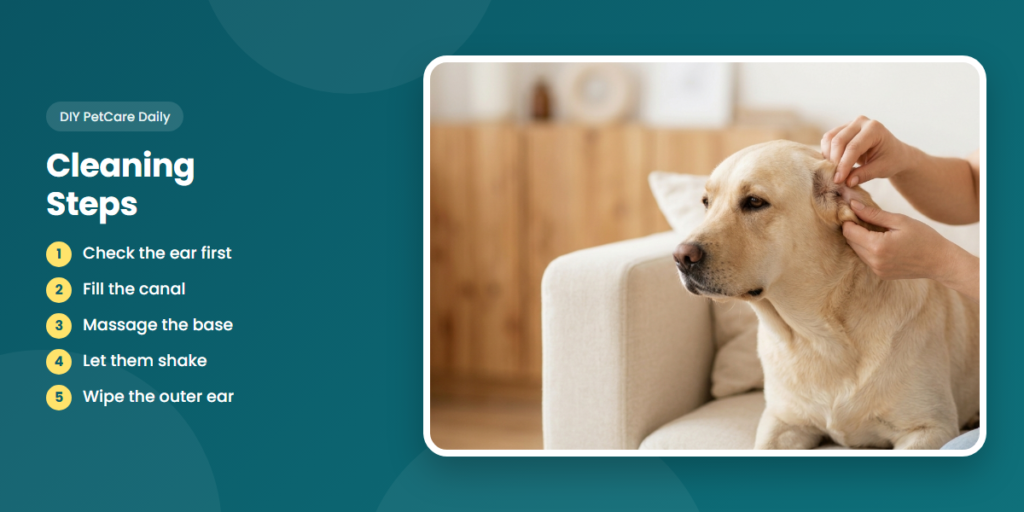
- Check the ear first. Look and sniff. If you see redness, swelling, or dark discharge, or smell something bad, stop and call your vet.
- Lift the ear flap. Gently hold it up and straight to open the canal.
- Fill the canal. Squeeze enough cleaner to fill the canal. Don’t put the bottle tip deep into the ear.
- Massage the base. Gently rub the base of the ear, just below the opening, for 20 to 30 seconds. You’ll hear a squishing sound. That’s the cleaner loosening wax.
- Let your dog shake. Step back and let them shake their head. This brings debris up and out. (A towel helps here.)
- Wipe the outer ear. Use a cotton ball or gauze around your finger to wipe the visible part of the ear and the opening. Only go as deep as your finger easily reaches.
- Reward your dog. Treats and praise make the next cleaning easier.
- Repeat on the other ear with a fresh cotton ball.
If your dog swims or gets baths often, dry the outer ear well afterward. During baths, keep water out of the ears. Our guide on homemade dog shampoo includes tips for keeping ears dry at bath time.
Signs of a Dog Ear Infection
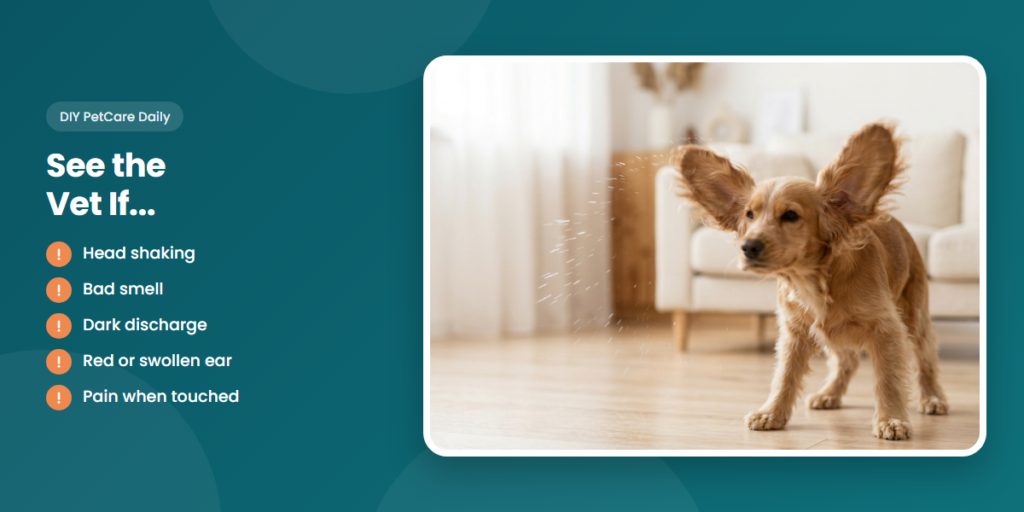
Ear infections are one of the most common reasons dogs see the vet. Call your vet if you notice:
- Head shaking or tilting
- Scratching or pawing at the ear
- A bad or yeasty smell
- Brown, yellow, black, or bloody discharge
- Redness or swelling inside the ear
- Crusts or scabs
- Pain when you touch the ear, or your dog pulling away
- Loss of balance, walking in circles, or unusual eye movements (signs of a deeper infection)
- A puffy, fluid-filled ear flap (an ear hematoma, often from head shaking)
Your vet will usually look inside with an otoscope and take a swab to check for yeast, bacteria, or mites under a microscope. The right medicine depends on what’s causing it. That’s why home remedies often don’t work. They can even make an infection worse or hide the signs until it gets deeper.
Ear Mites
Puppies and dogs that share a home with cats get ear mites more often. The mites cause strong itching and a dark, dry discharge that looks like coffee grounds. Mites need a vet-prescribed treatment, and all pets in the home usually need to be treated.
Allergies and Ear Problems
Many dogs with repeat ear infections have an allergy behind it, either to food or to something in the environment. Itchy paws and itchy ears often go together. Our guide on why dogs lick their paws explains the link and what to ask your vet.
Make Ear Checks Part of Your Routine
The easiest way to catch ear problems early is to look at your dog’s ears during regular grooming. Add a quick ear check to your weekly brushing session. Our full dog grooming schedule shows where ear care fits alongside baths, nails, and teeth.
For more simple care projects, visit our DIY Dog Projects section.
Frequently Asked Questions
Can I use vinegar to clean my dog’s ears?
Yes, a 50/50 mix of white or apple cider vinegar and water can be used on healthy ears for routine cleaning. Don’t use it on ears that are red, raw, swollen, or painful, since it stings and may not be safe if the eardrum is damaged.
Is hydrogen peroxide safe for dog ears?
No. Hydrogen peroxide can irritate and damage healthy ear tissue, and it leaves moisture in the canal. Most vets recommend avoiding it in dog ears.
How often should I clean my dog’s ears?
Most dogs only need their ears cleaned when they look dirty, often every 2 to 4 weeks or less. Dogs with floppy ears, allergies, or a love of swimming may need more frequent care. Cleaning too often can cause irritation.
Can a homemade ear cleaner cure an ear infection?
No. Ear infections are caused by yeast, bacteria, or mites, and each needs a specific treatment. Home remedies can delay proper care and let the infection spread deeper. See your vet for any ear that smells bad, has discharge, or hurts.
Why does my dog’s ear smell bad?
A bad or yeasty smell usually means an infection or a buildup of yeast or bacteria. Moisture, allergies, and trapped wax are common causes. Have your vet check it before cleaning, since some cleaners can sting an infected ear.