Table of Contents
- Table of Contents
- What Makes a Good Feral Cat Shelter?
- Plan 1: Storage Tote With Foam Board
- Plan 2: Foam Cooler Inside a Tote
- Bonus: A Wooden DIY Outdoor Cat House
- Bedding: Why Straw Beats Blankets
- Where to Place Your Shelter
- Food and Water: Keep Them Outside the Shelter
- Getting Cats to Use the Shelter
- A Few Winter Safety Tips for Outdoor Cats
- Frequently Asked Questions
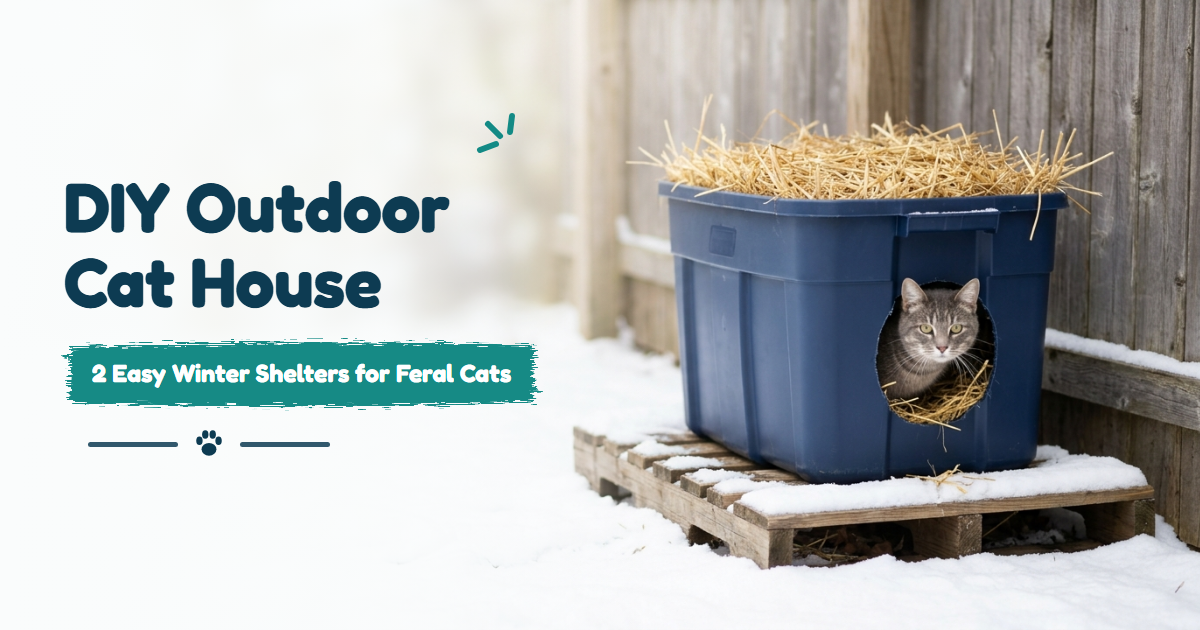
Quick answer: A DIY outdoor cat house can be made from a plastic storage tote lined with foam board, or a foam cooler set inside a tote. Cut a 6-inch entrance, raise it off the ground, and fill it with straw, never blankets or hay. Keep it small so the cats’ body heat warms the space, and put food and water outside it, not inside.
If you’ve noticed a cat hiding under your porch or curled up near a car engine on cold mornings, you’ve probably wondered how to help. Feral and stray cats are tough, but freezing nights are hard on them. A warm, dry shelter can make a real difference, and you can build one in an afternoon for less than the cost of a bag of cat food.
This guide covers two simple shelter designs, the right bedding, how big to make it, where to put it, and how to get cats to use it. You don’t need woodworking skills for either one.
Table of Contents
- What Makes a Good Feral Cat Shelter?
- Plan 1: Storage Tote With Foam Board
- Plan 2: Foam Cooler Inside a Tote
- Bonus: A Wooden DIY Outdoor Cat House
- Bedding: Why Straw Beats Blankets
- Where to Place Your Shelter
- Food and Water: Keep Them Outside the Shelter
- Getting Cats to Use the Shelter
- A Few Winter Safety Tips for Outdoor Cats
- Frequently Asked Questions
What Makes a Good Feral Cat Shelter?
A cat in a shelter is warmed mostly by their own body heat. The shelter’s job is to trap that heat and keep out wind, water, and predators. That comes down to five things:
- Small size. Less air to warm means a warmer space. Most cats would rather squeeze in than sprawl out.
- Insulation. Foam board or a foam cooler slows the loss of heat through the walls.
- A small door. About 5.5 to 6 inches wide lets cats in and keeps most dogs and larger animals out.
- Dry bedding. Straw stays dry and lets cats burrow. More on this below.
- Raised floor. A few inches off the ground keeps the cold and wet from soaking in.
How Many Cats Will It Hold?
| Shelter size | Inside space | Cats it fits |
| Small tote or cooler (about 18 gallons) | About 24 x 16 x 14 in | 1 to 3 cats |
| Medium tote (about 30 gallons) | About 30 x 20 x 15 in | 3 to 5 cats |
| Wooden shelter | About 26 x 32 x 18 in | 4 to 6 cats |
If you’re caring for a larger colony, build two or three small shelters instead of one big one. Bigger shelters are harder to keep warm, and some cats won’t share.
Plan 1: Storage Tote With Foam Board
This is the most popular feral cat shelter design, and for good reason. It’s cheap, light, and waterproof.
What You Need
- 1 large plastic storage tote with a lid (around 30 gallons)
- 1 sheet of rigid foam insulation board, 1 inch thick
- Utility knife or box cutter
- Duct tape or foil tape
- Straw
- Optional: a smaller tote that fits inside the large one
- Optional: a few bricks or a wood pallet to raise it
Steps
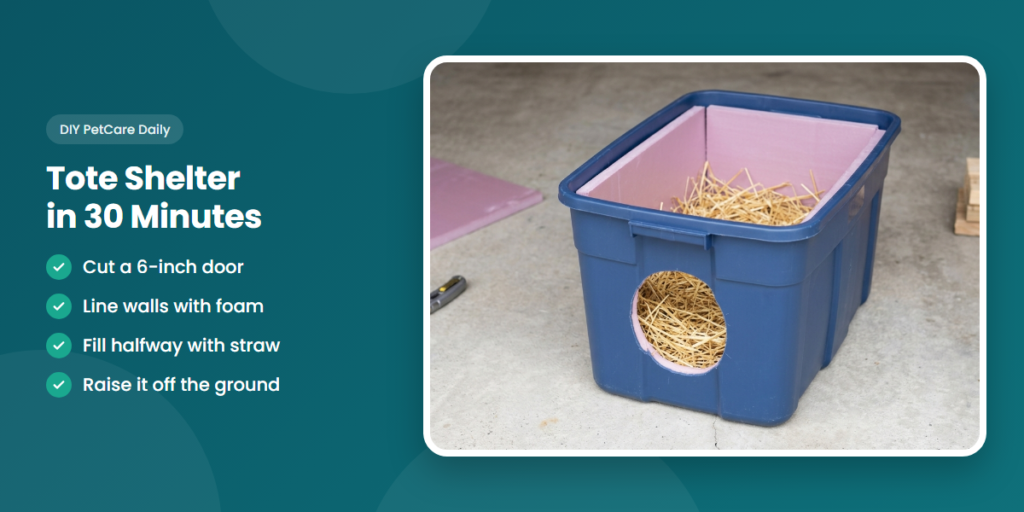
- Cut the door. On one of the long sides of the tote, mark a circle about 6 inches across. Place it a few inches up from the bottom so the straw doesn’t spill out and snow doesn’t drift in. Cut it out with the utility knife.
- Line the floor. Cut a piece of foam board to fit flat on the bottom of the tote.
- Line the walls. Cut foam pieces for all four walls. Leave a gap at the top so the lid can still close. Cut a matching hole in the foam wherever the door is.
- Add an inner box (optional). For more warmth, set a smaller tote inside the foam liner. Cut a matching door in it. This creates a cozy inner room.
- Fill with straw. Pack loose straw into the inner space, filling it about halfway. Cats will push it around to make a nest.
- Make a foam lid. Cut a piece of foam to sit on top of the walls, under the tote lid.
- Close it up. Snap the lid on. Tape around the door edges to cover rough foam.
- Raise it. Set the shelter on a pallet or bricks.
That’s it. The whole build takes about 30 to 45 minutes.
Plan 2: Foam Cooler Inside a Tote
A foam cooler is already an insulated box, which makes this the fastest build of all.
What You Need
- 1 foam cooler (about 18 by 12 inches, with walls at least 1 inch thick)
- 1 plastic storage tote big enough to hold the cooler
- Utility knife
- Straw
Steps
- Cut a 6-inch door in the side of the cooler, a few inches above the floor.
- Cut a matching door in the tote.
- Place the cooler inside the tote, lining up the two doors.
- Fill the cooler about halfway with straw.
- Put the cooler lid on, then close the tote lid.
The tote protects the foam from rain, wind, and chewing. On its own, a foam cooler gets brittle and can be pulled apart by raccoons, so don’t skip the outer tote.
Bonus: A Wooden DIY Outdoor Cat House
If you’re handy with tools, a plywood shelter lasts for years. Build a box about 26 by 32 inches and 18 inches tall from exterior plywood. Line the inside with foam board, then cover the foam with thin plywood so cats can’t scratch it apart. Add a sloped roof that overhangs the sides, and raise the box on 2×4 legs. A hinged roof makes cleaning easy.
Wooden shelters are heavier and cost more, but they hold up well in snowy states and look nicer in a yard.
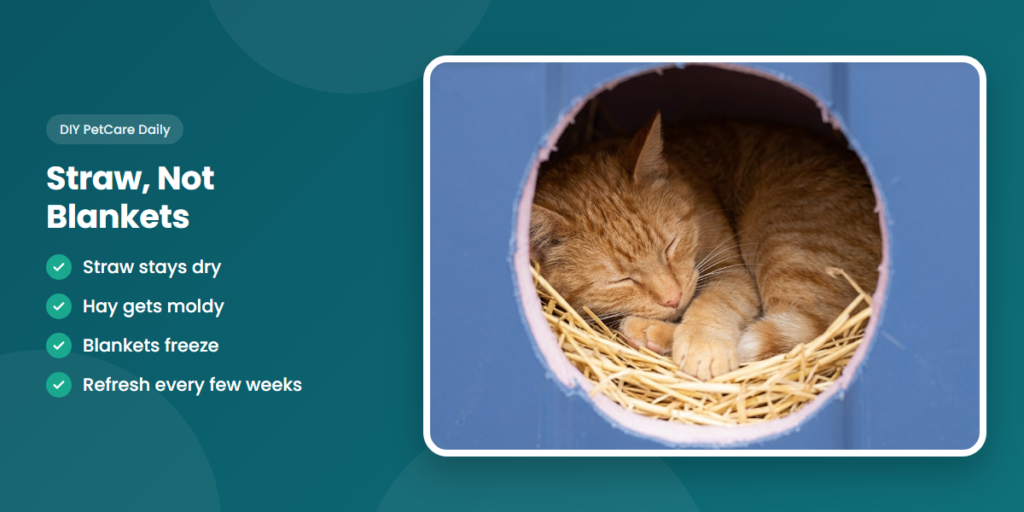
Bedding: Why Straw Beats Blankets
This is the single most important detail in any outdoor cat house.
Use straw. Straw is the dry, hollow stalks left after grain is harvested. It stays dry, holds warm air, and lets cats dig down into it. You can find bales at farm stores, garden centers, and feed shops, especially in fall.
Don’t use:
- Hay. It looks like straw, but hay is grass grown for animal feed. It soaks up moisture, gets moldy, and turns into a cold, damp mat.
- Blankets and towels. They absorb water from the air and from wet fur, then freeze.
- Newspaper. It gets wet and stays wet.
- Pillows or fabric beds. Same problem as blankets.
Check the straw every few weeks. Replace it if it’s damp, packed flat, or dirty.
A self-warming pad (the kind that reflects body heat back, with no cord) is a nice extra. Avoid electric heating pads unless they’re made for outdoor pets and have a chew-proof cord.
Where to Place Your Shelter
- Away from the wind. Turn the door to face a wall, fence, or bush, or put a board in front of it, a few inches out, to block gusts.
- Off the ground. A pallet, bricks, or a few boards keep the bottom dry.
- Somewhere quiet. Behind a shed, under a deck, or along the side of a house where people don’t walk by.
- Out of sight of the street if you can, so the shelter isn’t disturbed.
Weigh the shelter down with a brick on the lid or a heavy object nearby so wind doesn’t move it.
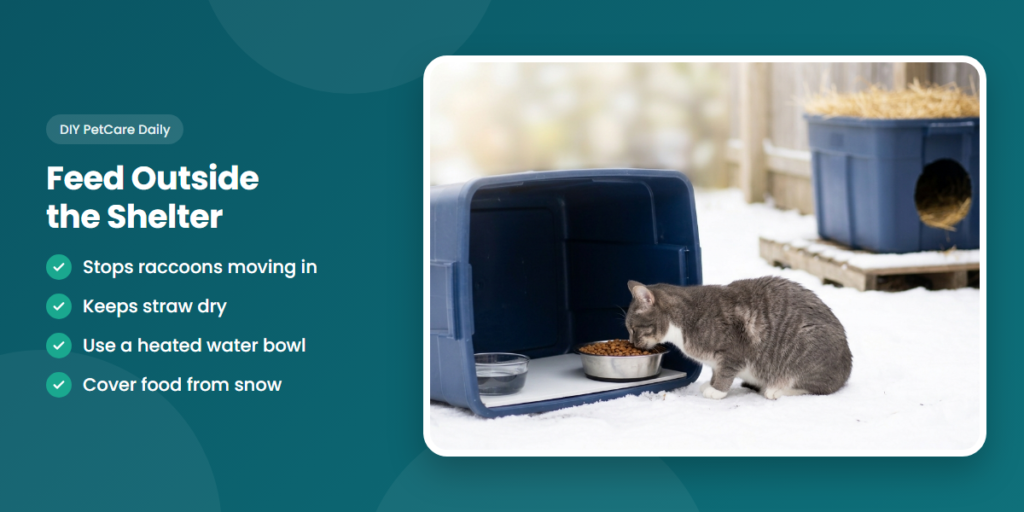
Food and Water: Keep Them Outside the Shelter
It feels natural to put food inside, but it causes problems. Food attracts raccoons, opossums, and skunks, which may take over the shelter. Spilled water soaks the straw and makes it cold.
Set up a feeding station a few feet away instead. A second tote turned on its side, or a simple roof over a bowl, keeps snow off the food. For water, a heated pet bowl stops freezing. If you don’t have power outside, use a deep, dark-colored bowl in a sunny spot and change the water often.
Wet food freezes fast in winter. Feed dry food or serve wet food in small amounts and pick up what isn’t eaten. If you’re not sure how much to put out, our guide on how many calories a cat needs helps, and cats burn more energy in the cold.
Getting Cats to Use the Shelter
Feral cats are cautious about anything new. It can take a few days or a few weeks before they move in. A few things help:
- Put the shelter near where the cats already sleep or eat.
- Sprinkle a little catnip near the door.
- Leave it alone. Checking it too often can scare cats away.
- Set out a second shelter if you have several cats. Some won’t share.
Look for paw prints in the snow or flattened straw to know it’s being used.
A Few Winter Safety Tips for Outdoor Cats
- Knock on your car hood or honk before starting the engine. Cats crawl into warm engines on cold mornings.
- Clean up antifreeze spills. It tastes sweet and is deadly to cats.
- Be careful with ice melt. Some types irritate paws. Look for pet-safe ice melt.
- Watch for sick or injured cats. A cat who stops eating or seems weak may need help. Our guide to signs of a sick cat lists what to look for.
If you care for a colony, ask a local shelter about trap-neuter-return (TNR) programs. Spaying and neutering means fewer kittens born into harsh weather.
Looking for more cat builds? Browse our DIY Cat Projects section, or try a DIY catio if your own cat wants safe outdoor time.
Frequently Asked Questions
What is the best bedding for an outdoor cat shelter?
Straw is the best bedding. It stays dry, holds warm air, and lets cats burrow. Avoid hay, blankets, towels, and newspaper, because they soak up moisture and make the shelter colder.
How big should the door be on a feral cat shelter?
About 5.5 to 6 inches across. That’s big enough for a cat but small enough to keep out most dogs and larger wildlife. Place it a few inches above the floor so straw stays in and snow stays out.
Can I put a heating pad in an outdoor cat house?
Only use one made for outdoor pets, with a thermostat and a chew-proof cord, plugged into a GFCI outlet. A cordless self-warming pad or plenty of straw is a safer choice for most shelters.
Should I put food inside the cat shelter?
No. Food inside attracts raccoons and other animals, and spilled water makes the bedding wet. Place food and water a few feet away under a small cover.
How cold is too cold for outdoor cats?
Cats can get hypothermia and frostbite when temperatures drop below freezing, especially with wind and wet weather. Kittens, seniors, and thin or sick cats are at the highest risk. A shelter helps, but very young or sick cats may need to come inside.