Table of Contents
Quick answer: The first signs of gum disease in dogs are bad breath, a thin red line along the gumline, and yellow or brown tartar on the back teeth. Later signs include bleeding or swollen gums, gums pulling away from the teeth, loose teeth, drooling, and trouble eating. Early gum disease can often be turned around with a vet cleaning and daily brushing, so check your dog’s mouth once a week.
Gum disease is one of the most common health problems in dogs, and it’s easy to miss. Dogs hide mouth pain well. Most keep eating even when their gums are sore. By the time many owners notice something is wrong, the damage has already reached the bone. This checklist shows you the signs of gum disease in dogs, from the earliest ones to the serious ones, and how to check your dog’s mouth at home in under a minute.
Table of Contents
- What Is Gum Disease in Dogs?
- Signs of Gum Disease in Dogs: The Early Warning Checklist
- How to Check Your Dog’s Gums at Home
- The Four Stages of Gum Disease
- Which Dogs Are at Higher Risk?
- How Vets Treat Gum Disease
- How to Prevent Gum Disease at Home
- Frequently Asked Questions
What Is Gum Disease in Dogs?
Gum disease, also called periodontal disease, starts with plaque. Plaque is a soft, sticky film of bacteria that forms on the teeth every day. If it isn’t brushed away, it hardens into tartar within a few days. The bacteria in plaque and tartar irritate the gums and, over time, attack the tissue and bone that hold each tooth in place.
Gingivitis vs Periodontitis
Gingivitis is the early stage. Only the gums are inflamed. The good news is that gingivitis can be reversed with a professional cleaning and good care at home.
Periodontitis is the later stage. The infection has moved below the gumline and started to destroy the bone and tissue around the teeth. This damage can’t be undone, but treatment can stop it from getting worse.
Signs of Gum Disease in Dogs: The Early Warning Checklist
Early Signs
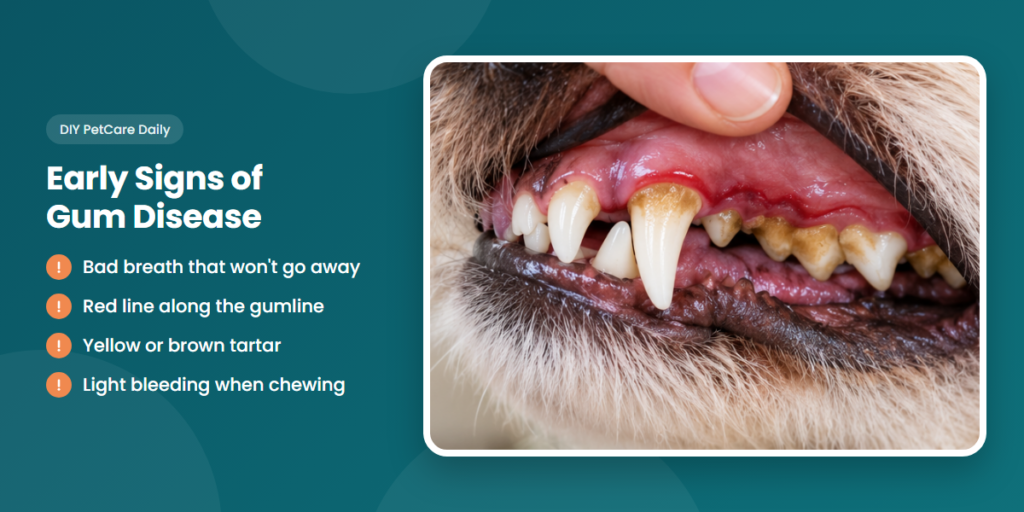
Bad Breath That Doesn’t Go Away
Dog breath isn’t supposed to smell strong. A sour or rotten smell that stays after meals is often the very first sign of bacteria building up in the mouth.
A Red Line Along the Gumline
Healthy gums are pink right up to the teeth. In early gum disease, you’ll see a thin red or dark pink line where the gum meets the tooth.
Yellow or Brown Tartar
Look at the big teeth toward the back of the mouth, especially the upper ones. Tartar shows up as a hard yellow, tan, or brown crust near the gumline.
Light Bleeding
You might see a little blood on a chew toy, in the water bowl, or on the brush after cleaning your dog’s teeth. Healthy gums don’t bleed from normal chewing.
Later Signs
As the disease goes deeper, you may notice:
- Swollen, puffy, or dark red gums
- Gums pulling back so more of the tooth shows
- Loose, moving, or missing teeth
- Pus or discharge near the gumline
- Drooling more than usual, sometimes with blood in it
- Dropping food, chewing on one side, or eating slowly (a dog who suddenly won’t finish meals may be in pain, not just picky)
- Pawing at the face or rubbing the mouth on the floor
- Swelling below the eye, which can mean a tooth root abscess
- Not wanting to play with chew toys anymore
- Weight loss or acting grumpy and withdrawn
If you see any of the later signs, book a vet visit soon. Your dog is likely in pain, even if they’re still eating.
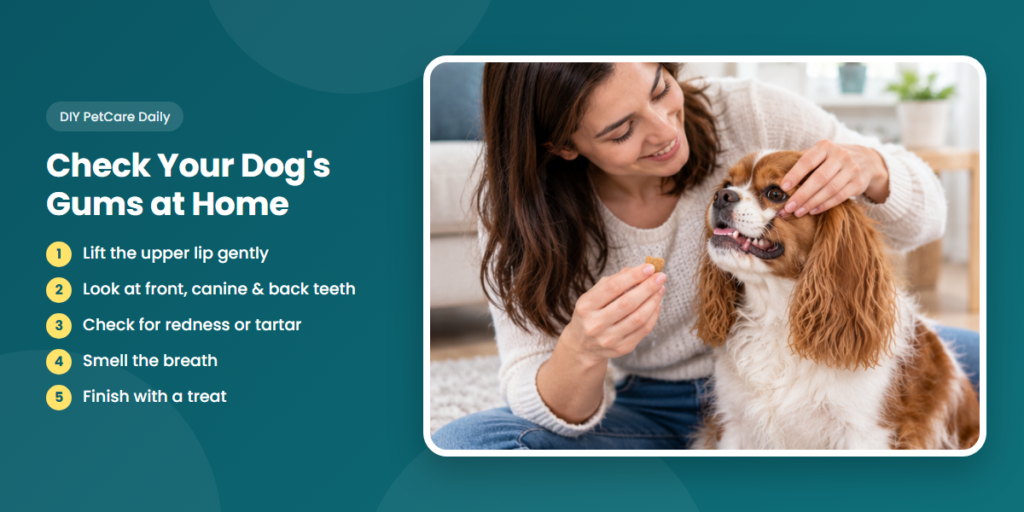
How to Check Your Dog’s Gums at Home
Do this once a week. It only takes a minute, and it fits easily into your regular dog grooming schedule.
- Pick a calm moment and have a few treats ready.
- Gently lift your dog’s upper lip on one side.
- Look at the front teeth, then the canines, then the big teeth at the back.
- Check the color of the gums and look for a red line at the gumline.
- Look for tartar, broken teeth, or swelling.
- Smell the breath.
- Repeat on the other side, then check the lower teeth.
- Give a treat and lots of praise.
If your dog won’t let you near the mouth, go slow. Our 7-day plan for brushing a dog’s teeth starts with simple lip and gum touches that work for checks too.
What Healthy Gums Look Like
- Pink and firm (some dogs have black or spotted gums, which is normal for them)
- No red line at the edge of the teeth
- Clean, white or light cream teeth
- Mild breath
When Gum Color Is an Emergency
Very pale, white, gray, blue, or bright yellow gums are not a dental problem. They can point to blood loss, shock, or another serious illness. Call your vet or an emergency clinic right away.
Vets check gum color along with heart rate, breathing, and temperature. Our guide on how to check your dog’s heart rate, breathing, and temperature at home shows you how to do all of them.
The Four Stages of Gum Disease
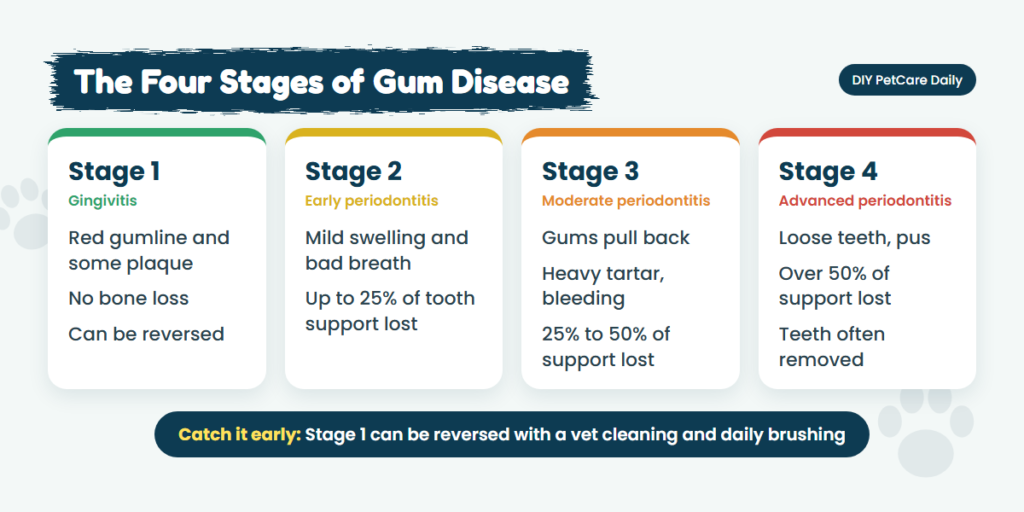
Vets often describe gum disease in four stages.
Stage 1: Gingivitis
Red gumline and some plaque or light tartar. No bone loss. This stage can be reversed.
Stage 2: Early Periodontitis
Mild swelling and bad breath. Up to about a quarter of the support around the tooth is lost.
Stage 3: Moderate Periodontitis
Gums start to pull back, tartar is heavy, and bleeding is common. About a quarter to half of the support is lost.
Stage 4: Advanced Periodontitis
Teeth are loose, gums are badly infected, and there may be pus. More than half the support is gone, and teeth often need to be removed.
Which Dogs Are at Higher Risk?
Any dog can get gum disease, but some are more likely to:
- Small and toy breeds like Chihuahuas, Yorkies, Dachshunds, and Pomeranians, because their teeth are crowded
- Flat-faced breeds like Pugs and Bulldogs
- Older dogs, since plaque has had more years to build up
- Dogs who never get their teeth brushed
- Dogs with crowded or leftover baby teeth
How Vets Treat Gum Disease
The main treatment is a professional cleaning under anesthesia. Anesthesia lets the vet clean below the gumline, where the real damage happens, and take X-rays to check the roots and bone. Loose or badly damaged teeth may be removed. Some dogs also need antibiotics or pain medicine afterward.
Cleanings done without anesthesia only scrape the visible part of the teeth. They can make the teeth look clean while the disease keeps going underneath.
What to Expect on Cleaning Day
If your vet recommends a cleaning, here’s how the day usually goes:
- Your vet runs blood work first, often a few days before, to make sure anesthesia is safe for your dog.
- You’ll be asked to skip your dog’s breakfast that morning.
- You drop your dog off early, and the team places an IV line and starts anesthesia.
- The vet cleans above and below the gumline, polishes the teeth, and takes dental X-rays.
- Any badly damaged teeth are removed, usually after the vet calls you to talk it over.
- Most dogs go home the same afternoon, a little sleepy.
In the US, a cleaning often costs several hundred dollars, and more if teeth need to come out. Ask for a written estimate first. Catching gum disease early usually means a simpler, cheaper visit.
How to Prevent Gum Disease at Home
- Brush daily. This is the most effective thing you can do. A few times a week is better than nothing.
- Use dog toothpaste only. Human toothpaste can contain fluoride and xylitol, which aren’t safe for dogs.
- Add dental chews if you like. They help, but they don’t replace brushing. See our breakdown of dental chews vs brushing for dogs.
- Skip hard chews. Bones, antlers, and hooves can crack teeth.
- Watch the treats. Many store treats are sticky and starchy. Slices of carrot or cucumber are a lighter choice, and our chart of fruits and vegetables dogs can eat lists the safe ones.
- Get a yearly vet checkup that includes a look at the mouth.
For more tips, browse our Dog Teeth Care and Dog Health & Wellness sections.
Frequently Asked Questions
Can gum disease in dogs be reversed?
Early gum disease (gingivitis) can be reversed with a professional cleaning and daily brushing at home. Once it reaches periodontitis and bone is lost, the damage is permanent, but treatment can stop it from getting worse.
At what age do dogs get gum disease?
It can start young. Many vets say most dogs show some signs of dental disease by age three. Small breeds often get it even earlier.
Is gum disease painful for dogs?
Yes, especially in the later stages. Dogs usually keep eating through the pain, so watch for chewing on one side, dropping food, or not wanting to play with toys.
Can gum disease affect my dog’s overall health?
It can. Bacteria from infected gums can get into the bloodstream. Vets link long-term gum disease with problems in the heart, liver, and kidneys.
Are black gums a sign of gum disease?
Not usually. Many dogs naturally have black or spotted gums. What matters is any change, like swelling, bleeding, a red line at the gumline, or new dark patches or lumps. Ask your vet if you’re not sure.