Table of Contents
- Table of Contents
- Why Some Cats Hate Being Brushed
- Why Brushing Still Matters
- Pick a Brush Your Cat Won’t Mind
- Set Up for Success Before You Start
- How to Brush a Cat That Hates Being Brushed: Step by Step
- Tips That Make a Big Difference
- What to Do If Your Cat Still Fights Brushing
- Brushing Schedule by Coat Type
- Frequently Asked Questions
Quick answer: To brush a cat that hates being brushed, start with a soft grooming glove or rubber brush, brush only the cheeks and chin at first, and stop after 3 to 5 strokes, before your cat gets annoyed. Give a treat after every short session. Add one new body area every few days, keep sessions under two minutes, and never hold your cat down. Most cats start to accept brushing within two to four weeks.
If your cat hisses, swats, or runs the second the brush comes out, you’re not alone. Lots of cats hate being brushed, and most of them have a good reason. Maybe the brush pulled their fur once. Maybe they were held down. Maybe the session went on too long. The good news is that you can turn this around. This guide shows you how to brush a cat that hates being brushed, one tiny step at a time, without a fight.
Table of Contents
- Why Some Cats Hate Being Brushed
- Why Brushing Still Matters
- Pick a Brush Your Cat Won’t Mind
- Set Up for Success Before You Start
- How to Brush a Cat That Hates Being Brushed: Step by Step
- Tips That Make a Big Difference
- What to Do If Your Cat Still Fights Brushing
- Brushing Schedule by Coat Type
- Frequently Asked Questions
Why Some Cats Hate Being Brushed
Before you change how you brush, it helps to know what your cat is reacting to. Here are the most common reasons.
The Brush Hurts
A wire brush with sharp pins, or a comb that catches a hidden tangle, can pinch the skin. Cats remember that. One painful pull can make a cat wary of every brush after it.
Too Much Touching
Many cats enjoy a little petting but get overstimulated quickly. Vets call this petting-induced aggression. Your cat may seem relaxed, then suddenly bite or swat. Long brushing sessions push cats past that point fast.
Sensitive Body Areas
Most cats love being touched on the cheeks, chin, and the top of the head. The belly, legs, tail, and lower back are a different story. Starting with these areas is a common mistake.
Being Held Down
Cats hate feeling trapped. If you’ve ever had to grip your cat to finish brushing, they’ve learned that the brush means losing control.
Pain or a Health Problem
Older cats with arthritis may hurt when you brush their hips or back. A cat who used to enjoy brushing and suddenly hates it may have sore joints, skin problems, or another health issue. If that sounds like your cat, read our guide to signs of pain in cats and talk to your vet.
Why Brushing Still Matters
Cats groom themselves, so you might wonder why you should bother. Here’s why regular brushing helps:
- Fewer hairballs. Every hair you brush out is a hair your cat doesn’t swallow. Our guide on how to prevent hairballs in cats explains the full picture.
- Fewer mats. Long-haired cats can tangle in a matter of days, and mats pull on the skin.
- Less fur on your couch. Brushing catches loose hair before it ends up on everything you own.
- Early health checks. Brushing lets you spot lumps, scabs, fleas, or weight changes early.
- Help for older cats. Senior and overweight cats can’t always reach their back and rear end, so they need extra help.
Pick a Brush Your Cat Won’t Mind
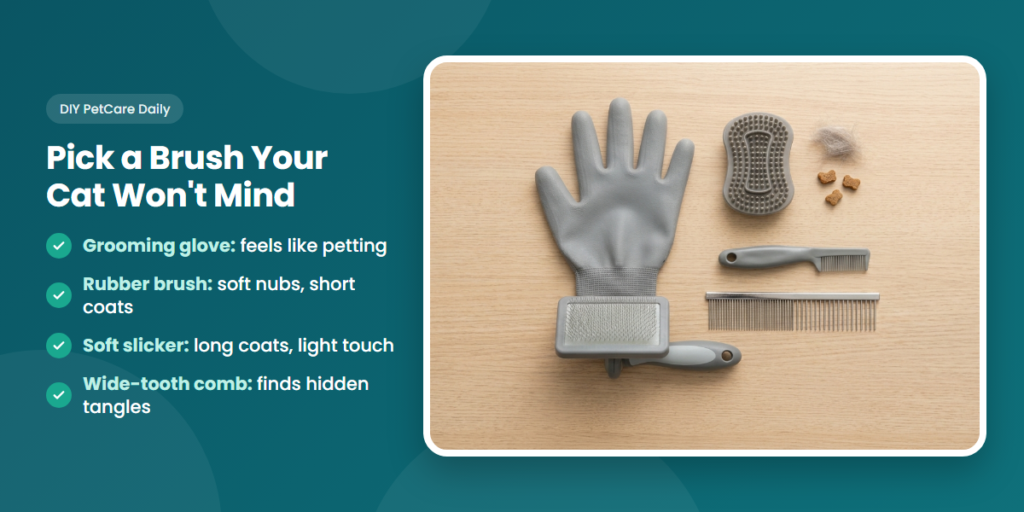
The right tool can make a huge difference for a cat who hates brushing. Start gentle and only move to stronger tools once your cat is comfortable.
Grooming Gloves and Rubber Brushes
These are the best starting point. A grooming glove feels like petting, so many cats don’t even notice they’re being brushed. Rubber curry brushes have soft nubs that pick up loose hair and feel like a massage.
Soft Slicker Brushes
A slicker brush has thin bent pins. It works well on medium and long coats, but choose one with coated or soft pins and use very light pressure. Never press it into the skin.
Wide-Tooth Metal Comb
A metal comb is great for finding small tangles in long fur. Use it after your cat is relaxed with the glove or rubber brush.
Tools to Avoid at First
- Hard wire brushes with sharp tips
- Deshedding tools with metal blades (save these for later, and use them gently)
- Fine-tooth combs on a long-haired cat with tangles
Set Up for Success Before You Start
A little planning makes every session easier.
- Pick the right time. Try after a meal or a play session, when your cat is sleepy and calm. Skip times when your cat is wound up or hungry.
- Choose a calm spot. Brush where your cat already likes to rest, like a favorite chair or a sunny window.
- Have treats ready. Use something your cat loves and only gets during brushing. Lickable cat treats in a squeeze tube work very well, because your cat can lick while you brush.
- Keep the brush visible. Leave it near your cat’s bed for a few days so it becomes a normal, boring object.
- Learn the warning signs. Watch for a twitching or thumping tail, skin rippling on the back, ears turning sideways or flat, a sudden head turn toward your hand, or a low growl. Any of these means stop now.
How to Brush a Cat That Hates Being Brushed: Step by Step
Go at your cat’s pace. Some cats move through these steps in a week. Others need a month or more. Both are fine.
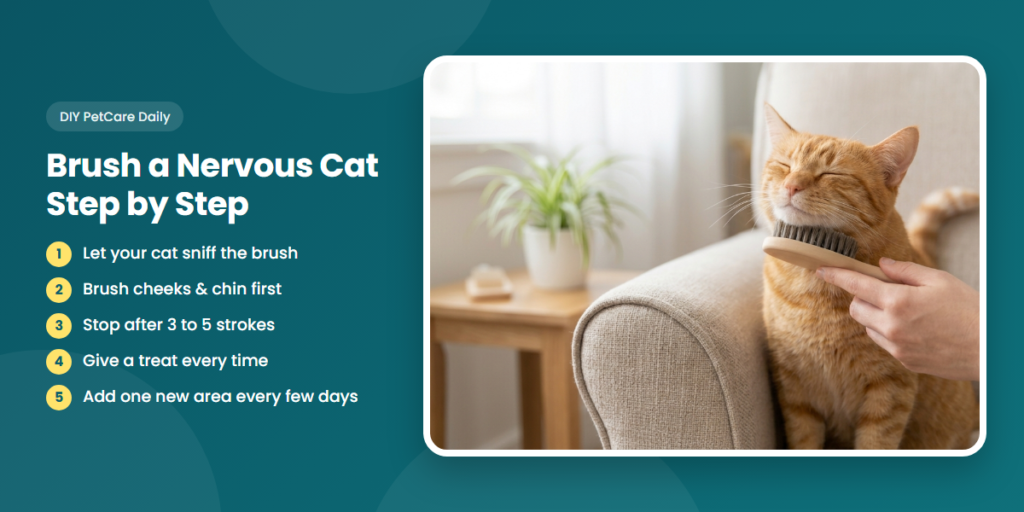
Step 1: Let Your Cat Sniff the Brush
Hold the brush out and let your cat sniff it. Give a treat. Do this a few times a day for two or three days. You’re teaching your cat that the brush means good things.
Step 2: Touch Without Brushing
Gently touch your cat’s cheek with the back of the brush or the gloved hand. Give a treat. That’s the whole session. Repeat until your cat stays relaxed.
Step 3: Brush the Cheeks and Chin
Most cats like having their faces rubbed. Brush slowly along the cheeks and under the chin, the same way your cat rubs against furniture. Do 3 to 5 strokes, then stop and give a treat. Always stop before your cat asks you to.
Step 4: Move to the Head and Neck
Once your cat leans into the face strokes, add the top of the head and the back of the neck. Brush in the direction the fur grows. Keep it short and sweet.
Step 5: Add the Back and Shoulders
Brush a few strokes down the shoulders and along the back. Use light pressure. Watch your cat’s tail and skin closely, since the lower back is where many cats get irritated.
Step 6: Add the Sides and Chest
Brush the sides and the front of the chest. Some cats are fine with this, and some aren’t. If your cat pulls away, go back a step for a few days.
Step 7: Work Up to the Tricky Areas
The belly, back legs, tail, and britches (the fluffy fur on the back of the thighs) come last. Many cats will never love having these spots brushed. For a long-haired cat, try brushing these areas for just a few seconds while your cat is busy licking a treat. A few seconds a day adds up.
Tips That Make a Big Difference
Keep Sessions Short
One to two minutes is plenty. Two short sessions a day beat one long fight. It’s much better to brush one side today and the other side tomorrow.
End on a Good Note
Always stop while your cat is still calm. If you stop only after your cat swats, your cat learns that swatting makes brushing end.
Never Hold Your Cat Down
Let your cat walk away whenever they want. This feels slower, but it builds trust much faster. A cat who knows they can leave is far more likely to stay.
Brush Little and Often
Daily brushing for a minute keeps tangles small, so each session is easier and less painful. Short-haired cats do well with brushing once or twice a week. Long-haired cats need a few minutes every day.
Try a Two-Person Approach
One person offers a lickable treat, and the other brushes. Your cat stays focused on the food instead of the brush.
What to Do If Your Cat Still Fights Brushing
Some cats need extra help. Here are a few things to try.
- Go back a step. If your cat was fine yesterday but not today, return to an earlier, easier step for a few days.
- Try a different tool. Some cats hate the feel of a slicker brush but love a rubber brush or a glove.
- Use a towel for comfort, not restraint. A soft towel on your lap gives your cat something cozy to sit on.
- Check for mats. A brush catching on a hidden tangle hurts. If your cat already has tangles, read our guide on how to remove mats from cat fur before you keep going.
- See your vet. If your cat reacts like brushing hurts, a vet visit can rule out arthritis, skin infections, or fleas.
- Ask a professional groomer. For a long-haired cat with heavy mats or a cat that is very stressed, a groomer who works with cats (or your vet) can help. Some cats need light sedation for a full groom, and that’s okay.
Brushing Schedule by Coat Type
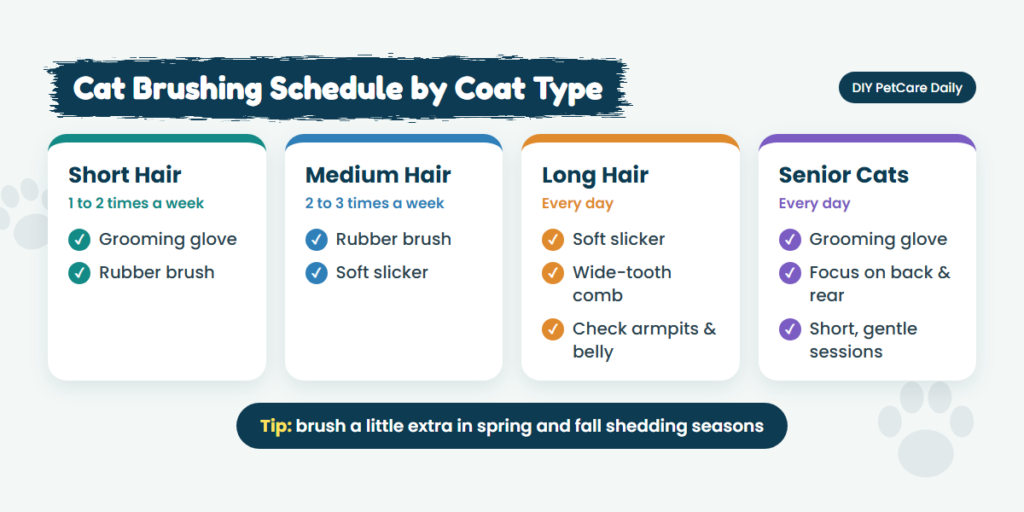
Use this as a simple starting point.
| Coat Type | How Often | Best Tools |
| Short hair | 1 to 2 times a week | Grooming glove, rubber brush |
| Medium hair | 2 to 3 times a week | Rubber brush, soft slicker |
| Long hair | Every day, a few minutes | Soft slicker, wide-tooth comb |
| Senior or overweight cats | Every day, focus on back and rear | Grooming glove, soft slicker |
During spring and fall shedding seasons, most cats need a little extra brushing.
Grooming covers more than fur, too. Once your cat accepts the brush, the same slow approach works for teeth. See our beginner guide on how to brush cat teeth and our tips on how to trim cat nails. You can find more guides in our Cat Hair & Grooming Care section.
Frequently Asked Questions
How long does it take for a cat to get used to brushing?
Most cats start to accept brushing in two to four weeks of short, daily sessions. Cats with a bad past experience may take a few months. Going slow is the fastest way in the long run.
Should I brush my cat if they hate it?
Yes, but change how you do it. Use a softer tool, keep sessions very short, and pair brushing with treats. Long-haired and senior cats especially need help, since mats and hairballs can cause real problems.
Why does my cat bite me when I brush them?
Usually it’s overstimulation. Your cat has had enough and is telling you to stop. Watch for a twitching tail, rippling skin, or flattened ears, and end the session before the bite. If the biting is new, ask your vet to check for pain.
Is it okay to brush a cat against the direction of the fur?
It’s best to brush in the direction the fur grows. Brushing against the grain pulls on the skin and annoys most cats. Some long-haired cats need gentle line brushing against the grain, but only once they’re comfortable.
Can I use a dog brush on my cat?
Some soft dog brushes and gloves work fine. Avoid large, stiff, or sharp brushes made for thick dog coats, since cat skin is thinner and more delicate.

One Response